avg —
Zucchini Yurcha for Winter

Instructions
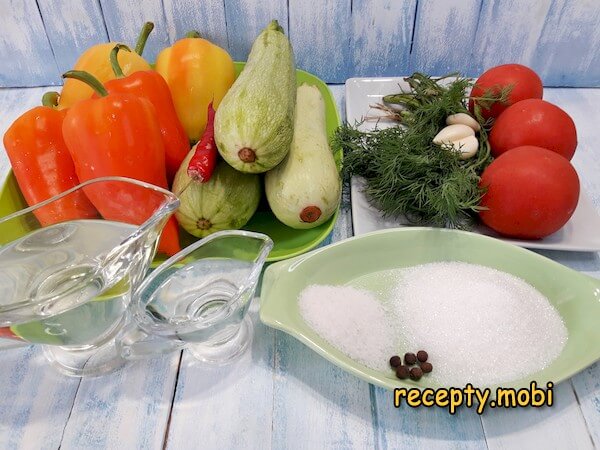
I prepare the ingredients. Both young and older zucchinis work — for older ones, peel the tough skin and discard the seedy soft core. Hot pepper amount adjusts to heat preference.
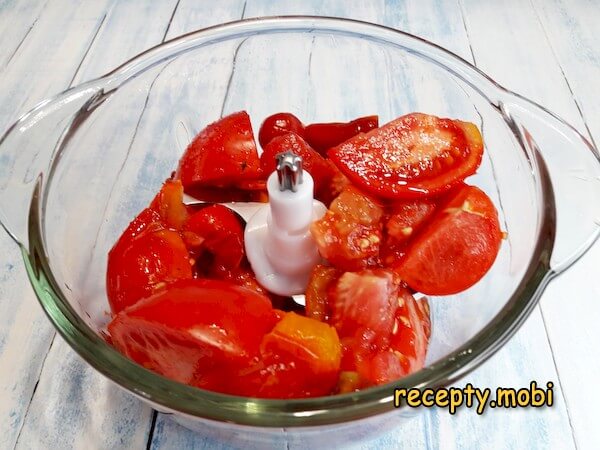
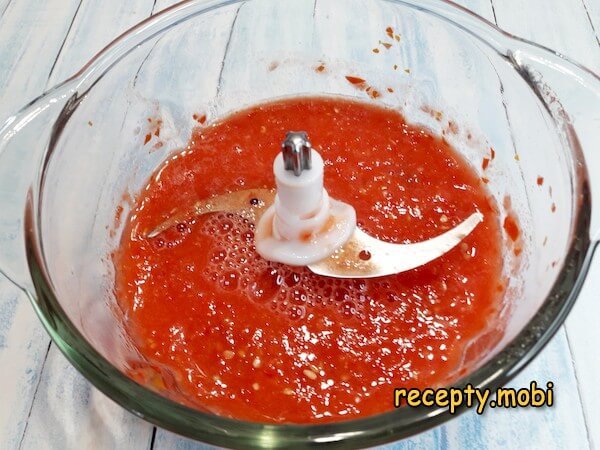
Tomatoes cut into chunks (stems removed) and load into a blender or meat grinder.
I grind the tomatoes to a smooth purée.
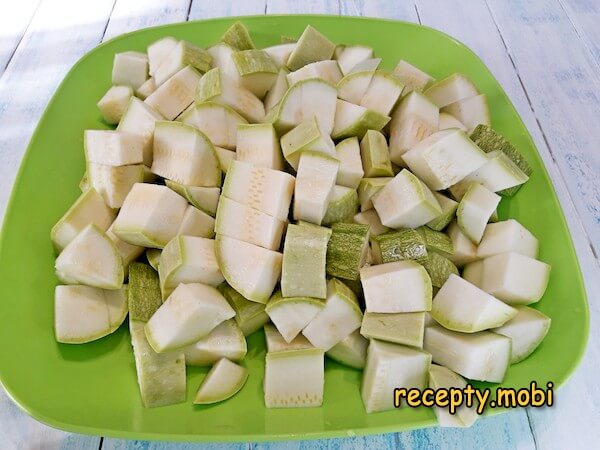
Zucchini cuts into 1.5 × 1.5 cm cubes — uniform size means uniform cooking.
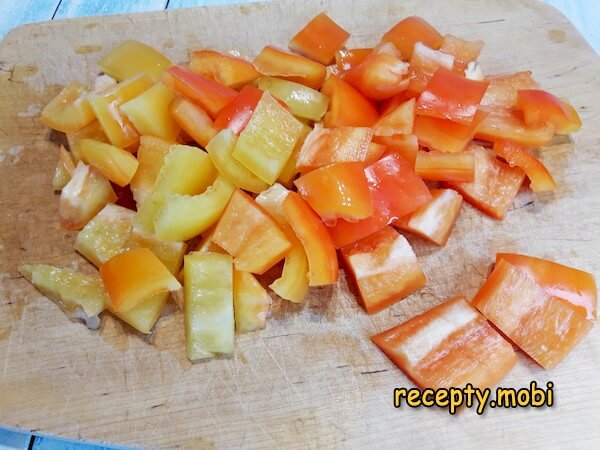
Bell pepper cuts to roughly the same cube size after deseeding. Hot pepper finely chops if using.
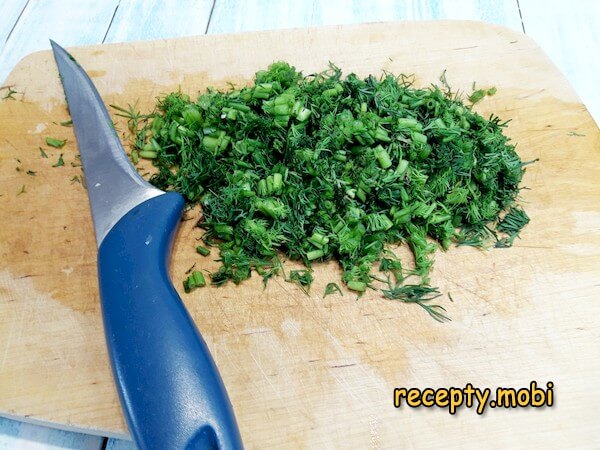
Fresh herbs (any mix — dill, parsley, cilantro) finely chop.
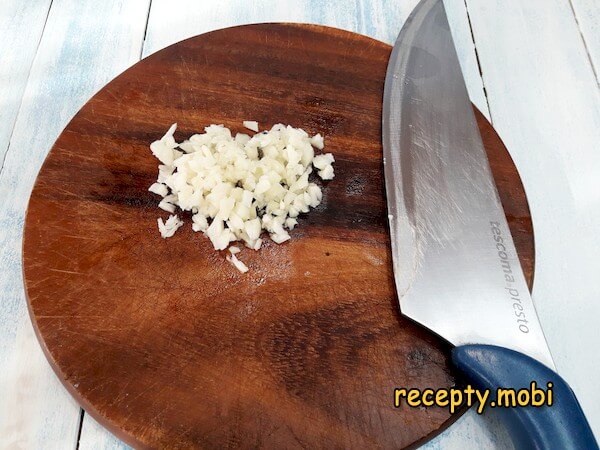
Garlic minces with a knife — knife-mince gives better texture than press.
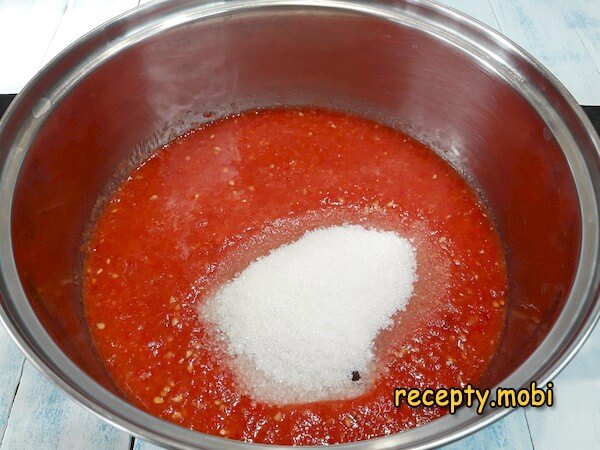
Tomato puree pours into the pot. Salt, sugar, and peppercorns join.
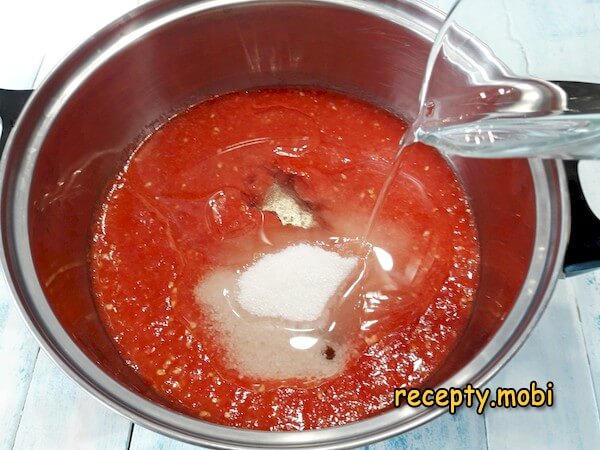
Vegetable oil pours in.
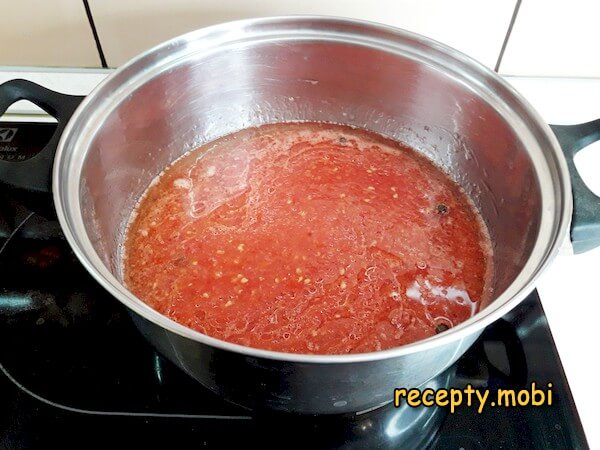
I mix everything and bring to a boil over medium-high heat.
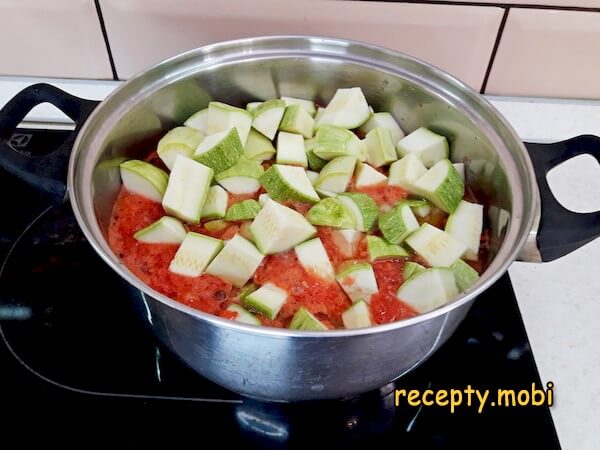
At the boiling point, all the zucchini cubes go in.
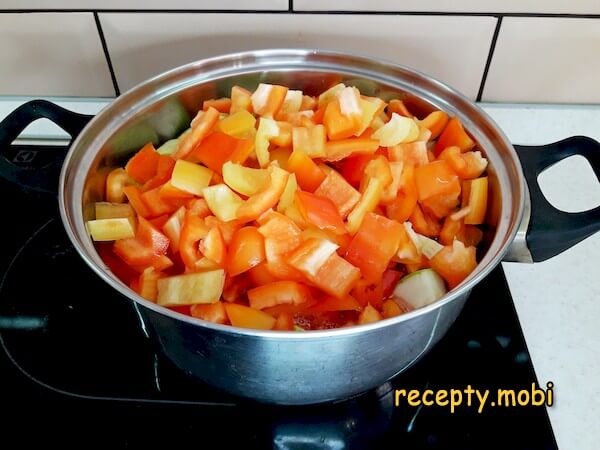
Sweet and hot pepper follow.
Simmer 30 minutes on high heat with periodic stirring (won't burn but needs movement). While cooking, wash and sterilise the glass jars and lids.
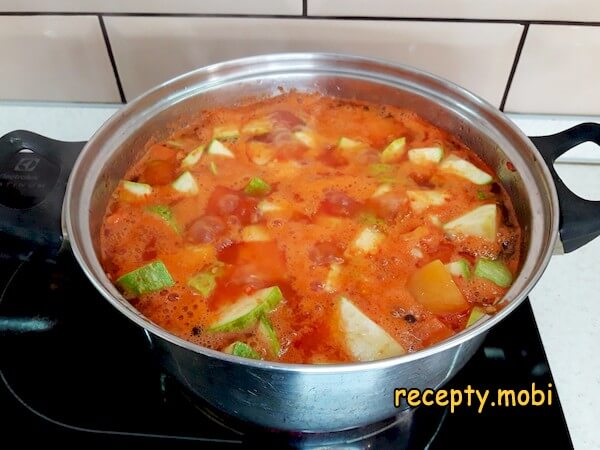
After 30 minutes, the volume noticeably reduces. I add the chopped herbs and garlic.
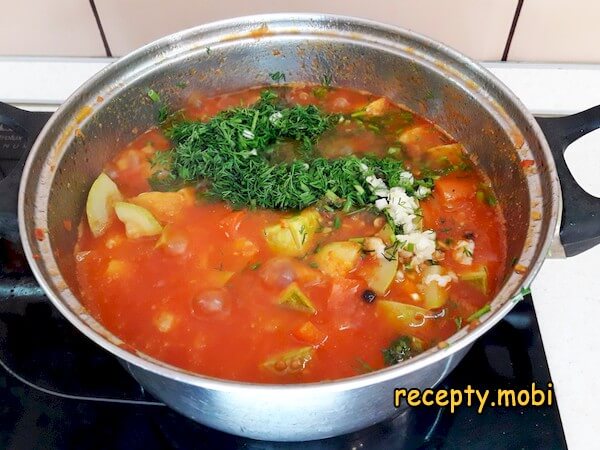
Vinegar pours in last. I mix and simmer 10 more minutes.
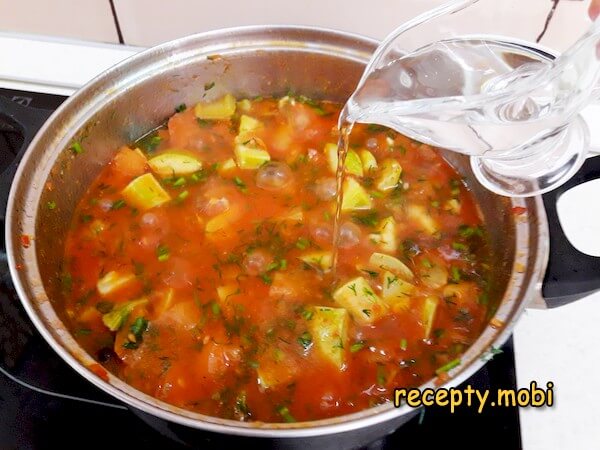
Jars fill to the very top with the hot vegetable mixture. Lids screw on tight.
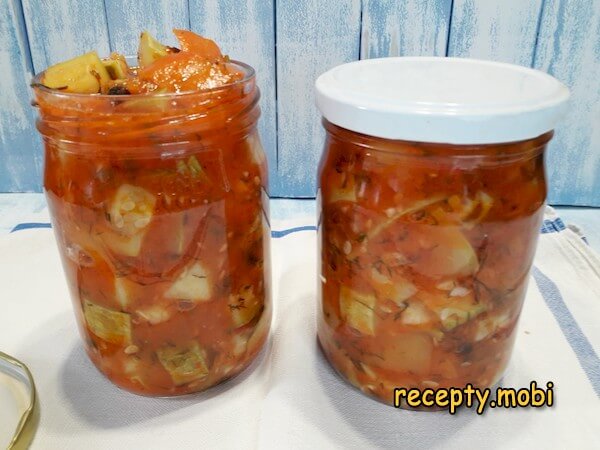
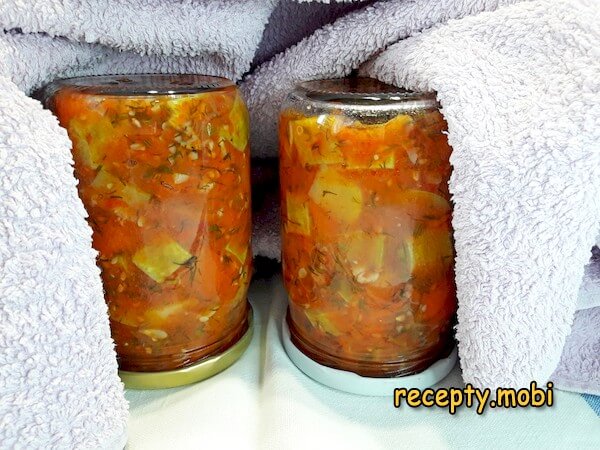
Jars invert, blanket-wrap, slow-cool until completely room temperature (8 hours).
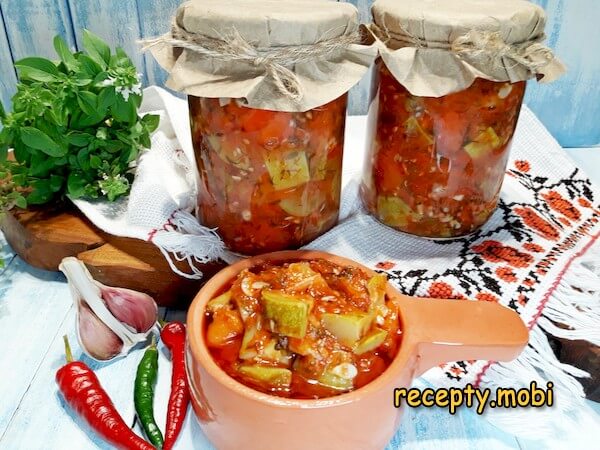
Zucchini yurcha for winter is ready. Store in a dark cool place — keeps until next year's harvest. Pair with meat, potatoes, American-style mac and cheese, or grain bowls. Even the most ordinary dish gains new flavour dimensions when this stew is on the side.


Tips
- 1
UNIFORM CUBE SIZE IS THE TEXTURE SECRET. Steps 4-5's instruction to cut zucchini and bell pepper to the same 1.5 cm cube isn't aesthetic — it's calibration for even cooking. Different sizes mean some pieces are mush while others are still firm. Take time at the cutting board; it pays off in the finished texture. The same principle applies to most multi-vegetable preserves.
- 2
ADD VINEGAR LAST. Step 15's late-stage vinegar addition preserves the sharp acidic character. Vinegar boiled for 30+ minutes loses its bite. The brief 10-minute final simmer with vinegar is enough for proper pH integration. For another zucchini-tomato winter preserve worth comparing, see Zucchini with Tomatoes for Winter "Lick Your Fingers".
- 3
KAZAKH ORIGIN, RUSSIAN POPULARITY. "Yurcha" comes from Central Asian Turkic culinary tradition where vegetable stews preserve the abundant summer harvest for long winters. The recipe spread across the Soviet space and became a classic Russian preserve. Variations exist: some add eggplant for hearty texture, some add carrot for sweetness, some include cabbage for crunch. The base technique stays universal across these regional variants.
- 4
SERVE BEYOND ZAKUSKA. The classic serving is as zakuska on rye bread or alongside meat. But yurcha is endlessly versatile: stir into pasta sauces (instant flavour upgrade), use as filling for omelettes, top baked potatoes, mix into grain bowls (quinoa, farro, barley), or use as vegetable bed under grilled fish. The preserve's bright tomato-vegetable profile elevates many dishes. For another zucchini winter preserve worth trying, try Mother-in-law's Tongue from Zucchini for the Winter.
FAQ
What does "yurcha" mean? +
"Yurcha" (юрча in Russian transliteration) is a Kazakh and Turkic culinary term loosely translating as "savoury stew" or "preserved mix." The exact etymology varies by region — some sources connect it to "yurt" (the Central Asian dwelling), referring to the food prepared in nomadic settlements. The dish itself spread across the post-Soviet space through Kazakh-Russian culinary exchange. Modern Russian-Kazakh kitchens use "yurcha" specifically for vegetable-stew preserves like this recipe. The name is part of the dish's regional identity.
How long does the preserve keep? +
Properly sealed jars at room temperature in a dark cupboard keep 12+ months — until next year's zucchini season. Cool basement extends to 18 months. Once opened, transfer to fridge and use within 2-3 weeks. The vegetable texture stays good for 6-8 months, then softens gradually. Flavour deepens over months. If you spot mould, fizzing, or bulging lids, discard the jar. Properly preserved yurcha doesn't ferment.
Can I use other vegetables? +
Yes — the technique adapts well. Best alternatives: yellow summer squash (identical handling), eggplant cubes (salt-purge first to remove bitterness), carrot strips (adds sweetness), cabbage (chopped, gives crunch). Mixed-vegetable batches work — keep total weight at 1.4 kg (1 kg primary + 400 g secondary). Avoid: leafy greens (don't preserve well), watery vegetables like cucumber (dilute the marinade), root vegetables larger than carrot (don't soften enough in the cook time).
Why include both bell pepper AND hot pepper? +
Bell pepper provides body, sweetness, and visible pieces; hot pepper provides flavour heat. Each does what the other can't. Skipping bell pepper produces a thin one-note spicy stew; skipping hot pepper produces a sweet bell-pepper stew without the Kazakh-style bite. The combination gives the proper balance — sweet vegetable substance with spiced complexity. Fresh chili can be reduced or omitted for milder versions; replace with 1/2 tsp paprika for colour without heat.
- Comment
or post as a guest
Be the first to comment.