avg —
How to Sprout Mung Beans (the Easiest Way)

Instructions
I carefully sort through the mung beans, removing any damaged, shrivelled or discoloured beans: they will not sprout and can spoil the whole batch. I rinse the beans 3-4 times under cold running water, draining the cloudy liquid each time until it runs clear. I transfer them to a deep ceramic or glass bowl (a metal one may oxidise) and cover them with clean, room-temperature water so that the water level sits 5-7 cm above the beans. I leave them for 10-12 hours at a room temperature of 20-25°C.
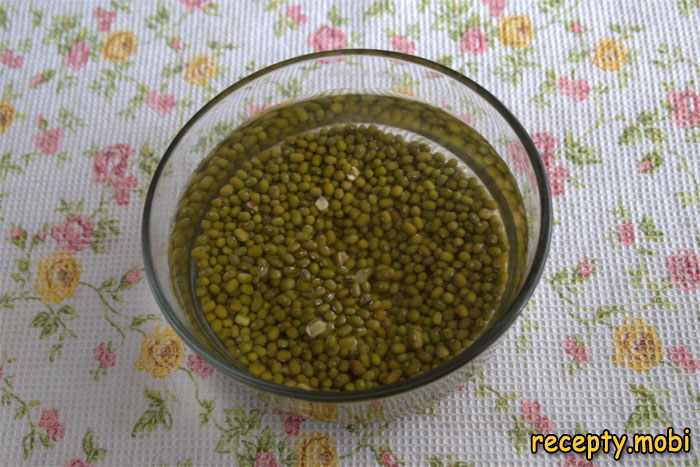
Over this time the mung beans soften and swell in volume. We rinse the beans under water.
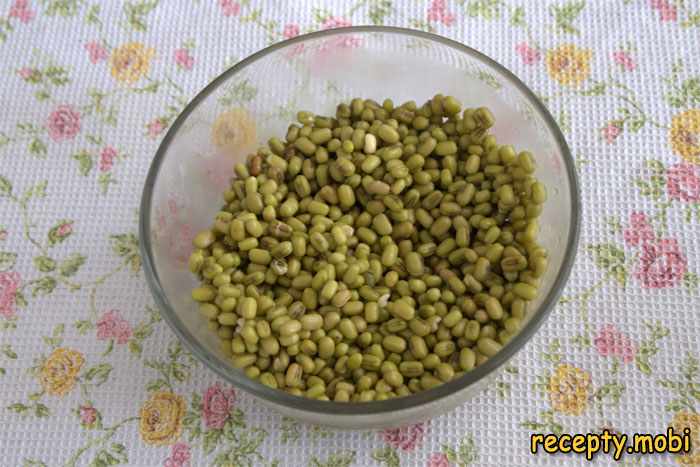
We lay the beans out on a plate or in a container. We try to spread the beans evenly (across the whole surface of the dish).
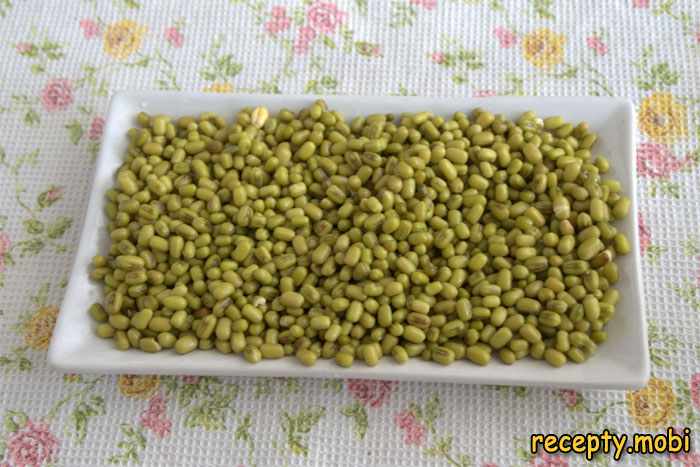
We cover the container holding the beans with a damp cotton cloth and put it in a dark place (for 15-20 hours).
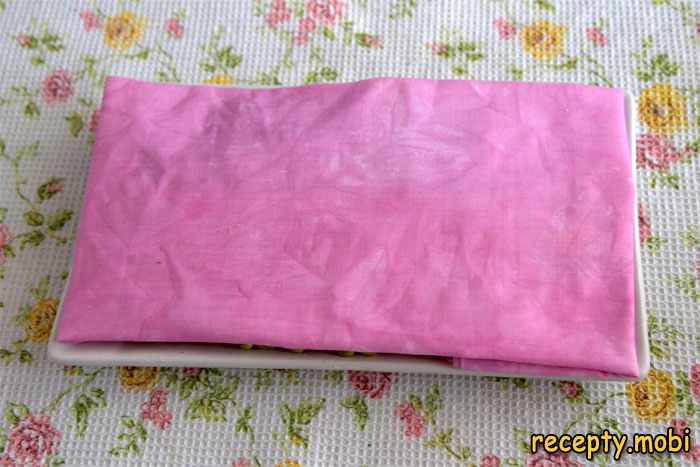
We try to moisten the cotton cloth every 2-3 hours so that the mung beans have enough moisture to sprout.
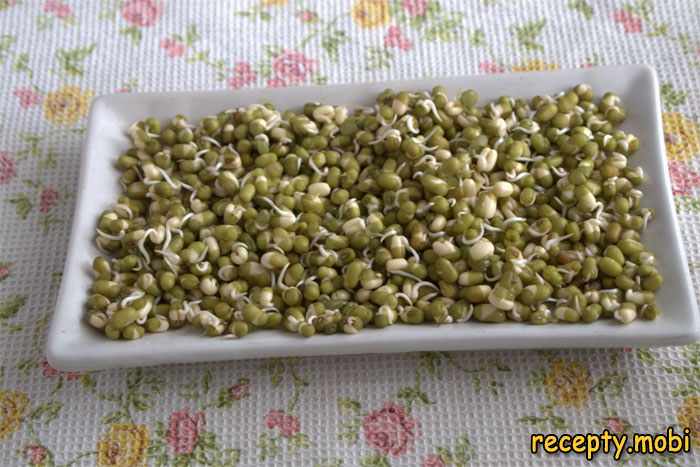
After 15-20 hours, firm white sprouts 5-10 mm long appear on the beans: this is the optimal length for eating, as longer sprouts turn slightly bitter. I rinse the sprouted mung beans thoroughly under cold running water, removing any loose seed coats. I keep them in an airtight container in the refrigerator at 4-6°C for no more than 3 days. I always rinse them again before eating.


Tips
- 1
The ideal temperature for sprouting mung beans is 22-26°C. Below 18°C the process slows down, above 30°C the beans may turn sour.
- 2
If you do not have cotton cloth, use several layers of paper towel: the main thing is to keep them moist at all times.
- 3
Do not stand the container of mung beans in sunlight: this stimulates chlorophyll production and the sprouts turn bitter.
How to Choose Mung Beans for Sprouting
The success of sprouting depends almost entirely on the quality of the beans themselves. For sprouts you need whole green mung beans from a fresh harvest: the younger the grain, the higher the germination rate. Old beans that have been stored for a year or longer often give a low percentage of sprouts, or do not sprout at all.
What to look for when buying:
- An even, rich green colour, with no brown or blackened grains.
- A smooth, glossy surface: a wrinkled skin gives away an over-dried or old product.
- Whole grains of a single size, with no chips or dust at the bottom of the bag.
- No musty or mouldy smell, and no signs of weevils.
Split mung beans (dal, skinless halves) are no good for sprouting: their germ is damaged, so there will be no sprout. Polished and roasted mung beans do not sprout either. Buy loose beans from a trusted source, or a pack marked as suitable for sprouting.
The Quick Way: Sprouting Mung Beans in a Jar in a Day
If fiddling with a plate and a cloth seems like a hassle, mung beans are easy to sprout in an ordinary glass jar. This method needs no constant attention and gives sprouts in about a day.
- Put 3-4 tablespoons of rinsed mung beans into a one-litre jar: the grains swell a great deal, so do not fill the jar.
- Cover them with cool water for 8-10 hours to soak.
- Drain the water, cover the neck with cheesecloth or fine mesh and secure it with an elastic band.
- Stand the jar at an angle, neck facing down, so that excess moisture drains away and air can pass inside.
- Rinse the grains right in the jar 2-3 times a day: pour water through the cheesecloth, swirl it, then drain.
After 18-24 hours you get sprouts 5-10 mm long. The cheesecloth and the angle solve the main problem of home sprouting: the mung beans do not turn sour in standing water, yet they do not dry out either. And if you do not care for the sprouts, mung beans can simply be boiled like ordinary pulses, see the separate guide on how to cook beans.
Common Sprouting Mistakes and How to Avoid Them
Most often mung beans fail because of a few typical slip-ups. Let us go through them in order.
- The grains stand in water. After soaking, the water must always be drained: in standing water the mung beans turn sour and become slimy. The right state is damp, but not wet.
- An airtight lid. In a sealed container with no air, the grains suffocate and rot. You need a breathable cloth, cheesecloth or a loose lid.
- Rinsing too rarely. Without a rinse 2-3 times a day, bacteria multiply on the beans, which is where the sour smell comes from. You must not skip a rinse, even overnight during a long cycle.
- Too thick a layer. If you pile the mung beans up in a heap, the lower grains overheat. Spread them in a layer one or two grains deep, or use a jar at an angle.
- Heat above 30 degrees. On a radiator or in the sun, mung beans overheat and spoil faster than they sprout. Keep them at a room temperature of 20-26 degrees.
If the batch does turn sour anyway (slime, a sharp smell), do not try to save it by rinsing: such sprouts are not fit to eat, so start again with a fresh portion.
Storing Sprouted Mung Beans and Laying in a Stock
Ready sprouts keep growing and gradually toughen, so they taste best when fresh in the first few days. To extend their shelf life, follow a few rules.
- Before storing, rinse the sprouts thoroughly and dry them well: excess moisture speeds up spoilage.
- Put them in a container lined with paper towel and keep them in the refrigerator at 4 degrees: this way they stay fresh for 3-5 days.
- Once a day, move them onto a dry towel, or lightly rinse and dry them again, so the sprouts keep for longer.
You can lay in a stock of sprouted mung beans by freezing them, but bear in mind: after thawing they lose their crunch and are suited to hot dishes rather than a fresh salad. Blanch the sprouts for 1 minute in boiling water, plunge them into iced water, dry them and freeze them in portions in a bag. In the freezer they keep for up to 2 months and go straight from frozen into soups, noodles and stir-fries. There is little point in sprouting large amounts in advance: a fresh portion is ready in just a day, so it is easier to start a new jar every 2-3 days.
Why Mung Bean Sprouts Are Good for You and What to Serve Them With
During sprouting, the content of vitamin C, B vitamins and active enzymes in the beans rises sharply, while the substances that are hard on the stomach partly break down, so the sprouts are easier to digest than boiled mung beans. This is a low-calorie product with plant protein and fibre, handy for light and lean dishes. Approximate macro and calorie values are given in the table below.
Sprouted mung beans are eaten both raw and lightly steamed. What they go well with:
- Fresh salads with cucumber, carrot and herbs: for a brighter flavour, add pickled onion.
- Asian dishes: the sprouts go into stir-fries, noodles, and the filling for sushi rolls and spring rolls.
- Warm side dishes: fry them for 2-3 minutes with garlic and soy sauce.
- Omelettes, soups and bowls: add them at the very end of cooking to keep the crunch.
If you value pulses for their benefits, take a look at other wholesome baking made with bean flour too, for example chickpea flour cookies.
Nutritional Value of Sprouted Mung Beans (per 100 g)
| Nutrient | Value per 100 g |
|---|---|
| Calories | about 30 kcal |
| Protein | 3 g |
| Fat | 0.2 g |
| Carbohydrates | 5.9 g |
| Fibre | 1.8 g |
| Vitamin C | 13 mg |
Video

FAQ
Why won't my mung beans sprout? +
The beans may be old or have been stored incorrectly. Buy mung beans from trusted places and keep an eye on the use-by date: good quality mung beans sprout in 24-36 hours.
Can I eat mung beans with long sprouts? +
Yes, but the longer the sprouts, the more bitterness there is. The optimal length for eating raw is 5-15 mm.
How can I tell that sprouted mung beans have gone off? +
A sour or unpleasant smell, a slimy surface and darkened sprouts are signs of spoilage. Mung beans like this must not be eaten.
Do I need to soak mung beans before sprouting? +
Yes, soaking for 8-12 hours kicks off germination: the grain swells and starts to grow. Sprouts will appear without soaking too, but noticeably later and less evenly.
Can sprouted mung beans be eaten raw? +
Yes, fresh rinsed sprouts are eaten raw in salads. If you are unsure how clean the product is, pour boiling water over them or blanch them for 1 minute.
Do I need to remove the green skin from the sprouts? +
Not necessarily: the thin green coat is edible and rich in fibre. It is removed only for a more tender texture, by rinsing the sprouts and pouring off the husks that float to the top.
How much do mung beans expand during sprouting? +
The grain grows roughly 4-6 times in volume, so 100 g of dry mung beans yields around 400-500 g of ready sprouts. Bear this in mind when choosing your dish.
Can mung beans be sprouted in cheesecloth or a colander? +
Yes, both options work. The mung beans are wrapped in damp cheesecloth, or spread out in a colander lined with cloth, then rinsed 2-3 times a day, making sure the water does not stagnate.
Do mung beans have to be kept in the dark? +
It is not strictly required, but in the shade the sprouts come out pale, juicy and free of bitterness. In the light they turn green and taste slightly bitter.
Can mung beans be sprouted on a radiator in winter? +
It is best not to put them on a radiator: in heat above 30 degrees the mung beans overheat and turn sour. A warm spot in the room at 20-26 degrees, away from direct heat, is enough.
- Comment
or post as a guest
Be the first to comment.