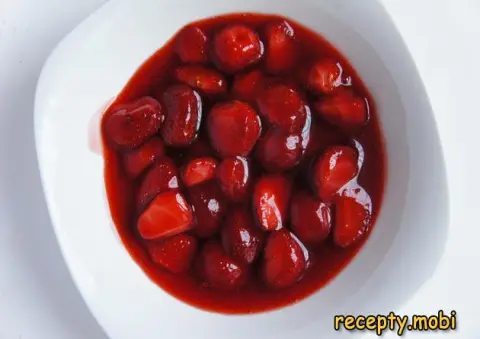
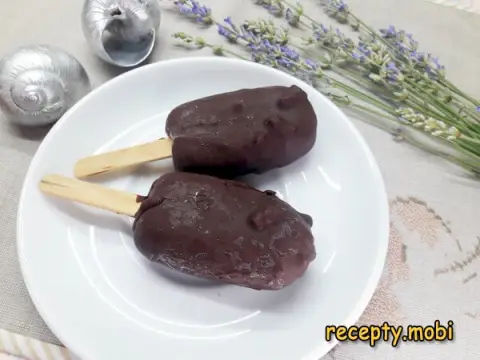
avg —
Strawberry Sorbet

Instructions
I prepare the ingredients for the strawberry sorbet. Since the berries are not heat-treated, they must be of good quality, sweet and must not have any rotten spots. The lemon juice can be replaced with orange juice.
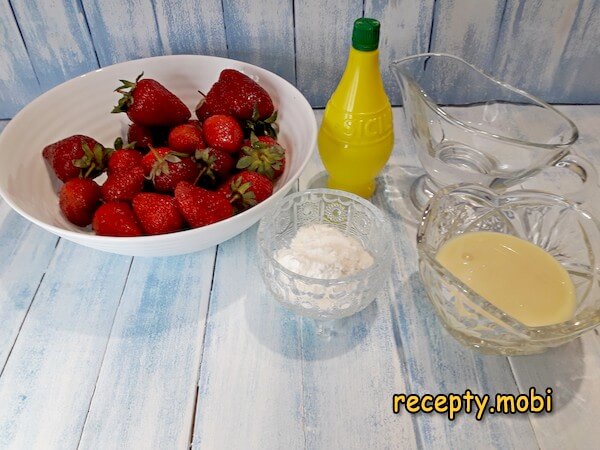
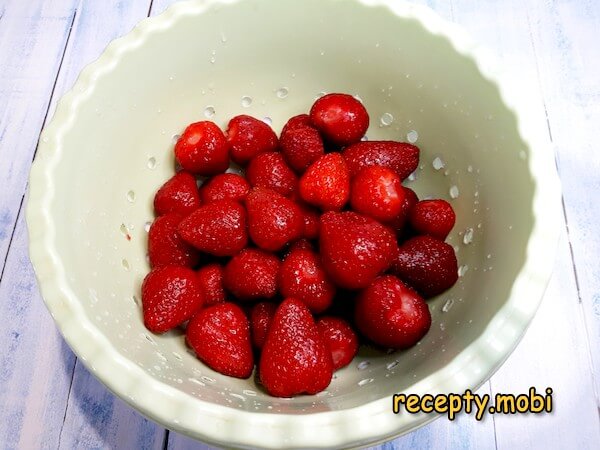
I hull the strawberries (remove the green stems) and rinse them well under running water. I put them in a colander and let them dry a little.
I pour the water into a small saucepan and add the lemon juice. Over low heat, I bring the liquid mixture just to the point of boiling.
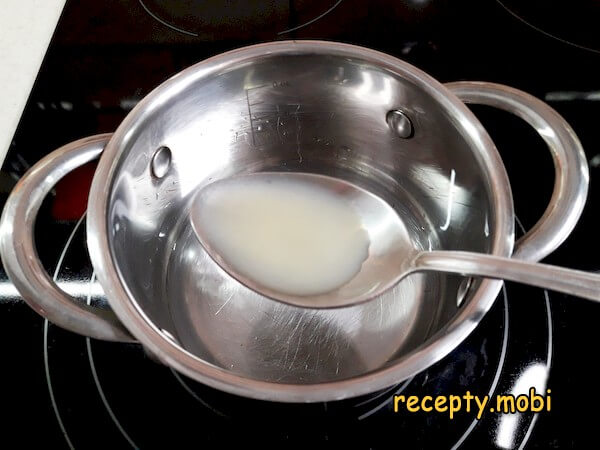
I add all the starch at once.
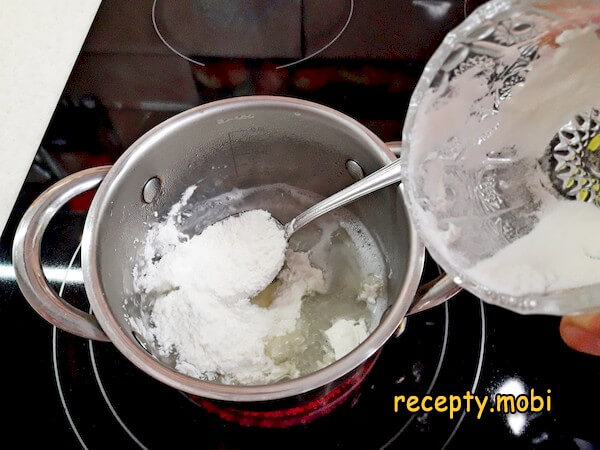
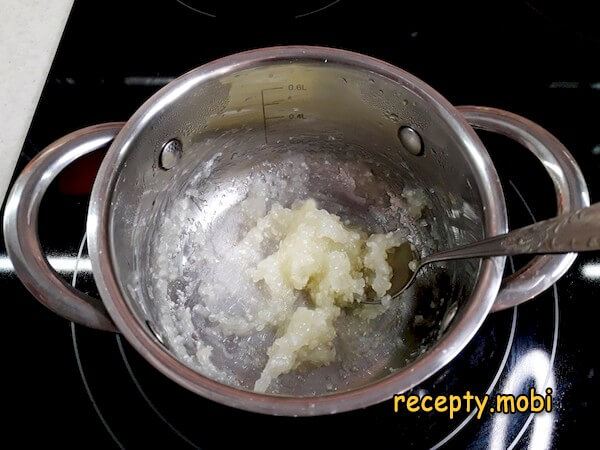
Stirring and rubbing the mixture constantly for 3 minutes, I bring it to a strong thickening over low heat. Then I remove it from the heat and leave it to cool.
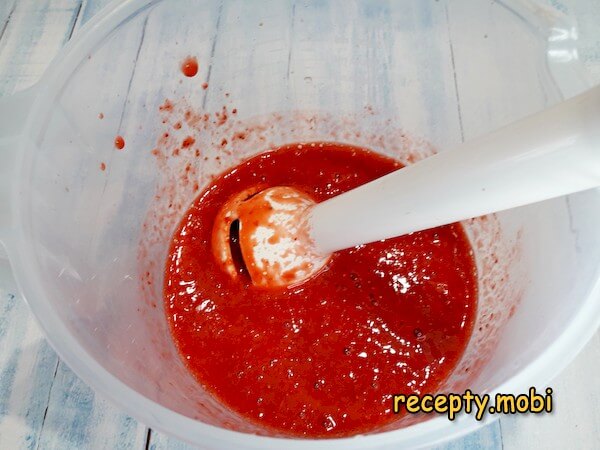
By this time the strawberries have dried off, so they can now be blitzed in a blender to a smooth, purée-like consistency.
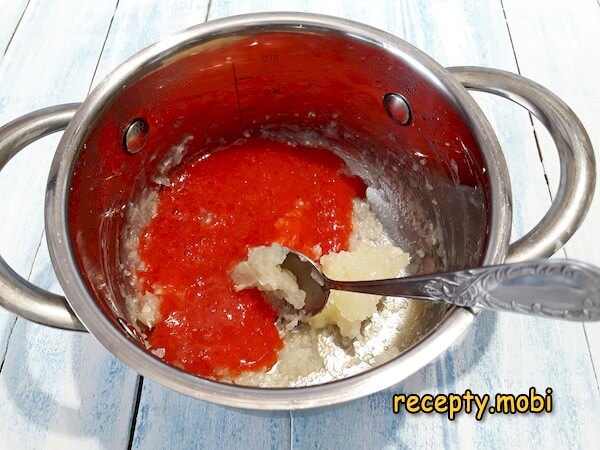
When the starch mixture has become warm, I add a couple of spoonfuls of the blended strawberries to it to even out the temperature. I rub everything together with a spatula or spoon.
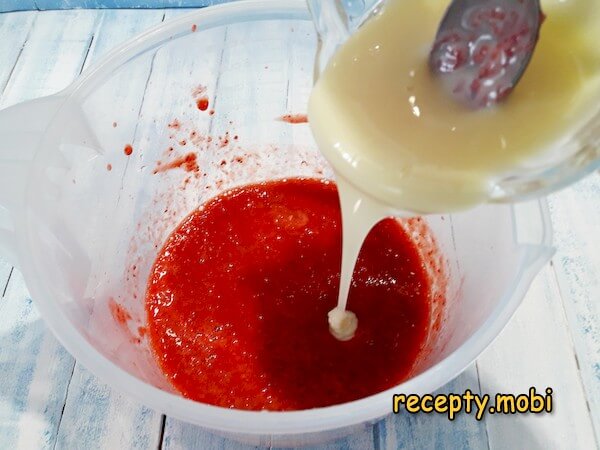
Into the main part of the strawberry purée I pour the condensed milk and the starch mixture.
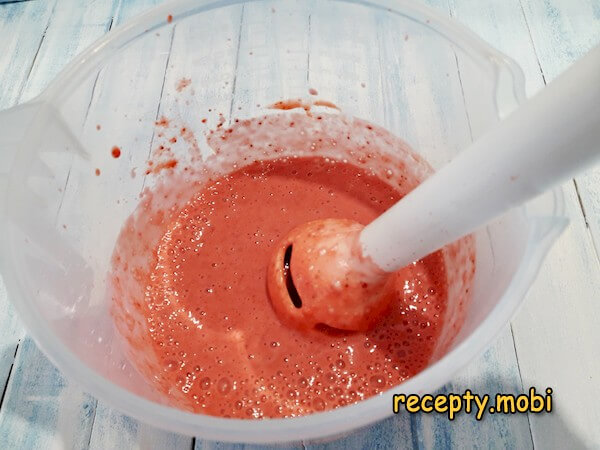
So that the mixture becomes uniform, with not the slightest lump left in it, and takes on a lovely pale-pink shade, I blitz it once more with an immersion blender.
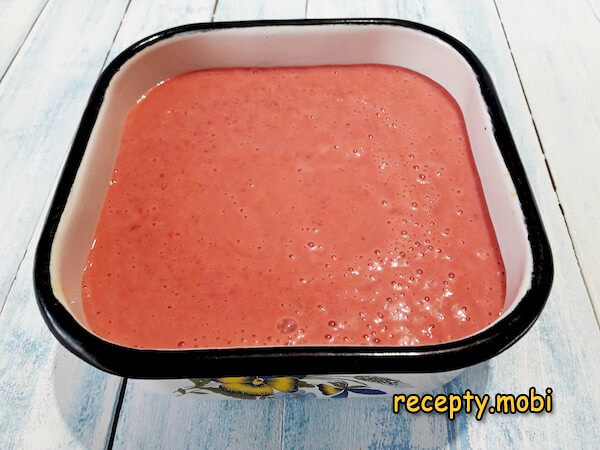
Now all that remains is to freeze the berry mixture. To do this, I transfer it to a container with a lid and put it in the freezer for a couple of hours.
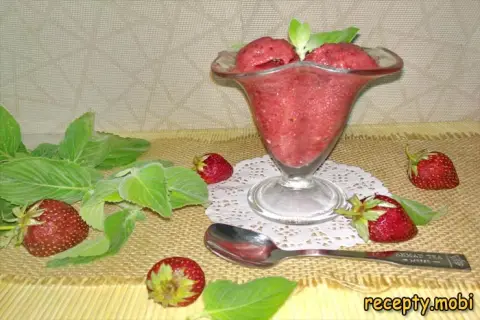
The strawberry sorbet is ready. Before spooning the ice cream into dessert bowls, I recommend letting it stand at room temperature for a little while – that way it scoops more easily. You can adjust the degree of freezing to your own taste – the sorbet can be eaten either slightly melted or in icy pieces. Strawberry ice cream drizzled with condensed milk or jam on top becomes even tastier and more appetising.



Tips
- 1
THE PERFECT STRAWBERRY – the secret of flavour. The strawberries do not undergo any heat treatment, so rotten or sour berries will spoil the sorbet. Use only sweet, ripe berries with no blemishes.
- 2
STARCH – the secret of shape. Without starch the sorbet turns into a hard block of ice. 20 g of cooked starch gives a tender, paste-like texture when frozen.
- 3
EVENING OUT THE TEMPERATURE – the secret of a smooth texture. A hot starch mixture added to cold purée will curdle into lumps. Stir 2 spoonfuls of purée into the starch first, and the temperatures even out.
- 4
LET IT THAW FOR 5 MINUTES – the secret of serving. Straight from the freezer the sorbet is hard and won't gather onto a spoon. 5 minutes on the worktop and it becomes perfect for scooping. The same principle works for other kinds of fruit sorbets and ice cream.
FAQ
Can I use frozen strawberries? +
Alternatives include: frozen "4 Seasons" strawberries (400 g – economical and convenient all year round), wild garden strawberries (400 g – premium and more aromatic), a mix of strawberries and raspberries (400 g – a premium mix), pitted cherries (400 g – a different flavour), blueberries (400 g – premium), raspberries (400 g – brighter acidity), and a mix of forest berries (400 g – premium). Fresh garden strawberries in summer are the premium option. Do not use berries covered in ice and frost (too much water) or strawberries with rotten patches. For the "classic" version, you must use fresh or good-quality frozen strawberries with no added sugar.
What can replace condensed milk? +
Alternatives include: white sugar (60 g – the classic choice), runny honey (60 g – premium and healthier), maple syrup (60 ml – premium and sugar-free), coconut condensed milk (85 g – vegan), agave syrup (60 ml – for a diet version), icing sugar (60 g – dissolves quickly), natural stevia (to taste – sugar-free) and boiled condensed milk (85 g – for a caramel note). Home-made farmhouse condensed milk is the premium option. Do not use a milk-containing product (one based on palm oil). For the "classic" version, you must use real sweetened condensed milk made to standard.
How long does strawberry sorbet keep? +
In the freezer, in a tightly closed container, it keeps for up to 2 months. For the best flavour it is better to eat it within the first 2 weeks, after which large ice crystals start to form. Before serving, let it stand for 5 minutes at room temperature. Once thawed, do not refreeze it, as the structure will break down completely. In the fridge at 0-4 °C it lasts no more than 4 hours (it melts into a milkshake). Freshly made after 2 hours of freezing it is at its best (tender texture). Do not leave it at room temperature for longer than 30 minutes. It is ideal to make ahead for hot days.
What should I serve strawberry sorbet with? +
A summer classic is with a scoop of vanilla ice cream alongside. Serve it with fresh strawberries, raspberries or blueberries; with a mint leaf for freshness; with chocolate sauce; with caramel sauce; with a drizzle of condensed milk on top; with strawberry or raspberry jam poured over; with mini savoiardi biscuits; with a wafer cone; with meringue drops; with thin chocolate wafers; with tiny basil leaves; with a cup of iced latte; with chilled prosecco (for adults); or with a drop of balsamic for the gourmets. For a "summer dessert" it is wonderfully versatile. This healthy sorbet suits a clean-eating menu, a children's party and a romantic evening alike.
- Comment
or post as a guest
Be the first to comment.