avg —
Pavlova with Berries

Instructions
Beat the egg whites to soft peaks. Preheat a conventional oven to 110 °C (230 °F). Draw a 20 cm (8-inch) circle on parchment and put it on a baking sheet marked side down. Beat the whites in a clean, dry, grease-free bowl until the tips curl over when you lift the whisk.
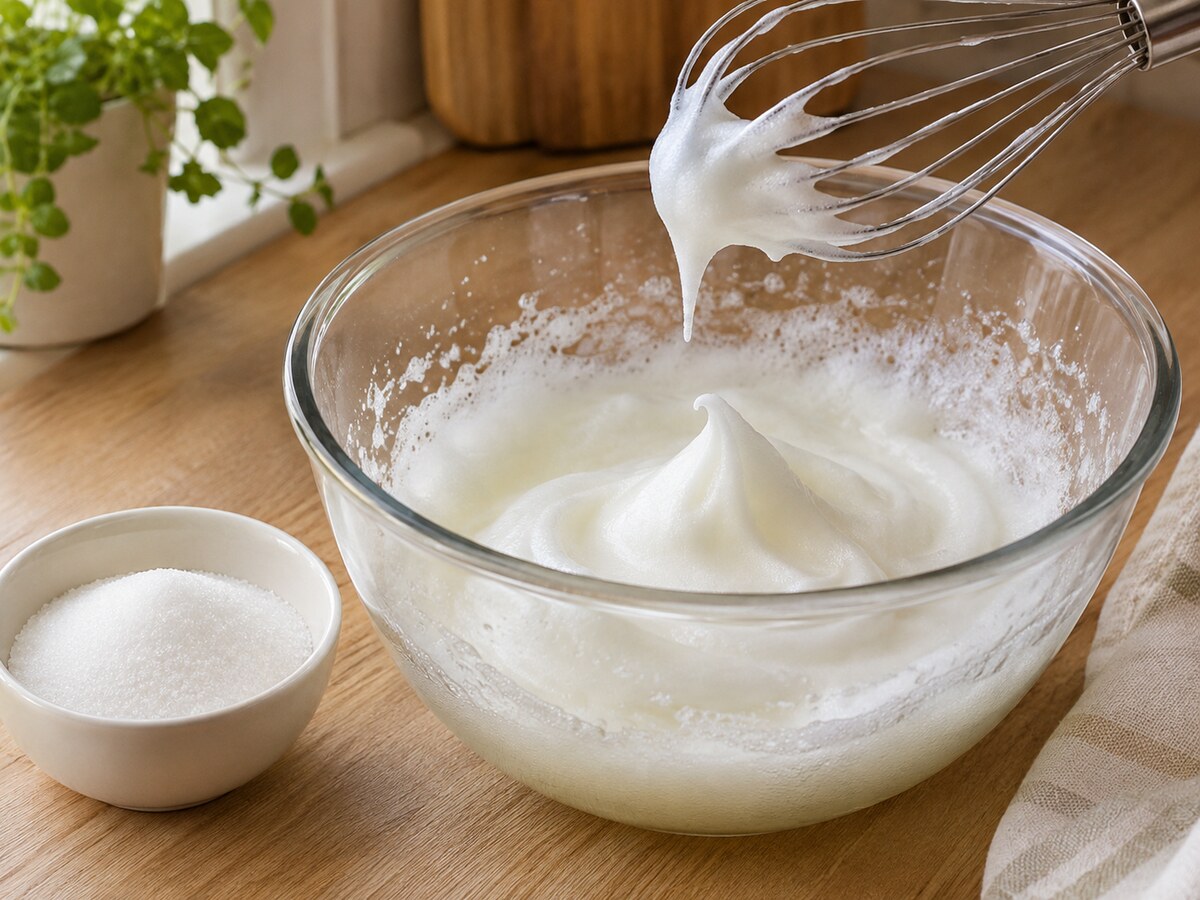
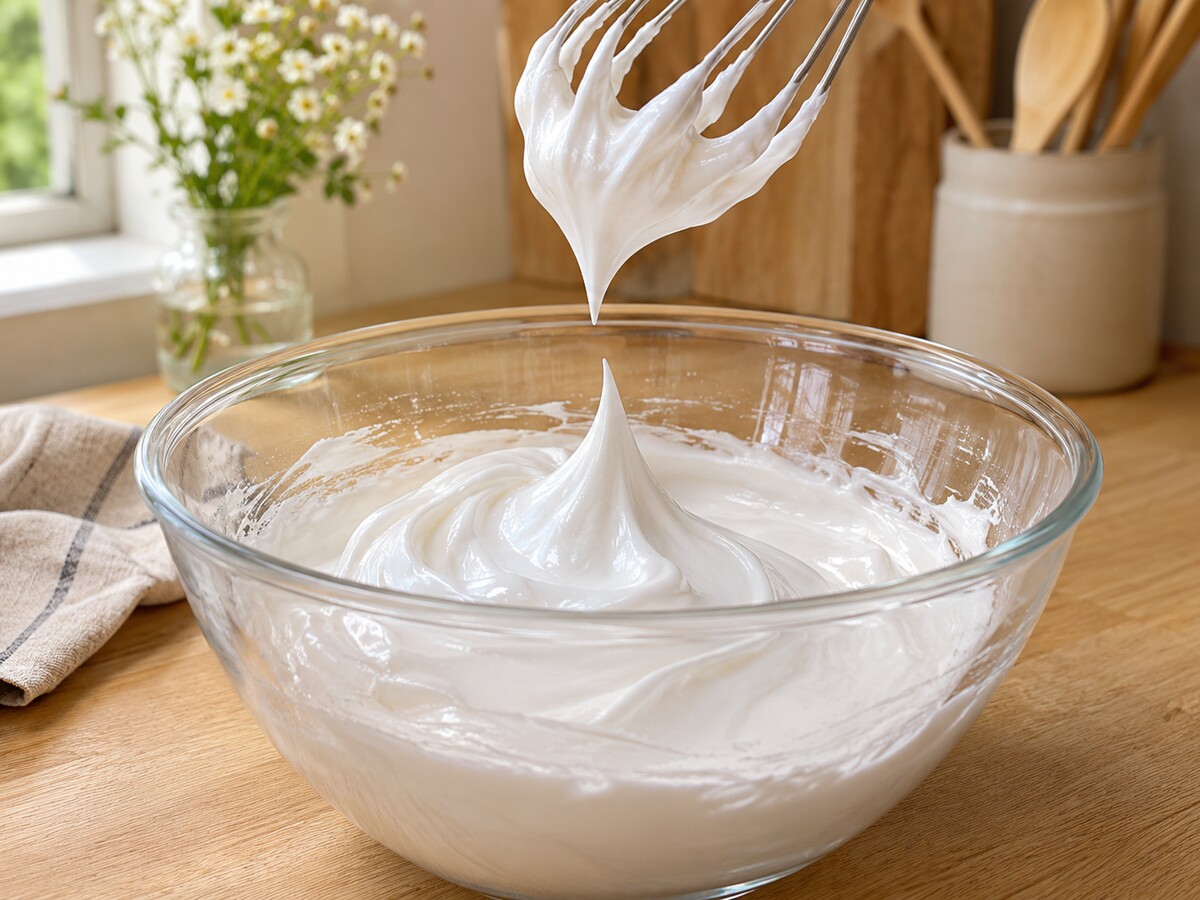
Dissolve the sugar in the meringue. With the mixer running, add the caster sugar in small amounts. Beat until the meringue is glossy and holds stiff peaks. Rub a dab between your fingertips. If you feel grains, whisk a little longer. Sift the cornstarch over the mixture, add the lemon juice and gently fold both in with a spatula.
Shape the shell. Spoon the meringue inside the circle. Make a wide, shallow well in the top with the back of a spoon. Keep the sides slightly higher than the centre without thinning out the base.
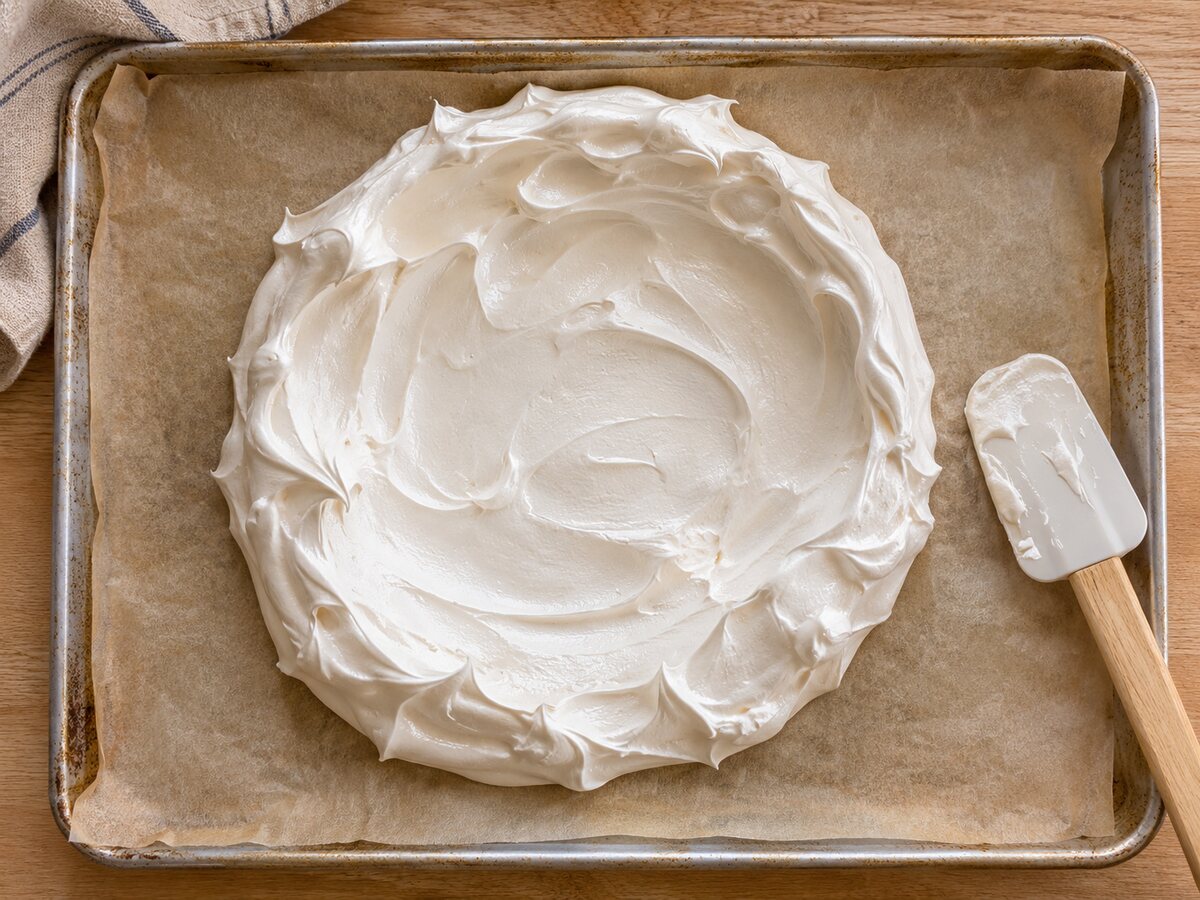
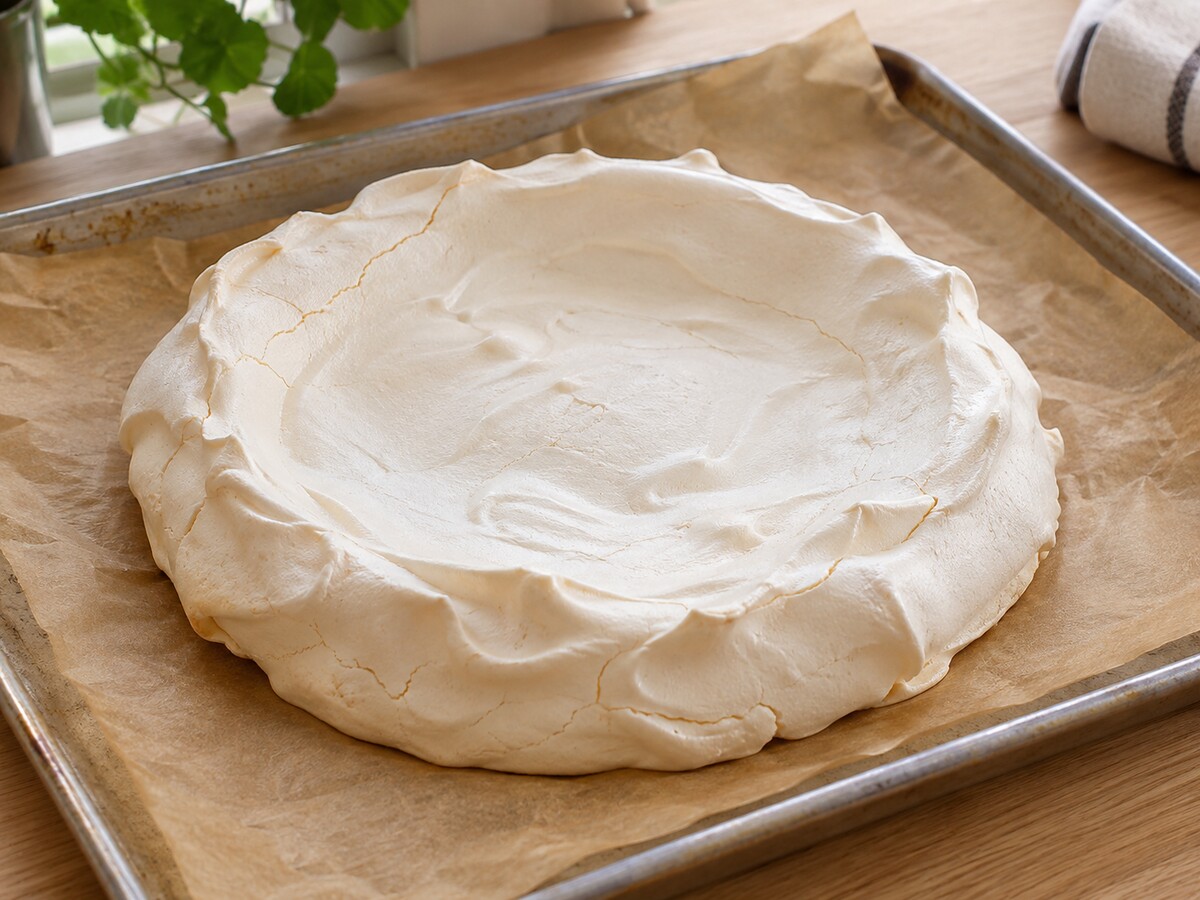
Bake and cool completely. Bake on the middle rack at 110 °C (230 °F) for about 90 minutes. The outside should be dry, firm and pale. Switch off the oven and leave the shell inside with the door closed for about 2 hours, or until completely cool. Fine cracks are normal.
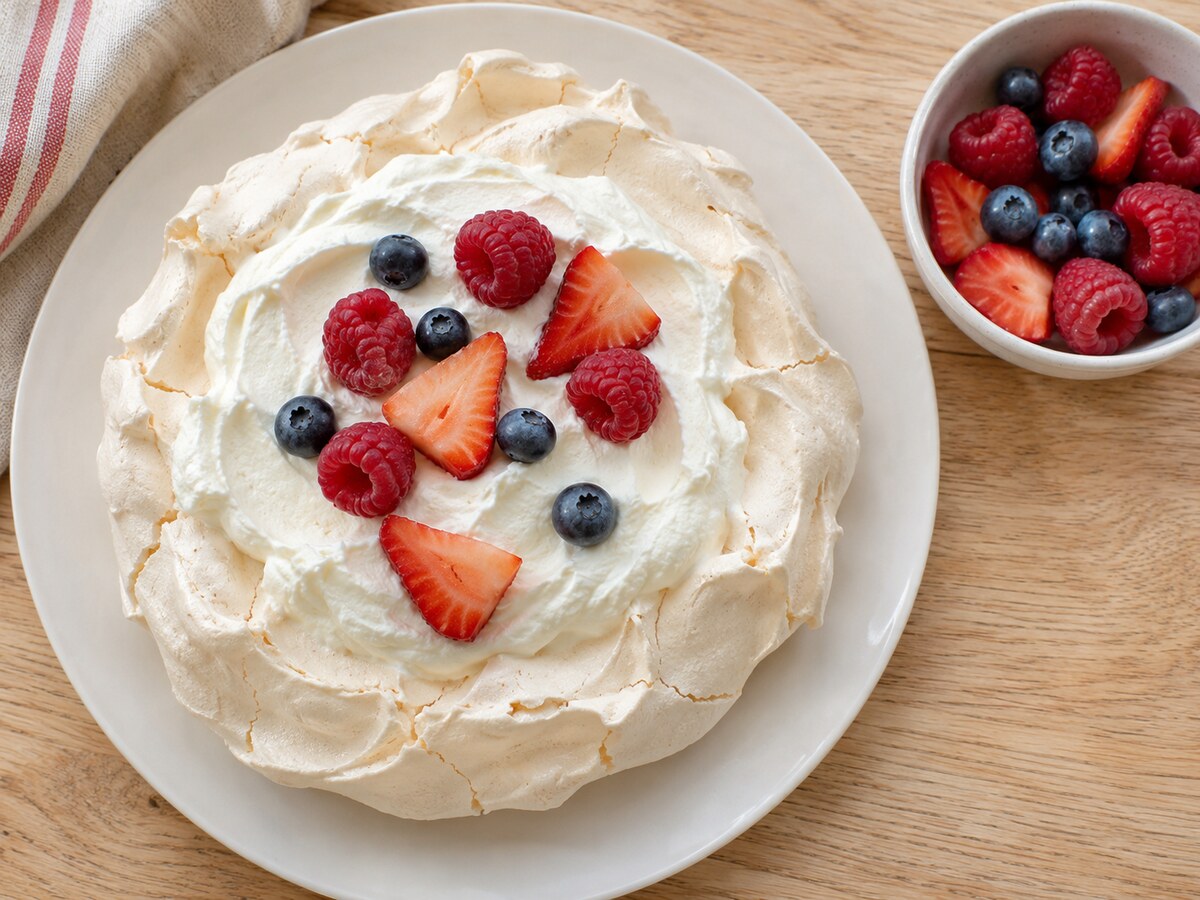
Add the cream and berries just before serving. Wash the berries and pat them dry. Slice the strawberries and leave the raspberries and blueberries whole. Whip the cold cream and icing sugar to soft peaks that hold on a spoon. Transfer the cool shell to a serving plate, spoon the cream into the well and add the berries.


Why pavlova cracks or turns sticky
Small cracks are normal. If the shell collapses badly, check whether the sugar was fully dissolved, the meringue held firm peaks and the shell cooled in the switched-off oven.
A soft centre is the point of a pavlova, but the outer shell should be dry. Humid air makes it absorb moisture faster, so store the cooled shell in an airtight container and do not top it in advance.
What you can make the day before
Bake the shell the day before. Once fully cool, keep it in a dry airtight container at room temperature. Keep the cream and berries separately in the fridge. Assemble only shortly before serving, since contact with cream softens the shell.
Yield, timing and estimated calories
One 20 cm shell serves 8. The estimated 4 hours include about 30 minutes of hands-on work, 90 minutes in the oven and about 2 hours cooling. If making more, bake two shells of the original thickness rather than one much thicker shell.
The estimate of 250 kcal per serving uses whipping cream at about 335 kcal per 100 g, plus sugar, egg whites, starch and berries. It varies with the cream, fruit and portion size. This recipe has not been kitchen-tested.
Another recipe to try
Recipe video: Pavlova with Berries
Important: Joy of Baking demonstrates whipping, shaping and topping a pavlova. The quantities and oven temperature differ from this recipe.
Illustrations are AI-generated.
FAQ
Can I use regular granulated sugar? +
Fine caster sugar dissolves more readily. Pulse coarse sugar in a blender until fine, but stop before it turns into a powder.
What if the shell cracks? +
A few small cracks are normal. Move the shell with a spatula and put the whipped cream in the well. Small cracks do not affect the taste.
Why use cornstarch? +
It helps keep the centre soft. Sift it over the whipped meringue and fold it in gently to prevent lumps.
Can I use frozen berries? +
Frozen berries release a lot of juice. Use them to make a thick berry sauce, cool it and serve it on the side to keep the shell crisp.
How do I know when the cream is ready? +
It will make soft peaks and hold on a spoon. Stop before the cream looks grainy.
When should I add whipped cream? +
Only once the shell is fully cool and just before serving. The longer cream sits on the shell, the more it softens.
- Comment
or post as a guest
Be the first to comment.