avg —
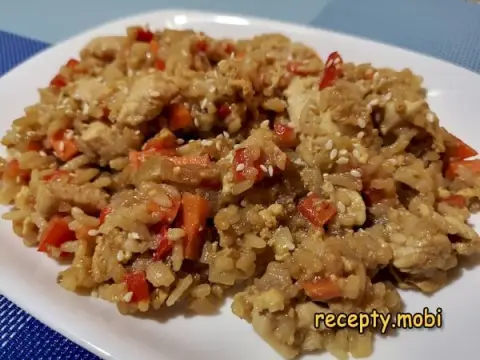
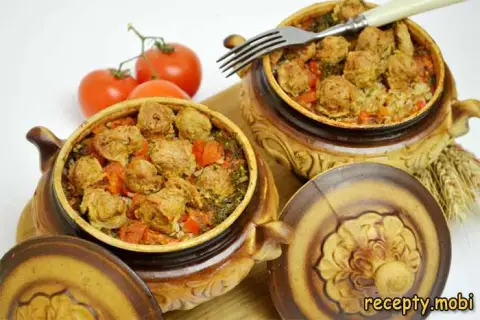
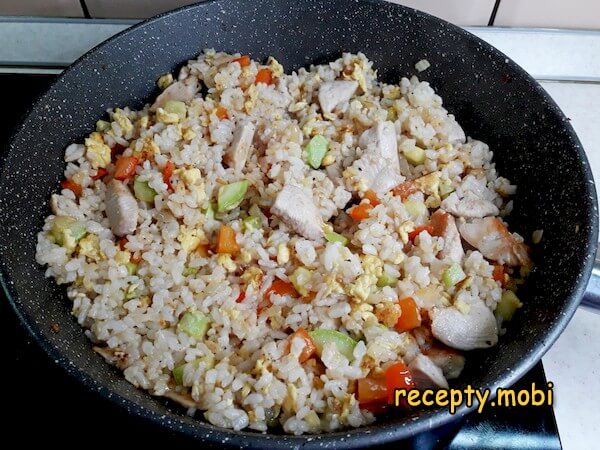
Takhana with chicken and vegetables

Instructions
I prepare the ingredients for the takhana with chicken and vegetables. The chicken breast can be swapped for boneless, skinless chicken thighs, which come out even juicier and are harder to overdry in the pan.
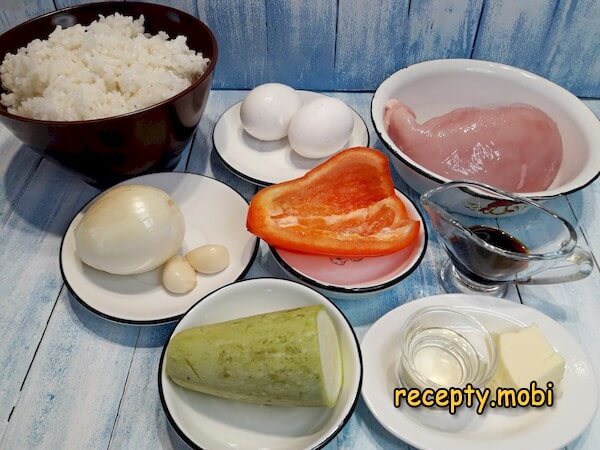
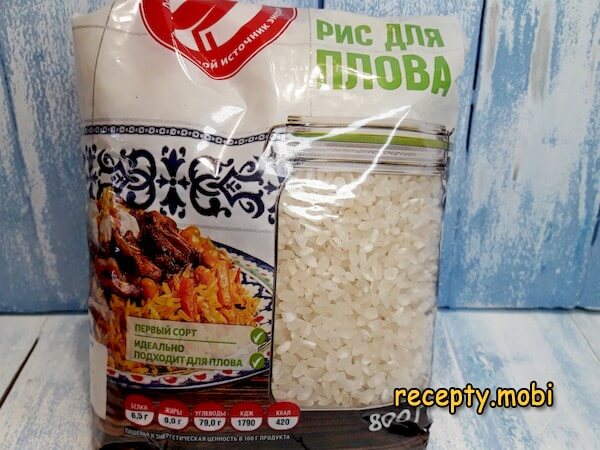
For this dish it is important to choose the right rice so that it does not turn into a slimy porridge. "Rice for pilaf" – long-grain and low in stickiness – works wonderfully, whereas round-grain Krasnodar rice or risotto arborio must not be used.
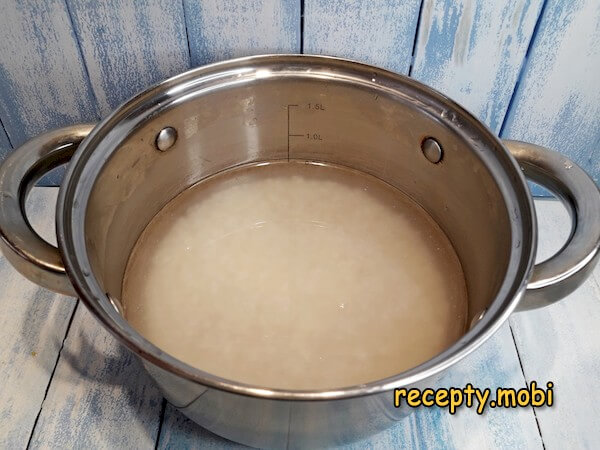
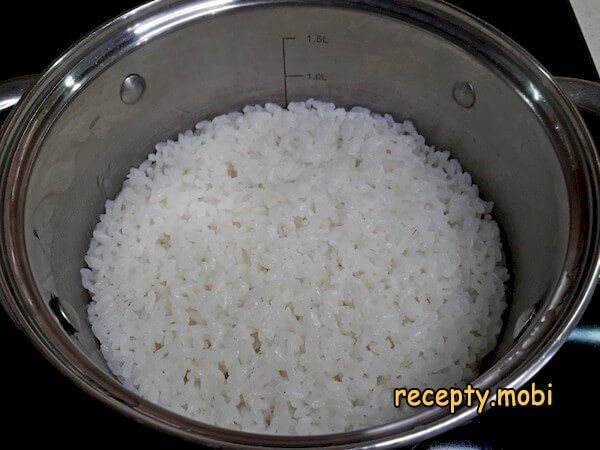
I rinse 200 g of raw rice several times in clean water – rinsing removes the excess starch so the grains do not stick together. Then I cover it with water 2 cm above the level of the rice. I cook it for 7–10 minutes from the boil, then take it off the heat and leave it covered for 5 minutes – the moisture works into the grain while there is no heat.
All the water should be absorbed and the grains should become plump and crumbly – this is exactly the rice that will not turn to mush during the later frying.
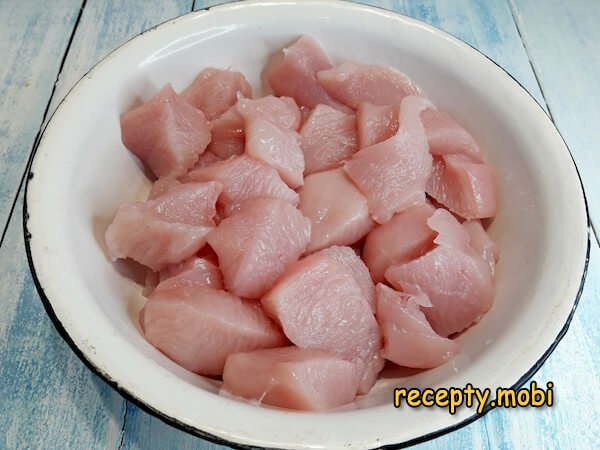
I cut the fillet into medium cubes – thin strips would dry out, while large pieces would not cook through in such a quick fry.
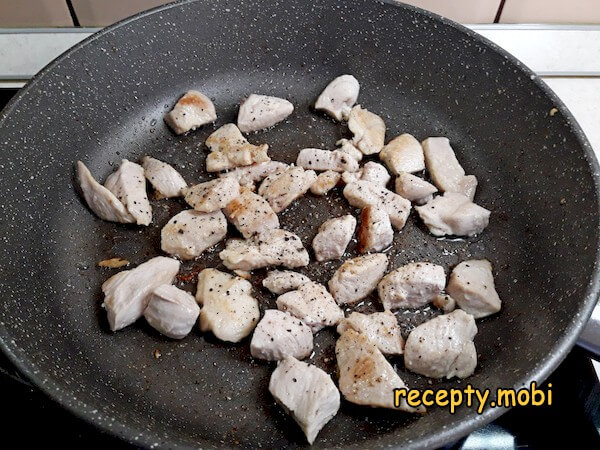
In hot vegetable oil I fry the pieces quickly until cooked through. At the end I salt and pepper them and move them to a separate plate. I do not wash the pan – the chicken juices and aroma left on it will be picked up by the vegetables in the next step.
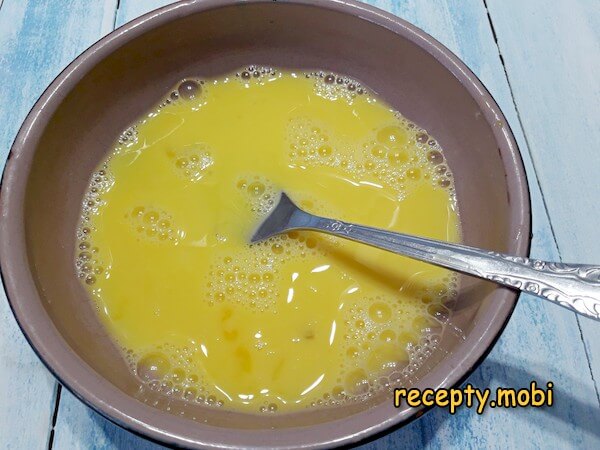
I whisk the eggs with a fork – with a fork, not a balloon whisk, so as not to beat air into them. Airy eggs would puff up into an omelette in the pan instead of breaking into pieces.
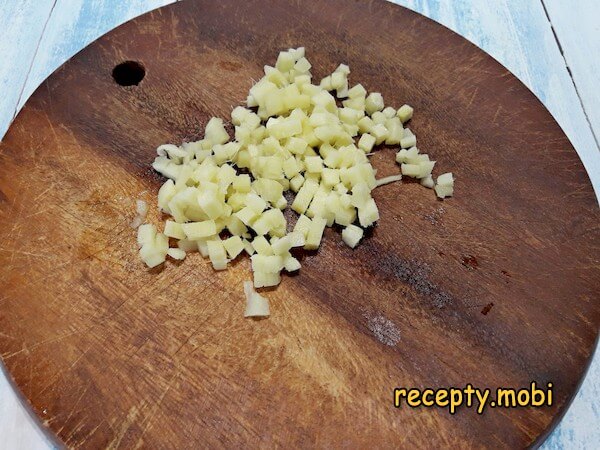
I scrape the skin off the ginger, the way you would a new potato, then cut it into a small dice – the finer it is, the more evenly its hot, spicy aroma spreads through the whole dish.
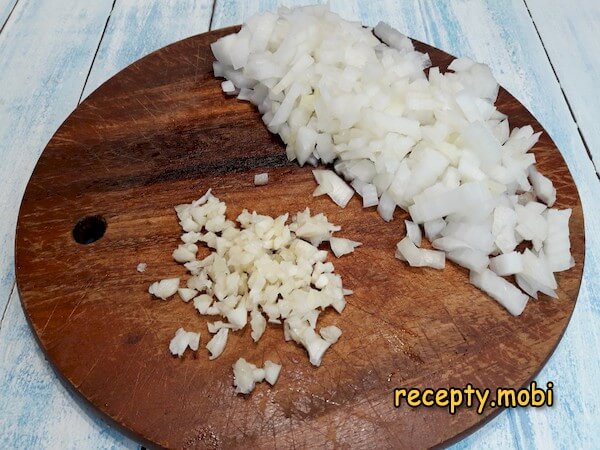
I chop the onion and garlic with a knife – with a knife, not a garlic press: a press squeezes out a bitter juice and gives an unpleasant sharpness.
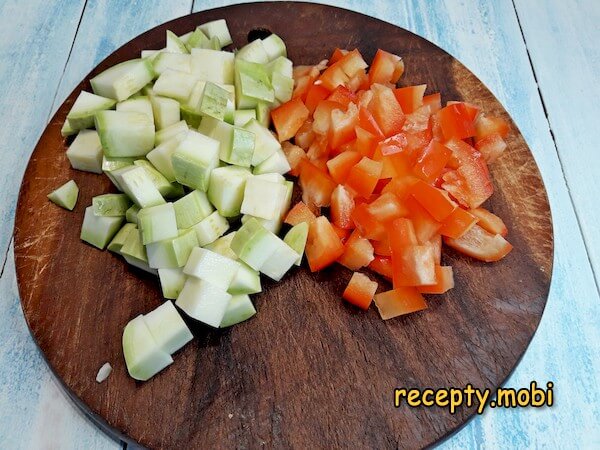
I cut the bell pepper and zucchini into small pieces – I do not peel the zucchini, as its skin is still tender and is not chewy in the finished dish.
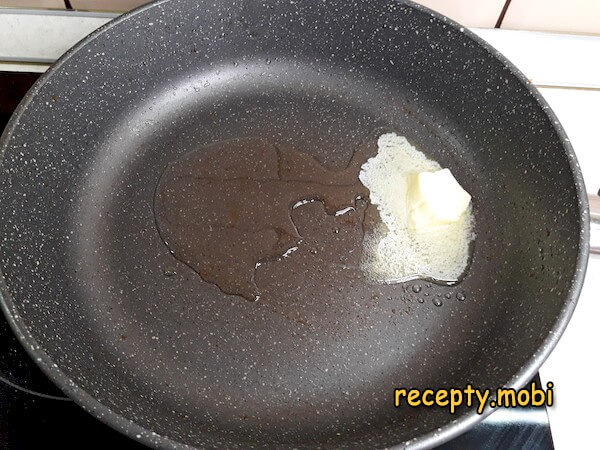
In the same skillet that held the chicken, I heat the vegetable oil and butter together – the butter adds a mellow flavour and the vegetable oil keeps it from burning.
I lightly sauté the onion and garlic there – just until a faint garlic aroma appears, not until they take on a browned colour. Deep frying would make them bitter, and bitterness has no place in takhana.
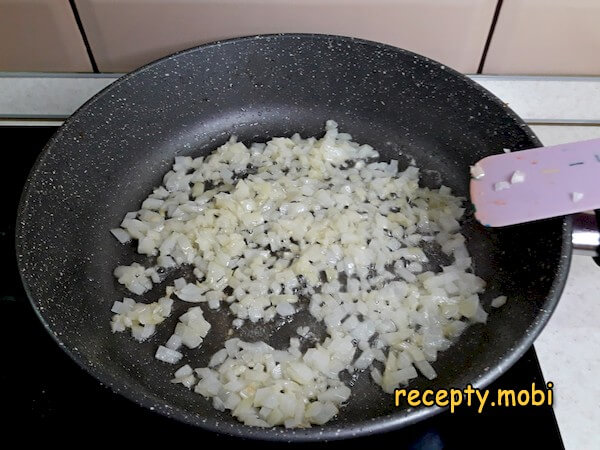
To the same pan I add the zucchini and bell pepper and sauté everything together for 1 minute – the vegetables should stay firm, not stewed soft.
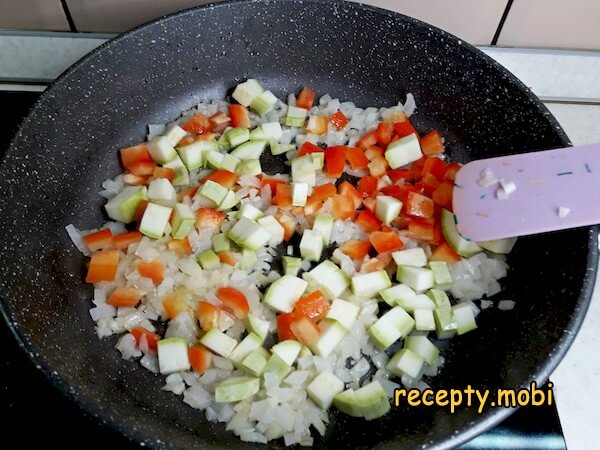
Next I add the ginger and keep the vegetables over medium heat for 2 more minutes – the ginger releases its aroma on contact with the hot oil.
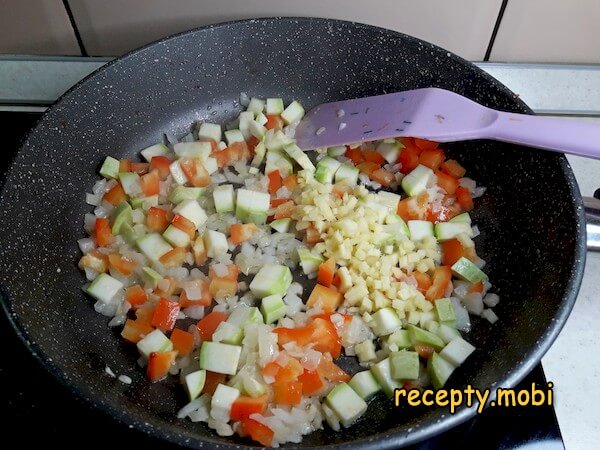
I pour the eggs into the skillet and quickly add a pinch of salt – the salt helps the egg white set quickly into the right structure.
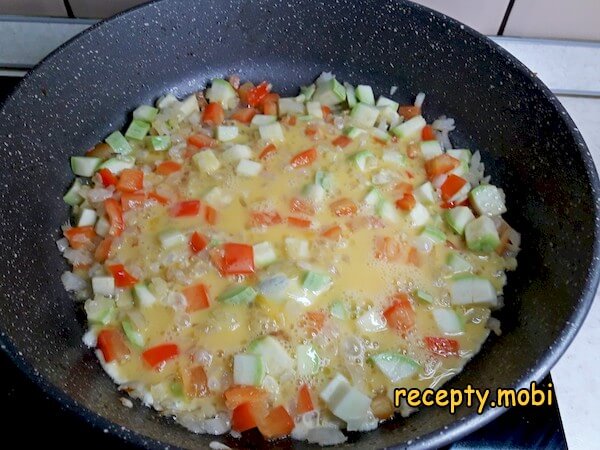
With a spatula I break the egg mass up into pieces so that no wet patches remain – the goal is exactly small flecks of egg, not one large sheet.
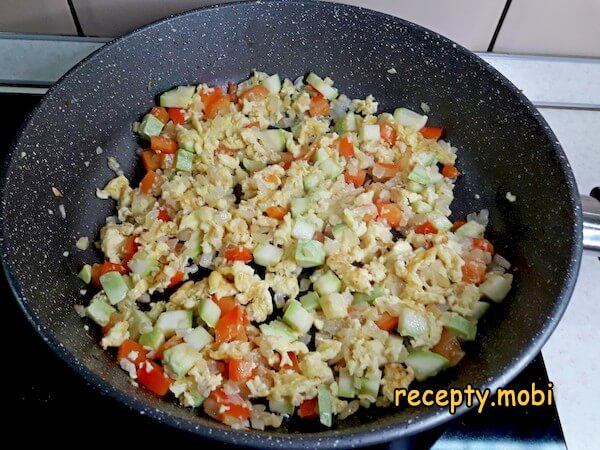
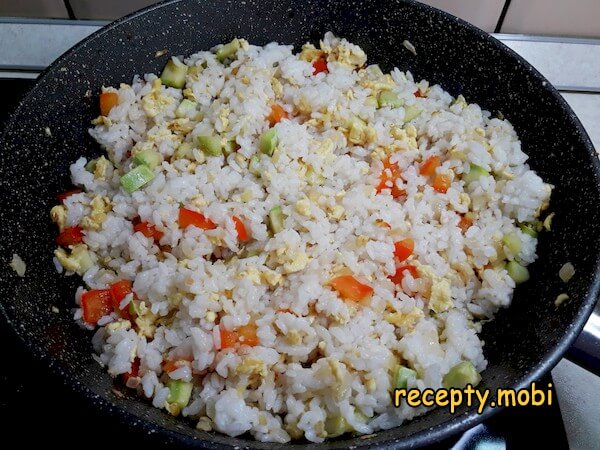
I add the rice to the common mass in the skillet, without turning off the heat. I stir – the rice should "roll" through all the oil and pick up the aroma of the onion, garlic, ginger, and egg.
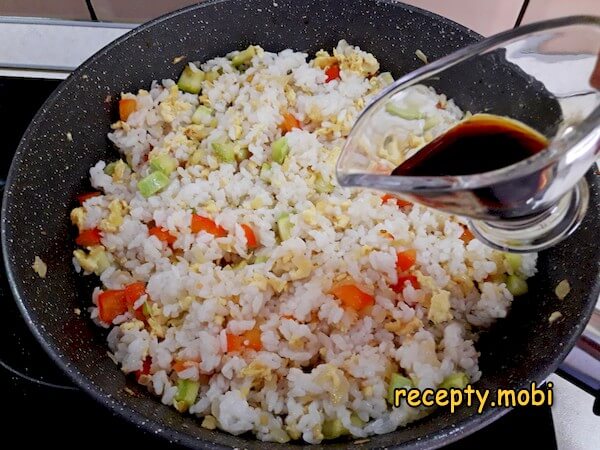
I add the soy sauce, pepper and, if needed, a little more salt. I stir-fry the whole mixture over high heat for about 3–4 minutes – the high temperature gives the characteristic wok aroma and the charred tips of rice.
Then I add the meat to the skillet – it is already cooked, so it only needs to warm through together with the rest of the ingredients.
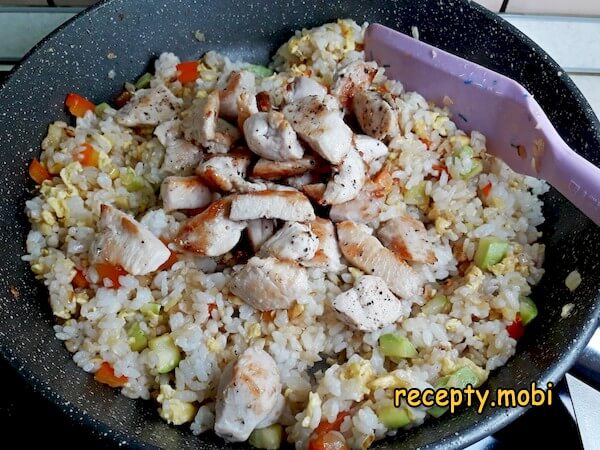
I mix everything and keep it on the heat for 1 more minute, then turn off the stove.


Tips
- 1
LONG-GRAIN RICE is the secret to a crumbly texture. With round-grain Krasnodar rice or arborio the dish turns into a sticky porridge. With long-grain "rice for pilaf" or basmati the grains stay separate and toast a little at the edges.
- 2
VEGETABLES KEPT CRISP are the secret to the Japanese texture. With long frying the vegetables cook down to a purée and the takhana becomes a "you can't tell what it is" dish. With 1–2 minutes over high heat the bell pepper and zucchini stay firm, as they should be in Eastern wok cooking. The same trick works in wok noodles with chicken and vegetables.
- 3
THE MEAT SEPARATELY, THEN TOGETHER is the secret to juiciness. Meat fried within the common mass dries out and turns rubbery. Fried separately and added at the end, it stays juicy and tender, and the vegetables and rice also keep their structure.
- 4
GINGER INTO HOT OIL is the secret to aroma. Raw ginger added to a finished dish gives a rough, hot taste. Fried with the vegetables in hot oil for 2 minutes, it reveals the soft, spicy aroma characteristic of Japanese cuisine. The same principle is used in buckwheat with soy meat and vegetables in pots.
Video

FAQ
Which rice is best for takhana? +
The "classic" choice is long-grain "rice for pilaf", basmati or jasmine (200 g raw, yielding 400 g cooked). Alternatives: Japanese "Nishiki", made especially for fried rice and rolls (premium, perfect texture); Indian basmati "Royal" or "Tilda" (premium, aromatic); Uzbek Devzira (premium for pilaf, also suitable for takhana). Do not use: round-grain Krasnodar rice (too sticky), parboiled rice (glassy, does not absorb the soy sauce), or brown or wild rice (a different texture and flavour that clashes with the Japanese style). Ideally, rice cooked the day before and chilled gives an even crumblier takhana.
What can replace soy sauce? +
The direct analogue is tamari (15 ml, the gluten-free version of soy sauce) or coconut aminos (20 ml, slightly sweeter). Alternatives: fish sauce "Nam Pla" (10 ml, stronger in flavour, so use less), Worcestershire sauce (15 ml, more sour, also works), or a mix of water and salt with a pinch of sugar (20 ml water + 1 tsp salt + a pinch of sugar – a minimal substitute). Do not use mushroom sauce or very sweet Eastern sauces – they will throw off the balance of the dish.
How long does ready takhana keep? +
In the fridge, in a tightly closed container, it keeps for up to 2 days without loss of quality. It is not worth keeping longer: the rice loses its texture and the vegetables go limp. In the freezer it can be stored for up to 1 month, but after thawing the rice becomes watery and loses its depth of flavour. Before serving I reheat it in a skillet with a spoonful of vegetable oil over high heat for 2–3 minutes – the aroma comes back and the texture stays crumbly. In the microwave, 2 minutes covered – less ideal, as the rice dries out at the edges. It is best to cook it in portions and eat it fresh.
What to serve with takhana? +
Takhana is a standalone dish, but it is traditionally served with: soy sauce (separately, for those who like it saltier), miso soup, wakame (marinated seaweed), pickled ginger gari, and wasabi. With alcohol: Japanese beer "Asahi" or "Kirin", sake warm or cool, green tea. In the European manner: with a light vegetable salad, or with fresh cucumbers and tomatoes. Sesame seeds on top are an essential garnish – without them the dish loses 30% of its flavour. It works universally for a family lunch and for a light supper.
- Comment
or post as a guest
Be the first to comment.