avg —
Chicken Heart Rice Pilaf with Carrots and Garlic

Instructions
Prepare the hearts and rice. Thaw the hearts in the fridge. Trim the vessels and excess fat, halve each heart lengthwise and remove any clots with the tip of a knife. Do not rinse raw poultry offal under running water. Pat dry with paper towels. Rinse the rice several times, drain well in a sieve and do not soak it. Dice the onion and cut the carrot into thin matchsticks. Remove only the loose outer skin from the garlic bulb.
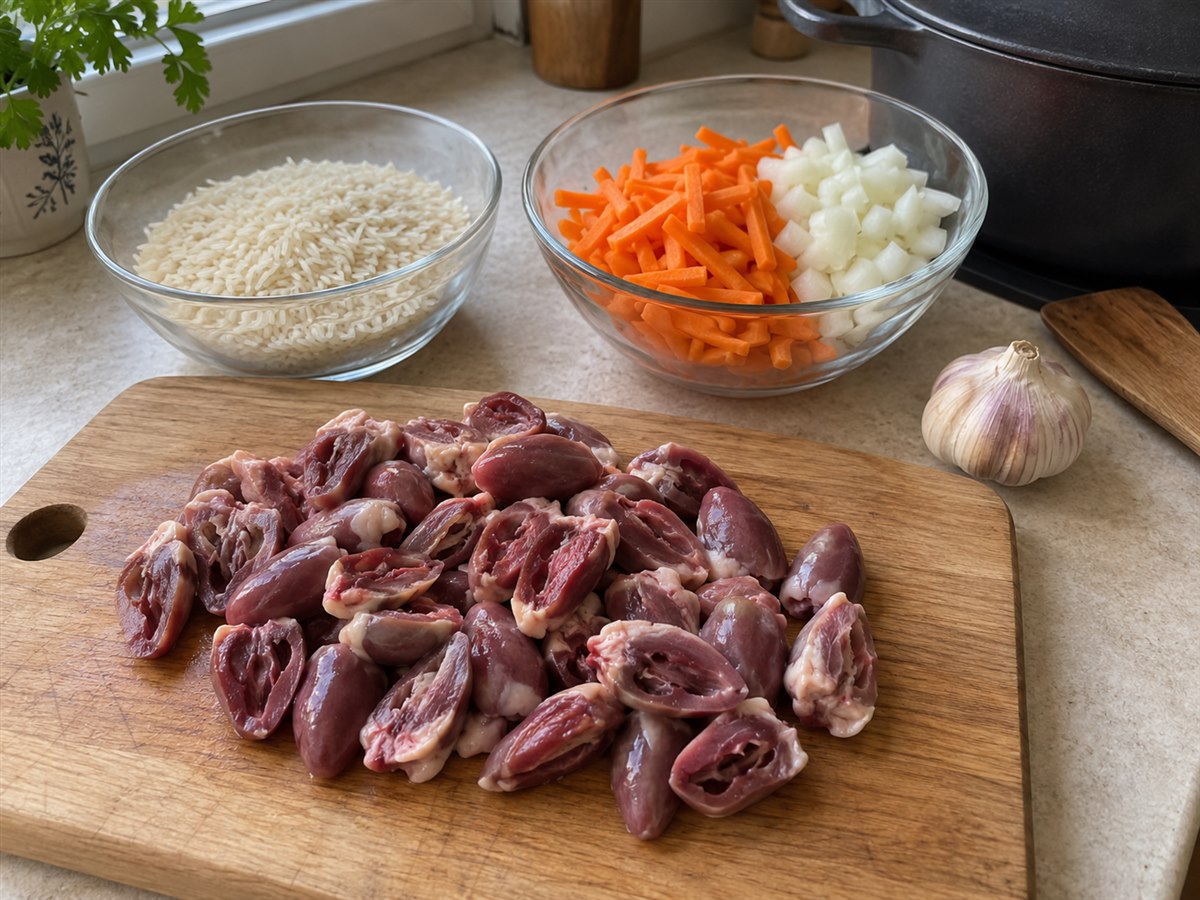
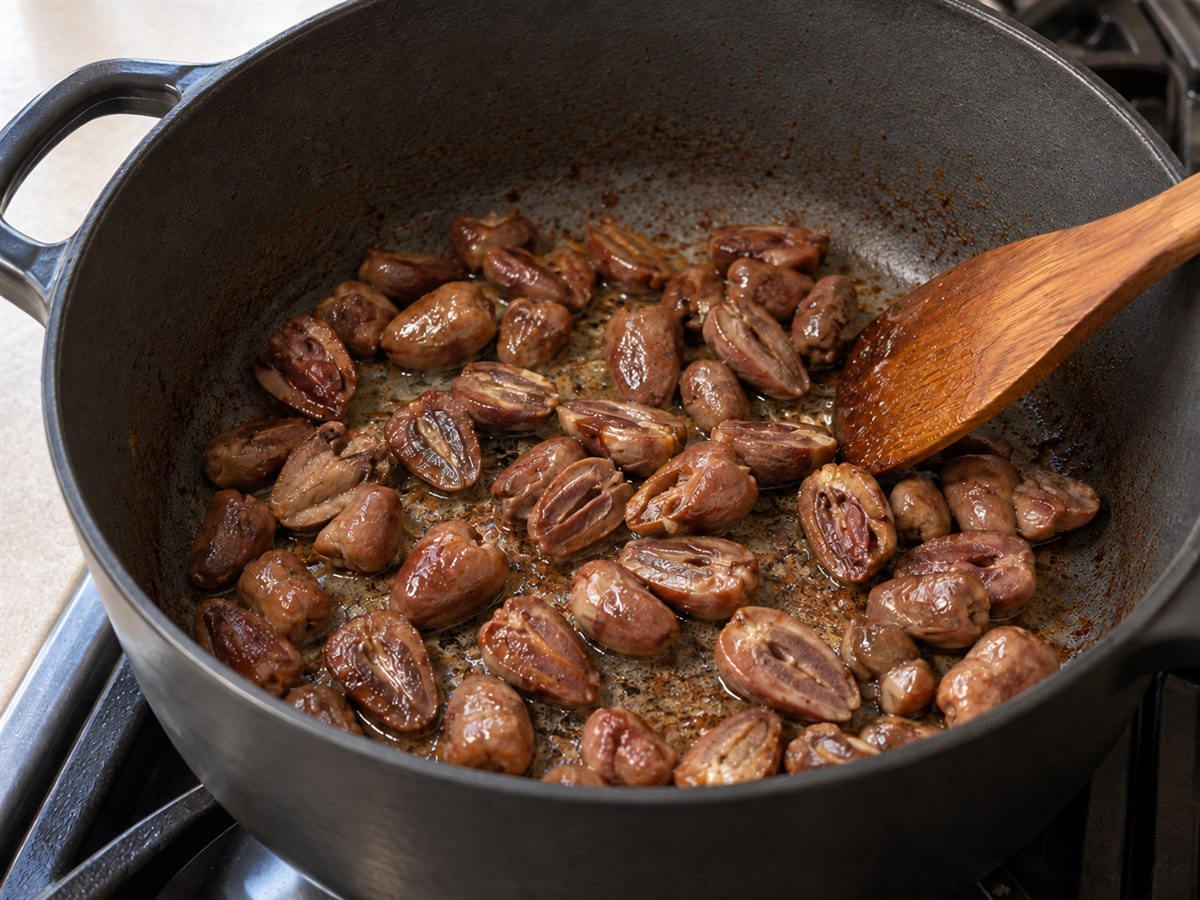
Brown the hearts. Heat the oil in a heavy pot or Dutch oven of about 4 litres. Add the hearts in two batches and fry over medium to medium-high heat for 6-8 minutes in total, stirring. They should change colour and lightly brown. If they release a lot of liquid, let it evaporate first. Return all the hearts to the pot.
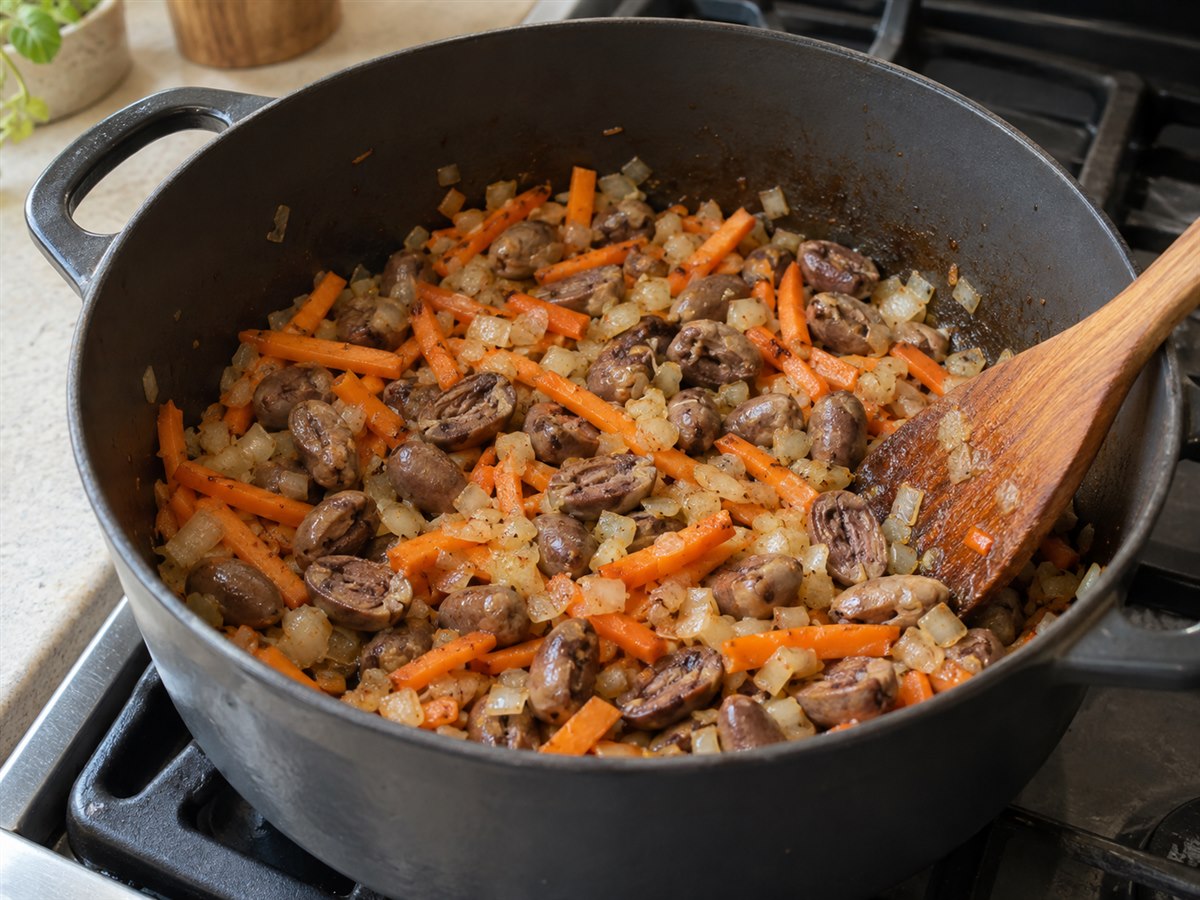
Add the vegetables. Add the onion and cook for 3-4 minutes. Add the carrot and cook for another 5 minutes, stirring gently. The vegetables should soften without burning. Add half the salt, the cumin seeds and black pepper.
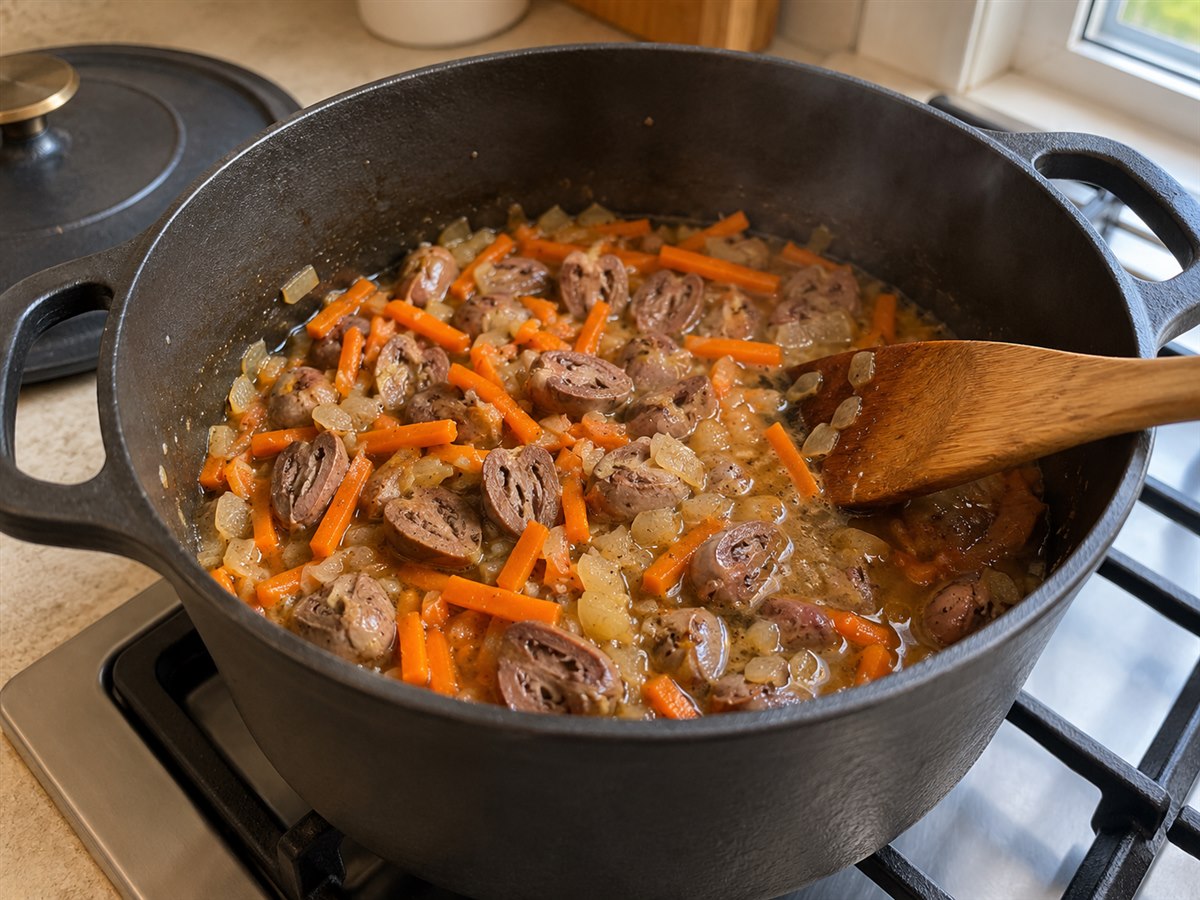
Braise until tender. Pour in the hot water listed for braising the hearts. Bring to a gentle simmer, cover and cook over low heat for 25-35 minutes. Check a large heart: it should cut easily and feel tender when tasted, and must reach 74 °C or 165 °F before tasting. If still tough, keep braising, adding a little hot water if needed.
Measure the rice water. Once the hearts are tender, uncover and evaporate the free broth: leave the oil and moist vegetables, but no pool of liquid in the bottom. Spread the rice in an even layer without stirring it into the hearts. Carefully pour in the water listed for the rice, add the remaining salt and nestle the garlic bulb in the centre. Bring to the boil.
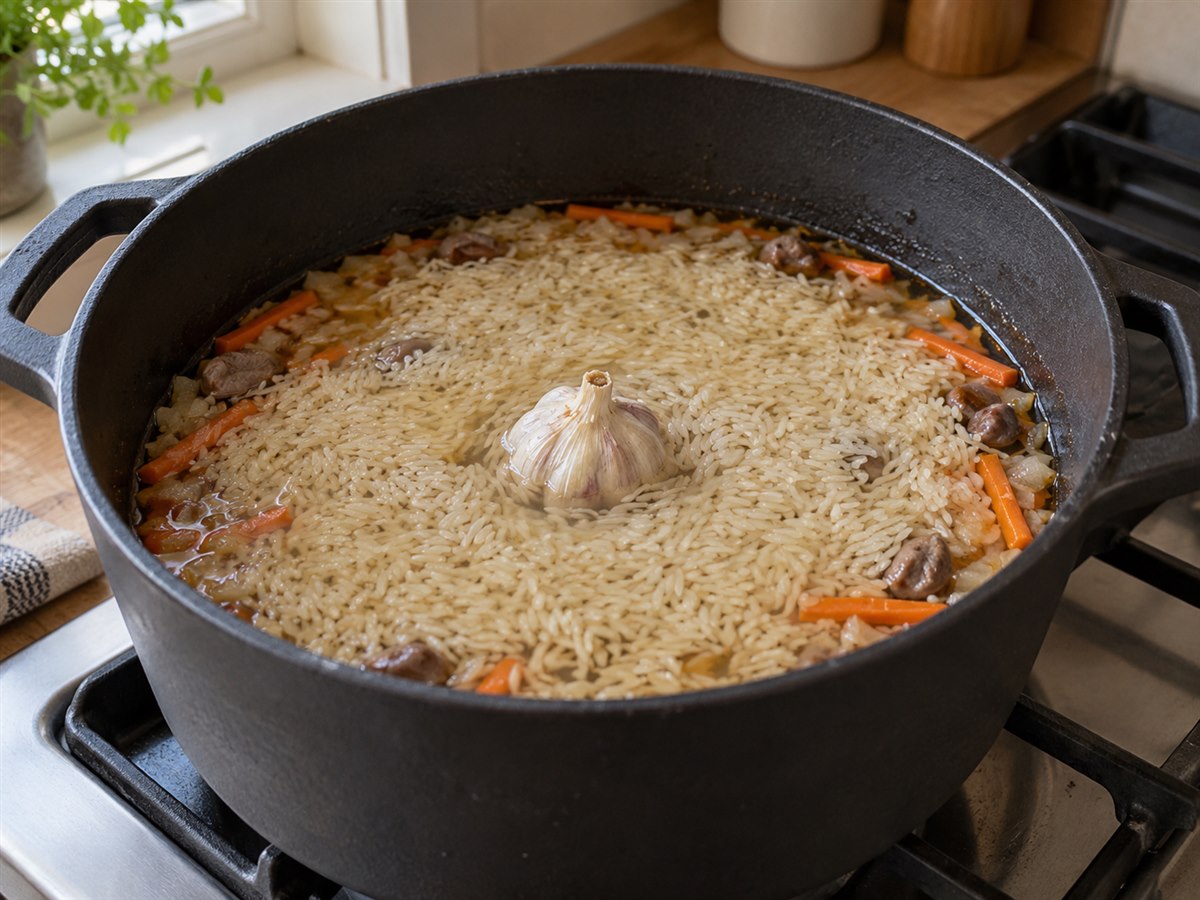
Cook with the lid on. Reduce the heat to its lowest setting, cover tightly and cook for about 20-25 minutes. Do not stir after adding the rice. Near the end, check a grain and the bottom beside the pot wall: the rice should be tender with no free water left. If the rice is firm and the pot is dry, make a few holes down to the bottom, add a little boiling water and cook covered for another 5 minutes.
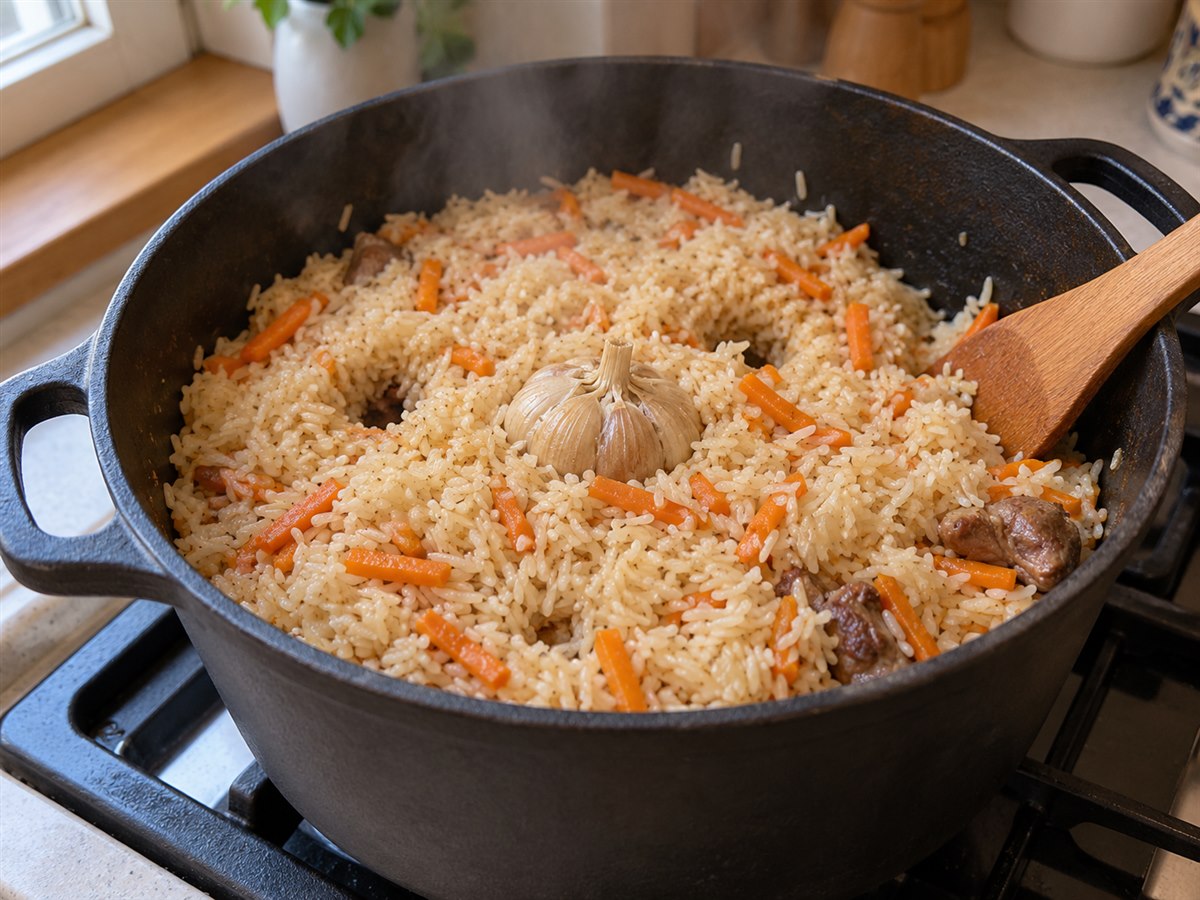
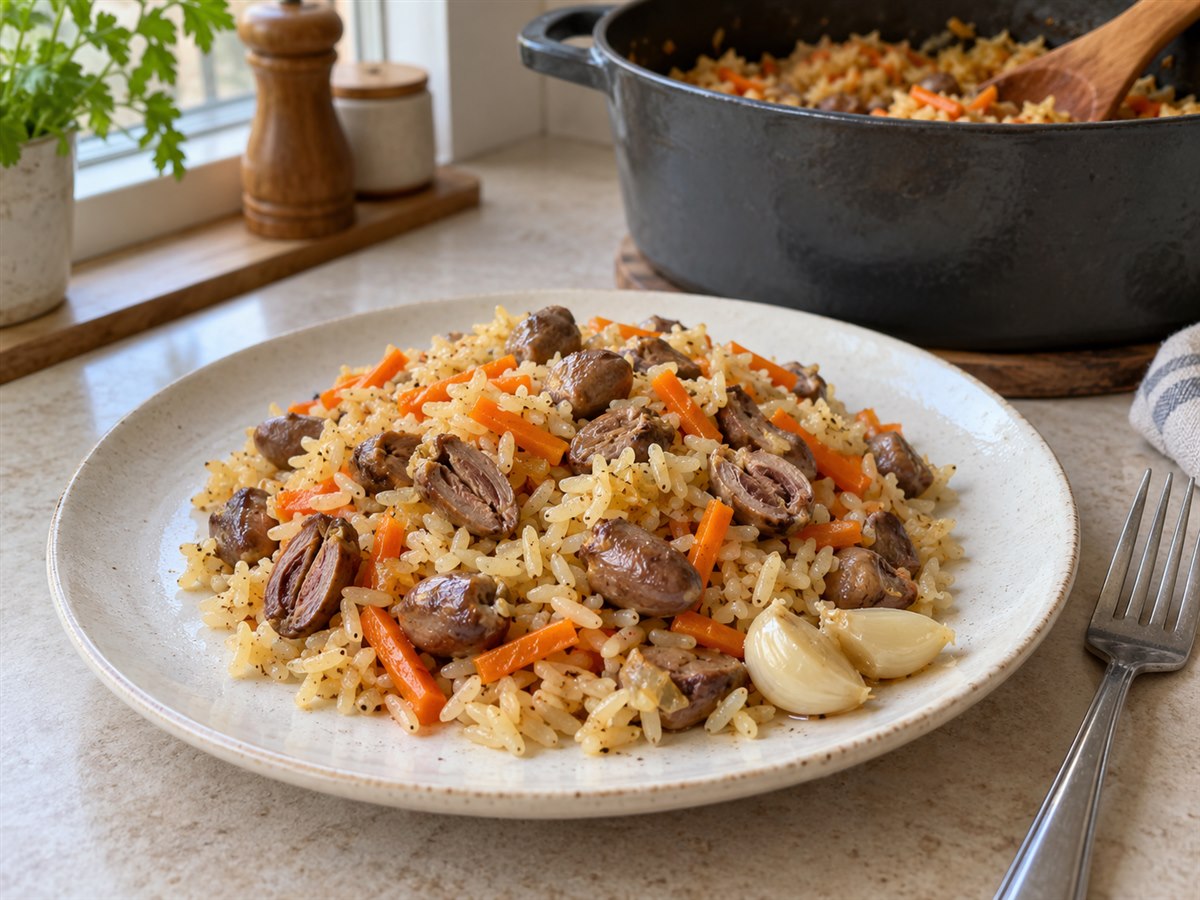
Rest and serve. Turn off the heat and leave the pilaf covered for 10 minutes. Remove the garlic and gently fold the rice, hearts and vegetables together from the bottom. Divide into portions and serve hot. Squeeze the soft garlic cloves out of their skins onto the plates if you like.


Choosing rice and a cooking pot
The main method uses long-grain parboiled rice without soaking. Check the packet and adjust the water if the manufacturer recommends a different ratio. Basmati and regular long-grain rice may need different amounts. Do not mix rice varieties in the same pot.
Use a heavy pot or Dutch oven of about 4 litres with a tight-fitting lid. A deep skillet can work, but water evaporates faster from a wide pan. If you increase the servings, increase the pot size as well as the ingredient amounts.
Why the water is added in two stages
The first amount of water is for braising the hearts. Evaporate the free broth before adding the rice so that it does not count as extra rice water. Then add the separately measured water for the grains. The base recipe uses 300 g dry rice and 600 ml water. These are weight and volume measurements, not equal-sized cups.
The serving calculator changes the ingredient quantities. Do not multiply the braising time by the number of servings: check tenderness separately. Peeled garlic cloves can replace the whole bulb by weight.
Troubleshooting chicken heart pilaf
- Chewy hearts. Braise longer before adding rice. A change of colour alone is not enough.
- Firm rice and a dry pot. For the base recipe, pour 30-50 ml boiling water through holes in the rice and cook covered for another 5 minutes. This is an adjustment based on the rice texture, not an obligatory extra ingredient.
- Cooked rice with water left. Uncover and gently evaporate the free liquid without stirring. Already mushy grains cannot become separate again.
- A scorching bottom. Lower the heat. Next time use a heavier pot and check that the lid fits tightly.
Serving and variations
This is a complete main dish, so fresh vegetables or a simple salad are enough on the side. For another way to cook the same ingredient, try chicken hearts in cream sauce. Do not replace hearts with gizzards and expect the same timing: gizzards can need substantially longer braising.
Calories and storing leftovers
About 460 kcal per one-sixth of the recipe is an estimate based on the raw ingredients, not a laboratory measurement. Using less oil changes the estimate. To calculate calories per 100 g, weigh the finished pilaf without the pot because evaporation affects the final weight.
Cool leftovers quickly in small portions in shallow containers and refrigerate ideally within one hour. Keep at 4 °C or below for up to 24 hours. Reheat only once to 74 °C or 165 °F in the centre. Do not leave a pot of rice on the stove overnight.
Recipe video: Chicken heart rice pilaf
Important: The Russian-language video shows a related method. Follow this recipe for the water amounts and braising sequence.
AI-generated images illustrate the recipe steps.
FAQ
How long should chicken hearts simmer before adding rice? +
Allow about 25-35 minutes after browning. Check a large piece for tenderness before adding the rice. Larger or tougher hearts may need longer; add hot water if the pot starts to dry out.
How much water does 300 g rice need? +
This recipe uses 600 ml water for rinsed but unsoaked long-grain parboiled rice, after the free braising broth has evaporated. Check the packet if using another type: 600 ml is not a universal amount for every rice variety.
Do I need to boil the hearts separately? +
No. Brown and braise them with the vegetables in the same pot until tender. Avoid cooking raw or tough hearts and rice from the start together, because the rice cooks faster.
What kind of rice works best? +
Use long-grain parboiled rice for this method. Short-grain rice, basmati and soaked rice absorb water differently, so do not use them with the same water amount without adjusting it.
Can I make chicken heart pilaf in a multicooker? +
Yes. Brown the hearts and vegetables on the saute setting, then braise the hearts until tender. Evaporate the free broth before adding the rice. Use the water amount and rice or pilaf programme advised for your particular cooker, rather than copying the stovetop ratio automatically.
Why are the hearts still chewy? +
They probably needed more braising time before the rice went in. A safe internal temperature does not necessarily mean a tender texture. Keep simmering gently until tender, then add the rice.
Why did the rice turn mushy? +
Too much leftover broth, an unsuitable rice variety or cooking for too long can make it mushy. You cannot restore the original grain shape. Next time evaporate the free broth and measure the rice water separately.
How long can I keep chicken heart rice pilaf? +
Divide leftovers into small portions in shallow containers, cool quickly and refrigerate ideally within one hour. Keep at 4 °C or below for up to 24 hours. Reheat only once to 74 °C or 165 °F in the centre. Do not leave the pilaf in a warm pot for hours.
- Comment
or post as a guest
Be the first to comment.