avg —
Kuchmachi Georgian Style

Instructions
I prepare the ingredients for the kuchmachi Georgian style. If you like, the lemon juice can be replaced with pomegranate juice, of which you will need 50 ml – pomegranate juice gives the dish a more "Georgian" character.
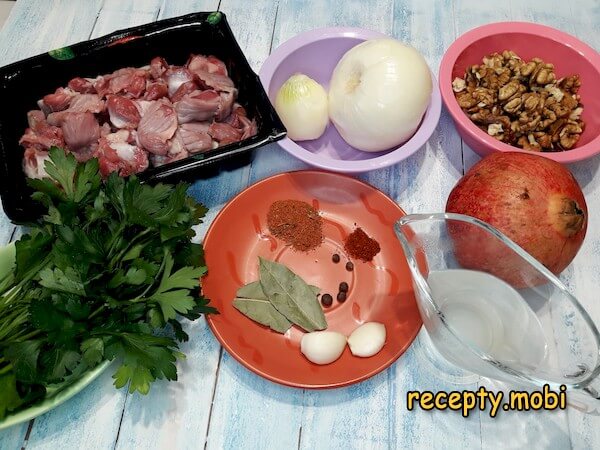
I rinse the gizzards well, trim away any remaining traces of bile, place them in a pot and cover with water – bile gives bitterness, so I always remove it.
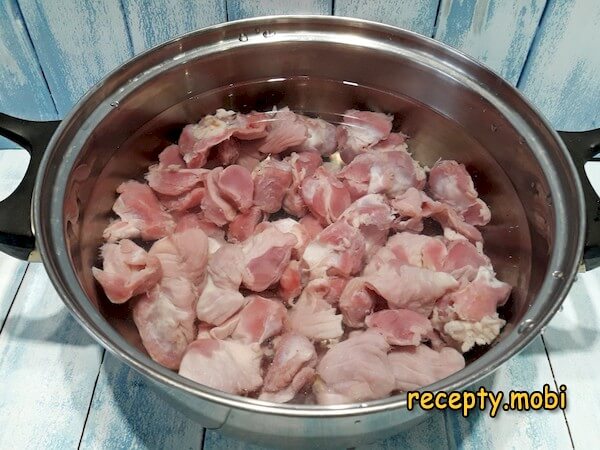
I let the liquid come to a boil (without covering the pot). A vigorous rush of foam begins. Let the gizzards bubble for about 5 minutes. Then I drain the water, rinse the offal and refill the pot with clean water – this is the secret to a clear broth and a neutral flavour in the giblets.
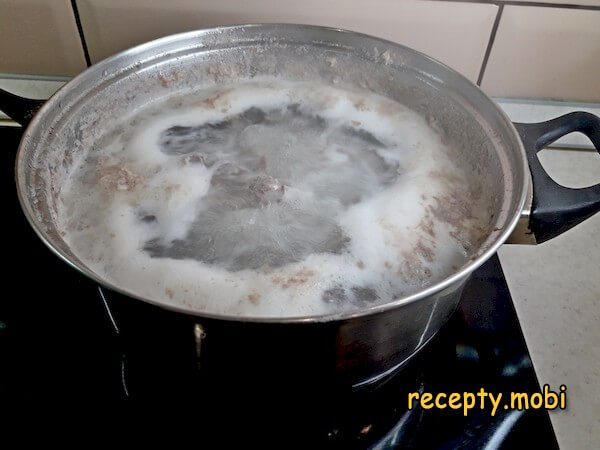
I put the pot back on the heat, add 50 g of onion (a piece cut off whole, without chopping it), the bay leaves and the allspice berries – the aromatic base for the broth.
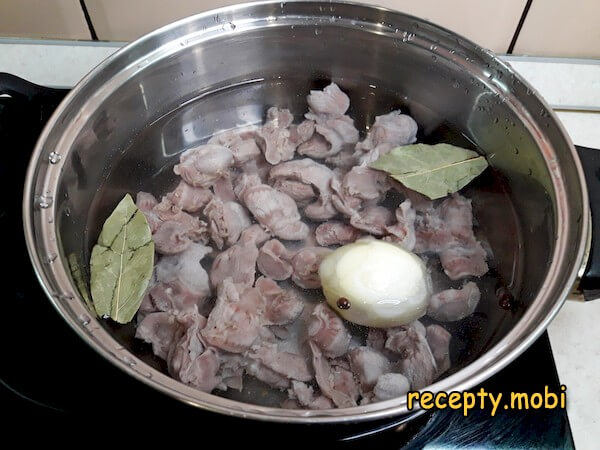
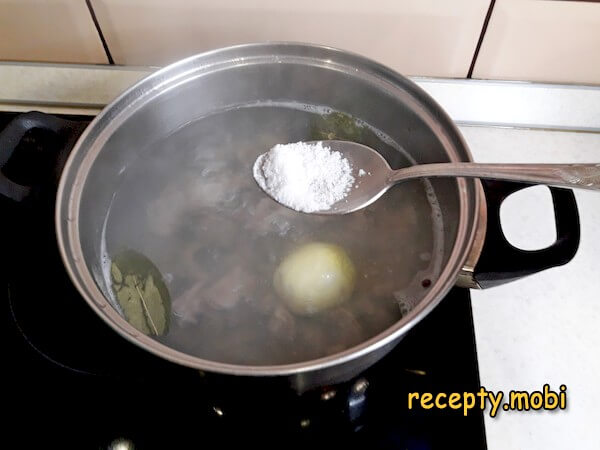
Once it comes to a boil, I salt the mixture and cook it covered over low heat for about two hours – the longer the gizzards cook, the softer and tastier they become. This is the secret to tender giblets.
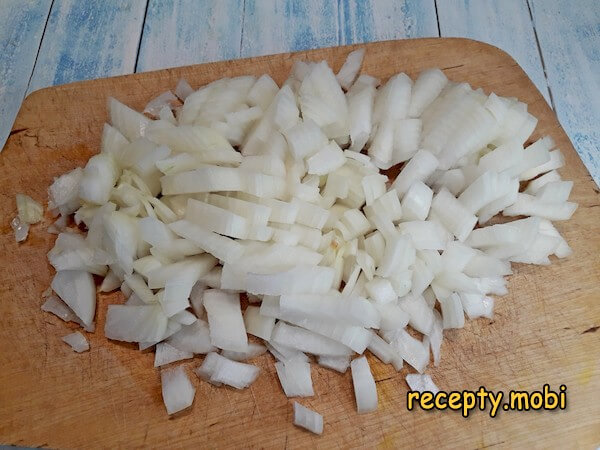
While I have some free time, I prepare the onion, cutting it into small cubes – for the onion dressing to come at the end.
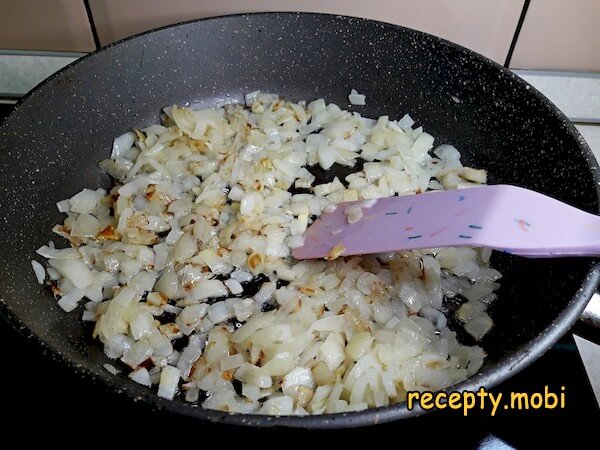
I fry the diced onion in vegetable oil until the first signs of golden colour appear – just the "first" signs, not a brown crust, so the onion stays tender.
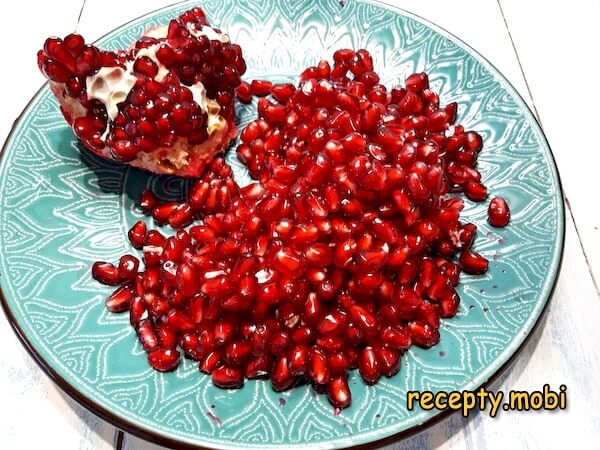
I deseed the pomegranate – I gently tap the seeds out of the fruit with a spoon along the breaks between the halves, so as not to crush a single seed.
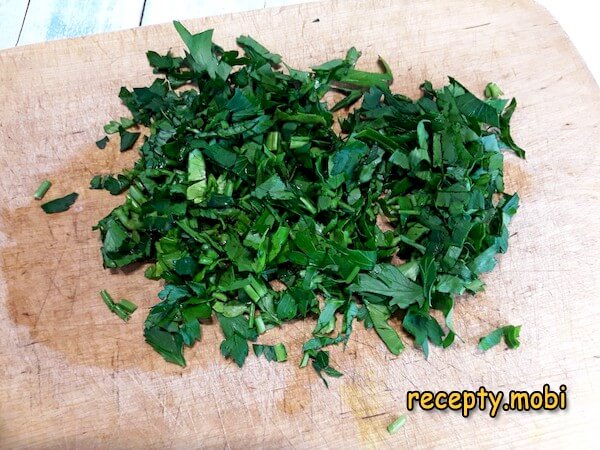
I finely chop the parsley (or cilantro) – with a knife, not a blender. The freshness of the herbs should be preserved in the finished dish.
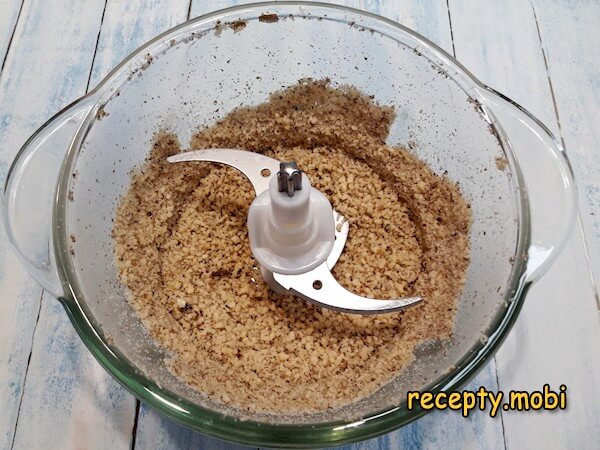
I grind the walnuts into a crumb, putting them through a meat grinder or chopper – it should be a "crumb", not dust and not large pieces.
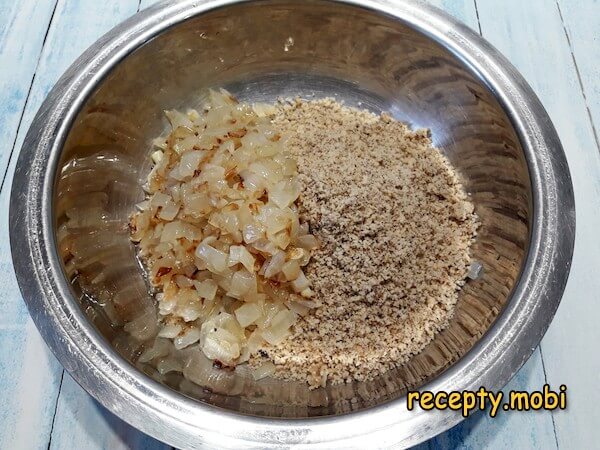
I add the fried onion to the walnut mass – I bring together the main "Georgian" components into a single dressing.
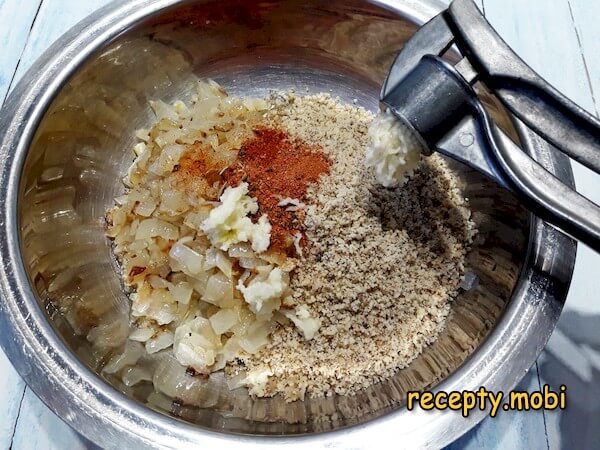
I add the spices here too and press the garlic through a press – the khmeli-suneli and red pepper give the characteristic "Georgian" aroma.
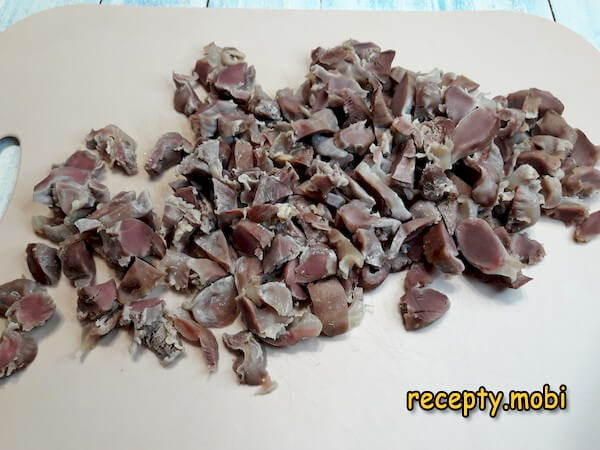
When the giblets are cooked, I lift them out of the broth and let them cool, then chop them finely – the pieces should be "bite-sized", about the size of a bean.
Next I add them to the bowl with the prepared mixture – I combine all the components of the dish.
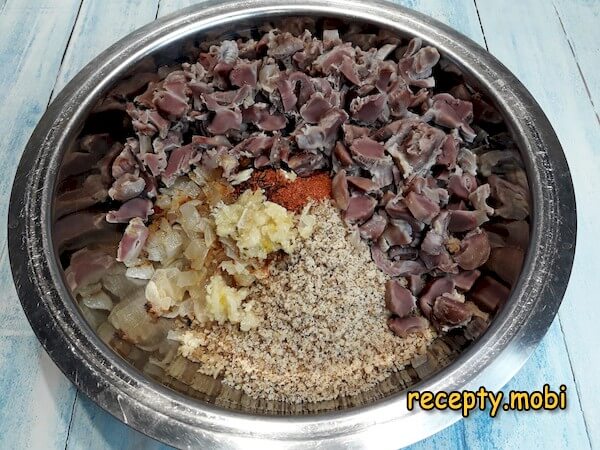
I mix everything together – the walnut dressing should coat every piece of gizzard evenly.
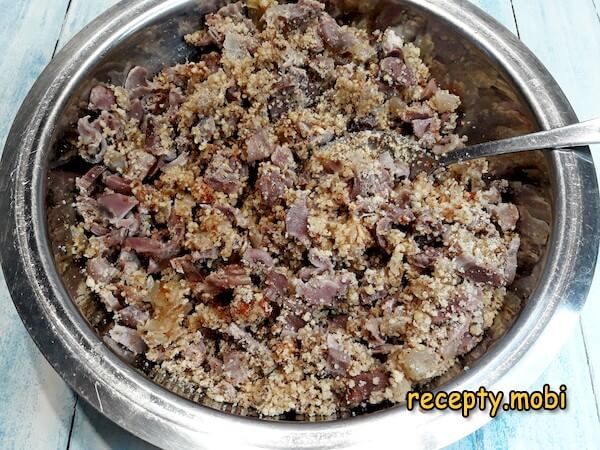
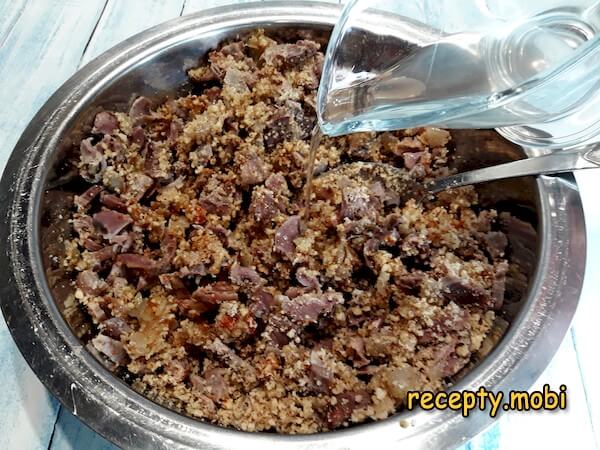
Now the mass needs to be moistened – it should not be runny, only become pliable. To do this I slowly start to pour in the chicken broth, working it thoroughly into the walnut-and-meat mixture. This is the secret to the right consistency of authentic kuchmachi.
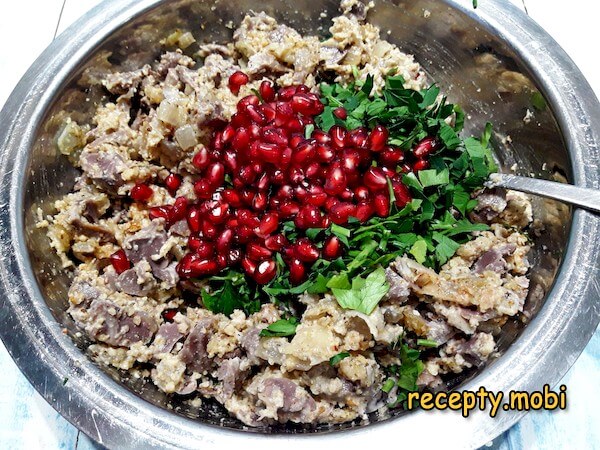
At the end I add the chopped herbs and the pomegranate seeds – these are the final "accents" of the dish.
I mix the appetiser again – the herbs and pomegranate will be distributed evenly throughout.
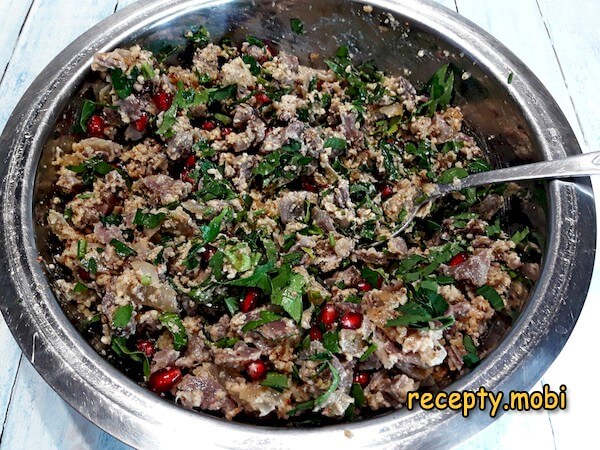
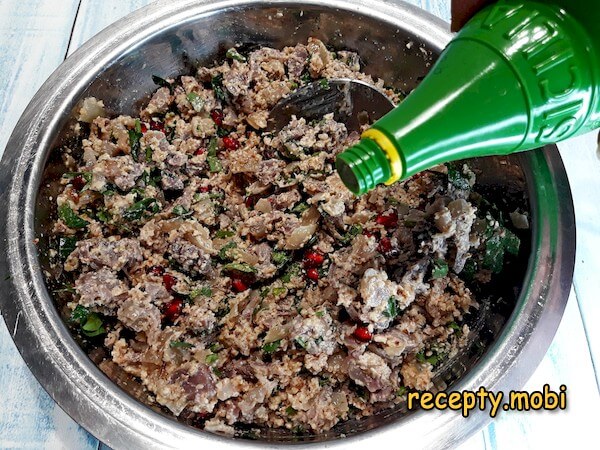
Next it needs to be slightly acidified – with either lemon or pomegranate juice. I taste the mixture and adjust it if necessary. The acidity balances the flavour of the walnut dressing.


Tips
- 1
DOUBLE-BOILING THE GIBLETS – the secret to a neutral flavour. Gizzards have a specific "giblet" aroma that not everyone likes. The first 5-minute boil followed by draining the liquid completely removes that "character" – the remaining 2 hours of cooking in clean water give tender, soft gizzards with a neutral taste. This is a secret from Georgian home cooks.
- 2
WALNUTS AND POMEGRANATE – the secret to the Georgian profile. These two ingredients are the "soul" of kuchmachi. Without walnuts you simply get an ordinary offal dish. Without pomegranate there is no signature "Georgian" note of sweet-and-sour freshness. A similar "walnut" approach appears in Georgian chicken satsivi – walnuts as the base of an authentic Georgian sauce.
- 3
PLIABLE, NOT RUNNY – the secret to the consistency. The chicken broth at the end is added in small portions. A runny mass is wrong: kuchmachi should "hold together" like modelling clay. A mass that is too dry is also wrong: it will crumble when served. The ideal is a "thick walnut paste" with the pieces of gizzard mixed into it.
- 4
VARIATIONS WITH OTHER GIBLETS – the secret to the recipe's flexibility. Using the same technique, you can make kuchmachi from hearts or liver. A similar approach to working with offal appears in braised chicken hearts with vegetables. The most authentic version is an "assortment" of all three types in equal parts, as served in the premium restaurants of Tbilisi.
FAQ
What is kuchmachi and where is it eaten? +
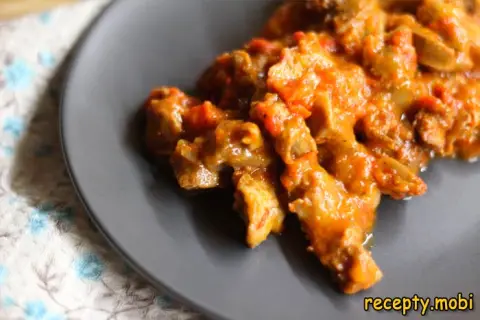
Kuchmachi (Georgian "კუჭმაჭი") is a national Georgian dish of offal (chicken or beef) with walnuts, onion, pomegranate and seasonings. It is found throughout Georgia, among the Georgian diaspora in Russia and the CIS, and partly in Armenia and Azerbaijan. It is served as a cold appetiser or a hot main course – the way it is served determines whether it is hot or cold. At a large Georgian "supra" (festive feast), kuchmachi is an essential part of the meat assortment. In modern Georgian restaurants it is often served in individual clay pots with warm lavash.
Can the gizzards be replaced with other giblets? +
Yes, kuchmachi is a "universal" recipe for offal. Alternatives: chicken hearts (more tender than gizzards, without the giblet note), chicken liver (a more "delicate" option, cooks in just 10 minutes), turkey giblets (a more "dietary" option with a mild flavour). From beef: beef tongue (a premium option, cooks for 3-4 hours), beef heart, beef liver. The most authentic is an "assortment" of all three types of chicken offal in equal parts. Minced chicken is not suitable – it is the wrong texture.
How long does kuchmachi keep? +
In the refrigerator in an airtight container – up to 3 days. On the second day the flavour becomes richer – all the ingredients "steep" in one another. Before serving I reheat it (if served hot) or simply take it out 30 minutes before serving (if served cold) – straight from the fridge the dish is "muted" in flavour. I do not recommend freezing it – after thawing, the pomegranate seeds become soft and watery, and their crunchy contrast is lost. It is better to make it for 1-2 days and eat it fresh.
What to serve with kuchmachi Georgian style? +
The authentic Georgian way to serve it is on a flat plate with cilantro and pomegranate seeds on top. To the table: lavash or Georgian "shoti" bread, pickled vegetables (cucumbers, mushrooms), a bunch of fresh herbs, Georgian pickled peppers. For sauces: tkemali, adjika. For drinks: Georgian dry red wine (Saperavi, Mukuzani, Kindzmarauli), chacha. For a large table: kuchmachi as part of a meat assortment alongside other Georgian dishes – chakhokhbili, kharcho, shashlik, khachapuri. This dish works wonderfully in any context – from a family lunch to a large "supra".
- Comment
or post as a guest
Be the first to comment.