avg —
Tatar Tutyrma

Instructions
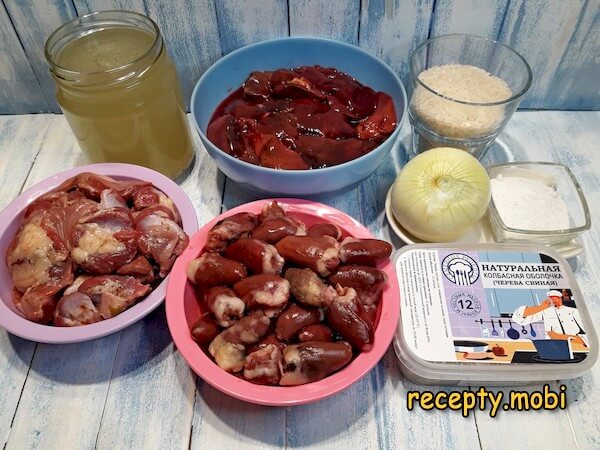
I prepare the ingredients for the Tatar tutyrma. The proportions of the offal can be changed to your own preference, the main thing is that the total weight stays the same. The meat broth may be replaced with milk.
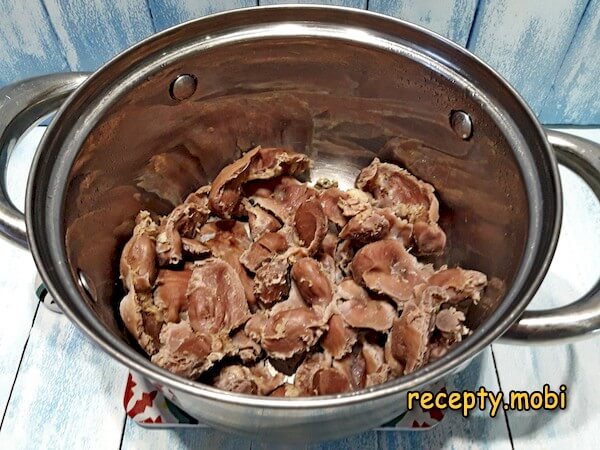
Since chicken liver and hearts cook quickly, unlike the gizzards, it is advisable to boil the gizzards a little before use — that way they lose their inherent toughness and become softer. To do this, I cover the gizzards with water and put them on the heat.
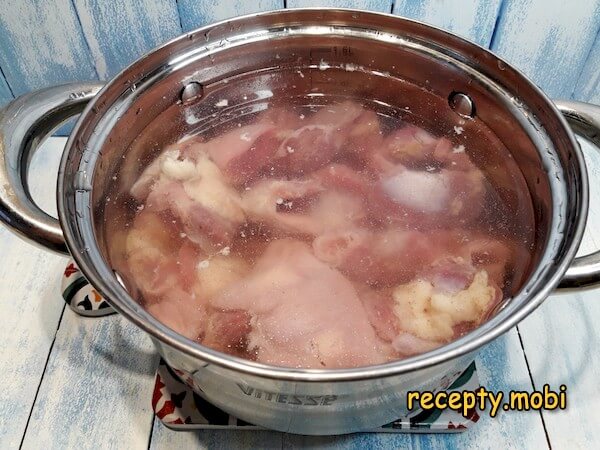
After it comes to the boil, I cook them for half an hour (I don't add salt) and drain the water — this is the secret to the tenderness of the finished tutyrma.
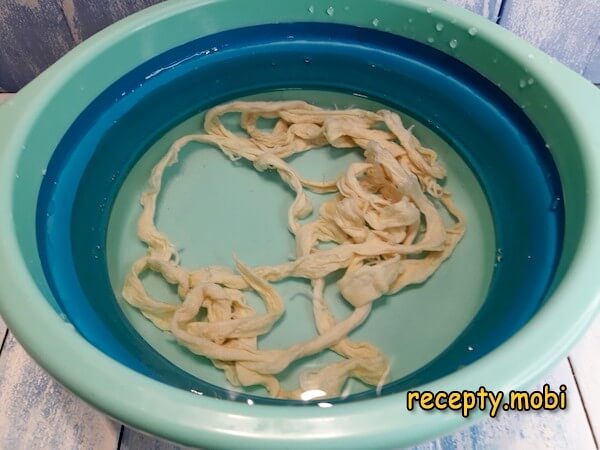
I place the pork casing in room-temperature water and leave it for 30-35 minutes — so that it "relaxes" after salting.
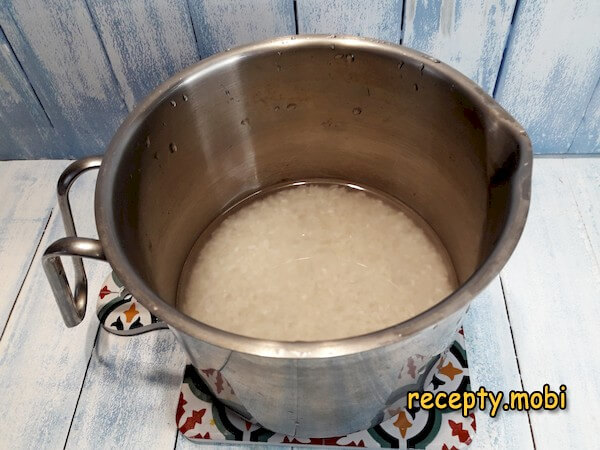
I rinse the rice so that all the starch washes out, then cover it with water that only just covers the grains — the minimum of water for par-cooking.
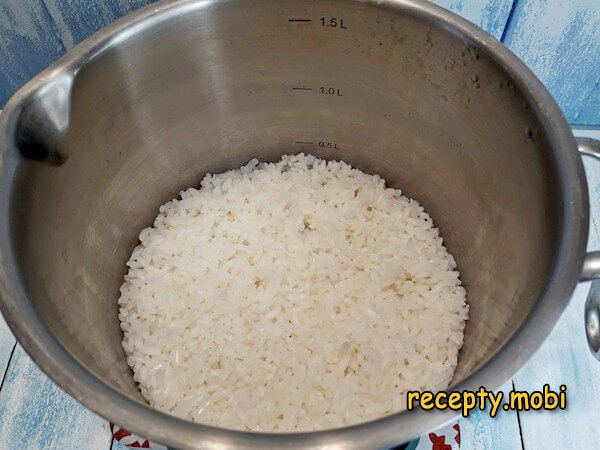
I cook the rice over low heat until half-done (about 3 minutes), so that all the moisture is absorbed or evaporates. The half-cooked rice will "finish cooking" inside the casing together with the filling.
Next, I rinse the salt out from inside the casings. To do this, I fill them and flush them with running tap water several times — the salt must be washed off completely.
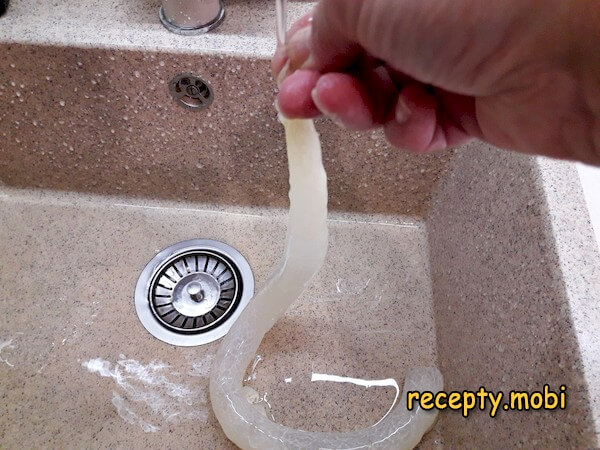
I grind the cooled gizzards in a food processor or meat grinder together with the onion — specifically together, so that the onion is evenly distributed through the filling.
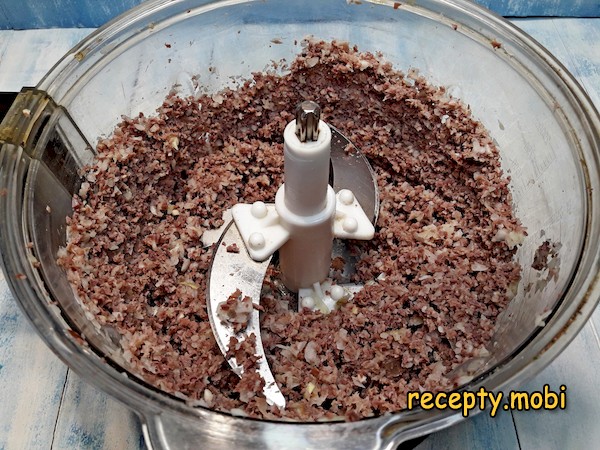
To the same mixture I add the raw liver and hearts. I grind everything again — the raw liver and hearts cook quickly and will have time to reach readiness inside the casing.
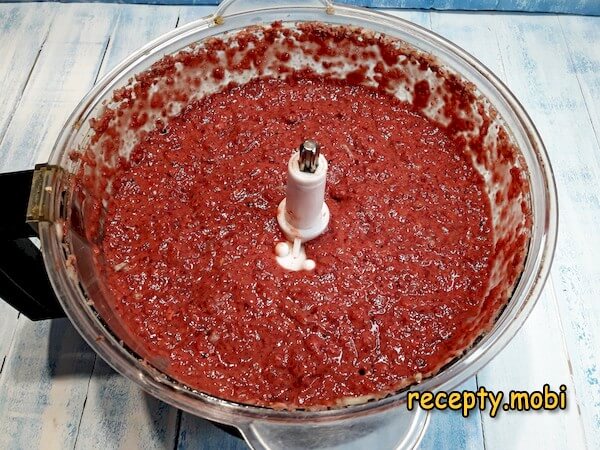
I transfer the filling to a bowl and add the cooled rice and the salt — the salt at this stage penetrates the filling evenly.
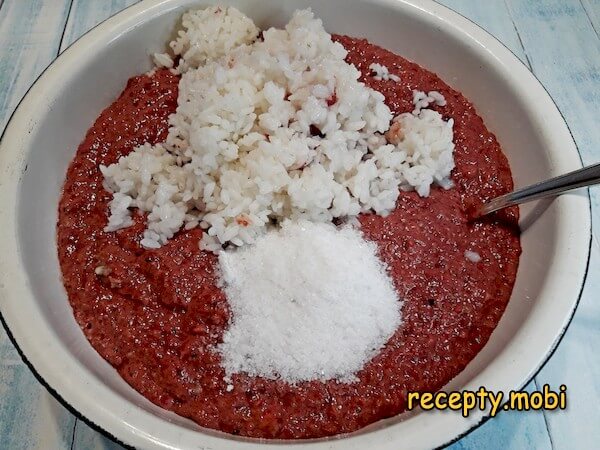
I pepper the mixture — black ground pepper gives the characteristic aroma of Tatar sausage.
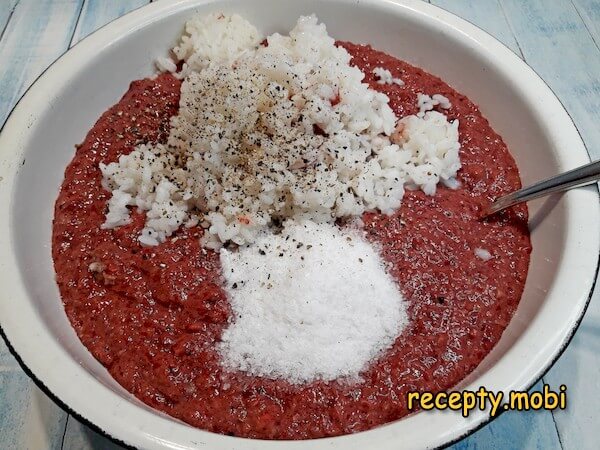
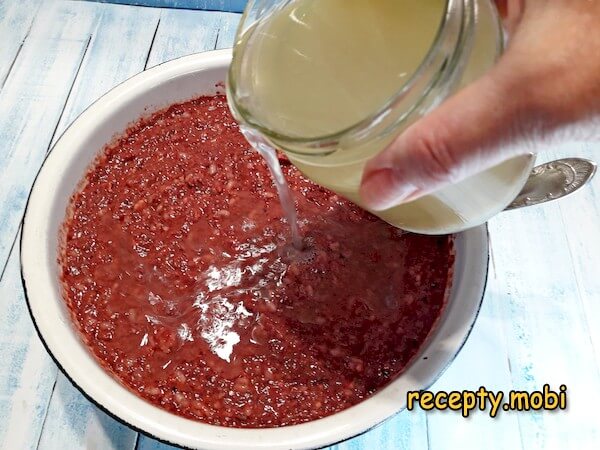
Slowly I pour in the meat broth, controlling the consistency of the filling (it should not turn out too runny). The optimal amount of liquid for the stated weight of offal is 300-400 millilitres. This is the secret to the juiciness of the finished tutyrma.
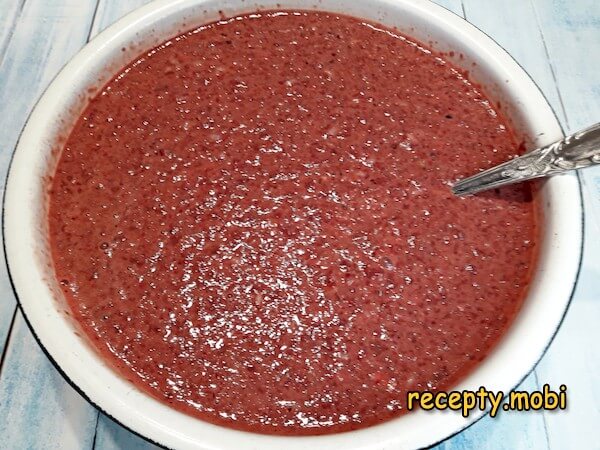
I mix the filling and put it in the fridge for half an hour to stabilise — there it thickens a little and becomes more convenient for stuffing.
I remove the knife and screen from the screw-type meat grinder. I fit the special sausage-stuffing attachment and pull the casing onto it (as much as fits) — its tip should hang down from the attachment and I don't tie it yet (the air needs to come out first). I prepare small pieces of cotton thread for tying.
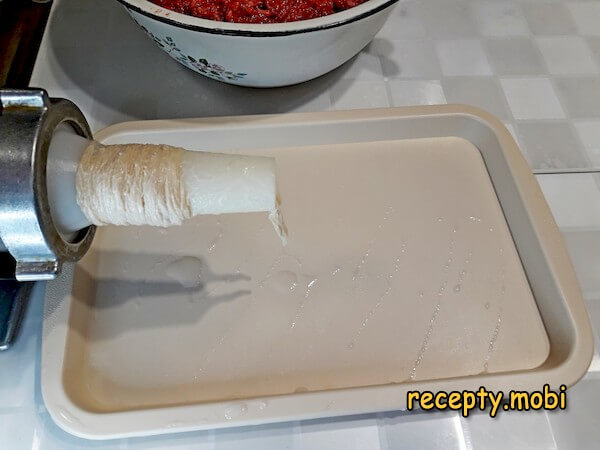
I start pushing the filling through. When it gets close to the tip of the casing, I tie off the end with thread — this secures the first knot of the sausage.
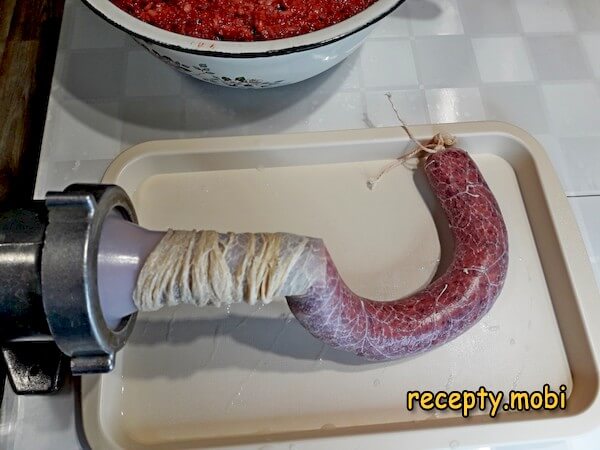
In this way I fill the whole casing, and for convenience I make ties along its entire length, forming sausage sections of 20-30 centimetres — a convenient size for serving and storing.
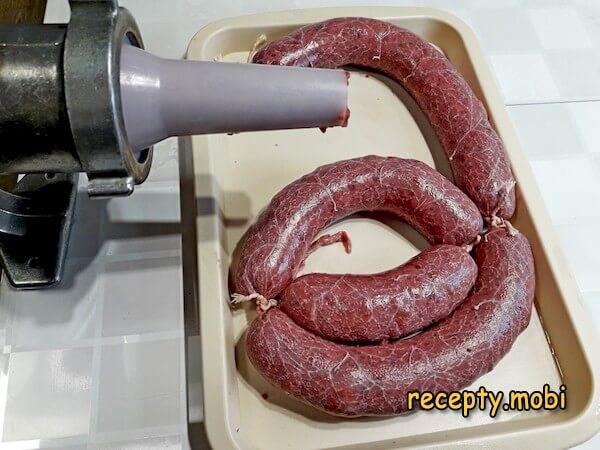
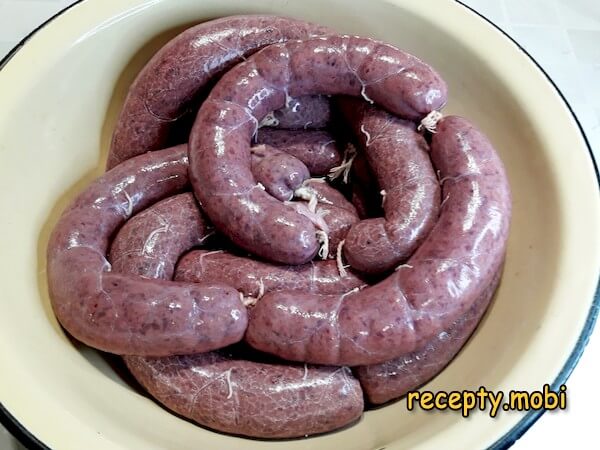
I pull the next casing onto the attachment and continue forming the sausages, which I then place in a bowl.
I put a large pot of water on the heat and warm it to 90-95 degrees — specifically "non-boiling" water, so that the sausage doesn't burst while cooking.
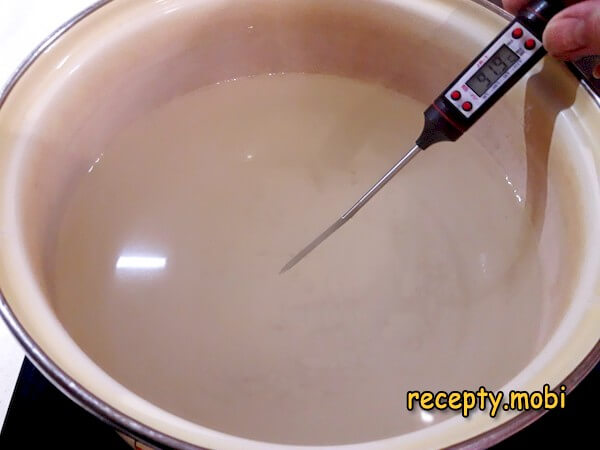
I lower the sausages into the hot water — at this moment the water temperature drops a little. This is normal; the main thing is not to let it come to the boil.
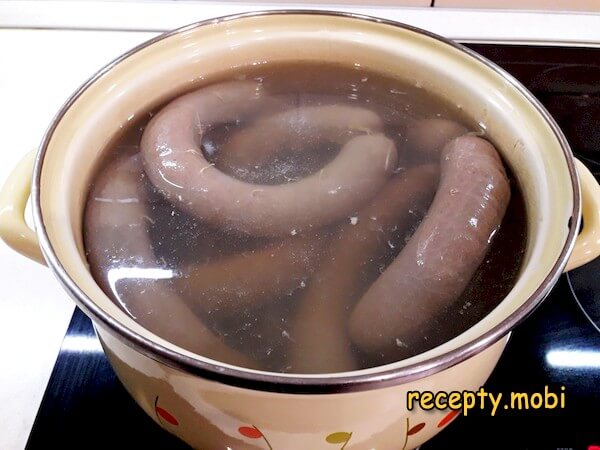
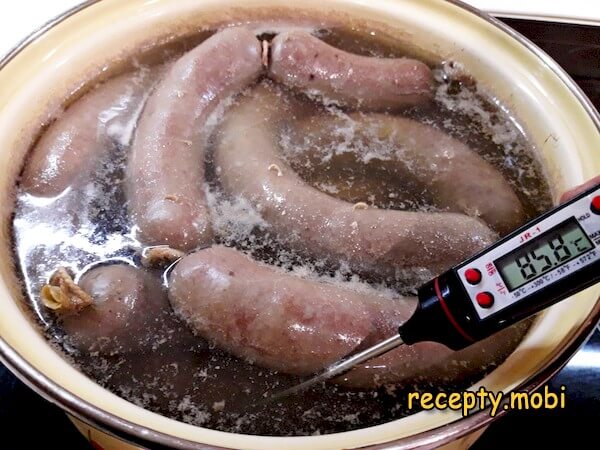
From then on you need to constantly control the heat so that the temperature stays within 85-87 degrees — this is the secret against the casing bursting and for perfect readiness of the filling inside.
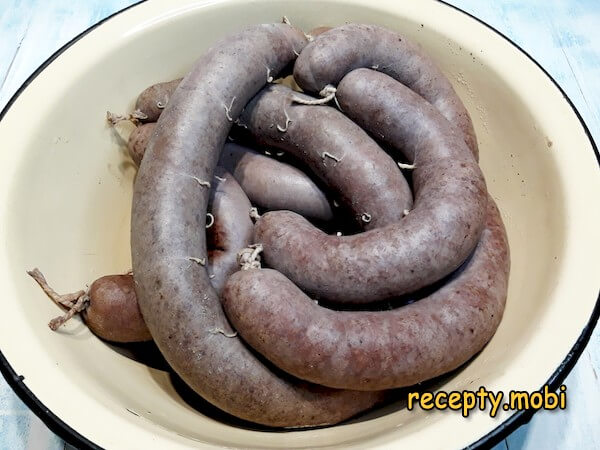
After 20 minutes the tutyrma can be taken out of the pot — the filling inside is already cooked.


Tips
- 1
A THERMOMETER IS ESSENTIAL — the secret against the casing bursting. The main problem when cooking homemade sausage is that a sudden boil tears the casing and the filling "flies" out. A culinary thermometer with a probe lets you precisely control the 85-87°C temperature — the tutyrma cooks without losses and the casing is not damaged. Without a thermometer it is practically impossible to hold the right regime "by eye".
- 2
BOIL THE GIZZARDS SEPARATELY — the secret of even cooking. Gizzards, liver and hearts cook in different times. If you put all the raw ingredients in together, the gizzards will stay tough while the liver overcooks into mush. Pre-boiling the gizzards for 30 minutes "evens out" the texture of all the components, and in the finished sausage they are "in harmony" with one another.
- 3
VARIATIONS FROM A SINGLE OFFAL — the secret of flexibility. Tutyrma can be made from just one type of offal: only from liver (more "pâté-like"), only from gizzards (more "springy"), only from hearts (more "meaty"). A similar "single-ingredient dish" principle works in chicken gizzards in a creamy sauce — one part of the carcass gives the dish its characteristic profile.
- 4
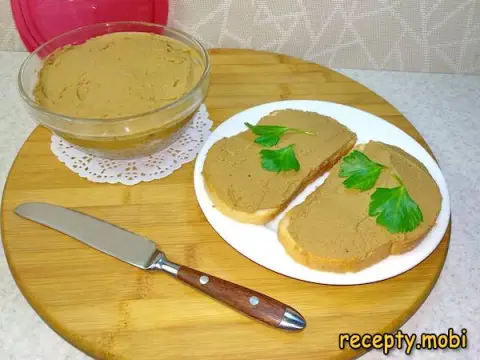
SERVING AS A PÂTÉ — the secret of using up leftovers. Cold tutyrma, after being removed from the casing, works beautifully as a pâté. Following the principle of homemade liver pâté, it can be spread on bread or served with a side dish. This is a "second" way of using the same sausage, particularly handy for leftovers.
FAQ
What is tutyrma and where is it eaten? +
Tutyrma is a national Tatar homemade sausage made from offal (chicken, beef, lamb) with rice and onion. It is widespread in Tatarstan, Bashkortostan, and among the Tatar diaspora throughout Russia. It is traditionally made for big family celebrations (Sabantuy, Tatar weddings, Kurban Bayram), and is also served as everyday hearty food. In principle it is similar to homemade European sausages (Spanish morcilla, Scottish haggis), but with a "Tatar" character — the obligatory rice and chicken offal.
Can pork casing be replaced with a synthetic one? +
It can, but this will give a slightly different result. Authentic tutyrma is always made in pork casing, because the natural casing "breathes", absorbs aromas, and after cooking pleasantly "pops" when you eat it. Synthetic casings (cellulose, collagen) give the sausage a more "industrial" look, but are easier to use. You can buy ready-made casing in specialist online shops — the price is affordable (250-400 roubles for a 5 m hank), and it is enough for several batches of tutyrma.
How long does tutyrma keep? +
In the fridge in an airtight container — up to 4 days. In the freezer — up to 3 months. Before serving, I defrost frozen tutyrma in the fridge for 12 hours, then reheat it in a pan with butter or in the oven at 150°C. Cold tutyrma is good as a standalone snack — it doesn't have to be reheated. After 4 days in the fridge the sausage may "dry out" — the optimal time to eat it is within 2-3 days. The ideal option is to make a large batch and freeze it in portions.
What to serve Tatar tutyrma with? +
The authentic Tatar way to serve it is with Tatar flatbreads or bread, pickled onion, and fresh herbs. For sauces: mustard, homemade ketchup, sour cream with herbs. To accompany it: Tatar "kara chai" (black tea with milk and salt), fermented milk drinks — ayran, tan. For a family dinner: with boiled potatoes, buckwheat, rice. For a big table: as part of a meat platter with other Tatar dishes — shurpa, echpochmaki. For drinks: strong tea, homemade kvass.
- Comment
or post as a guest
Be the first to comment.