avg —
Chicken fillet baked with cheese and tomato

Instructions
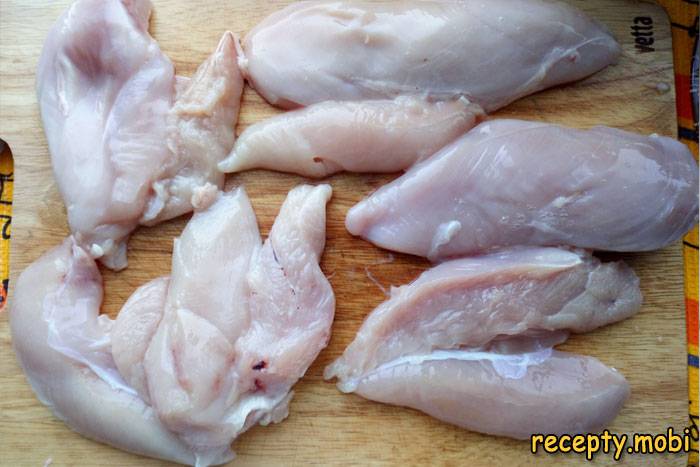
I rinse the fillet under cold water and pat it dry with paper towels. Wet meat will release a lot of liquid while baking, and the dish will end up "boiling" rather than baking. I cut each fillet lengthways into slices 1.5–2 cm thick.
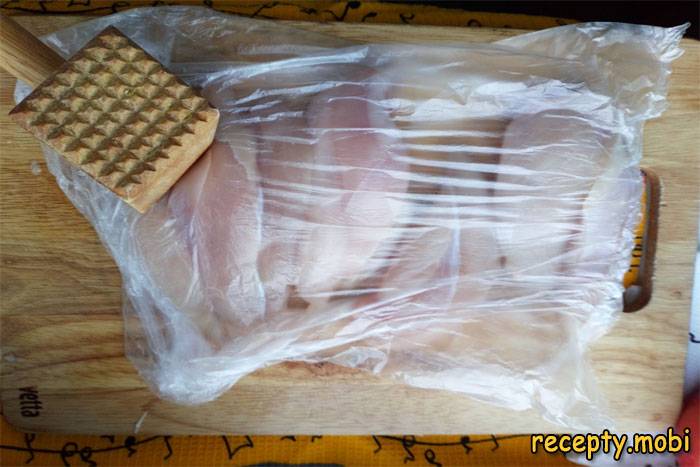
I put the meat into a sturdy plastic bag or cover it with cling film, so that the meat does not scatter around the whole kitchen while pounding. I start to pound it with the smooth side of a mallet to a thickness of 1–1.5 cm. Pounding breaks down the fibres, so the meat becomes more tender and bakes faster.
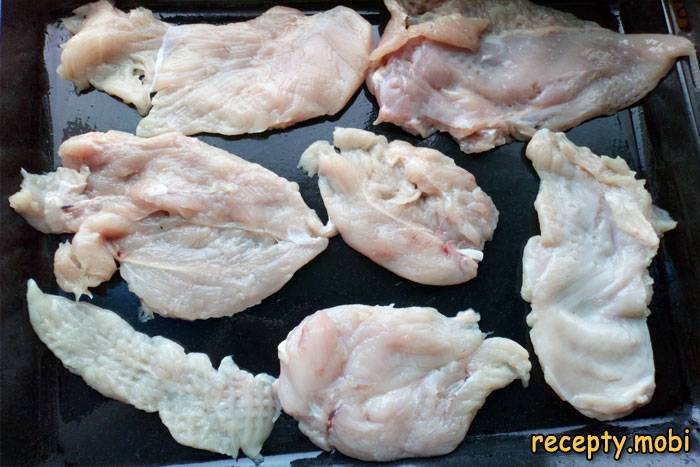
I grease the baking tray with a thin layer of vegetable oil and lay the pounded fillet on it, leaving 1–2 cm between the pieces. If you place them tightly together, the meat will stick and bake unevenly.
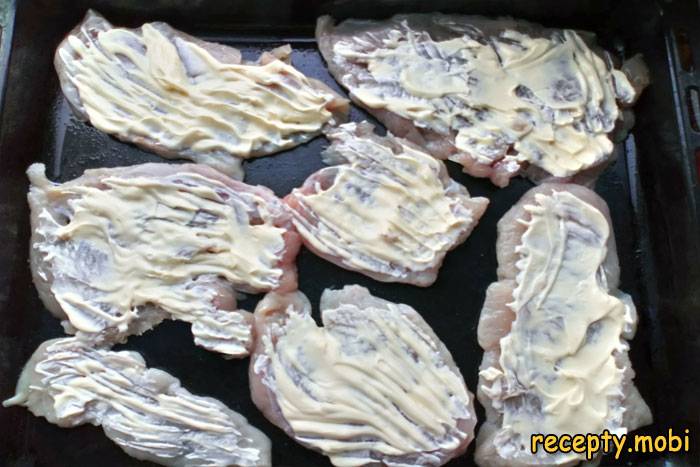
I salt the meat on both sides and sprinkle it with freshly ground black pepper. I apply mayonnaise to the fillet and spread it with a silicone brush; so that the meat does not turn out dry, I apply the mayonnaise on both sides. The mayonnaise acts as a protective film that keeps the juices inside the meat.
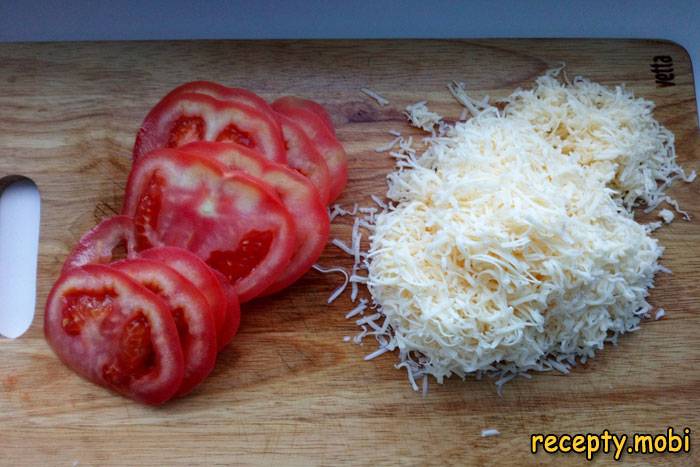
I grate a piece of hard cheese on a coarse grater and cut the tomato into rounds 5–7 mm thick. Thin rounds are better than thick ones; they warm through faster and release their juice into the meat instead of staying raw on top.
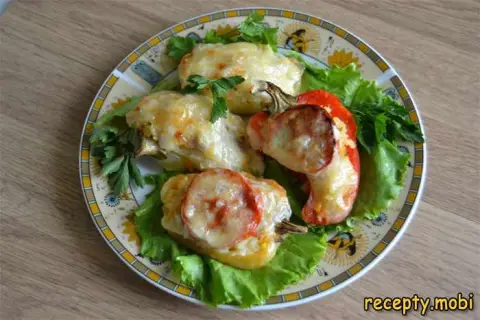
On each piece of meat I spread a first layer of grated cheese, place a slice of tomato on top and sprinkle with cheese again. A double layer of cheese gives a lovely melted crust that protects the tomato from drying out.
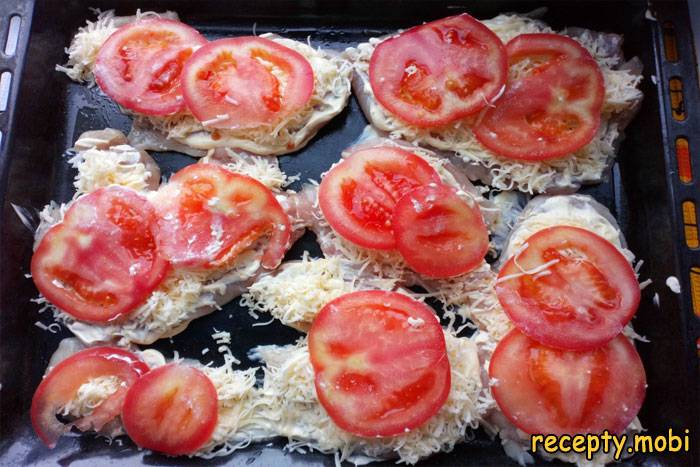
I preheat the oven to 180 °C and put the dish in to bake for 40–50 minutes. I check whether it is done with a toothpick: when pierced, the juice should run clear with no pink tinge. Pink juice means the meat is not ready yet.
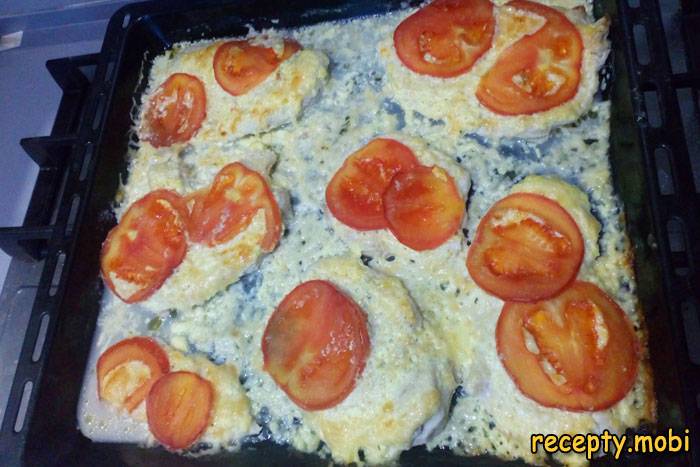
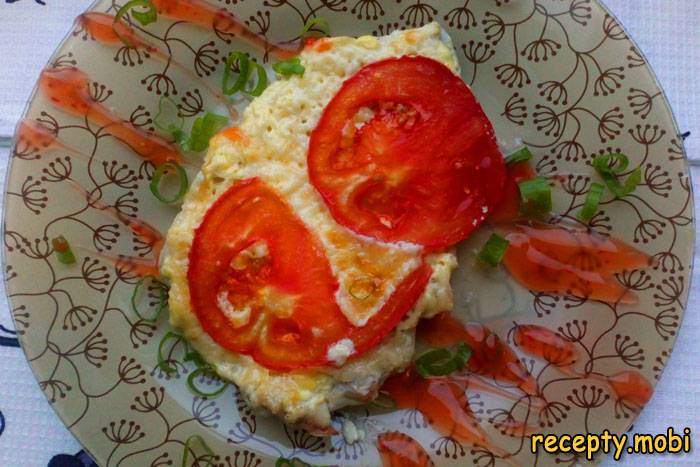
The baked chicken fillet with cheese and tomato is ready! I take the dish out and let it rest for 5 minutes, so the juices spread through the fibres and do not run out when the meat is cut. I serve it with any side dish.


Tips
- 1
Always pound the fillet inside a bag or under cling film – that way there are no splashes all over the kitchen and the meat becomes more tender because the fibres are broken down.
- 2
Mayonnaise on both sides is a proven trick for a juicy chicken breast. Without it the fillet will dry out even in 30 minutes.
- 3
Use a hard cheese (Russian, Gouda, Dutch) – it melts better and gives a golden crust. I use a similar principle when I make French-style meat.
- 4
Serve with any side dish – mashed potatoes, boiled rice, buckwheat, stewed vegetables or a fresh salad.
FAQ
Can I replace the mayonnaise with something healthier? +
Yes, thick sour cream (20–25%), Greek yogurt or a 50/50 mix of yogurt with sour cream work very well. The flavour will be slightly more tangy, but the meat will stay just as juicy. You can also use a mix of soft cream cheese (60 g) and a spoonful of sour cream – it gives a tender texture with a light creamy note. The most diet-friendly option is plain unsweetened yogurt with mustard and herbs. Home-made mayonnaise (based on eggs and olive oil) is a good choice too.
Which cheese is best for baking? +
The ideal choice is a hard cheese such as Russian, Dutch, Gouda or Edam. They melt beautifully, give a stretchy texture and a nice golden crust. Mozzarella also works – it gives that characteristic "pizzeria" cheese pull, but it melts at low temperatures and can run. Use Parmesan as an addition to the main cheese – it adds a savoury, salty accent. Processed cheese or soft cheeses (Brie, Camembert) are not suitable for baking – they will melt into a puddle.
How long should I bake chicken fillet? +
At 180 °C, about 40–50 minutes depending on the thickness of the fillet and how much of it is on the tray. Thinly pounded fillet (1–1.5 cm) is ready in 25–30 minutes. Check doneness with a toothpick – the juice should run clear, with no pink. If the meat is in large, thick pieces without pounding, it needs 60–70 minutes at the same temperature. At 200 °C the time is reduced to 30–35 minutes, but the risk of drying it out is higher. Do not exceed the time – overcooked fillet cannot be saved.
- Comment
or post as a guest
Be the first to comment.