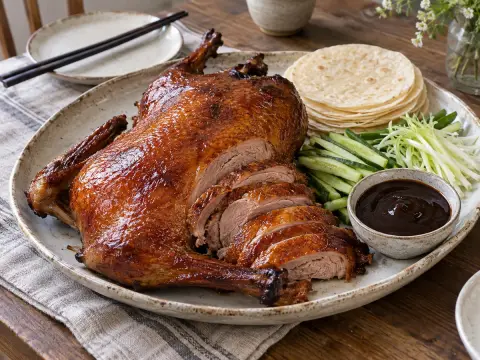
avg —
Roast Duck Legs with Apples

Instructions
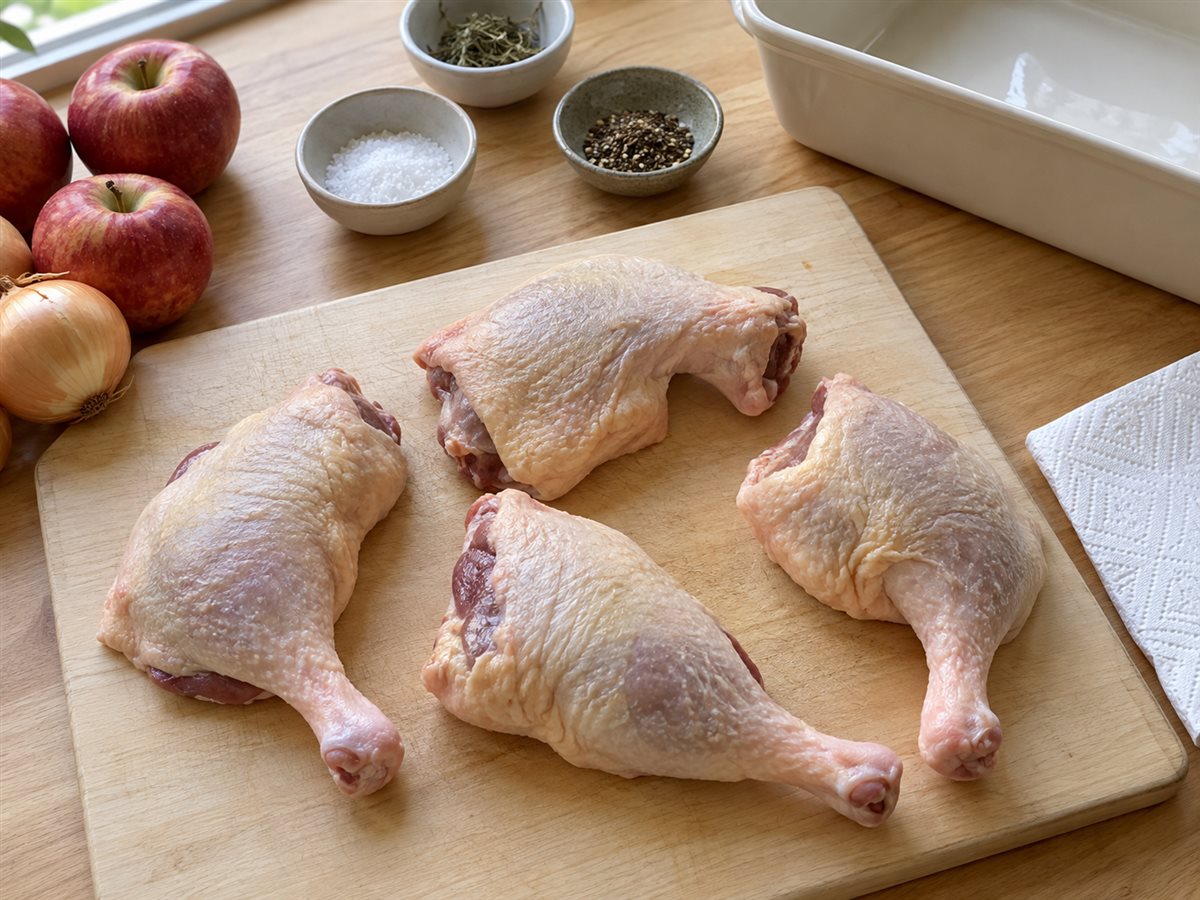
Prepare the duck. For 4 servings, use 4 duck legs weighing about 300 g each, with thigh, drumstick, skin and bone attached. Thaw frozen legs fully in the refrigerator first. Heat a conventional oven to 160 °C / 320 °F. Remove any feather stubs and pat the skin thoroughly dry with paper towels. Do not rinse raw poultry under the tap. Wash your hands and equipment after handling it.
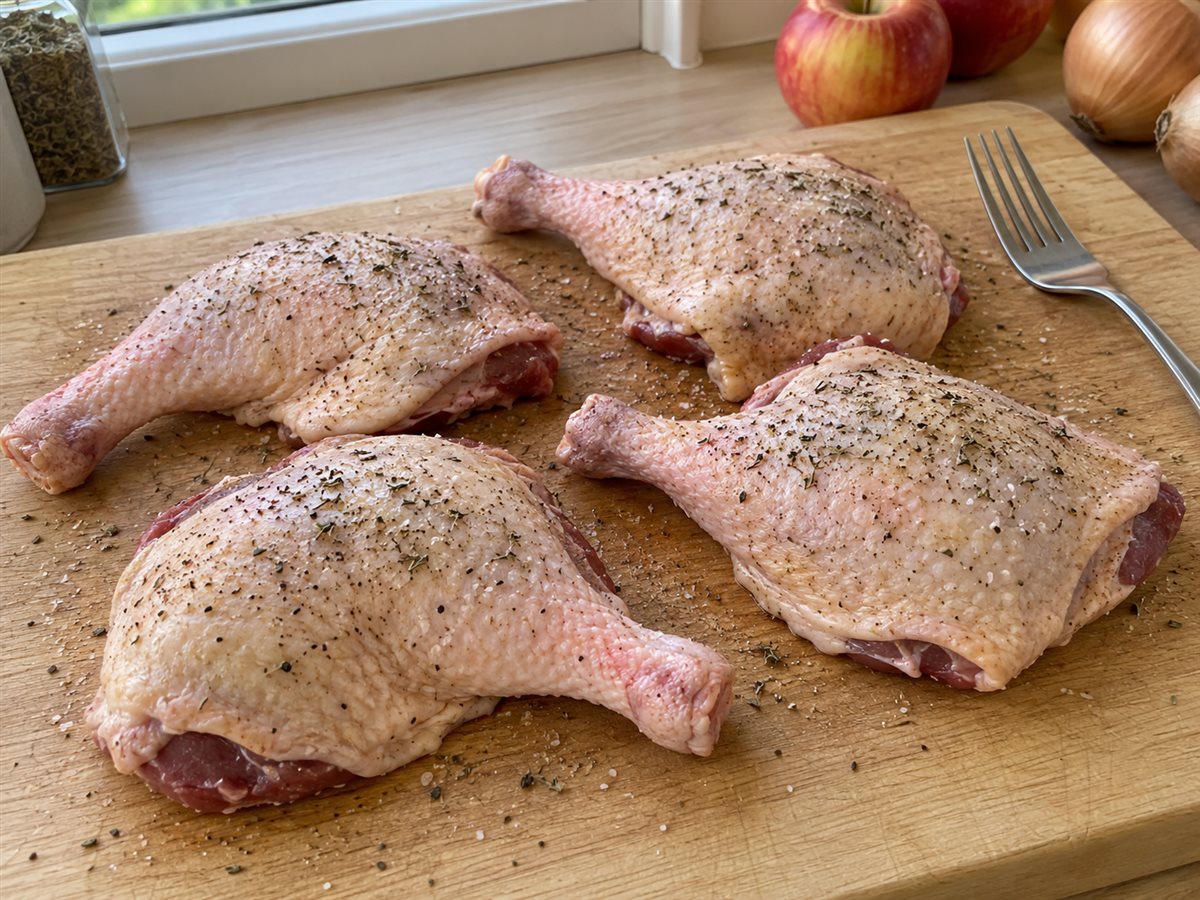
Season the legs. Mix the salt, pepper and thyme and rub over both sides. Carefully prick thick areas of skin with a fork without pushing deeply into the meat. Do not add oil: the duck has enough fat of its own. This method does not require overnight marinating.
Start the covered roast. Peel the onions, cut into thick wedges and spread over a roughly 25 × 35 cm / 10 × 14 inch baking dish. Arrange the legs skin-side up in one layer with space between them. Pour the water down the side without wetting the skin. Cover tightly with foil and roast on the middle shelf for 90 minutes at 160 °C / 320 °F. Do not add the apples yet.
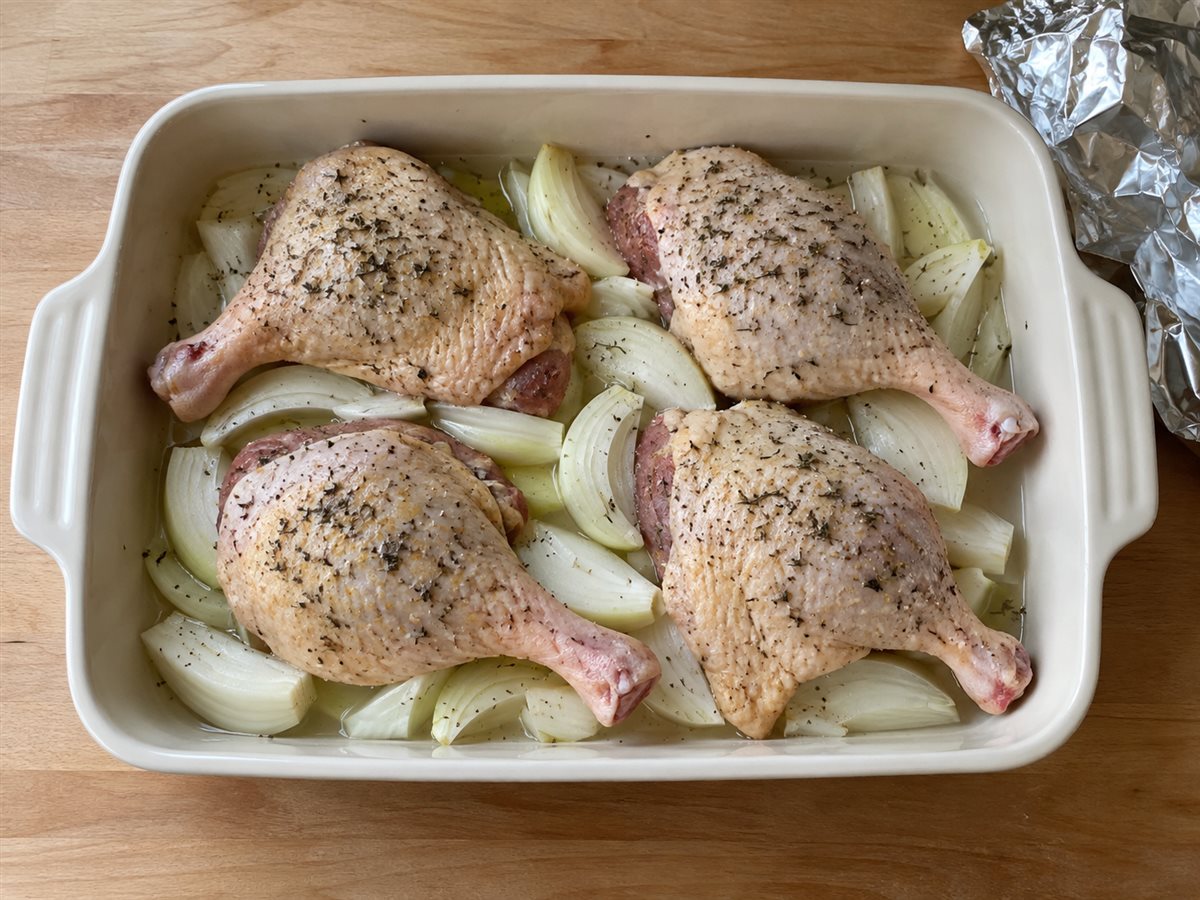
Check tenderness and add the apples. Open the foil away from your face. If the meat still feels firm when pierced with a fork, cover again and continue in 15-minute intervals until it is noticeably softer. Wash the apples, remove their cores and cut each into 6 thick wedges, leaving the peel on. Spoon off excess rendered fat while retaining some juices in the dish. Tuck the apples around, not over, the legs. Cover again and roast for a further 20 minutes at 160 °C / 320 °F.
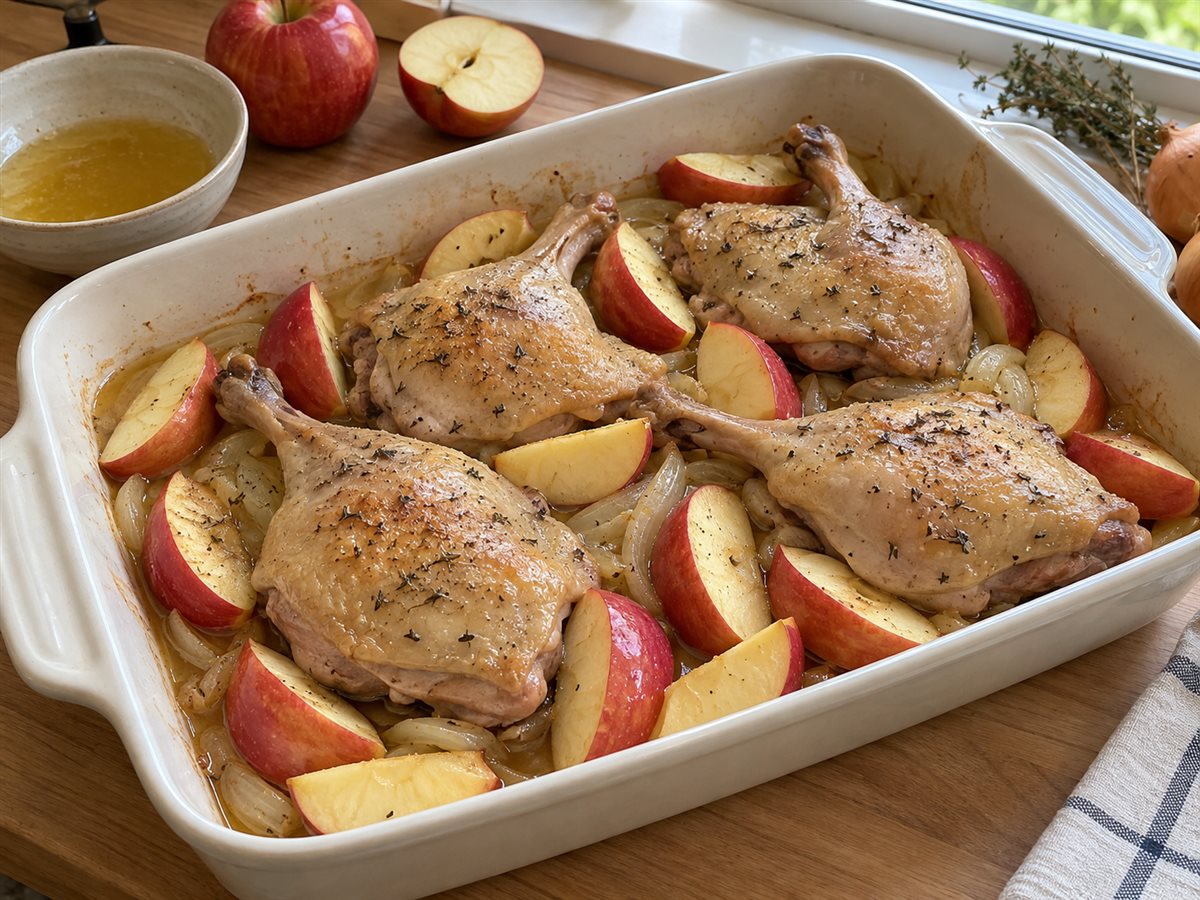
Brown the skin. Remove the foil, raise the oven to 200 °C / 390 °F and roast for 15-20 minutes, watching the colour. Do not baste the skin during this stage. If the apples are already soft, move them to a clean dish and return them when the duck is ready. Check every leg with a food thermometer in its thickest part without touching bone: it must reach at least 74 °C / 165 °F. Also check tenderness: a fork should slide in easily and the meat should release readily near the joint.
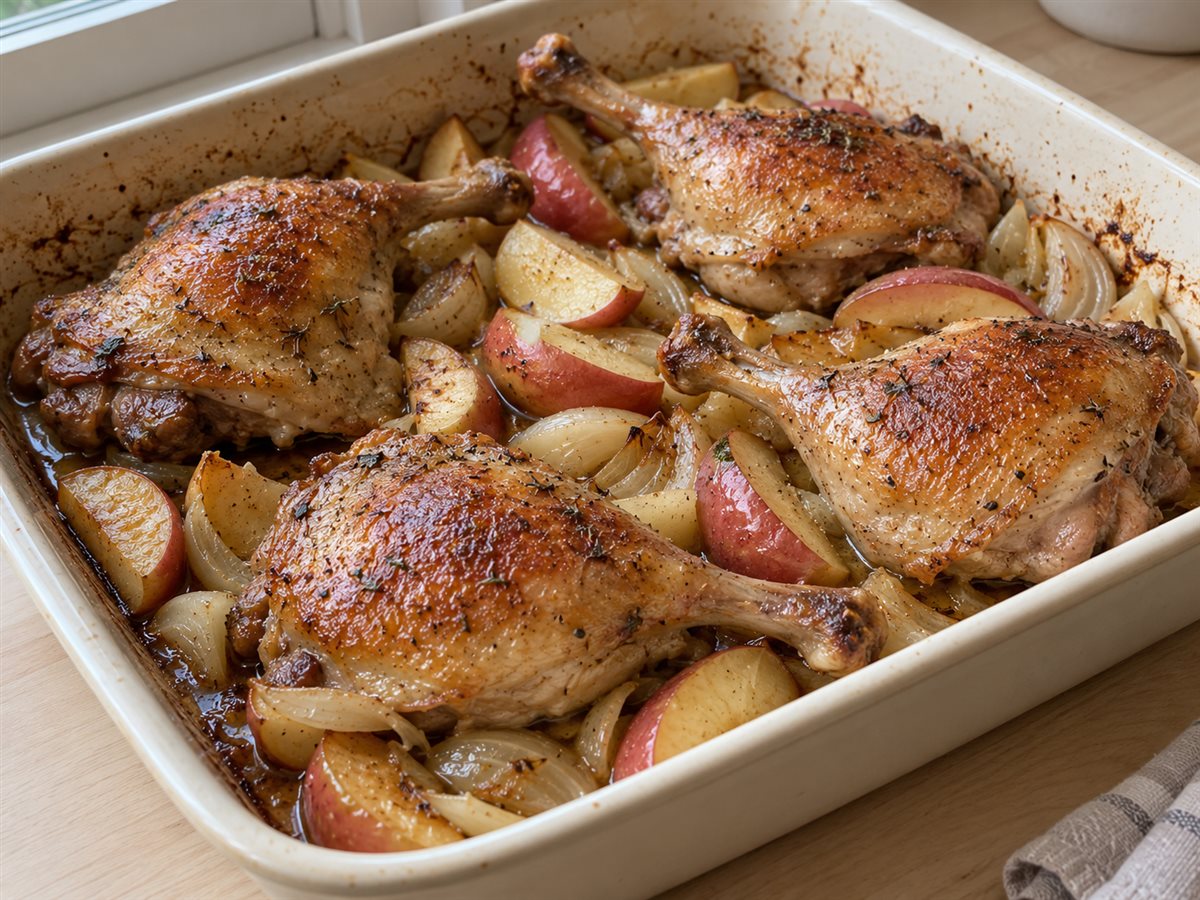
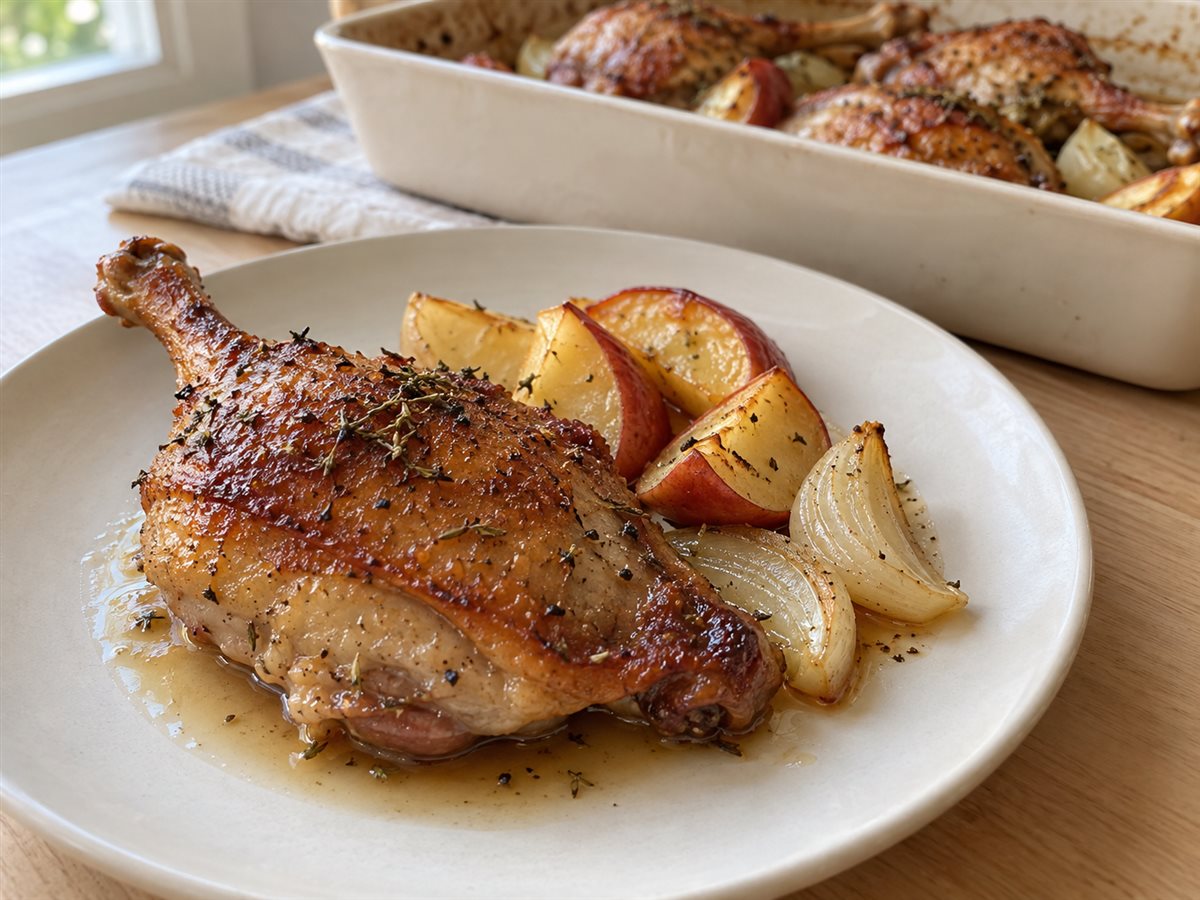
Rest and serve. Remove the dish and rest for 10 minutes without wrapping tightly in foil. Divide into 4 portions, each with one leg, apples and onions. Skim excess fat from the pan juices and serve a little juice beside the meat rather than over the browned skin. Discard the bones when eating.


Choosing duck legs and apples
Use raw domestic duck legs with the thigh and drumstick attached, not small drumsticks alone and not ready-cooked confit. Four legs totalling about 1.2 kg make four portions. Very large legs take longer. Wild duck needs separate guidance because age and meat texture can differ substantially.
Choose firm sweet-tart apples and keep their peel on. They go in later because they do not need the duck's full cooking time. Salt, pepper and thyme give a simple savoury flavour. There is no need for honey, sugar, mayonnaise or soy sauce.
Oven temperature and cooking time
| Stage | Heat and time |
|---|---|
| Duck and onions, covered | 160 °C / 320 °F, 90 minutes, then check tenderness |
| With apples, covered | 160 °C / 320 °F, 20 more minutes |
| Brown uncovered | 200 °C / 390 °F, 15-20 minutes |
| Rest before serving | Out of the oven, 10 minutes |
The 2 hour 30 minute total includes 15 minutes of preparation and 10 minutes of resting, but not thawing. Add time to the first stage if the legs are still tough. For a fan oven, follow its manufacturer guidance and start checking earlier. The temperatures above are for an oven without the fan.
Golden skin does not prove the duck is cooked. Check every leg with a food thermometer: at least 74 °C / 165 °F in the thickest meat, without touching bone. If safely cooked meat is still firm, continue gentle covered cooking until tender.
Keeping the skin golden and the apples intact
- Dry the skin well before seasoning and do not stack the legs.
- Pour water into the bottom of the dish, not over the duck. During covered cooking, check that the dish has not dried out. Add a little hot water down the side if needed.
- Before browning, spoon excess fat into a heatproof container. Do not pour hot fat down the sink.
- Do not baste the skin during the final 15-20 minutes. Remove apple wedges early if they are already tender.
- If edges colour too quickly, shield only those areas with small pieces of foil.
Servings, scaling and calories
The recipe makes 4 servings. Each includes one duck leg plus apples and onions. The 1.2 kg ingredient weight includes bones; it is not the finished edible weight. The ingredient calculator scales quantities but does not calculate cooking loss, bones or oven time.
About 650 kcal per serving is a rough estimate, not a measurement. It represents approximately 160 g cooked edible duck meat with skin at an assumed 340 kcal per 100 g, plus a share of the apples and onions. The actual value varies considerably with bone size, skin, rendered fat and how much sauce is eaten. Side dishes are excluded. The finished dish has not been weighed, so an exact calorie value per 100 g is not claimed.
Serving and storing leftovers
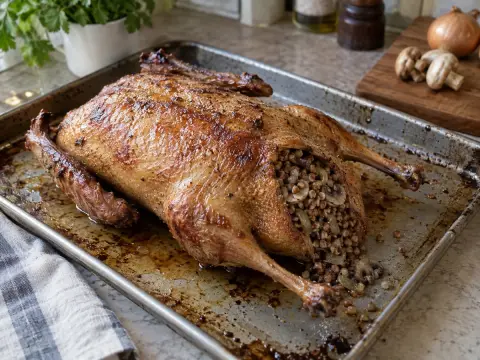
Serve with mashed potatoes, buckwheat or braised cabbage. For a whole bird, use the separate duck with apples and oranges recipe. Another option is duck with buckwheat stuffing. Whole-bird cooking times should not be applied to individual legs.
Transfer leftovers into shallow containers and refrigerate within 2 hours of cooking, or within 1 hour above 32 °C / 90 °F. Store at 4 °C / 40 °F or below and use within 3 days. Reheat the portion you need to 74 °C / 165 °F throughout. The apples and skin will soften after refrigeration.
Recipe video: Duck legs with apples: roasting-bag variation
Important: This video uses a roasting bag. The written recipe uses a foil-covered dish and an uncovered browning stage. The video is not in English.
Images are AI-generated.
FAQ
How long do duck legs with apples take in the oven? +
For legs weighing about 300 g each, allow 90 minutes covered at 160 °C / 320 °F, a further 20 minutes with the apples and 15-20 minutes uncovered at 200 °C / 390 °F. Tougher duck needs extra covered cooking before the apples go in. The meat must reach at least 74 °C / 165 °F.
Why are my duck legs still tough? +
A safe internal temperature and tender texture are separate checks. Duck legs contain connective tissue that needs longer cooking to soften. Cover the dish, return to 160 °C / 320 °F and continue in 15-minute intervals, checking tenderness and the liquid in the dish.
Which apples are best with roast duck? +
Choose firm sweet-tart apples such as Granny Smith or Braeburn. Very soft or overripe apples break down more quickly. Thick wedges with their peel left on usually hold their shape better.
Do duck legs need to marinate overnight? +
Not for this method. Salt and herbs added before roasting are sufficient. If seasoning ahead, keep the duck covered in the refrigerator and within its use-by date. Do not leave raw duck marinating on the counter.
Can I use a roasting bag instead of foil? +
Use an oven roasting bag only according to its manufacturer instructions, away from heating elements and oven walls. For the browning stage, transfer the cooked duck safely to an open dish. Check tenderness and internal temperature rather than relying on a fixed time.
Why is the duck skin not crisp? +
Moisture, crowding and juices on top of the skin prevent browning. Uncover the dish, skim excess fat and keep the skin exposed without basting at the end. Avoid excessive heat because the apple wedges and skin edges can burn.
Can I roast the legs without apples? +
Yes, roast them with the onions using the same covered-then-uncovered method. The flavour will lack the apple acidity. Do not replace apples with potatoes and expect them to cook in the same 20 minutes.
Should I double the cooking time for eight servings? +
No. Leg size, spacing and oven performance matter more. Use two dishes if the duck cannot fit in one layer and check each leg individually. Scale the ingredient amounts, not the cooking time in direct proportion.
- Comment
or post as a guest
Be the first to comment.