avg —
Oven-Roasted Duck with Buckwheat Stuffing

Instructions
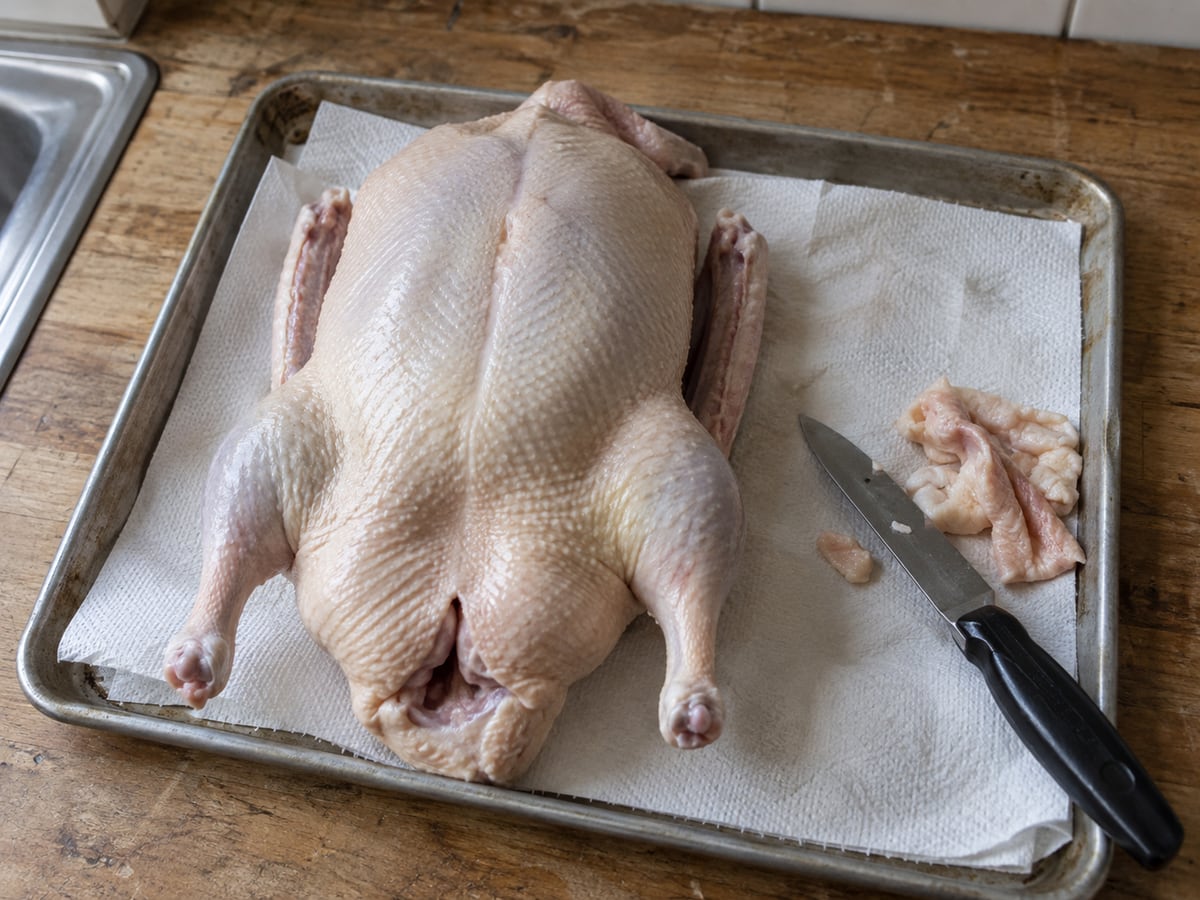
Prepare the duck. Thaw the duck completely in the refrigerator, remove the giblet pack and trim large pads of fat near the neck and tail. Do not wash the bird. Pat it dry and rub inside and out with about two-thirds of the salt, the paprika and half the pepper.
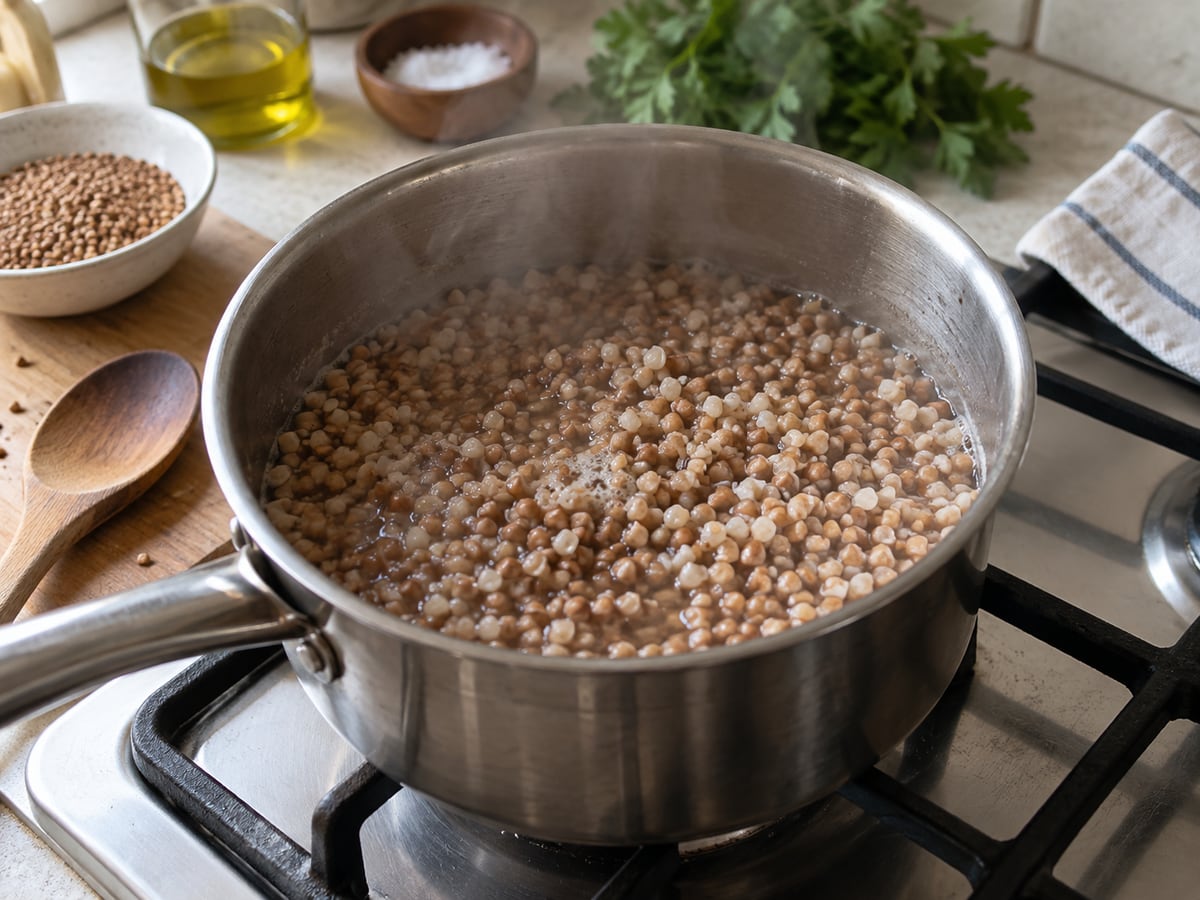
Partly cook the buckwheat. Rinse the buckwheat, add the water for buckwheat listed in the ingredients and simmer for 10-12 minutes until partly cooked. Remove from the heat and leave covered for 5 minutes. The groats should retain their shape; drain any free water.
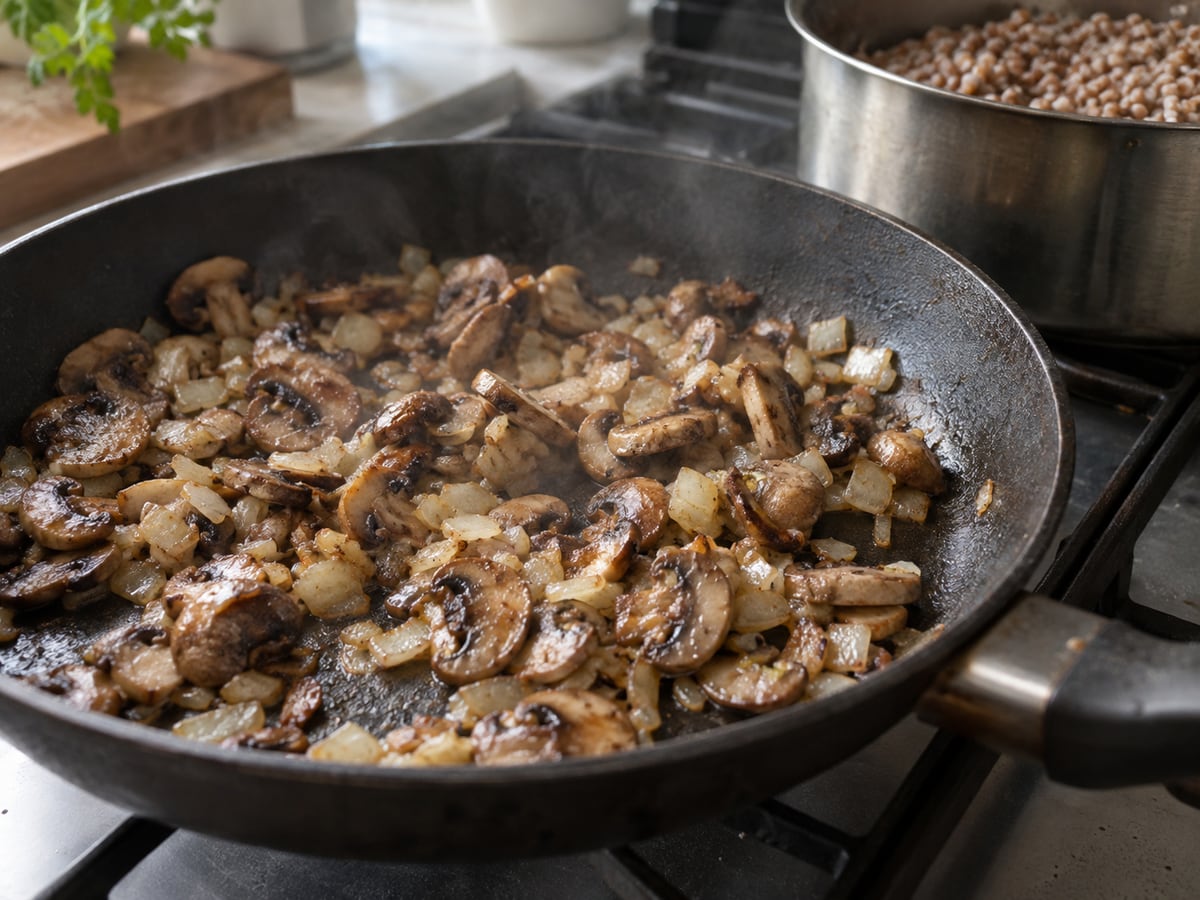
Fry the onion and mushrooms. Chop the onion and mushrooms. Heat the oil in a frying pan, cook the onion for 4 minutes, then add the mushrooms and cook for another 8-10 minutes until the liquid has evaporated. Mix with the buckwheat, remaining salt and pepper.
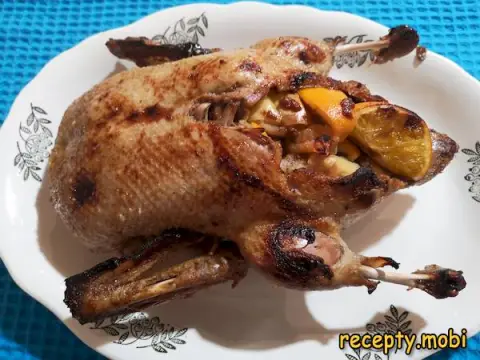
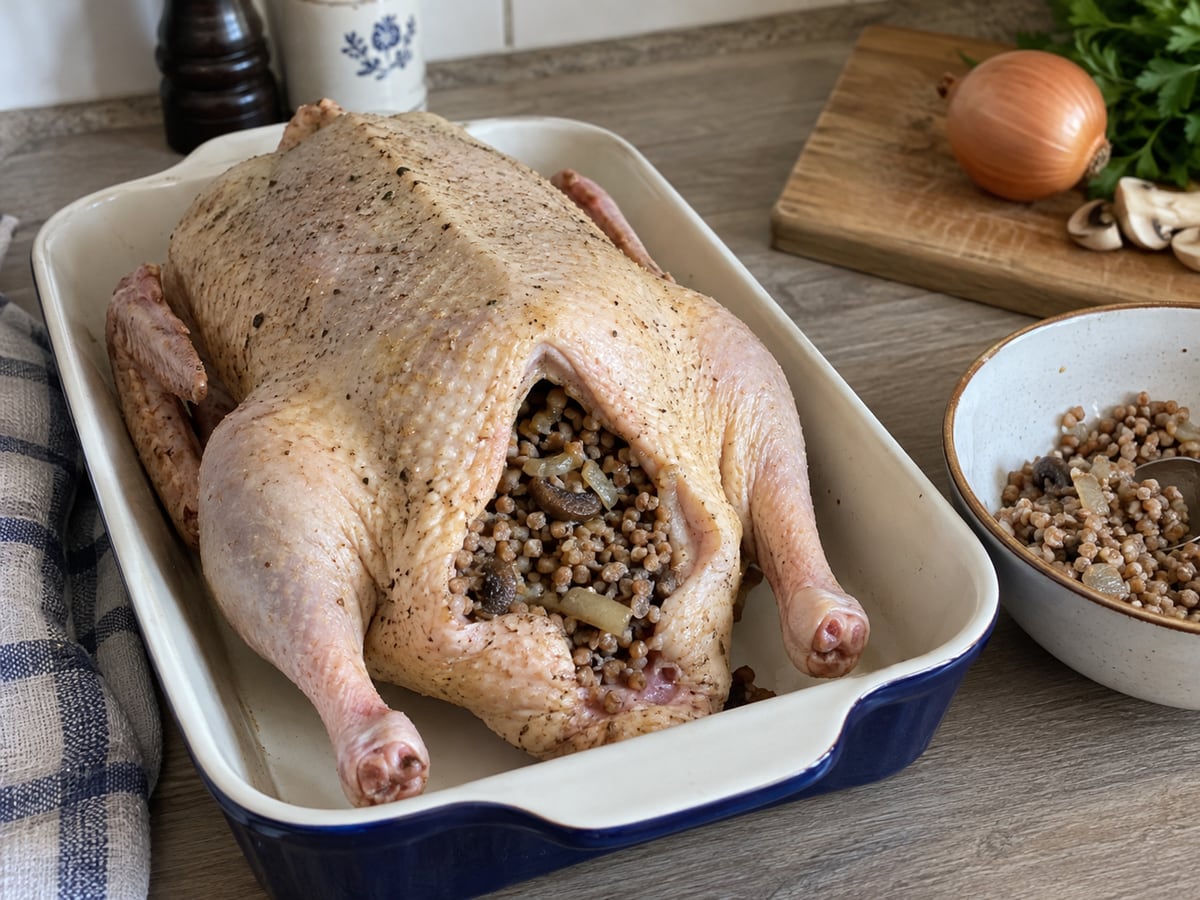
Fill the duck loosely. Heat the oven to 180 C or 355 F. Spoon the warm buckwheat into the duck without filling the cavity more than two-thirds full. Secure the opening with kitchen string or skewers and tuck the wings underneath. Cook any leftover stuffing separately rather than packing it in.
Roast the duck in a bag. Put the duck breast-side up in an oven-safe roasting bag, close it according to the maker's instructions and set it in a deep roasting tray. Pour the water for the roasting tray listed in the ingredients into the tray, keeping the bag clear of the oven walls and heating elements. Roast for about 2 hours at 180 C or 355 F.
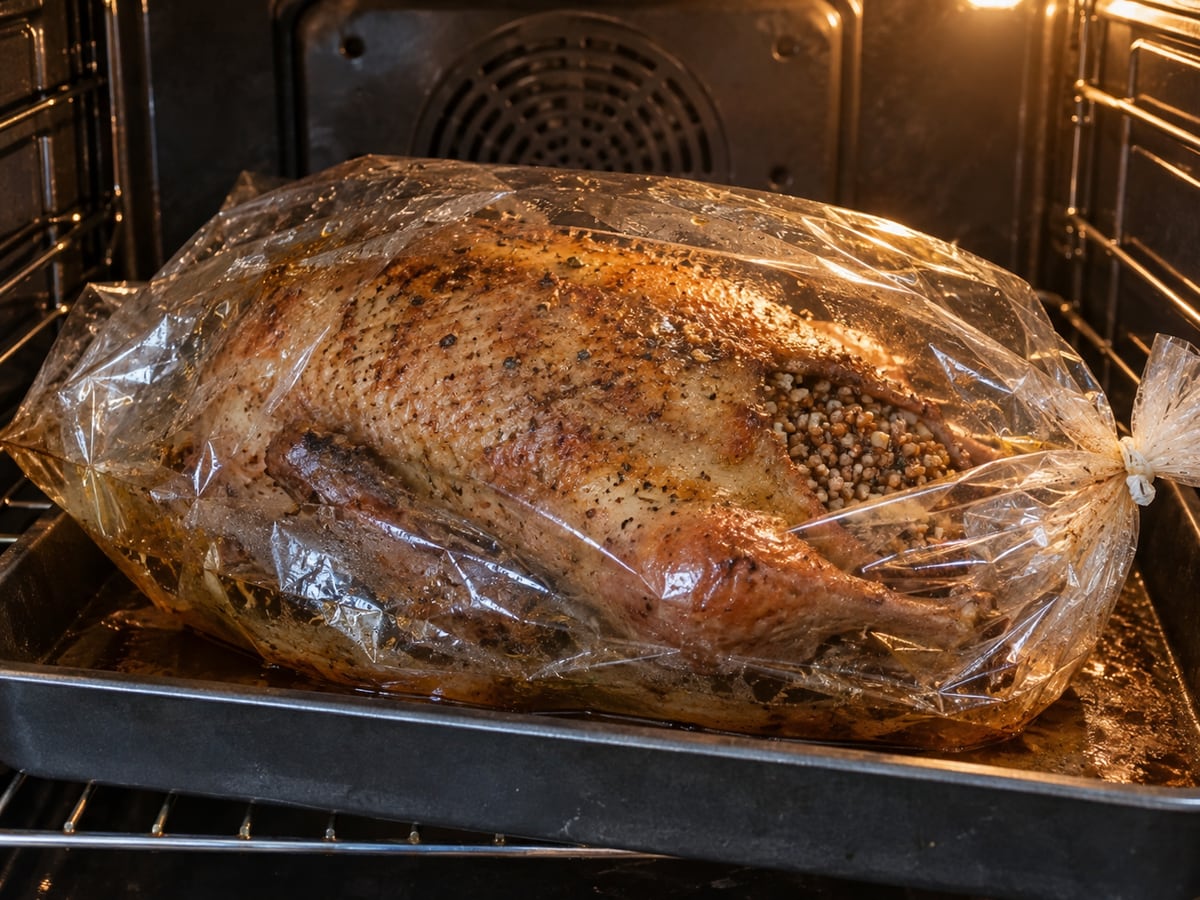
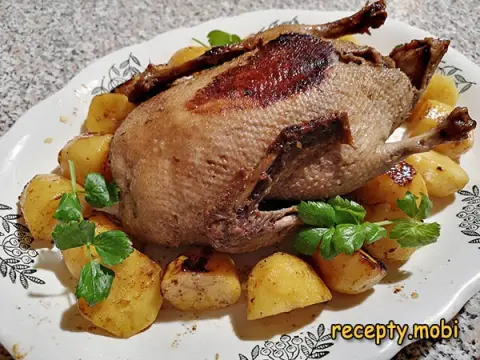
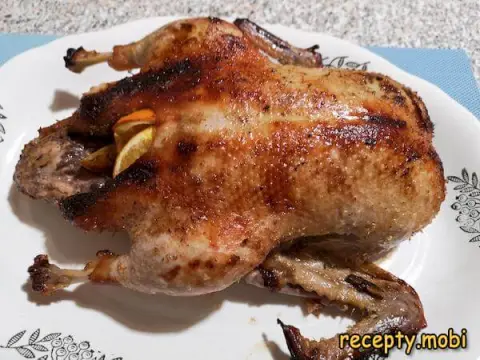
Brown the skin and check doneness. Carefully cut the bag open, avoiding the hot steam. Increase the heat to 200 C or 390 F and brown the skin for 15-20 minutes. Check the breast, thick thigh away from bone and centre of the buckwheat with a thermometer: each must reach at least 74 C or 165 F. Continue roasting if necessary. Rest the duck for 20 minutes, remove the stuffing and serve it beside the carved meat.
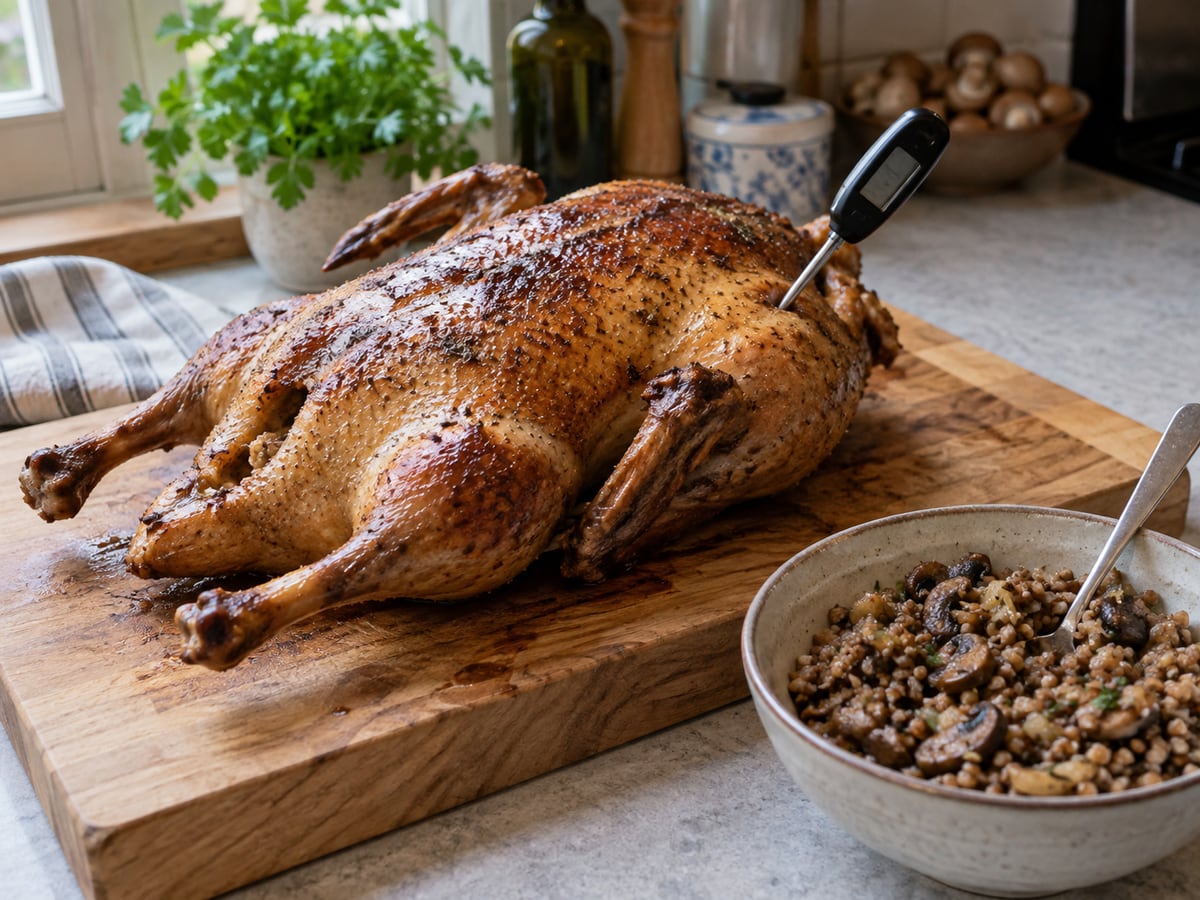


How to keep the buckwheat filling moist
Cook the buckwheat only partway; it finishes cooking inside the duck. Fry the mushrooms and onion until their free liquid evaporates, then mix them with the warm groats. Keep the filling loose and lightly moist. You can omit the mushrooms and make it with onion alone.
Check the duck and the stuffing
A stuffed bird needs more than a visual check. Insert a food thermometer into the thickest breast and thigh meat, avoiding bone, and then into the centre of the buckwheat. Every reading must reach at least 74 C or 165 F. If the skin is already brown but the filling is cooler, cover the duck loosely with foil and keep roasting. The time given suits a bird around 2.2 kg; do not scale oven time in direct proportion to servings.
Servings and nutrition
Six portions give roughly 150 g cooked duck with skin per person plus a serving of buckwheat. About 700 kcal per serving is an estimate, not a measured value. It varies with the duck's fat content and how much skin is eaten. Water for the groats and for the roasting tray is listed separately; do not pour the tray water into the filling.
Serving and leftovers
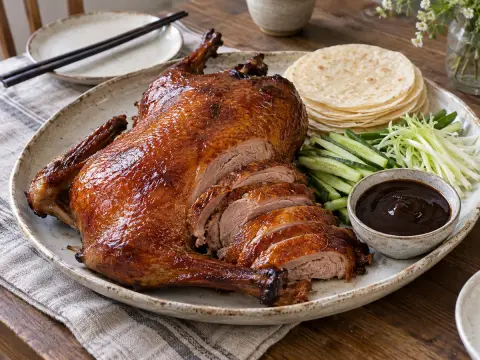
After the 20-minute rest, spoon the buckwheat into a serving bowl and carve the duck. This prevents the grains from soaking up excess fat. For another duck preparation, see our home oven Peking duck. Put leftover meat and stuffing into separate shallow containers within 2 hours and refrigerate for up to 3 days.
Recipe video: Duck with buckwheat stuffing in the oven
Important: The video shows a related method in Russian. Follow this recipe for the mushrooms, quantities and temperature checks.
Images were generated with AI for illustration.
FAQ
How long should a duck with buckwheat stuffing roast? +
For a 2.2 kg duck, allow about 2 hours at 180 C or 355 F in an oven bag, followed by 15-20 minutes at 200 C or 390 F after opening the bag. Ovens and birds vary. The duck and the centre of the stuffing must each reach 74 C or 165 F.
Should buckwheat be cooked before stuffing the duck? +
Yes. Simmer the groats for about 10-12 minutes until only partly cooked, then let them stand for 5 minutes. Uncooked buckwheat may cook unevenly inside the bird and draw moisture from the stuffing.
Can I leave out the mushrooms? +
Yes. Replace them with another 100 g onion, or make the filling with buckwheat and onion alone. The flavour will be a little less savoury.
Should the duck be packed tightly with buckwheat? +
No. Fill the cavity about two-thirds full without pressing down. The centre must heat through, and the groats need a little room to expand.
How can I tell when a stuffed duck is cooked? +
Use a food thermometer in the thickest breast and thigh meat without touching bone, then check the centre of the stuffing. Each spot must read at least 74 C or 165 F. Brown skin and clear juices are not reliable substitutes.
What if I do not have an oven bag? +
Use a deep roasting pan loosely covered with foil. Remove the foil near the end to brown the skin. The timing may change, so rely on the meat and stuffing temperatures.
What if some buckwheat does not fit inside the bird? +
Do not pack it in. Heat the remaining filling separately in an ovenproof dish or frying pan and serve it alongside the duck.
How should leftovers be stored? +
Remove the stuffing after the duck has rested. Refrigerate meat and stuffing in separate shallow containers within 2 hours. Keep for up to 3 days and reheat until hot throughout.
- Comment
or post as a guest
Be the first to comment.