avg —
Peking Duck in the Oven: Crispy Skin Home Recipe

Instructions
Prepare the duck. Thaw the duck completely in the refrigerator if frozen. Remove the giblet pack from the cavity and trim the large pads of fat at the neck and tail. Do not rinse the duck. Instead, pat the skin and cavity dry with kitchen paper. Tuck the wing tips under the bird and loosely tie the legs with kitchen string.
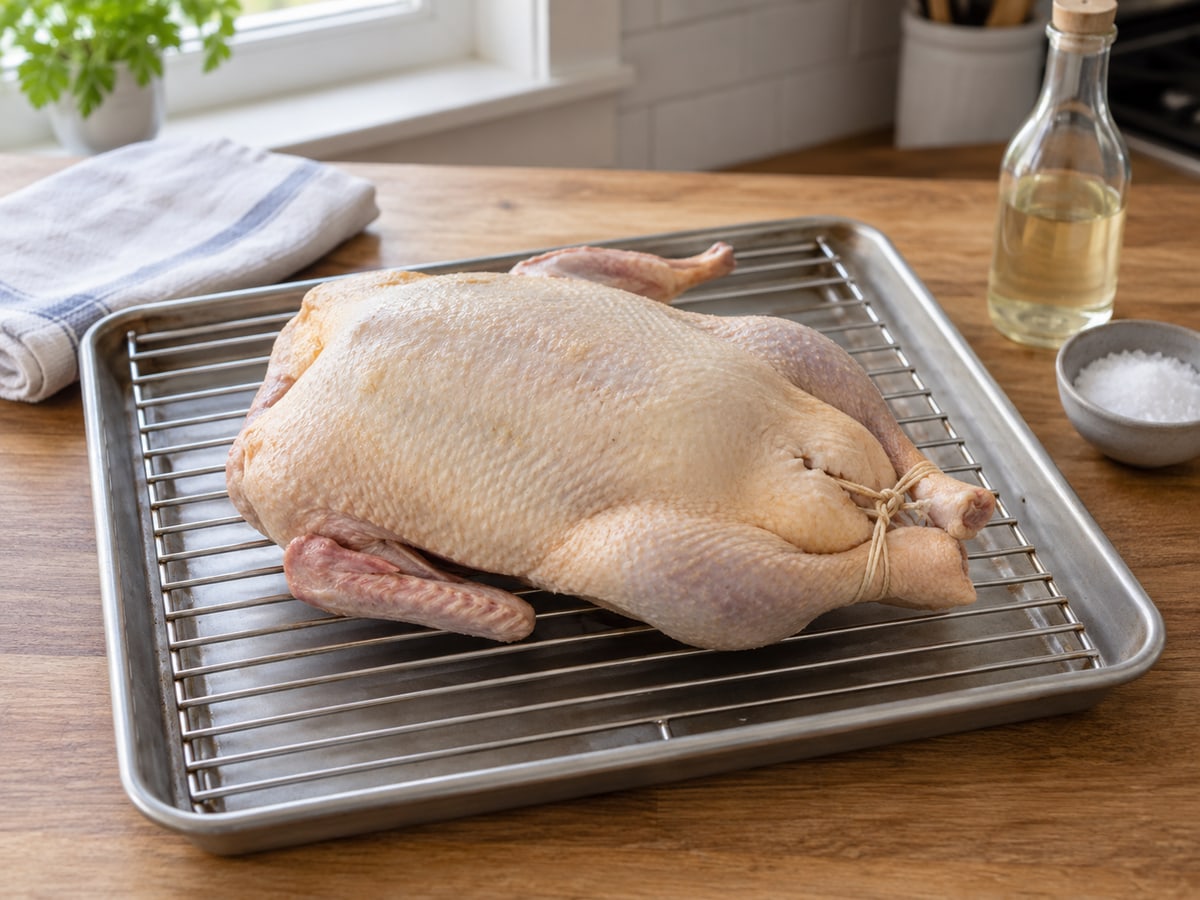
Scald and dry the skin. Set the duck breast-side up on a wire rack over a deep tray. Slowly pour boiling water over the skin only, then pat it very dry again. Rub the cavity and skin with the salt. Refrigerate the duck on the rack uncovered for 12-24 hours. In a shared fridge, keep the tray on the bottom shelf and away from ready-to-eat food.
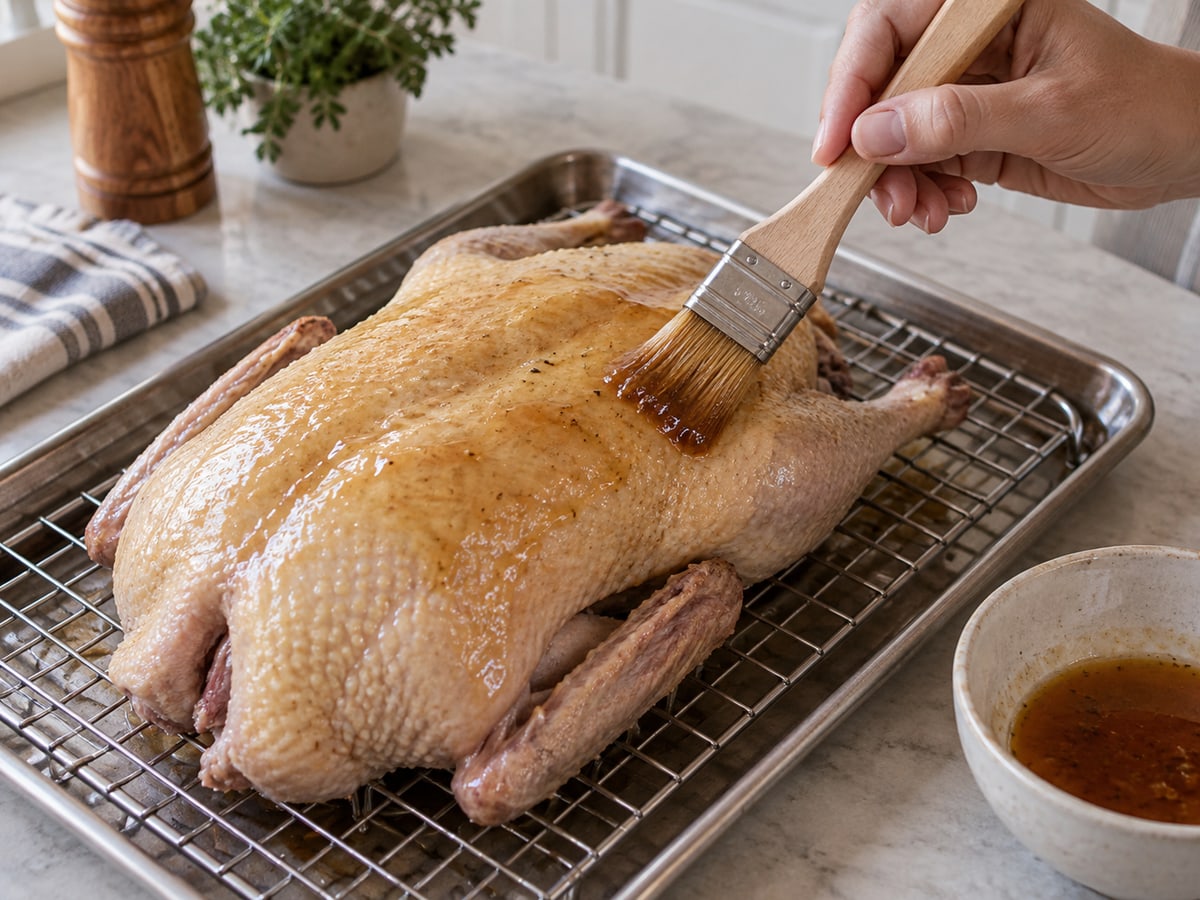
Make the glaze and prepare the oven. Take the duck from the fridge 40 minutes before roasting. Mix the honey, rice vinegar, soy sauce and five-spice powder. Heat the oven to 200 C or 400 F with conventional top and bottom heat. Put 250 ml water in a clean deep roasting tray, set a rack on top and place the duck breast-side up. Brush on a thin coat of the glaze without pouring the remainder over it.
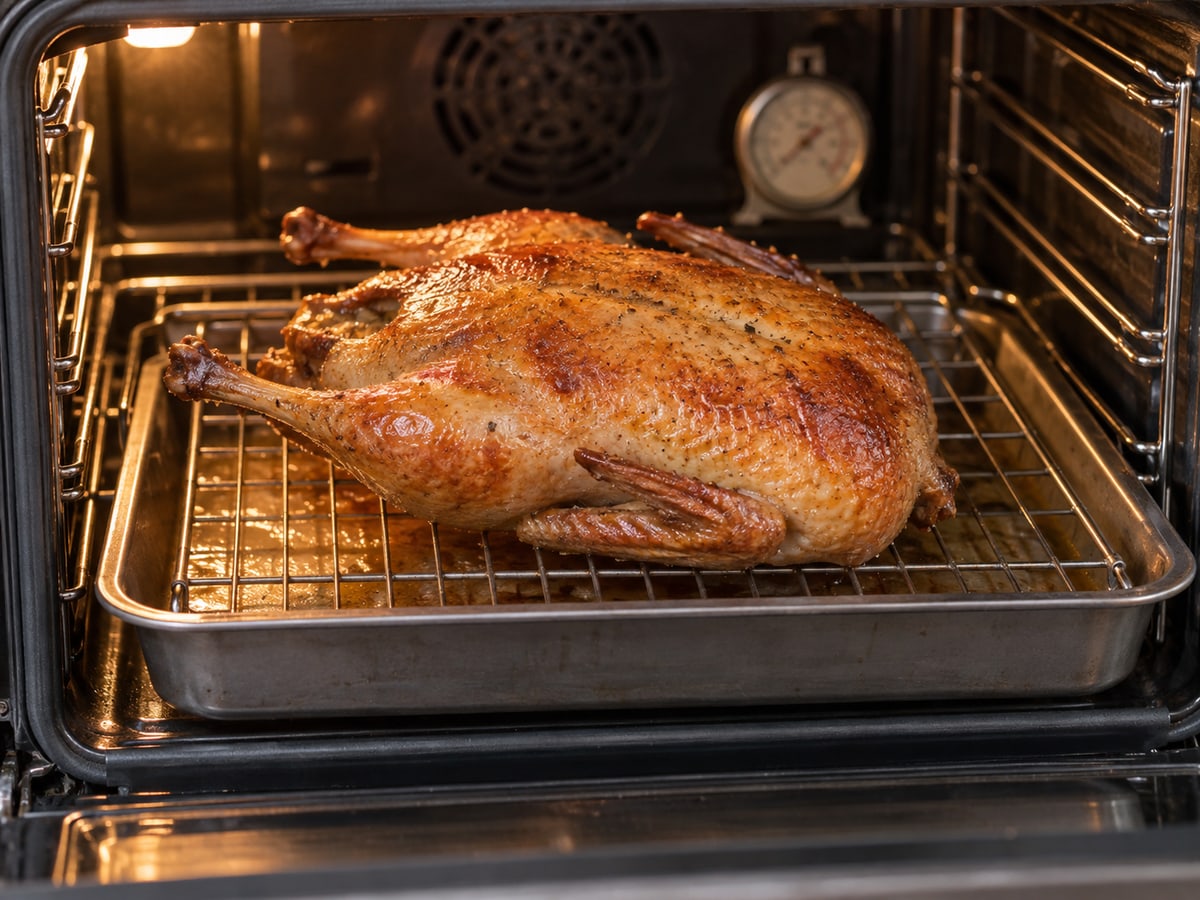
Roast on a rack. Roast for 25 minutes at 200 C or 400 F, then reduce the oven to 170 C or 340 F. Thirty-five minutes after reducing the heat, brush on a second thin coat of glaze. Roast for another 40-50 minutes. Carefully add hot water if the tray dries out. Do not baste the skin with rendered fat, which softens the crust.
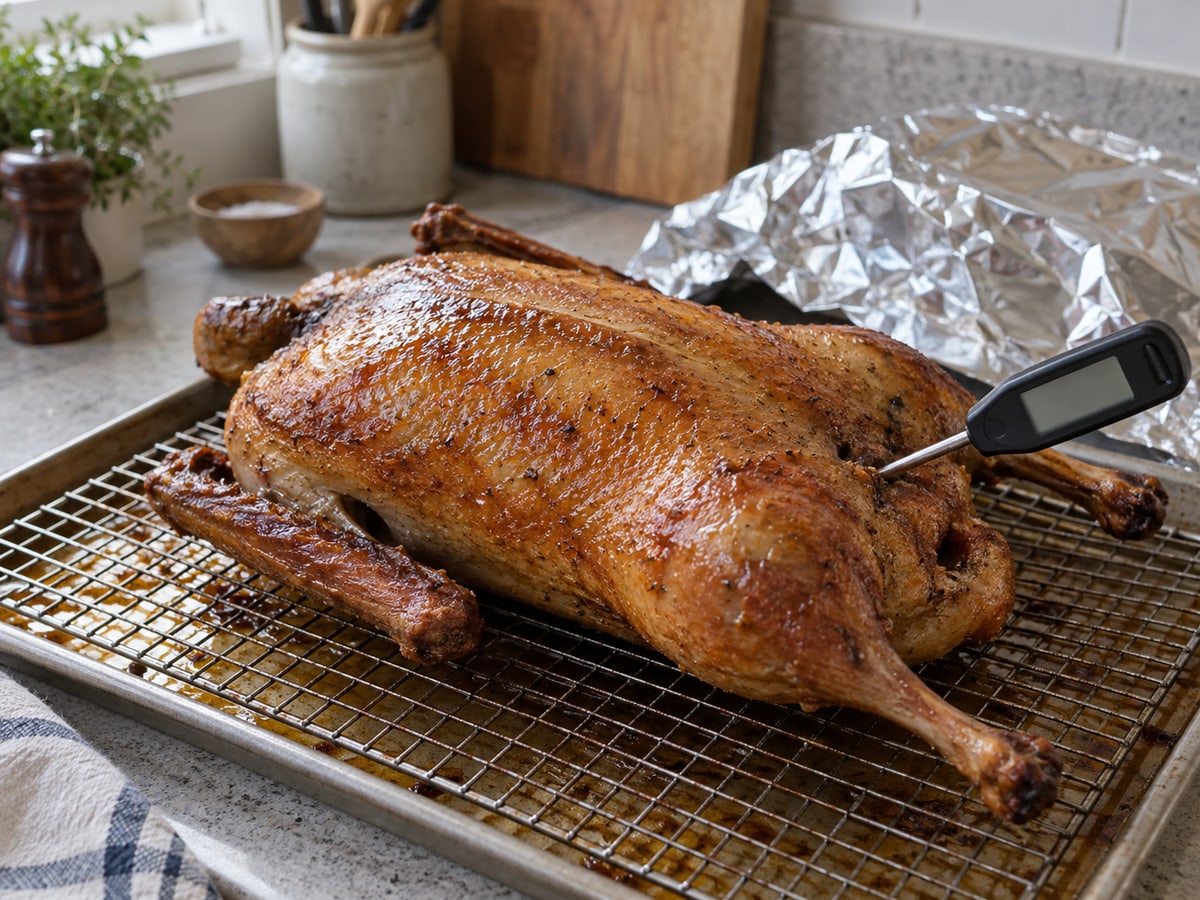
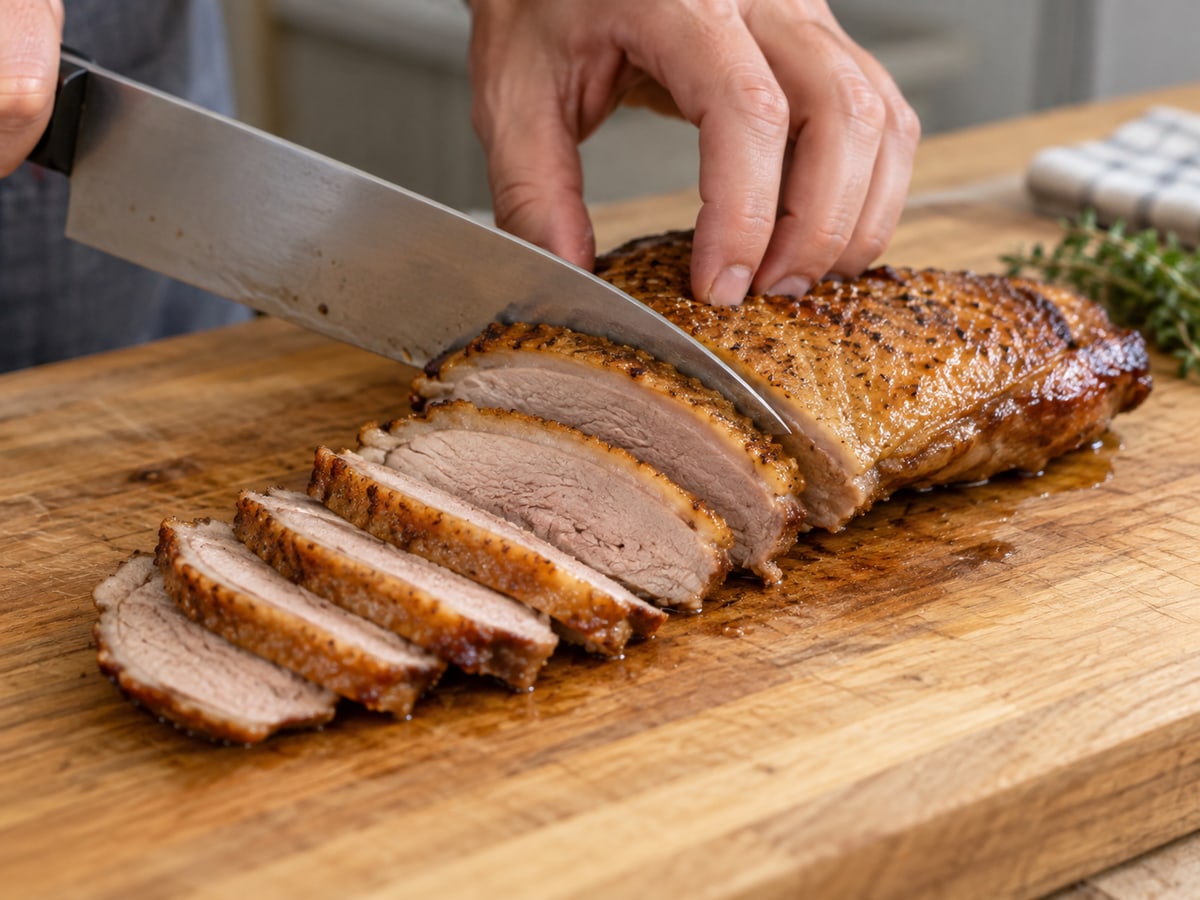
Check doneness and carve. Check the thickest part of the thigh without touching bone: it should reach 74 C or 165 F. If the skin is colouring faster than the meat cooks, cover the duck loosely with foil. Transfer the cooked duck to a rack and rest for 15 minutes. Separate the legs, lift the breast from the bone and slice it thinly with the skin.
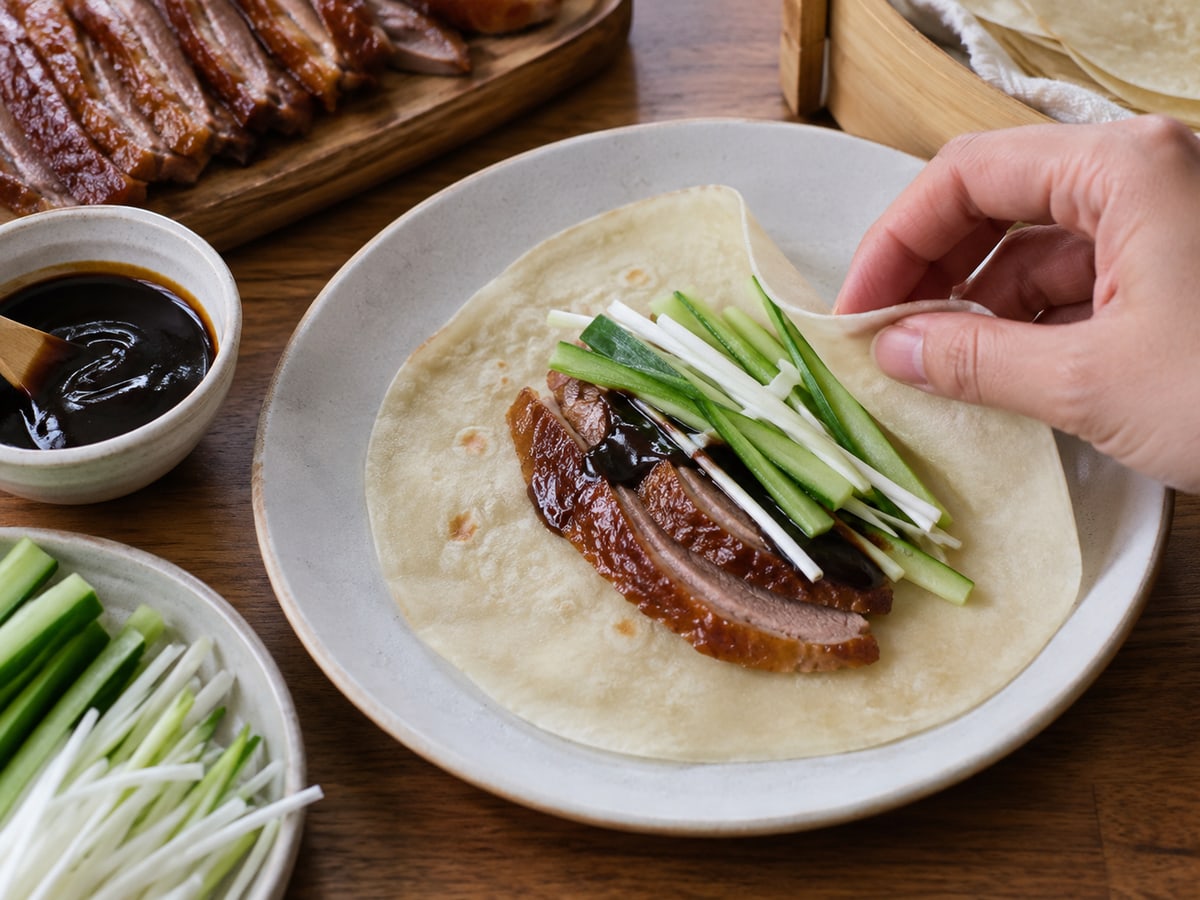
Assemble the pancakes. Cut the cucumber and scallions into fine matchsticks. Briefly warm the pancakes according to the packet directions so they are flexible. Spread a little hoisin over each pancake, add duck, cucumber and scallions, then roll it up. Serve at once while the skin is still crisp.


Why this is a practical home version
Traditional Peking duck uses specialist ovens and lengthy professional skin preparation. A domestic oven cannot copy that equipment, but it can produce an honest, useful result with dry skin, a thin glaze, a rack over a tray and a temperature check in the thigh.
This recipe makes 6 servings with pancakes, hoisin and vegetables. You can change the number of pancakes to suit your guests, but do not scale the duck weight and oven time down mechanically. Check a large bird with a thermometer instead.
Nutrition and serving size
The estimate is about 830 kcal per serving with pancakes, hoisin, cucumber and scallions. It is a guide rather than a laboratory value: the actual amount changes with the duck's fat, the amount of skin and the pancake size. Side dishes and drinks are not included.
One serving is about three filled pancakes. For a lighter plate, add more cucumber and scallions to each pancake and use hoisin by the teaspoon rather than spreading a thick layer.
Serving, storing and reheating
Serve the duck soon after carving, when the skin is at its crispest. For other ideas, see our duck recipes. Store the pancakes, cut vegetables, hoisin and duck separately.
Cool leftovers and refrigerate them within 2 hours. Keep for up to 3 days. Before reheating, separate the skin and meat, place them on a rack and warm at 180 C or 355 F until hot through. Do not reheat assembled pancakes because they turn soggy.
Recipe video: Peking duck in a home oven
Important: The video shows a related method. Use this recipe for the quantities, oven temperature and timing.
Images were generated with AI for illustration.
FAQ
Why dry the duck uncovered in the fridge? +
Uncovered chilling removes moisture from the surface of the skin. That makes it more likely to render and crisp in the oven instead of staying rubbery. Leave the duck on a rack so air can reach all sides.
Can I skip the boiling-water step? +
You can, but the skin will be less taut and dry. Pour the water over the outside skin only, then pat the duck dry straight away. Do not fill the cavity with water or soak the bird.
How is this different from restaurant Peking duck? +
Restaurants use specialist ovens and professional skin preparation. This is a transparent home adaptation built around drying, glazing and roasting on a rack. It does not present a domestic oven as a restaurant technique.
How do I know the duck is cooked? +
Use an instant-read thermometer in the thickest part of the thigh without touching bone. Aim for 74 C or 165 F. If the skin has browned before the meat is ready, tent the duck loosely with foil and continue roasting.
Why use a rack over a tray of water? +
The rack lets fat drip away rather than soften the skin. A small amount of water in the tray helps reduce smoke from the rendered duck fat. Keep an eye on it and top it up with hot water if it evaporates.
What can I use instead of hoisin sauce? +
A sweet Chinese plum sauce is the closest simple alternative. Soy sauce alone is not a substitute because it is saltier and much thinner. Serve the alternative separately rather than changing the glaze.
How should I serve Peking duck? +
Spread a little hoisin on a pancake, add 2-3 thin slices of duck with skin, cucumber and scallions. Fold up the lower edge and roll it. Assemble portions just before eating so the pancakes do not turn soggy.
How should leftovers be stored and reheated? +
Cool the duck and refrigerate it within 2 hours. Keep it for up to 3 days. Reheat skin and meat separately on a rack at 180 C or 355 F until hot through. Keep the pancakes, vegetables and sauce separate.
- Comment
or post as a guest
Be the first to comment.