avg —
Beef Langet in a Skillet: Tender Thin Steaks

Instructions
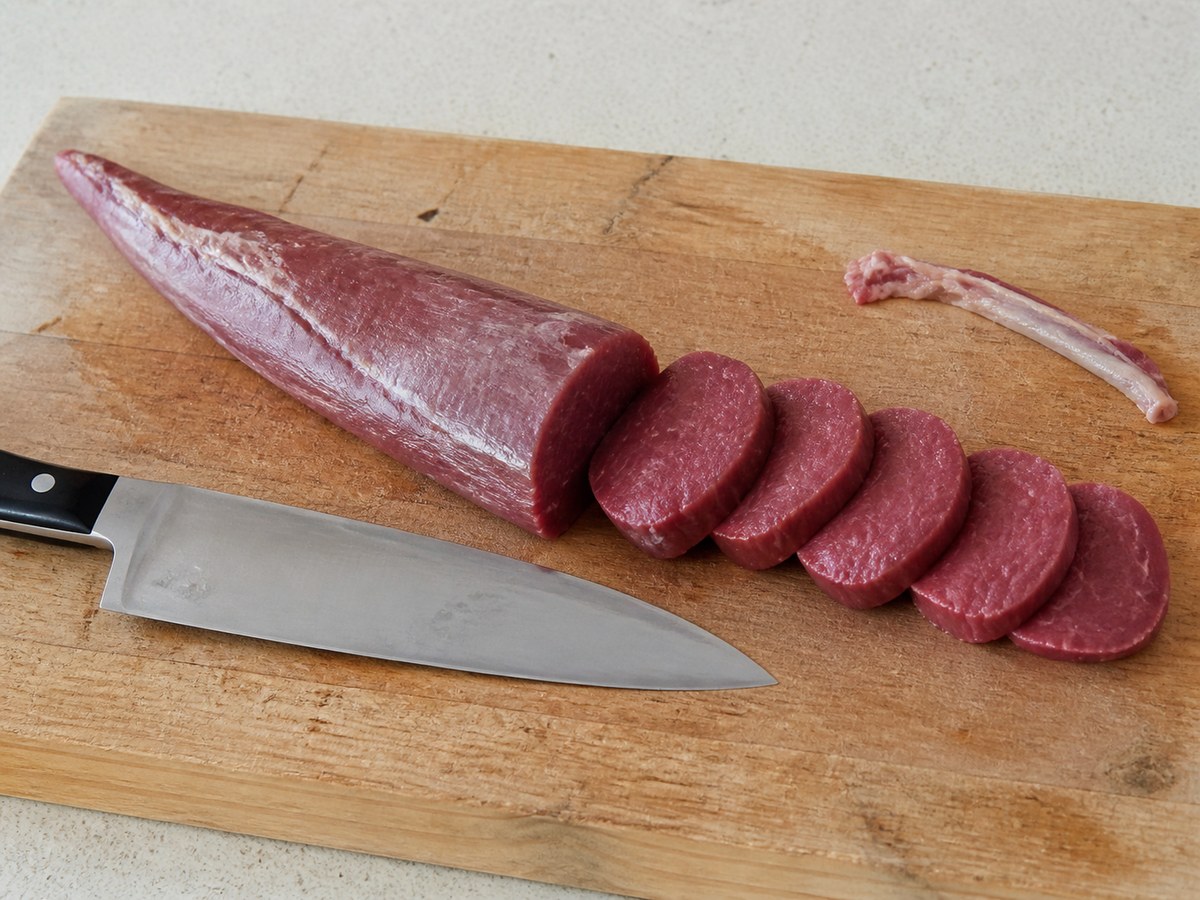
Trim and slice the tenderloin. Remove the tough silverskin from the narrow end of the tenderloin and pat the beef completely dry. Identify the direction of the muscle fibres and cut strictly across them into 8 slices, each 1-1.5 cm thick.
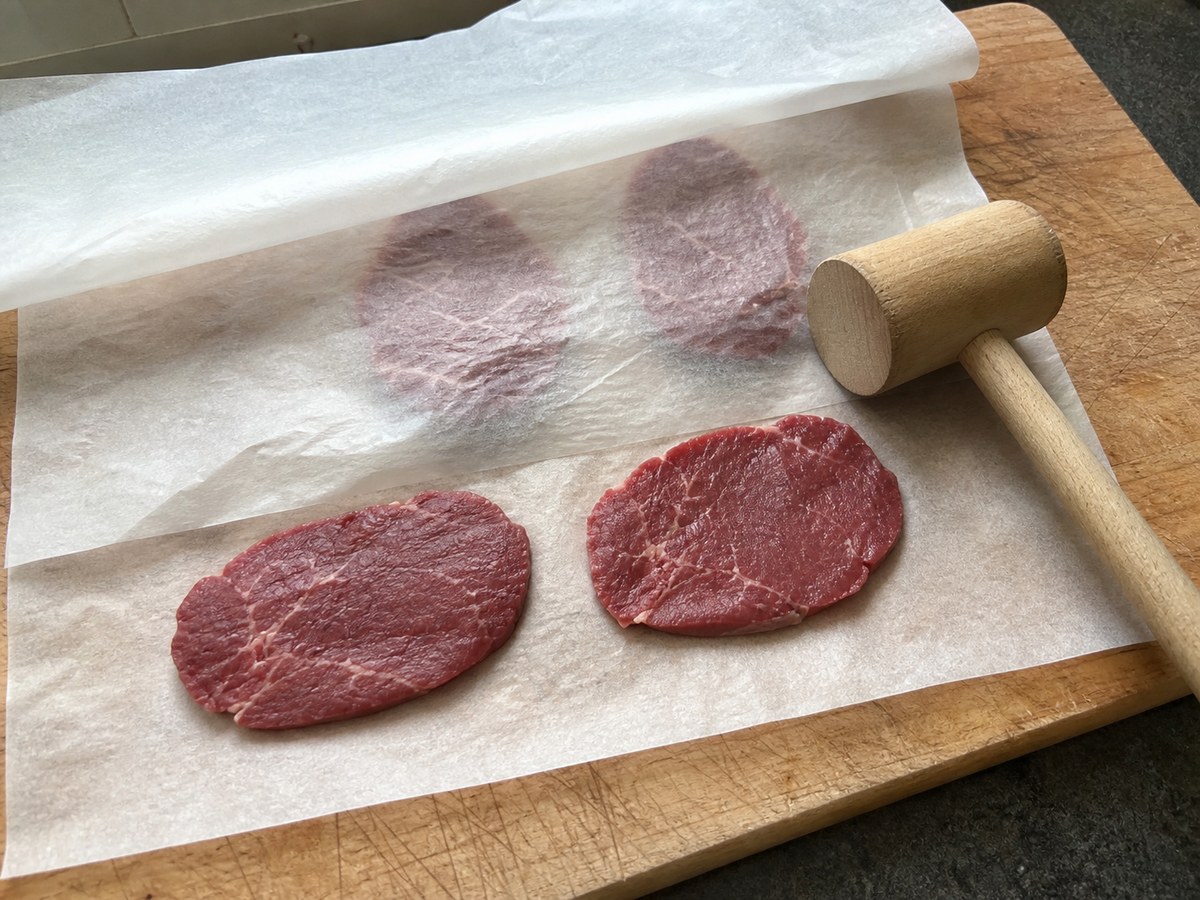
Flatten the beef lightly. Place the slices between two sheets of baking parchment. Give each side 2-3 gentle taps with the smooth side of a meat mallet, evening the thickness to 8-10 mm. Do not turn the meat into a wide, paper-thin cutlet.
Heat the skillet. Season the langets with salt and black pepper immediately before cooking. Set a heavy steel or cast-iron skillet over medium-high heat for 3-4 minutes. Add 15 g clarified butter and spread it into a thin film.
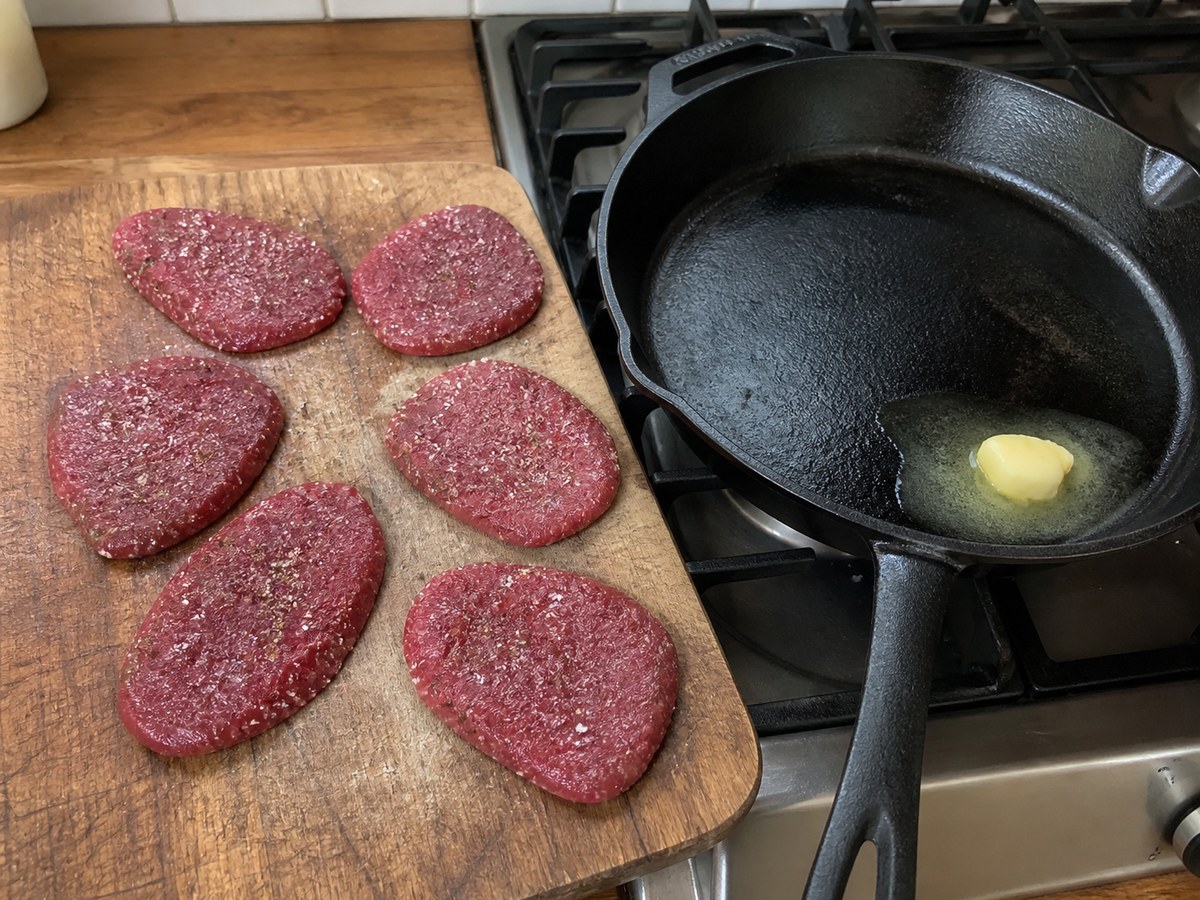
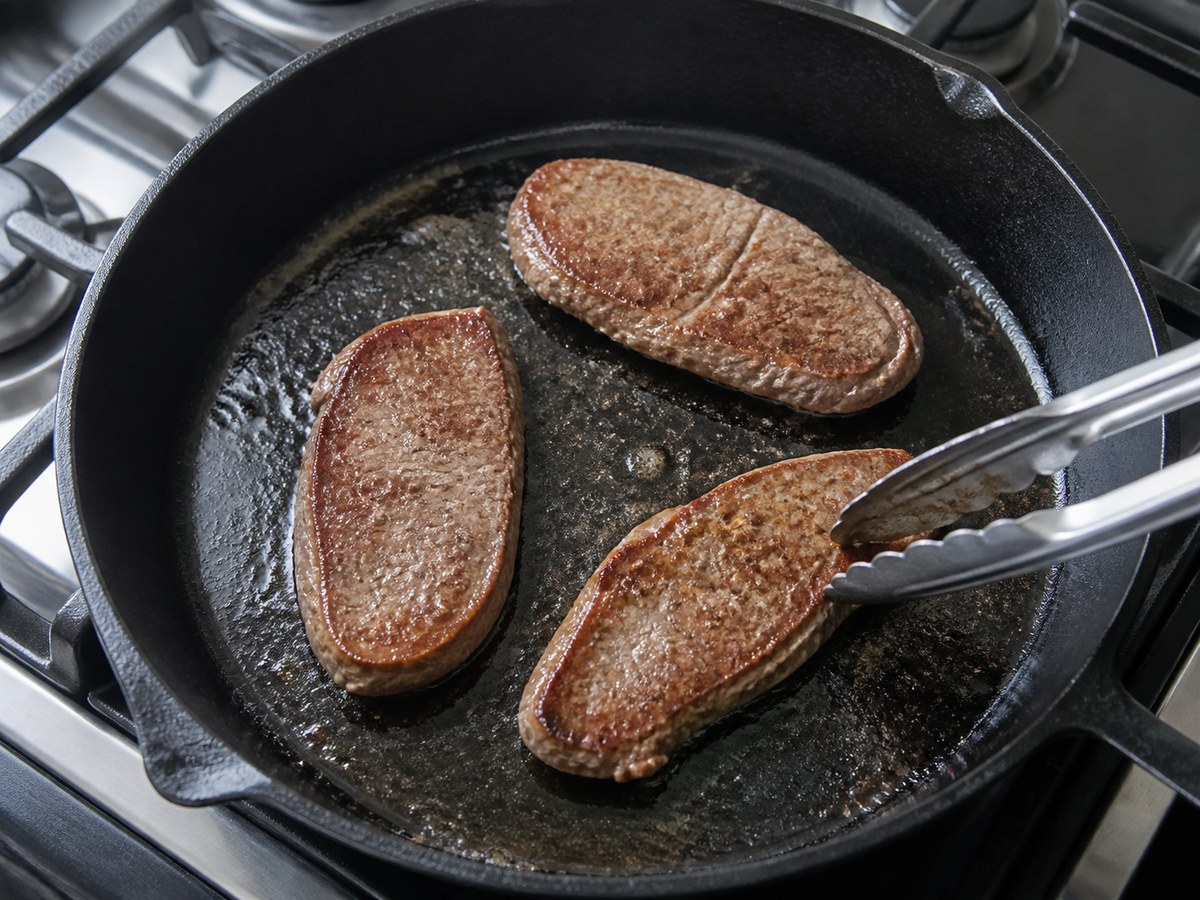
Pan-fry quickly. Add half of the beef in a single layer with space between the pieces. Cook for 1.5-2.5 minutes, turn with tongs and cook the second side for the same time. Repeat with the remaining beef and clarified butter. Move the langets to a warm plate and rest for 3 minutes.
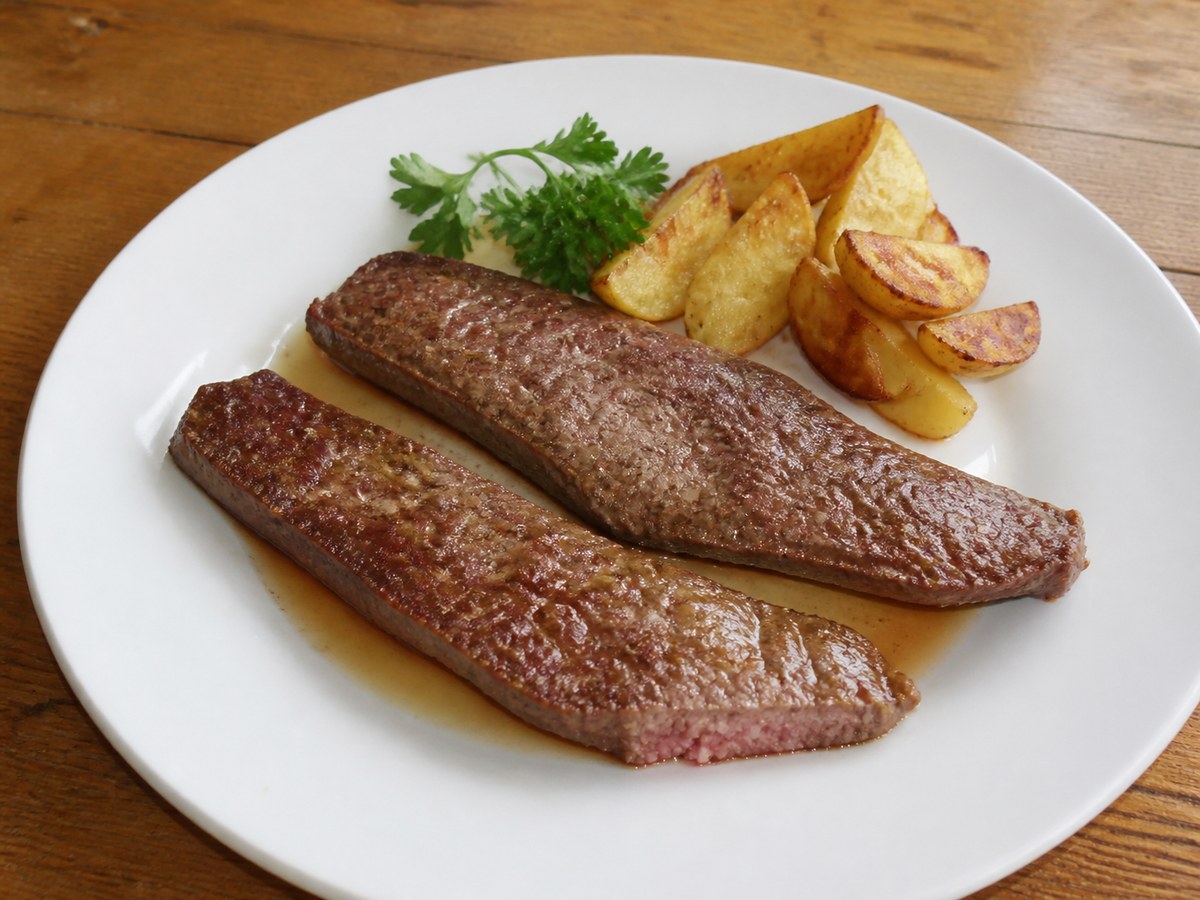
Make the pan juices. Reduce the heat to medium, add the stock or water and scrape up the browned bits. Simmer for 2-3 minutes. Remove the skillet from the heat and whisk in 15 g unsalted butter plus any juices released while the beef rested. Spoon over the langets and add the parsley.


What is beef langet?
Langet is a portioned beef dish cut from tenderloin. Its name refers to the elongated, tongue-like shape of the slice. A classic serving contains two small pieces rather than one large steak.
A steak is generally thicker and may come from several different cuts. Langet is thin, flattened lightly and cooked much faster. Unlike breaded rump steak or schnitzel, natural langet contains no egg coating, flour or breadcrumbs.
How to choose the beef
The most reliable choice is the narrow tail end of a chilled beef tenderloin. It tapers naturally, making it easy to produce small elongated pieces of even thickness. The surface should look moist but not sticky, with an even colour.
Chuck, round and neck suit slow cooking but are not equal substitutes here. Their connective tissue cannot soften during a few minutes in a skillet. If tenderloin is unavailable, choose a different cooking method rather than extending the frying time.
Thickness and frying time
| Thickness after flattening | First side | Second side | Result |
|---|---|---|---|
| 6-7 mm | 1-1.5 minutes | 1-1.5 minutes | Thin and cooked through |
| 8-10 mm | 1.5-2.5 minutes | 1.5-2.5 minutes | Juicy, depending on pan heat |
| 12 mm | 2.5-3 minutes | 2-3 minutes | A more pronounced tender centre |
Start timing only after the beef enters a fully heated skillet. A cold pan, wet meat or an oversized batch lowers the temperature and causes the beef to release liquid instead of browning.
How to check doneness
For whole cuts of beef, a food-safe reference point is 63 C in the centre followed by a rest of at least 3 minutes. A probe is difficult to position accurately in a very thin langet, so even thickness, a thoroughly heated skillet and the absence of cold spots are particularly important.
For beef that is cooked through, use 6-7 mm slices and continue until no raw colour remains in the centre. Do not compensate for a tough cut with prolonged frying because the meat will become drier rather than more tender.
Why beef langet turns tough or pale
- The cut is unsuitable. Fast frying is designed for tenderloin, not chuck or round.
- The slices follow the grain. Long muscle fibres are harder to chew after cooking.
- The beef is pounded heavily. A damaged, overly thin slice loses moisture quickly.
- The surface is wet. Water must evaporate before browning can begin.
- The skillet is crowded. Cook in two batches so the temperature stays high.
- The cooking time is too long. Tenderloin does not need to braise in the pan.
Serving and storage
Serve langet with fried potatoes, mashed potatoes or vegetables. The light pan juices support the flavour of the tenderloin without hiding its browned surface. Serve immediately after the short rest while the beef is hot.
Refrigerate leftovers in a covered container at 4 C or below for up to 3 days. Reheat briefly over low heat with 1-2 spoonfuls of stock. Strong repeated frying dries the thin pieces very quickly.
How this recipe differs from other beef dishes
Tender oven-baked beef cooked whole takes several hours and uses chuck or shoulder. Langet answers a different query: tenderloin, thin individual pieces and less than 10 minutes at the hob.
Beef Stroganoff with mushrooms is cut into strips and finished in sauce. Langet keeps each tenderloin slice whole and uses only a small amount of light pan juice.
Recipe control points
For repeatable results, the method fixes the cut, slicing direction, thickness before and after flattening, salt quantity, batch size, cooking time per side and the short resting period. These controls separate langet from a generic fried-beef recipe and help preserve the tenderness of the thin tenderloin.
Recipe video: How to cook classic beef langet
Important: The video demonstrates a closely related classic method. Use the exact quantities and timing in this article.
Images are AI-generated visual guides for the cooking steps.
FAQ
Which cut of beef is used for langet? +
Classic langet is cut from the narrow tail end of the beef tenderloin. This cut is naturally tender and suits very fast cooking without a long marinade.
How thick should a beef langet be? +
Cut the tenderloin across the grain into 1-1.5 cm slices, then flatten them gently to about 8-10 mm. The finished pieces should remain intact and elongated.
How long should beef langet cook in a skillet? +
A thin langet usually needs 1.5-2.5 minutes per side in a properly heated heavy skillet. The exact time depends on thickness, starting temperature and preferred doneness.
Should I pound beef langet? +
Flatten it only lightly with the smooth side of a mallet through baking parchment. Heavy pounding tears the fibres, makes the beef too thin and increases moisture loss.
Does classic langet need flour or breadcrumbs? +
No. Natural langet is pan-fried without flour, breadcrumbs or batter. A dry surface and a hot skillet create browning without a coating.
When should I salt beef langet? +
Season the slices immediately before they enter the skillet. If salted beef sits on the board for too long, moisture collects on the surface and slows browning.
Why did my beef langet turn out tough? +
A tougher cut may have replaced tenderloin, the meat may have been sliced with the grain, or it may have cooked too long. Tenderloin, cross-grain slicing and brief frying are all essential.
What should I serve with beef langet? +
Serve it with fried potatoes, mashed potatoes, green beans, vegetables or a fresh salad. Spoon the light pan juices over the beef instead of covering it with a heavy gravy.
- Comment
or post as a guest
Be the first to comment.