avg —
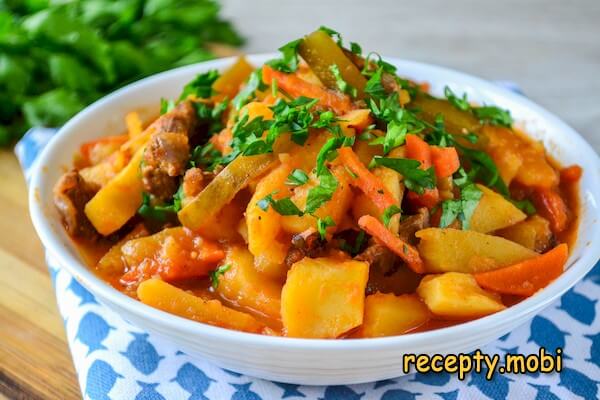
Tatar Azu with Pickled Cucumbers and Potatoes

Instructions
I prepare all the necessary ingredients. Peel and rinse all the vegetables. You can use beef or young veal for azu.
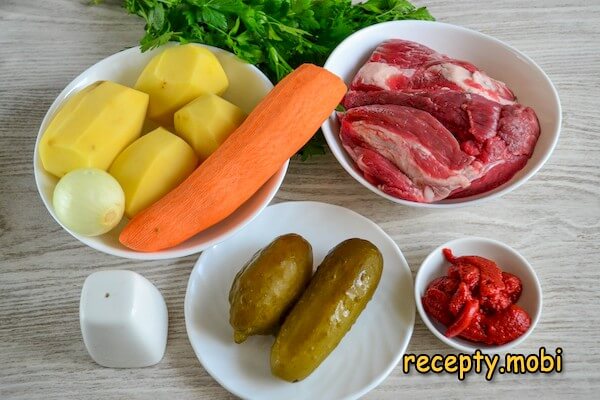
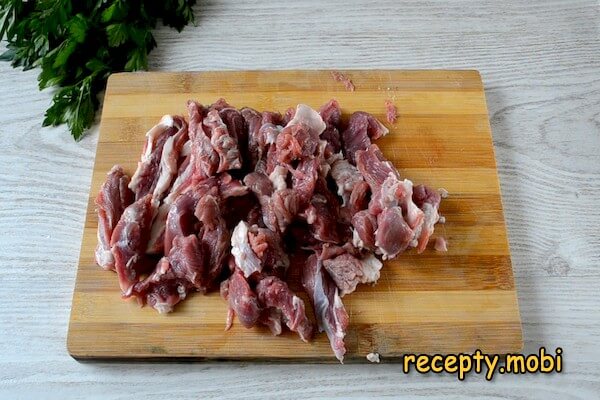
Cut the beef into thin strips or cubes. It is easier to cut the meat if it is slightly frozen or not completely thawed after the freezer.
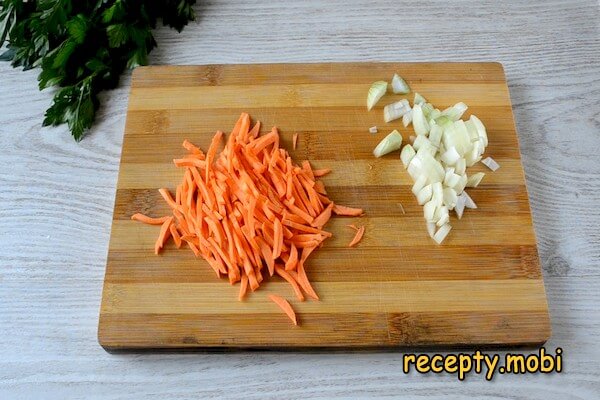
Finely chop the onion. Grate the carrot on a coarse grater or cut it into thin strips. I use plenty of carrot – it goes very well with the meat and the cucumbers and looks very appetizing in the finished dish.
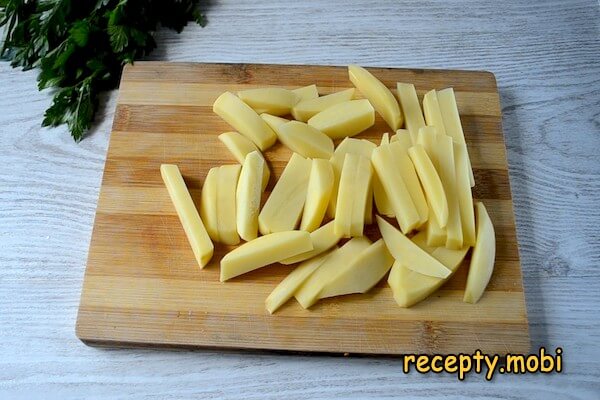
Cut the potatoes into sticks, like French fries.
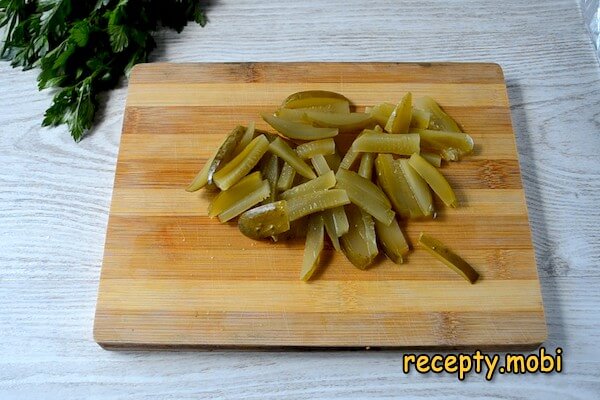
Cut the salted cucumbers into strips. You should use exactly salted cucumbers, not marinated ones. They are the ones that give the necessary sourness and bright flavour.
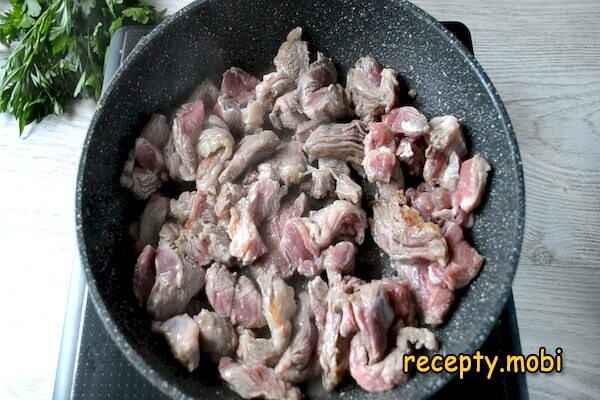
I heat a little vegetable oil in a frying pan, add the chopped meat to the well-heated pan and fry over above-medium heat, stirring frequently, so that each piece browns on the outside but stays juicy inside.
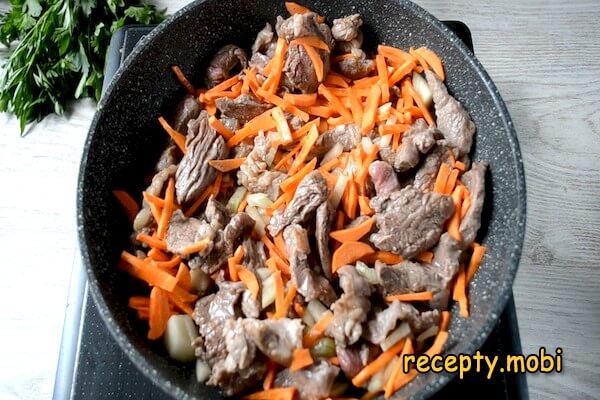
Then I add the onion and carrot to the pan and stew for another 2–3 minutes.
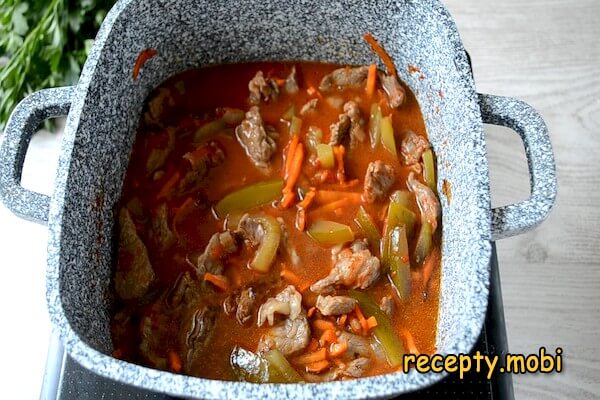
I transfer the contents of the pan to a sauté pan or a thick-walled pot and add the salted cucumbers and tomato paste. I add salt, pepper and spices. I add the salt bearing in mind that the dish already contains salted cucumbers.
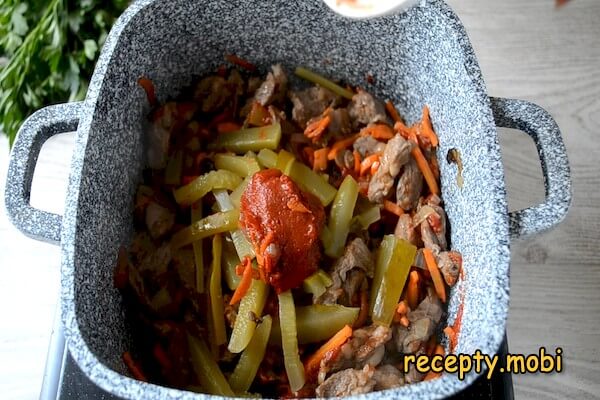
Now I pour in about 300 ml of water, stir and put it on low heat so that the azu simmers for 20 minutes.
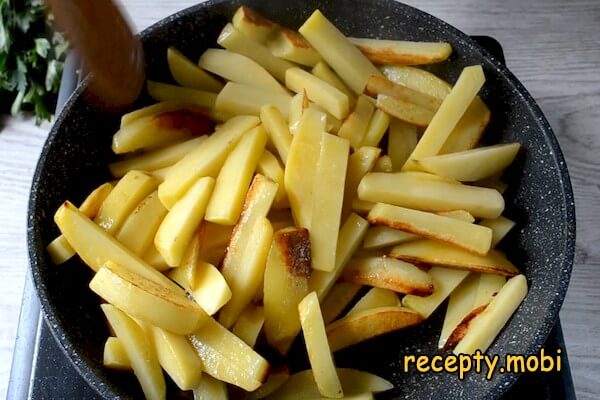
Meanwhile, I heat the frying pan again and add the potatoes. I fry the potatoes over medium heat so that they brown on the outside.
I transfer the potatoes to the pot with the azu and add a little more water. I taste for salt.
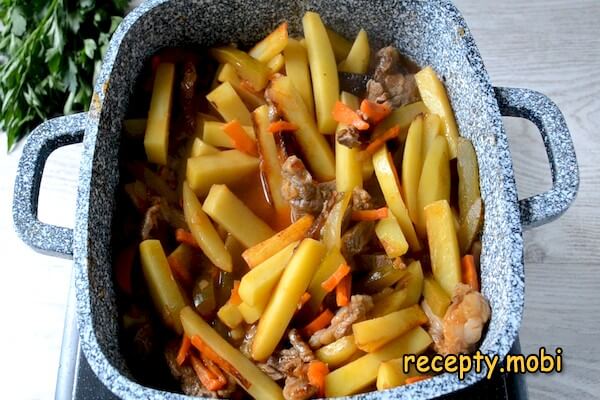
I cook the azu over low heat, covered, until the potatoes are done. Since they were fried beforehand, they only need a little longer.
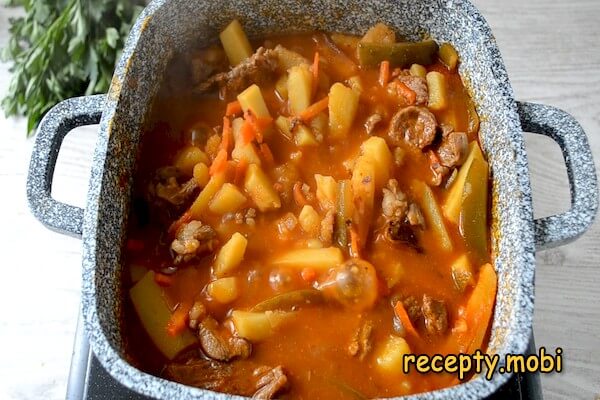
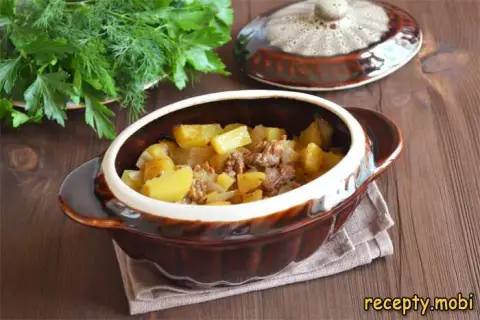
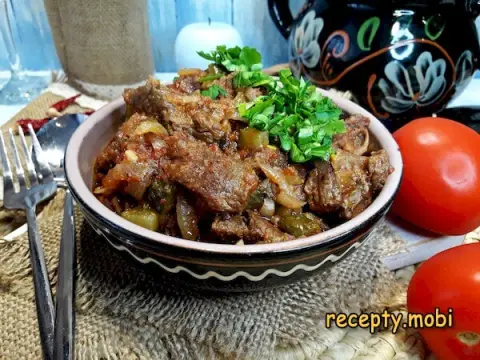
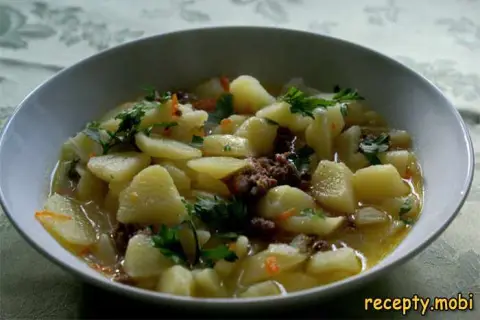
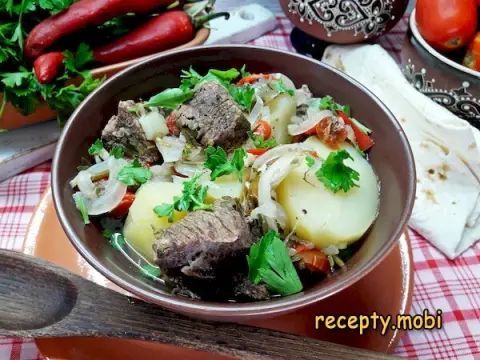
Tatar-style azu with salted cucumbers is ready. I serve it generously sprinkled with fresh herbs.


Tips
- 1
USE SALTED CUCUMBERS – not marinated ones. Marinated cucumbers give a vinegary sourness, whereas salted ones give an authentic brine note.
- 2
FRYING THE POTATOES SEPARATELY – the secret to their shape. Without frying, the potatoes will fall apart in the common pot during stewing.
- 3
SLIGHTLY FROZEN MEAT – the secret to cutting. Fresh meat sticks to the knife, while slightly frozen meat cuts into even sticks.
- 4
ABOVE-MEDIUM HEAT FOR THE MEAT – quick frying "seals in" the juices. On low heat the meat turns out "boiled". The same principle works in other kinds of azu and meat stews.
Video

FAQ
Which meat should I choose? +
Ideally beef or young veal (as in the recipe). Alternatives: lamb (the Tatar-style classic), chicken (lighter), rabbit (premium), horse meat (the historical option). Not suitable for the classic: pork (it changes the character), turkey. Fresh meat is firm and dark red without a grey film. Chilled is better than frozen. Defrost frozen meat in the fridge for 12–24 hours. Cut across the grain – it will be more tender. Cubes of 1×3 cm are best for strips. For a premium version – veal tenderloin (no need for long stewing).
What can replace salted cucumbers? +
Alternatives: sauerkraut (for a "sour" note, but it changes the character), barrel-fermented tomatoes (unusual), salted mushrooms. Do not use: marinated cucumbers (with vinegar, they spoil the flavour), fresh cucumbers (they will not give the "brine" note). Homemade barrel-fermented cucumbers are the premium option. If they are too salty, soak them in cold water for 30 minutes. Size: 8–12 cm, firm, without hollows. Yellow ones and overgrown ones are not suitable. A ratio of 2–3 cucumbers per 400 g of beef is best.
How long does azu keep? +
In the fridge in a covered pot – 3 days. Reheat on the stove to 80 °C over low heat for 5–10 minutes. In the microwave, in portions, 2–3 minutes. On the second day the dish "matures" and the flavour becomes richer. In the freezer up to 1 month (in portions). Defrost in the fridge for 8–12 hours or reheat straight away over low heat. Do not leave it at room temperature for longer than 2 hours – meat in sauce spoils. For a "lunch to go" it is handy in a container. It is ideal as a "family batch" – a double portion. Reheated azu with herbs is always "as good as fresh".
What to serve azu with? +
It is a stand-alone dish – the potatoes are already included. With black or rye bread – it will soak up the sauce. With a bowl of fresh salad (cucumber + tomato + herbs). With a shot of cold vodka – a "Russian-Tatar" serving. With kvass or fruit drink. With a cup of herbal tea – a warming lunch. For a "family dinner" – with dill and parsley. For a picnic – handy in a thermos. With salted cabbage or marinated mushrooms – a "winter" serving. For a "children's" version – reduce the amount of cucumbers and spices. A universal meat dish for cold days.
- Comment
or post as a guest
Be the first to comment.