avg —
Tender and Juicy Oven-Baked Beef Roast

Instructions
Prepare the beef. Pat the meat dry with paper towels. Remove only tough outer silverskin, leaving fine seams of fat in place because they help the chuck stay juicy. Rub the whole piece with 8 g salt and the black pepper.
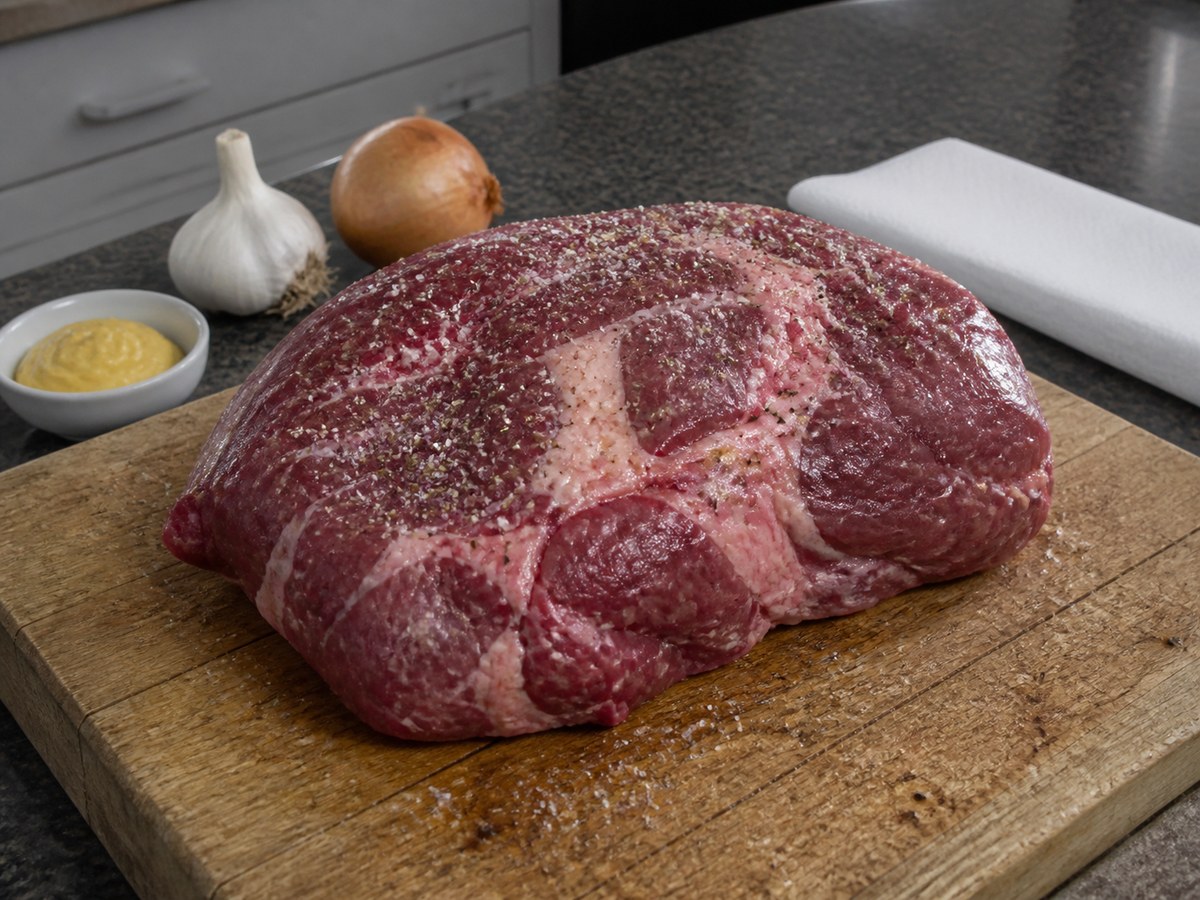
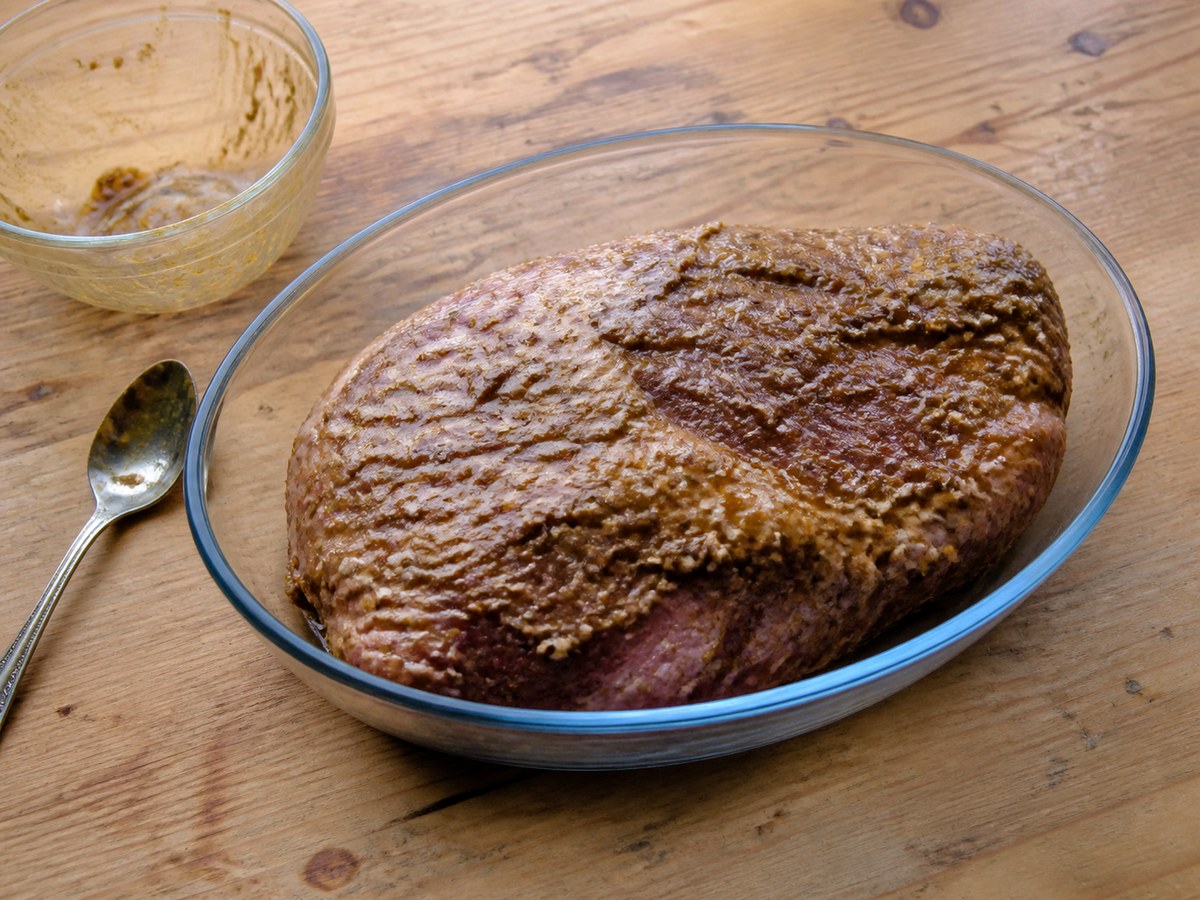
Marinate the beef. Combine the soy sauce, Dijon mustard, neutral oil, smoked paprika and crushed garlic. Coat every surface of the meat, cover and refrigerate for 2 hours. There is no need to exceed 12 hours because the surface can become overly salty.
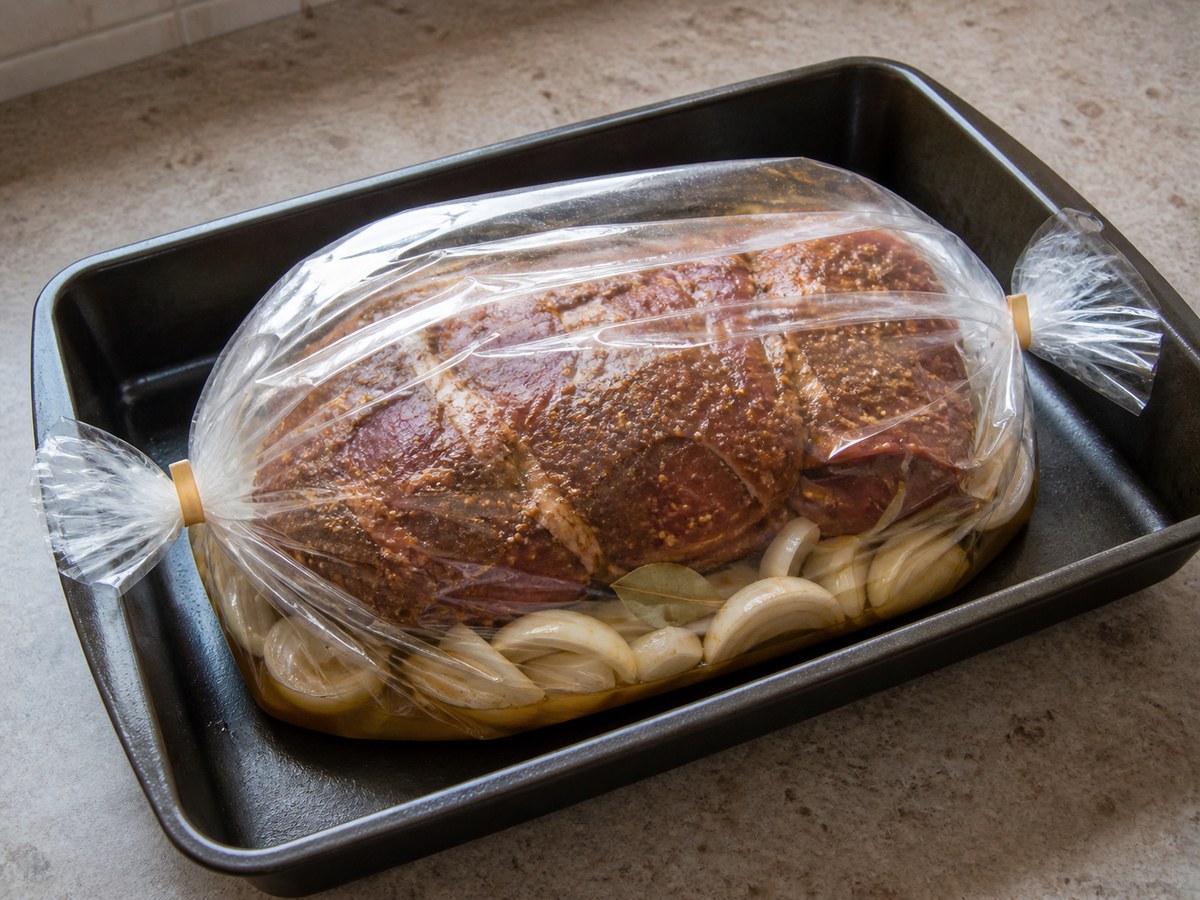
Fill the roasting bag. Cut the onions into thick half-moons and spread them across the bottom of the bag. Place the beef on top, pour in 100 ml hot water or unsalted stock and add the bay leaves. Seal both ends securely. If the bag manufacturer requires steam vents, make 2-3 small holes in the top.
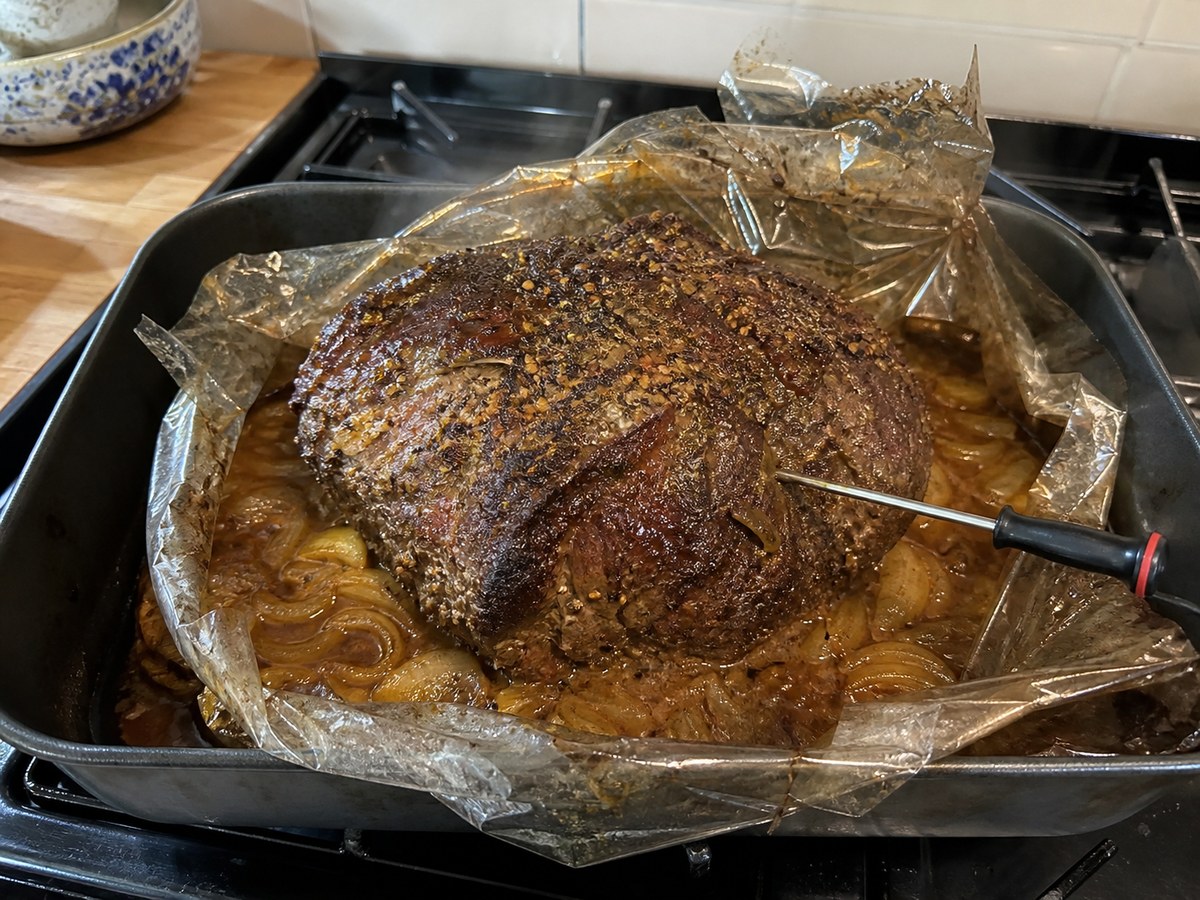
Roast until tender. Set the bag seam-side up in a baking dish and place it in a preheated 160 C oven. Roast for 2 hours 20 minutes. Insert a thermometer into the thickest part, avoiding seams of fat: fully cooked, tender chuck should reach 88-92 C. Carefully cut open the bag, raise the heat to 220 C and brown the beef for another 10-15 minutes.
Rest and slice. Move the beef to a board, cover loosely with foil and rest for 20 minutes. Identify the direction of the long muscle fibres and slice across them into 7-10 mm pieces. Spoon the strained roasting juices over the beef before serving.
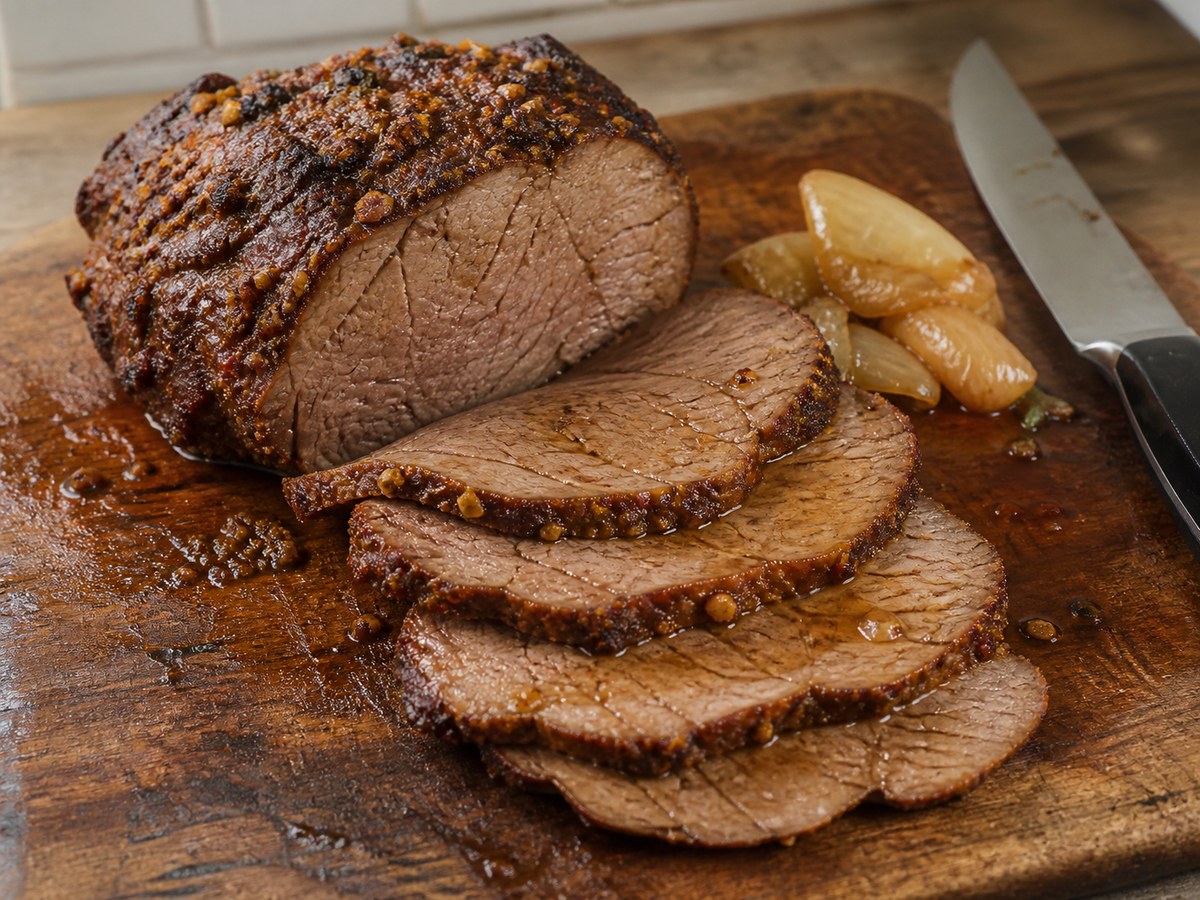


Which cut of beef should you roast?
For a long whole-piece roast, choose chuck, shoulder or a well-marbled neck cut. These contain connective tissue and fine seams of fat. Moderate heat gradually softens the collagen while preserving a rich beef flavour.
Tenderloin and strip loin are naturally tender, but they need a different method with shorter cooking and a lower finishing temperature. Lean round tolerates prolonged dry heat less well and can turn firm without a tightly sealed cover.
Temperature and timing for a whole beef roast
| Chuck weight | Oven temperature | Approximate time | Internal temperature |
|---|---|---|---|
| 800 g | 160 C | 1 hr 40 min - 2 hr | 88-92 C |
| 1-1.2 kg | 160 C | 2 hr 10 min - 2 hr 30 min | 88-92 C |
| 1.5 kg | 160 C | 2 hr 45 min - 3 hr 15 min | 88-92 C |
These ranges apply to chuck cooked in a sealed roasting bag. The shape and starting temperature of the meat, as well as oven accuracy, matter more than weight alone. Once the minimum time has passed, check both internal temperature and the resistance of a thin knife.
Food-safe temperature and tenderness are different targets
The safe minimum for a whole beef roast is 63 C followed by a rest of at least 3 minutes. That temperature suits naturally tender cuts and pink roast beef, but connective-tissue-rich chuck will remain firm.
This recipe takes chuck to 88-92 C. That is not an additional food-safety requirement. It is the culinary range for fully cooked beef in which collagen has time to soften. If a thin knife still meets clear resistance, reseal or cover the meat and continue cooking in 15-minute intervals.
Roasting bag or foil?
A roasting bag holds steam and juices close to the meat, while its clear surface makes it easy to monitor the liquid. Always set it in a baking dish, keep it away from heating elements and follow the manufacturer's venting instructions.
Foil gives a similar result when the beef is enclosed in two layers and the seams are tightly crimped. With either method, open the cover only at the end, once the beef is tender and needs a short burst of high heat for browning.
Why oven-baked beef turns out tough or dry
- The cut is too lean. Chuck and neck are more reliable than lean round for this long method.
- The oven is too hot. At 200 C the surface loses moisture before the connective tissue has time to soften.
- The cooking time is too short. Chuck can be food-safe at 63-70 C yet still feel firm.
- The bag is torn. A large split releases steam and lets the liquid evaporate more quickly.
- The meat is sliced immediately. A 20-minute rest reduces the amount of juice lost on the board.
- The slices follow the grain. Even well-cooked beef seems tougher when cut parallel to the fibres.
Serving and storage
Serve the hot beef with mashed potatoes, roasted vegetables or buckwheat. Chilled thin slices work well in sandwiches and on a cold meat platter. The onions and strained bag juices can also be blended into a simple sauce.
Refrigerate the beef with its juices in a covered container at 4 C or below for up to 3 days. To reheat, place the slices in a small dish, add 2-3 spoonfuls of juice, cover and warm at 150 C. Aggressive reheating dries the surface.
How this recipe differs from other beef dishes
Georgian-style beef in the oven uses a different seasoning profile and answers a specific regional-food query. This recipe focuses on a neutral whole roast, a tender texture and a repeatable internal-temperature target.
Beef ribs in the oven contain bones and a different ratio of meat, fat and connective tissue. Their cooking time cannot be transferred directly to a boneless chuck roast.
How the method was designed
The method fixes the cut, roast weight, salt and liquid quantities, marinating time, covered cooking stage, tenderness temperature and resting period. These controls make the result easier to reproduce in different ovens and separate the safe finishing temperature for tender pink roast beef from the temperature needed to soften beef chuck.
Recipe video: How to bake a whole beef roast in a roasting bag
Important: The video shows a closely related method. Use the exact quantities and timing in this article.
Images are AI-generated visual guides for the cooking steps.
FAQ
Which cut of beef is best for a whole oven roast? +
Beef chuck, shoulder or a well-marbled neck cut suits this method. Lean round is more likely to dry out during the long cooking time needed to make the meat tender.
What oven temperature keeps beef tender and juicy? +
Cook a 1.2 kg chuck roast at 160 C in a sealed roasting bag. Moderate heat gives connective tissue time to soften while the bag reduces moisture loss.
How long does a 1 kg beef roast take in the oven? +
Allow roughly 2 hours at 160 C for chuck in a roasting bag, followed by 10-15 minutes for browning. Use internal temperature and tenderness rather than the clock alone.
What internal temperature should the beef reach? +
A whole beef roast is safe at 63 C followed by a rest of at least 3 minutes, but chuck will still be firm at that point. For the fully cooked, fork-tender texture in this recipe, take chuck to 88-92 C.
Do I need to sear the beef before roasting? +
No. The final 10-15 minutes at 220 C brown the surface. Searing can add flavour, but it requires another pan and does not seal moisture inside the meat.
Can I use foil instead of a roasting bag? +
Yes. Wrap the beef in two layers of foil and crimp the seams tightly over a baking dish. Open the top for the final 10-15 minutes so the surface can brown.
Why did my oven-baked beef turn out tough? +
The cut may have been too lean, the chuck may not have reached the temperature needed to soften collagen, or it may have been sliced with the grain. Keep tough chuck covered and check it again every 15 minutes.
How should I store and reheat the roast beef? +
Refrigerate the beef with its juices in a covered container for up to 3 days. Reheat slices covered at 150 C or gently on the hob with a few spoonfuls of the juices.
- Comment
or post as a guest
Be the first to comment.