RU EN
Khinkali at Home
cuisine Georgian
difficulty Hard
0 views this month
0 saved by readers
0 ratings
avg —
Main Dishes with Pork

Khinkali at Home

The traditional dish of national Georgian cuisine "khinkali" will leave no one indifferent. The traditional preparation produces remarkable family-meal-quality results that elevate basic meat-and-dough into sophisticated Georgian dumplings applications worthy of family tables and weekday family applications throughout…
Time 10 minutes + 2 hours preparation
Yield 4 servings
Difficulty Hard
Jump to recipe

Instructions

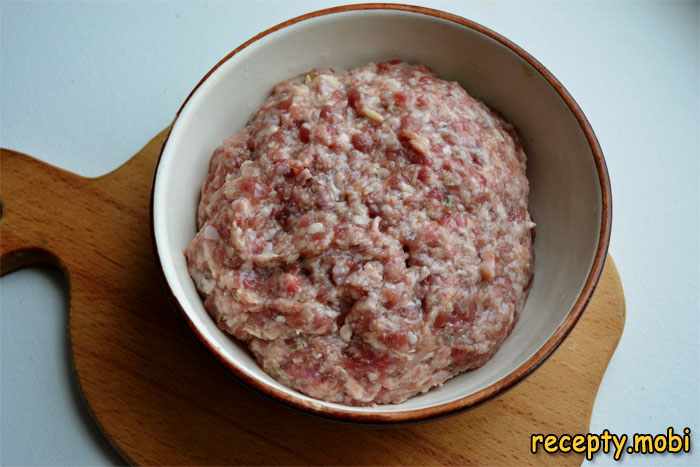
  1. Grind the meat in a meat grinder (the grate should be large). If desired, the meat can be finely chopped by hand with a knife. Add the spice mix according to the recipe, dried or fresh cilantro (you can use parsley). If adding fresh herbs, they should be finely chopped beforehand.

    Step 1
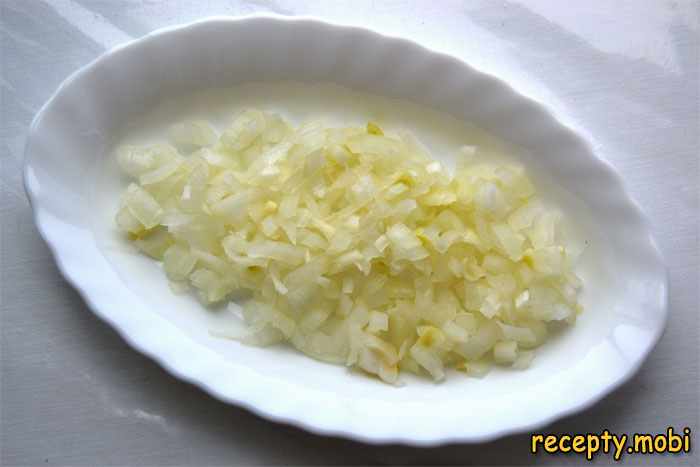
  2. Peel two onions. Finely chop the onion into cubes, then add it to the meat filling. Mix the filling ingredients well, then add ice water to it. Add a large amount of water to the khinkali filling, constantly stirring the filling with water. Gradually add water as it is absorbed by the meat mixture. Add salt to the filling to taste. When the filling becomes moist enough but retains its elasticity, cover it with plastic wrap and place it in the refrigerator for 1 hour.

    Step 2
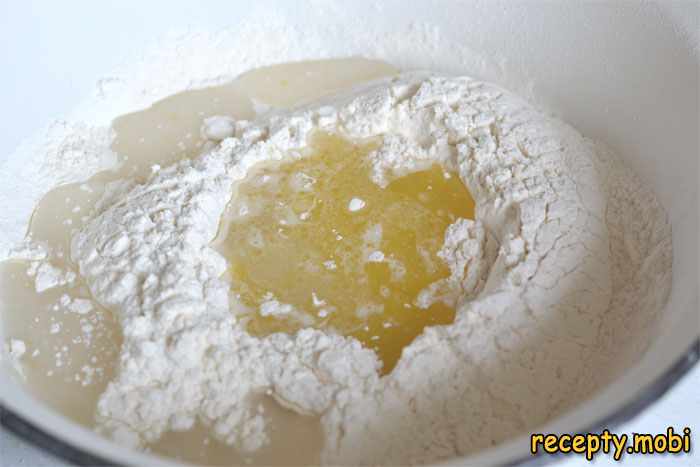
  3. Knead a simple dough for khinkali. We will need very cold water. Therefore, we put the water in the refrigerator in advance. It's better to even put the water in the freezer so that it is simply icy (in this case, make sure the water doesn't freeze solid). As usual, we start by sifting the flour. Pour the sifted flour into a bowl in a mound. In the middle of the flour, make a deep well by pushing the flour to the edges of the bowl. Pour room temperature water into the flour well, add 1/2 tsp salt. Now, gradually add flour from all sides into the well with water in small portions, starting to knead the dough. The kneading process begins right in the middle of the flour well. At first, the dough is liquid, so we knead it using a spatula. When the dough thickens to the point where it is inconvenient to knead with the spatula, we will continue to knead the dough by hand.

    Step 3
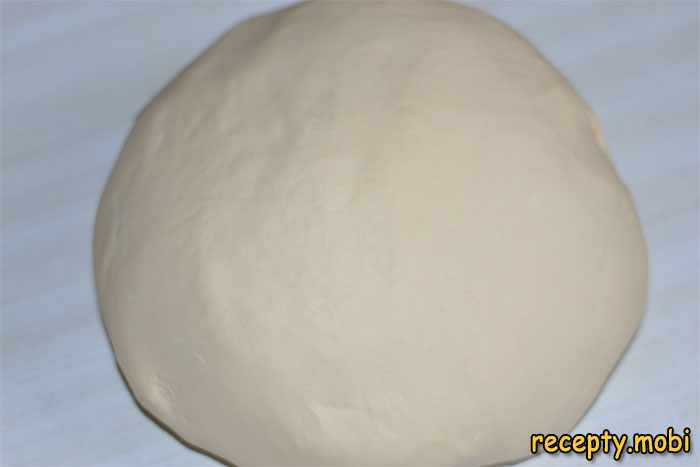
  4. Knead the dough, gradually incorporating flour in small portions. When all the flour from the recipe has been used for kneading the dough, let the dough rest for 20 minutes, covering the bowl with plastic wrap. Then knead the dough thoroughly and for a long time again (for at least 10 minutes), and set the dough aside for another 20 minutes. The dough should be firm, not sticky to the hands, and elastic.

    Step 4
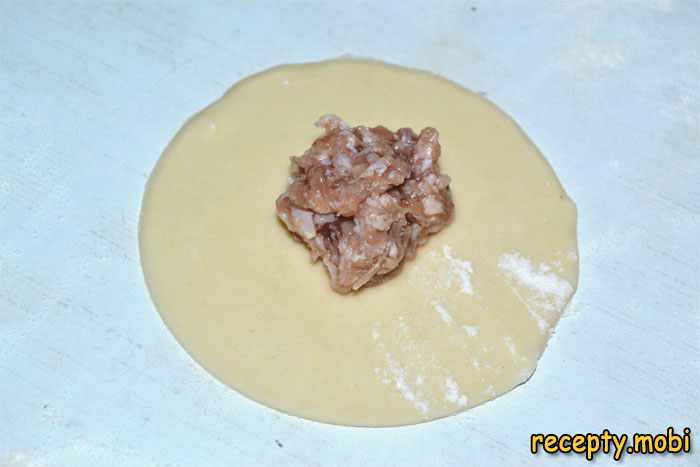
  5. Sprinkle the table with flour. Next, cut off a piece of dough, roll it out on the table into a thin layer, and the table is already sprinkled with flour. Cut out circles from the rolled-out dough using a cutter, about 10 cm in diameter. Take the filling out of the refrigerator. Mix it thoroughly until homogeneous. Place a tablespoon of filling in the center of the circle.

    Step 5
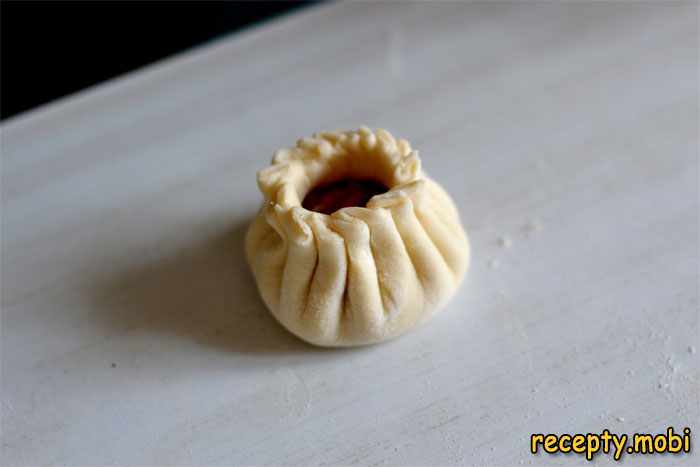
  6. Raising the edges of the dough circle, bring them together by sequentially folding the edges into pleats. This creates a little bag with the meat filling. The meat filling should not completely fill the dough bag. There should be space in the khinkali for the juice that will form during boiling.

    Step 6
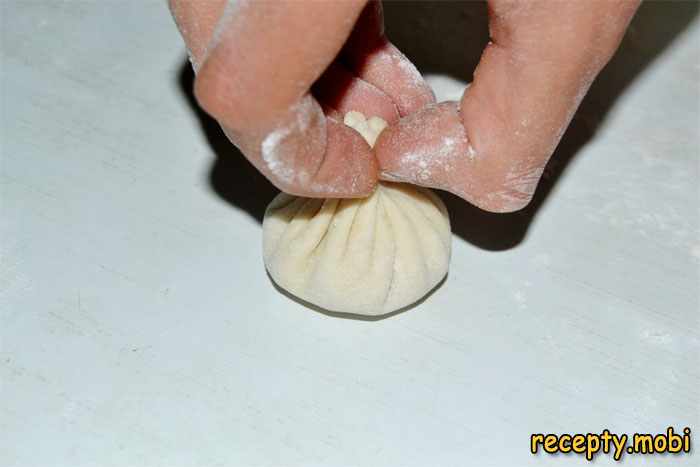
  7. Join the pleats by tightly pinching them with your fingers. Holding the khinkali by the knot, gently lift it (while holding the bottom of the khinkali with the other hand), lightly twist to make the pleats turn. Pinch off any excess dough at the knot of the khinkali.

    Step 7
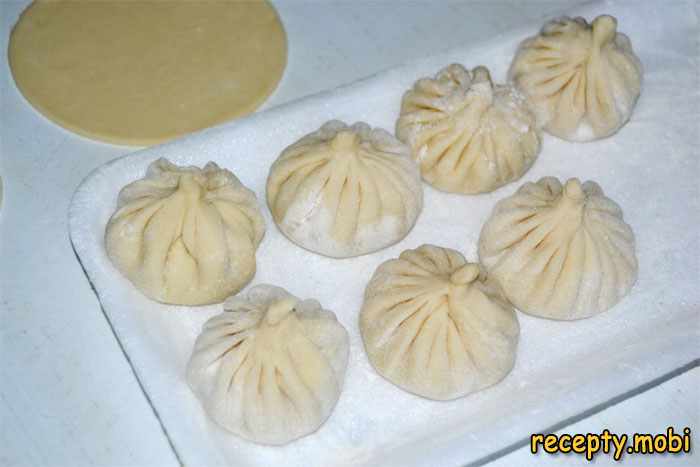
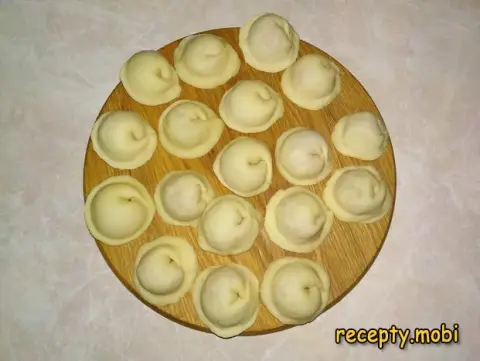
  8. Place the shaped khinkali on a floured board.

    Step 8
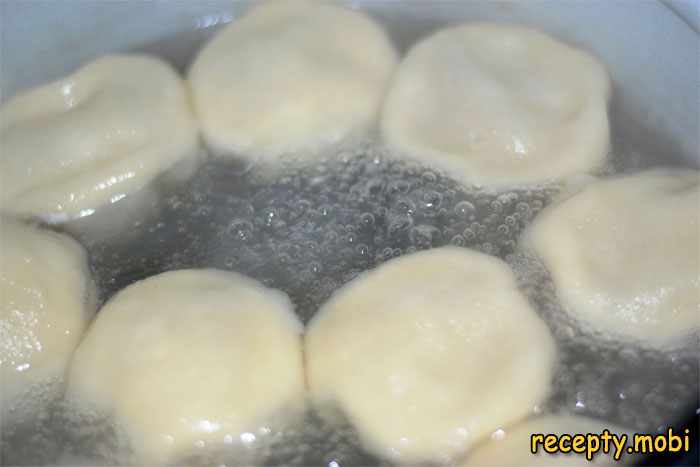
  9. Pour water into the pot. After salting the water, heat it to boiling. When the water boils, stir the water in circular motions. In the resulting whirlpool, drop the khinkali one by one. While the khinkali have not surfaced, stir them in the pot with a spatula. Boil the khinkali for 10 minutes. After 10 minutes, pour 1 cup of cold water into the pot, and use a slotted spoon to remove the khinkali.

    Step 9
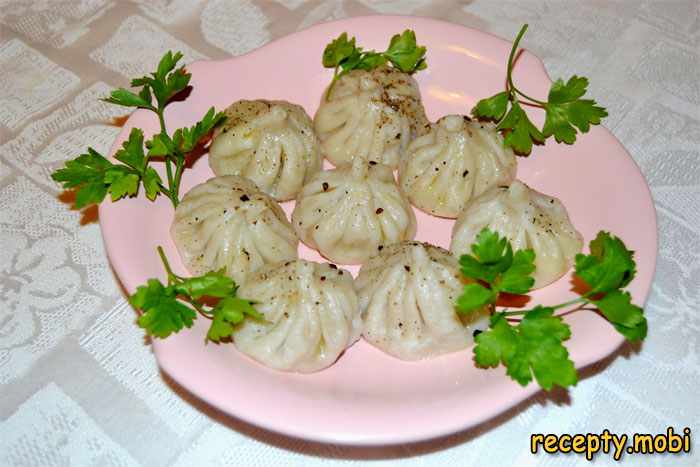
  10. Place the cooked khinkali on a plate separately from each other. Sprinkle with black pepper (coarsely ground) on top. Serve the khinkali hot (with herbs).Tip: khinkali are eaten by holding the knot with one hand. A piece of khinkali is bitten off from the side, then the juice is sipped, and then the khinkali itself is eaten. The knot of dough on the khinkali is usually not eaten.

    Step 10

Tips

  • 1

    Use ice-cold water in filling for best finished juiciness. Warm filling produces dry meat with no juice formation; properly ice-water-mixed filling produces the proper signature juicy soup-filled character authentic to traditional Georgian khinkali preparations. The water-temperature matters more than home cooks typically realize for finished khinkali-quality and overall family-meal success consistently across batches reliably across various entertaining occasions throughout the year for proper traditional Georgian-style results consistently.

  • 2

    Rest dough thoroughly for proper finished elasticity. Insufficient resting produces brittle tearing dough; properly twice-rested dough (20 minutes + 20 minutes with kneading between) produces the proper signature firm elastic character authentic to traditional Georgian dough preparations. The same resting principle elevates many dumpling preparations including homemade bread-accompanying dumpling applications across various traditional international culinary occasions throughout the year reliably.

  • 3

    Leave space in dough bag for juice for proper finished khinkali. Tight filling produces no juice space; properly loose filling (with space at top of dough bag) produces the proper signature juice-filled khinkali character authentic to traditional Georgian preparations. The patient space-leaving principle pays back significantly in finished khinkali-quality consistently across batches and various dumpling preparations throughout the year for proper traditional results worth showcasing reliably across various family-meal occasions for proper home-cooking results.

  • 4

    Pair the finished khinkali with traditional accompaniments for proper presentation. Serve hot sprinkled with coarse black pepper, alongside fresh herbs, traditional Georgian sauces like tkemali or adjika for substantial Georgian-style spreads, or with red wine for elegant entertaining presentations worth showcasing across various Caucasian-cuisine occasions reliably. Pair with crusty homemade bread for substantial dinner spreads throughout the year for proper traditional results worth showcasing reliably across various family-meal occasions throughout the year.

FAQ

Can I use only one meat type? +

Yes, beef, pork, lamb, or veal alone all work beautifully producing equally delicious results. Each option produces distinct character: beef-pork combination provides classic Georgian balanced character, pure beef adds traditional Caucasian richness, pure pork adds juicy succulence, lamb adds traditional authentic Georgian profile, veal provides delicate elegant character. Choose based on availability and personal preference for proper finished khinkali variations consistently throughout the year reliably across various Georgian-cuisine occasions throughout the year for proper personalized traditional results.

How long do khinkali keep? +

Stored covered in the refrigerator, the boiled khinkali keep for 1-2 days at peak quality. The flavors meld and improve over the first 4-6 hours as components marry beautifully. Reheat by re-steaming briefly to preserve juicy texture. The raw shaped khinkali freeze beautifully for up to 3 months — boil from frozen for fresh-cooked taste. Best consumed within 24 hours boiled for the brightest most appealing finished results across multiple meal applications throughout the year reliably across various family-meal occasions.

Can I cook them differently? +

Yes, steaming, baking, or frying all work beautifully producing different variations. Each option produces distinct character: boiling provides classic Georgian juice-preservation character, steaming produces lighter version, baking produces firm crust, frying produces crispy fried variant. Adjust cooking time per method — steaming takes 15-20 minutes, baking at 200 degrees for 20 minutes, frying in shallow oil 8-10 minutes total. Choose based on equipment and desired character for proper finished khinkali variations consistently.

Why do my khinkali break during boiling? +

Three usual causes: dough not kneaded enough, sealing knot not tight, or boiling water too aggressive. Address proper thorough dough kneading (10+ minutes), tight pinching of pleated knot, and stirring whirlpool method (creating gentle current) for consistently intact results. The combination of proper kneading, secure sealing, and careful boiling produces dramatic structural-quality reliably across various Georgian khinkali preparation sessions throughout the year for proper traditional results consistently.

Write comments...
symbols left.
or post as a guest
Loading comment... The comment will be refreshed after 00:00.

Be the first to comment.