avg —
Meat French-style without potatoes in the oven

Instructions
I prepare the ingredients. It is best to take the neck part of the pork or an entrecôte cut. The cheese should be 50% fat, and the weight of the cheese and the mayonnaise should be the same. I start heating the oven straight away, setting the temperature to 190 degrees.
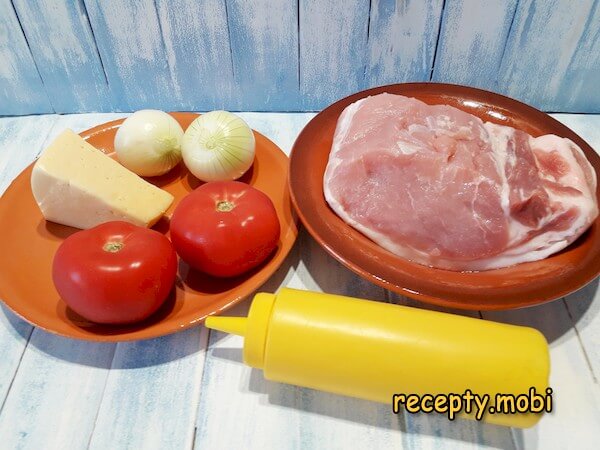
I set aside the products for the marinade.

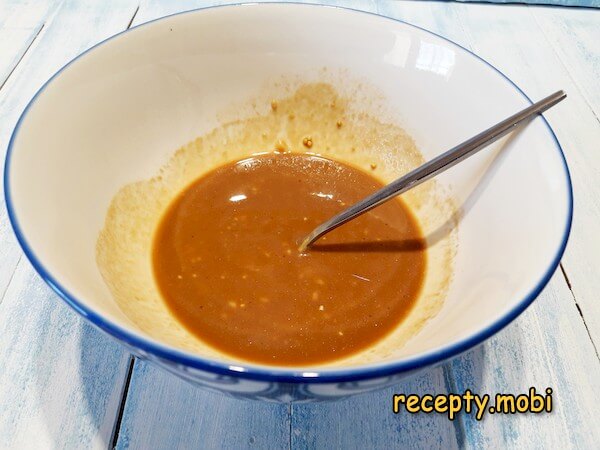
I mix them all together in a small bowl.
I cut the meat across the grain into fairly thick slices (about 2 centimetres each).
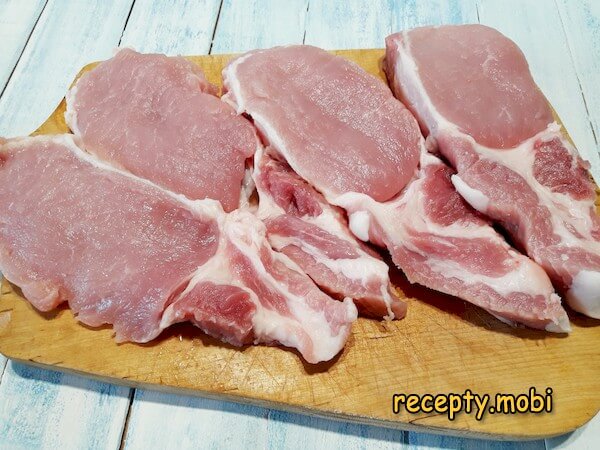
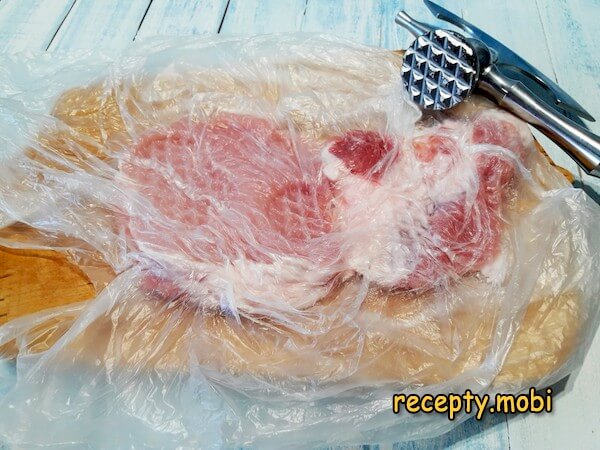
Now they need to be pounded, but not too thin – in the end the thickness should be no less than 1 centimetre, as this helps to keep the meat juicy. And so that you don't have to wash down the whole kitchen afterwards, I place the pieces of meat in a bag and pound them on both sides in that form.
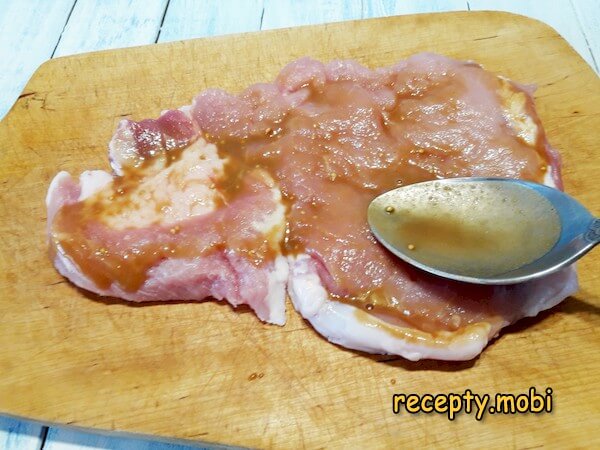
I coat the slices prepared this way with the marinade, using about 1 tablespoon per side.
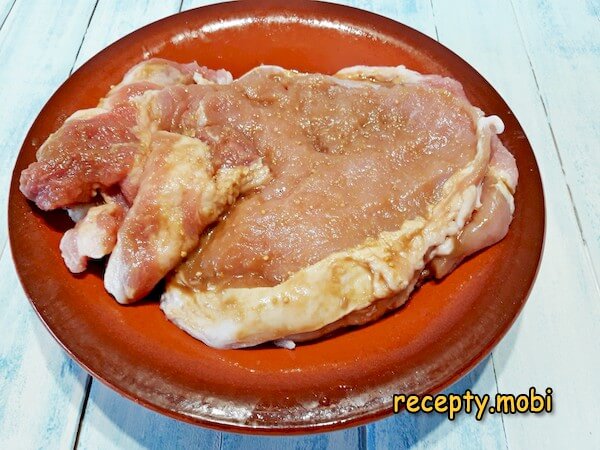
I put the meat in the marinade into a bowl and leave it like that for literally 5–7 minutes.
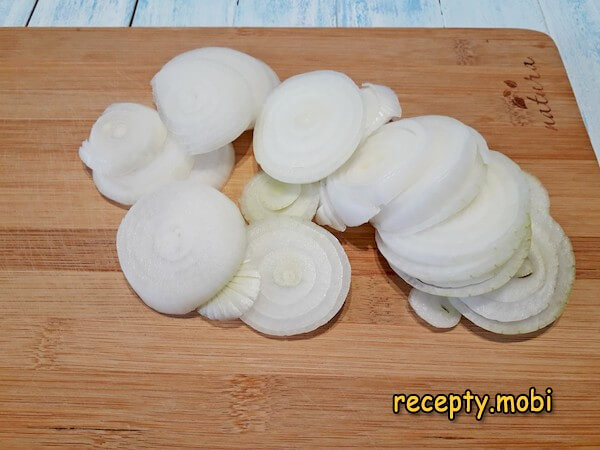
I slice the onion into thin rounds, without separating them into rings – in this form the onion is felt better under the cheese cap.
I grate the cheese on a medium grater.

I add mayonnaise to it.

I mix everything together – this way the cheese will not burn in the oven.

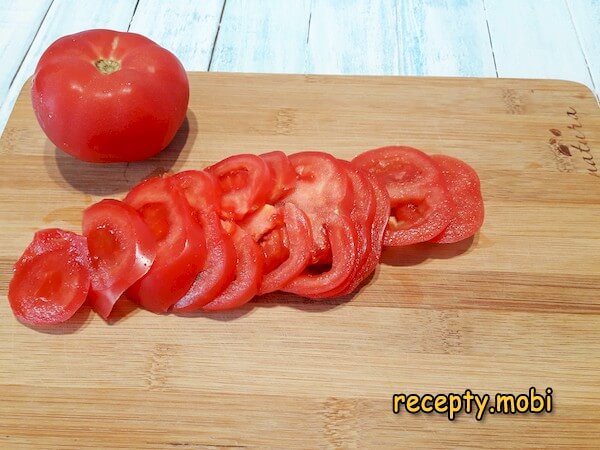
I slice the tomato into thin rounds.
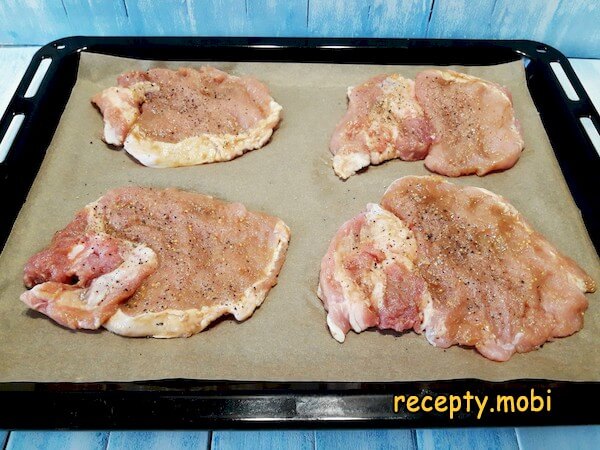
I line the baking sheet with siliconised parchment (you can skip this, but then the sheet needs to be oiled). I lay out the pieces of meat and pepper them. There is no need to add salt, as the marinade contains soy sauce, which is quite salty. Besides, the cheese and the mayonnaise also contain a certain amount of salt.
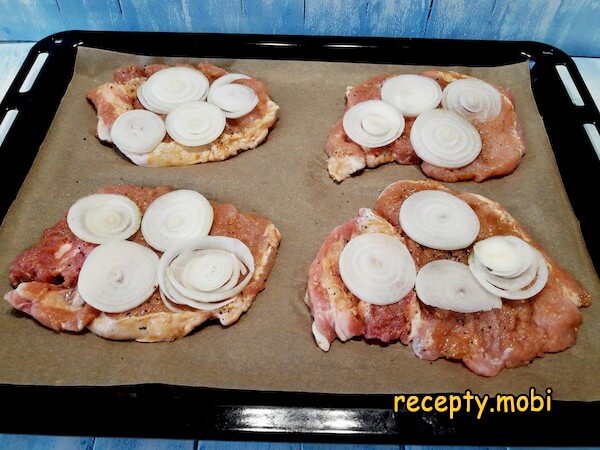
On top I place the onion rounds.
On them go the tomatoes (I lay everything out in a single layer – a big mound is not needed here).

I distribute the cheese with mayonnaise evenly over each portion and spread it across the whole surface with a fork.

I put the baking sheet into the oven on the middle level. The approximate baking time is 40 minutes. At the end, each portion is covered with a lovely golden cap.



Tips
- 1
POUNDING IN A BAG – the secret to a clean kitchen. Without a bag, the meat juice splatters onto the walls and the hob. In a bag, all the mess stays inside and the surfaces stay clean.
- 2
1 CM THICKNESS – the secret to juiciness. A thin escalope will dry out during 40 minutes in the oven. A thickness of 1 cm or more holds the meat juice inside.
- 3
CHEESE + MAYONNAISE – the secret to the cap. Plain cheese on top will burn over 40 minutes. Mixed with mayonnaise, it melts more slowly and forms a golden, tender cap.
- 4
NO SALT – the secret to balance. The soy sauce, cheese and mayonnaise are already salty. Extra salt will make the dish over-salted. The same principle works with other kinds of baked pork.
FAQ
Which meat should I choose? +
Ideally pork neck or an entrecôte cut with streaks of fat (800 g – the "classic"). Alternatives: boneless pork loin (800 g – "lean"), chicken fillet (800 g – the "light option"), boneless chicken thigh (800 g – "juicier"), turkey breast (800 g – "diet"), veal (800 g – "premium, leaner"), beef tenderloin (800 g – premium), pork shoulder (800 g – "budget"). Fresh farm pork is the premium option. Do not use meat that has been frozen and re-frozen (it will lose its juices) or lean cuts without fat (it will be dry). For the "classic", marbled pork with a little fat is a must.
What can I use instead of mayonnaise? +
Alternatives: 20% sour cream (150 g – "premium, more tender"), plain Greek yoghurt (150 g – "lean"), a mix of sour cream and cream cheese (75 + 75 g – premium), 20% cream (150 ml – "light"), a mix of yoghurt and 1 tablespoon of mustard (150 g – "fresh"), homemade mayonnaise on egg yolk (150 g – premium), béchamel (150 g – "a French accent"), a mix of sour cream and 1 teaspoon of lemon juice (150 g – "budget"). Homemade mayonnaise made with olive oil is the premium option. Do not use light mayonnaise (it will run) or sour-cream sauce with herbs. For the "classic", classic full-fat mayonnaise is a must.
How long does French-style meat keep? +
In the refrigerator, in a tightly closed container – 2–3 days. On the second day the flavour becomes richer, as the marinade soaks deeper into the meat. Before serving, reheat it in the microwave for 2–3 minutes or in the oven for 10 minutes at 150°C under foil. In the freezer – up to 1 month; defrost in the refrigerator for 8 hours. Fresh and hot from the oven is the "star" version (maximum juiciness and a crisp cheese crust). Do not leave it at room temperature for longer than 4 hours. It is ideal to cook it "for 2 days" – it will be even tastier.
What should I serve French-style meat with? +
A festive classic: with boiled potatoes and dill. With creamy mashed potatoes. With boiled basmati rice. With buckwheat. With stewed sauerkraut. With green peas. With baked vegetables (aubergine, courgette, pepper). With a fresh vegetable salad. With pickled cucumbers or mushrooms. With a shot of cold vodka. With a glass of dry red wine. With a slice of dark Borodinsky bread. With garlic croutons. With tomato juice. With fresh dill and parsley. For the "festive table" it is universal. French-style meat is right for a birthday, an anniversary and New Year.
- Comment
or post as a guest
Be the first to comment.