avg —
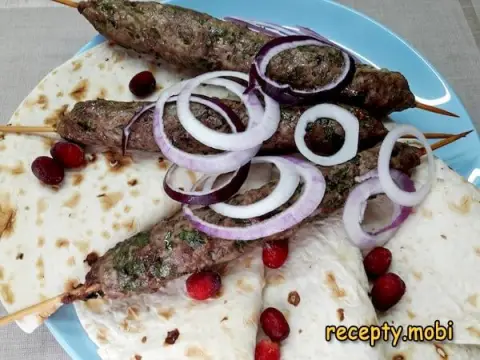
Oven Pork Shashlik on Skewers

Instructions
I prepare the ingredients for making oven pork shashlik on skewers. Instead of tomato juice you can take fresh tomatoes and grate them on a coarse grater. The peeled potatoes will not be cooked straight away, so I cover them with water to stop them darkening and put them in the fridge.

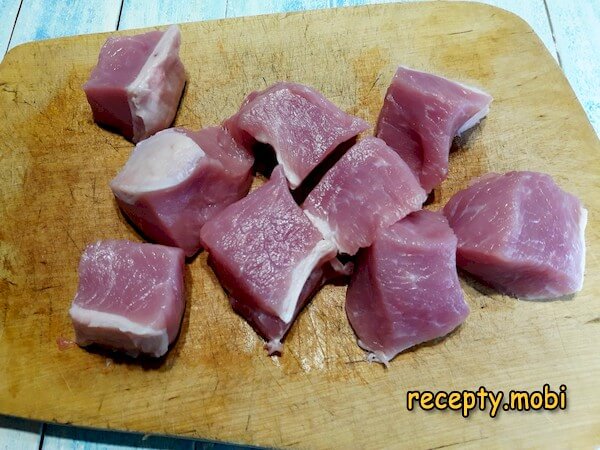
I cut the meat into cubes a little smaller than for ordinary shashlik – roughly 4 cm to a side. The smaller size is needed for a home oven, so the meat has time to cook through in 35 minutes.
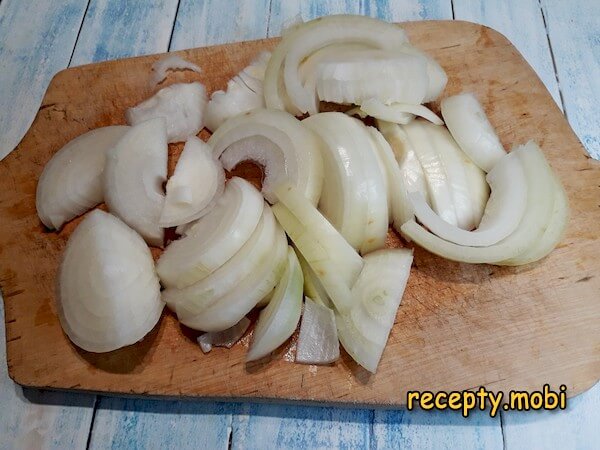
I cut the onion into fairly wide half-rings. This size is needed so the pieces slide easily onto the skewer – narrow half-rings fall off as you thread them.
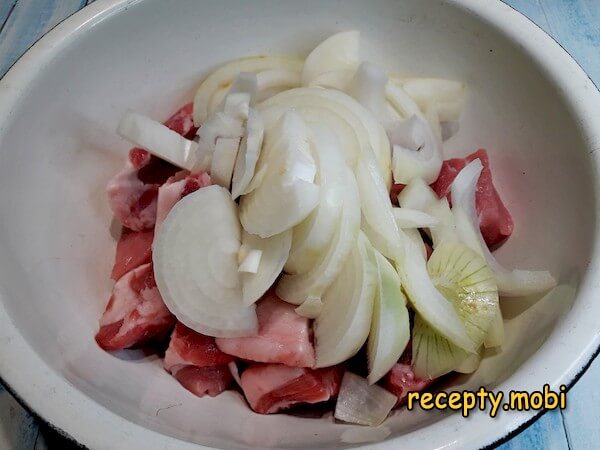
I transfer the meat and onion into a wide bowl – a wide bowl is exactly what lets you mix the contents well and distribute the spices evenly.
I add salt and spices there. I mix everything and crush the onion with my hands so it releases a little juice – it is the hand-mixing that draws the most juice from the onion without adding more spices.
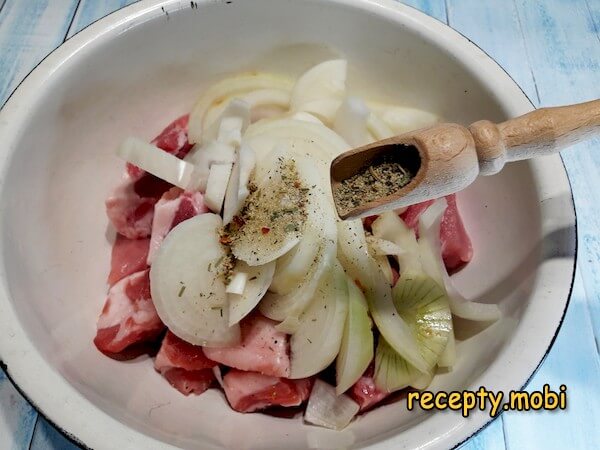
I pour the tomato juice into the mixture – the tomato acid will soften the meat fibres over 3 hours of marinating, just like with real shashlik.

I mix again and press it down with my hand – the meat should be completely in the marinade so that every piece marinates evenly.

I press everything down with a plate and put it in a cool place for at least 3 hours – 3 hours is the minimum, otherwise the meat will not have time to marinate. It is better to keep it for 4-5 hours or even overnight.

I soak the skewers in water for about 15 minutes so they do not burn in the oven, which you can already switch on to preheat to 190 degrees. Without soaking, wooden skewers char during the 35 minutes of baking.

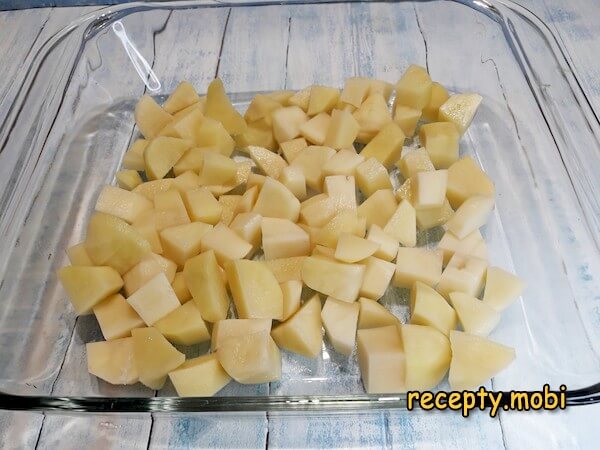
I cut the potatoes into fairly small pieces so they have time to cook together with the meat. I put them in a baking dish greased with vegetable oil and salt them – the small cut ensures they are ready at the same time as the shashlik in 35 minutes.
I thread the meat onto the wooden skewers, alternating the pork with a few pieces of onion. A standard skewer holds 5 pieces of meat – do not try to fit more, as the skewer may not take the heavy weight.

I add the remaining onion to the dish with the potatoes – it gives extra aroma and sweetness to the bottom layer.

If the skewers are not long enough to span the dish, and also so the little kebabs do not sag under their own weight, I lay 3 long sticks across the edges of the dish for the wooden skewers with the meat to rest on.

I lay the shashlik on skewers across the supporting sticks. I put the dish in the oven and bake for 35 minutes. About 5-7 minutes before the end I switch on the fan grill so the meat pieces brown better, as if over a fire.



Tips
- 1
ALWAYS SOAK THE SKEWERS – the secret against charring. Dry wooden skewers char during 35 minutes in the oven and can start to smoke, spoiling the taste of the meat. Fifteen minutes in water before threading makes them damp – the oven's heat does not burn the wood and the shashlik stays clean in flavour. An alternative is metal skewers, but they are heavier and less flexible.
- 2
POTATOES UNDER THE MEAT – the secret of a complete meal. Under the skewers I lay finely cut potatoes – they soak up the dripping meat juice and cook at the same time as the meat. You get a full meal in one tray with no extra side dish. The same principle works with vegetables laid under the meat, which catch all the flavourful drips.
- 3
THE GRILL AT THE END – the secret of imitating a fire. Baking at 190°C gives tender, juicy meat, but without the characteristic "fire" browning. Switching on the fan grill 5-7 minutes before the end imitates the heat of the coals – golden browned spots appear on the meat, mimicking real shashlik from the barbecue. Without this stage the meat looks "stewed" rather than roasted.
- 4
A TOMATO MARINADE – the secret of tender fibres. The natural acidity of tomatoes softens the meat fibres over 3-4 hours of marinating – in the finished shashlik the meat melts in the mouth and you do not have to "chew through" it. Alternative acidic marinades: kefir, sparkling water with vinegar, lemon juice. The same trick with a home-made marinade works with any poultry too.
FAQ
Which cut of pork is best for oven shashlik? +
Pork neck is ideal – it has natural layers of fat which melt during baking and soak into the meat, making it juicy and tender. Alternatives: pork loin on the bone (more tender, but less fatty), ham (a leaner option), shoulder (tougher, needs longer marinating – 5-6 hours). Not suitable: tenderloin (too dry for shashlik), carbonade (tough and fibrous). The main rule – the meat should contain 15-20% fat for the best juiciness in the finished shashlik.
Can I replace wooden skewers with metal ones? +
Yes, metal skewers are even more convenient – they do not need soaking and do not burn. The main differences: metal heats up and "helps" cook the meat from the inside, so the time may shorten by 5-7 minutes. Metal skewers do not bend under the weight of the meat, so no extra supports are needed. They are easy to wash after use. Disposable wooden ones are handy for a one-off serving and look pleasantly "picnic-style". It is best to have both kinds for different occasions.
How long should pork be marinated for shashlik? +
At least 3 hours in the tomato-and-onion marinade – without this the meat will not have time to marinate. Optimally 4-6 hours in the fridge – this gives the ideal balance of soaking through and keeping the meat's structure. You can marinate overnight (8-10 hours) – the meat becomes even more tender, but loses some of its "meaty" character. I do not recommend marinating for more than 24 hours – the acid will begin to "digest" the meat and it will become fibrous and watery. If you are really short of time – 1.5-2 hours in the marinade with some sparkling water added.
What to serve with pork shashlik? +
The classic serving is with baked potatoes (as in this recipe), fresh vegetables (tomatoes, cucumbers, bell pepper, spring onion). For sauces: home-made ketchup, tkemali, adjika, sweet-and-sour sauce, sour cream and garlic sauce. Pickled vegetables: gherkins, mushrooms, onion. For flatbreads: thin or thick lavash, Tatar flatbreads. For drinks: for a festive table – dry red wine (Georgian Saperavi, Chilean Cabernet), for everyday serving – fruit drinks, home-made compotes, dark beer. Fresh herbs are a must with pork: a bunch of dill, parsley or coriander.
- Comment
or post as a guest
Be the first to comment.