avg —
Pork Trotter and Hock Kholodets

Instructions
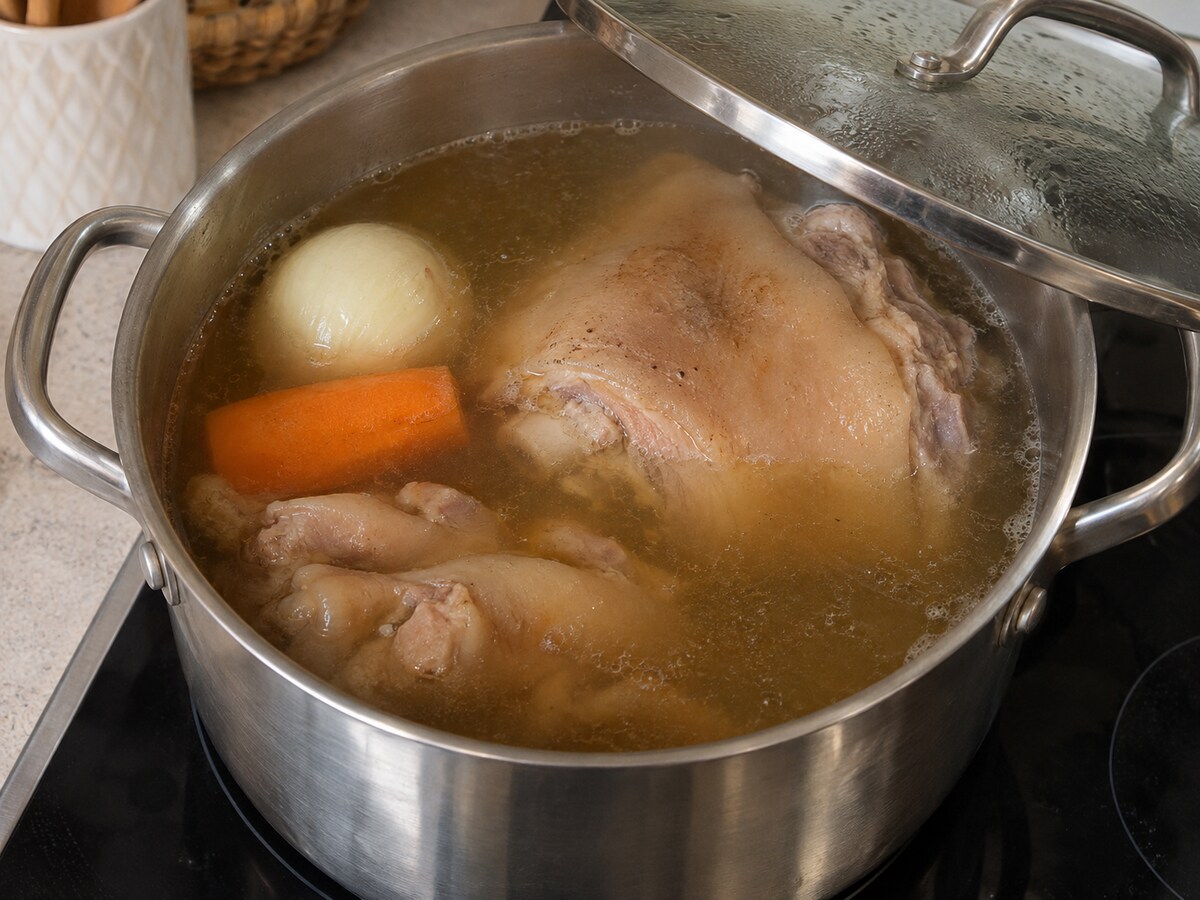
Fit the cuts snugly in a pot. Use fresh pork trotters and a raw unsmoked, uncured hock. Remove any loose bone fragments or remaining bristles. Fit the cuts snugly in a narrow 5- to 6-litre pot and add about 2.2 litres of cold water. The water should cover the meat by about 1-2 cm. Rearrange the cuts or add a little water if necessary.
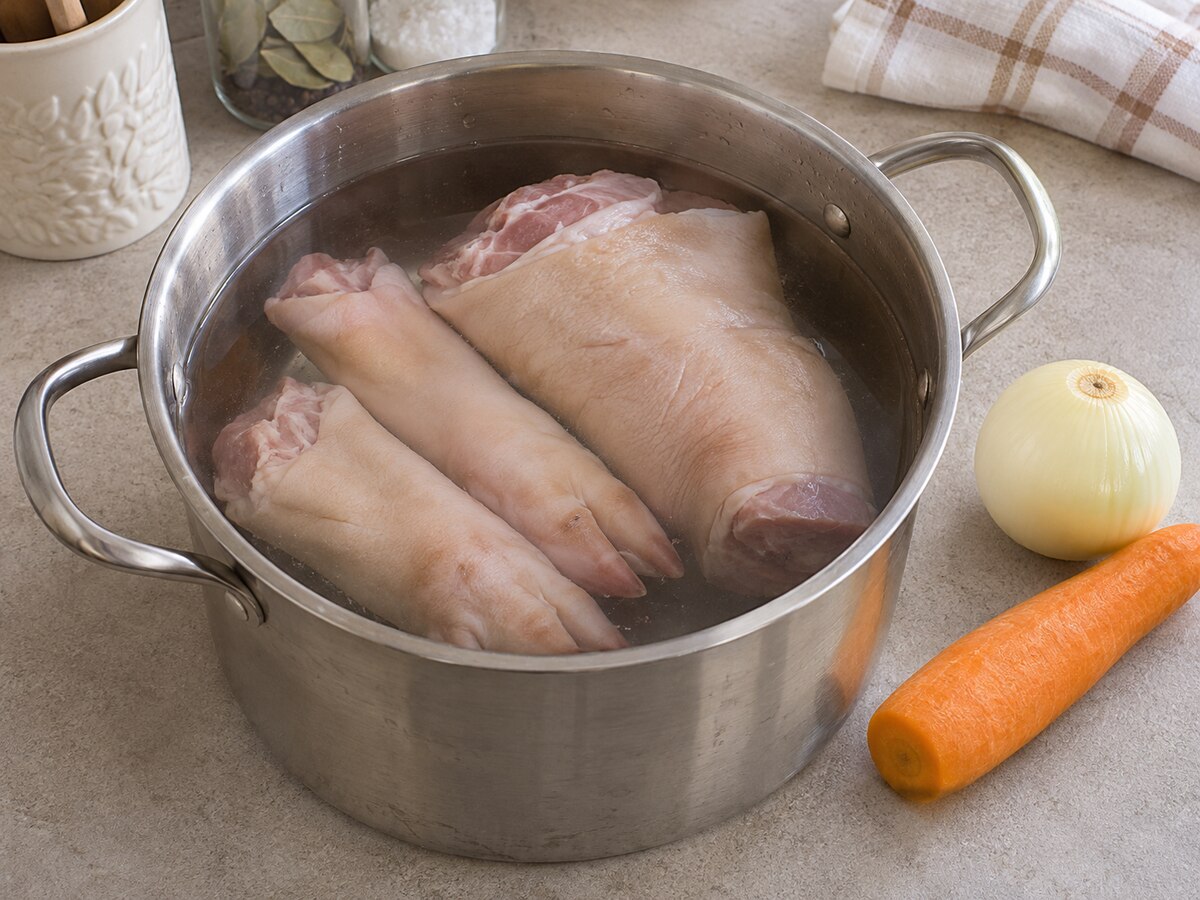
Simmer gently. Bring to a boil, skim off the foam and turn the heat down. Simmer for 5-6 hours with the lid ajar and just a few bubbles breaking the surface. Add the peeled onion and carrot for the last hour. Add the peppercorns and bay leaves for the last 20 minutes. Start with half the salt and adjust after testing the stock.
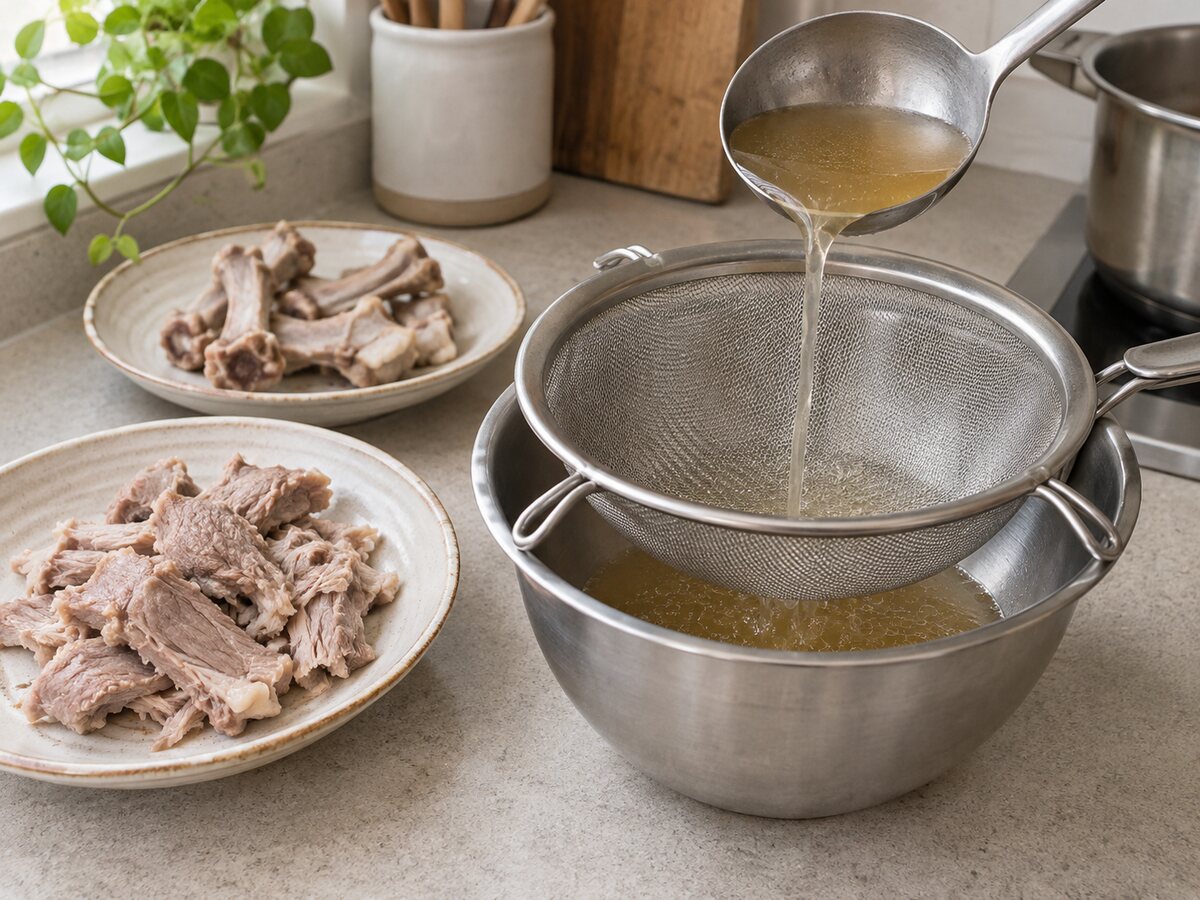
Shred the pork, strain the stock and test it. When the meat pulls easily away from the bones, lift the pieces onto a plate with tongs. Discard bones, bone fragments, tough cartilage, skin and excess fat. Shred or chop the meat. Discard the vegetables and spices, strain the stock through a fine sieve and skim off surface fat. Chill a tablespoon of stock on a saucer in the freezer for 10-15 minutes, without letting it freeze. If it stays runny, simmer the strained stock uncovered to reduce it slightly and test again.
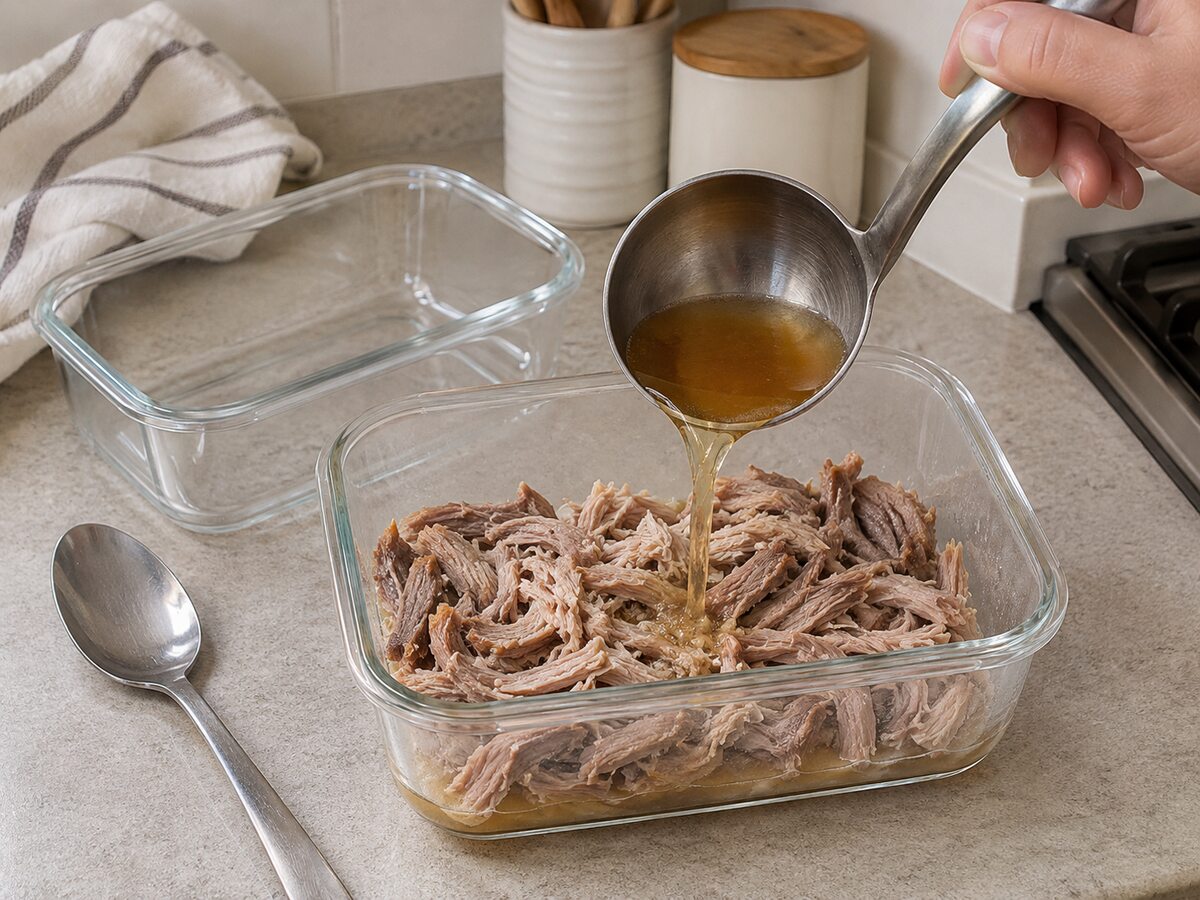
Fill shallow dishes. Finely chop the garlic and stir it into the hot strained stock. Taste and add more salt if needed. Divide the meat among shallow dishes and pour in enough stock to just cover it. Do not dilute the stock to stretch it to an extra serving.
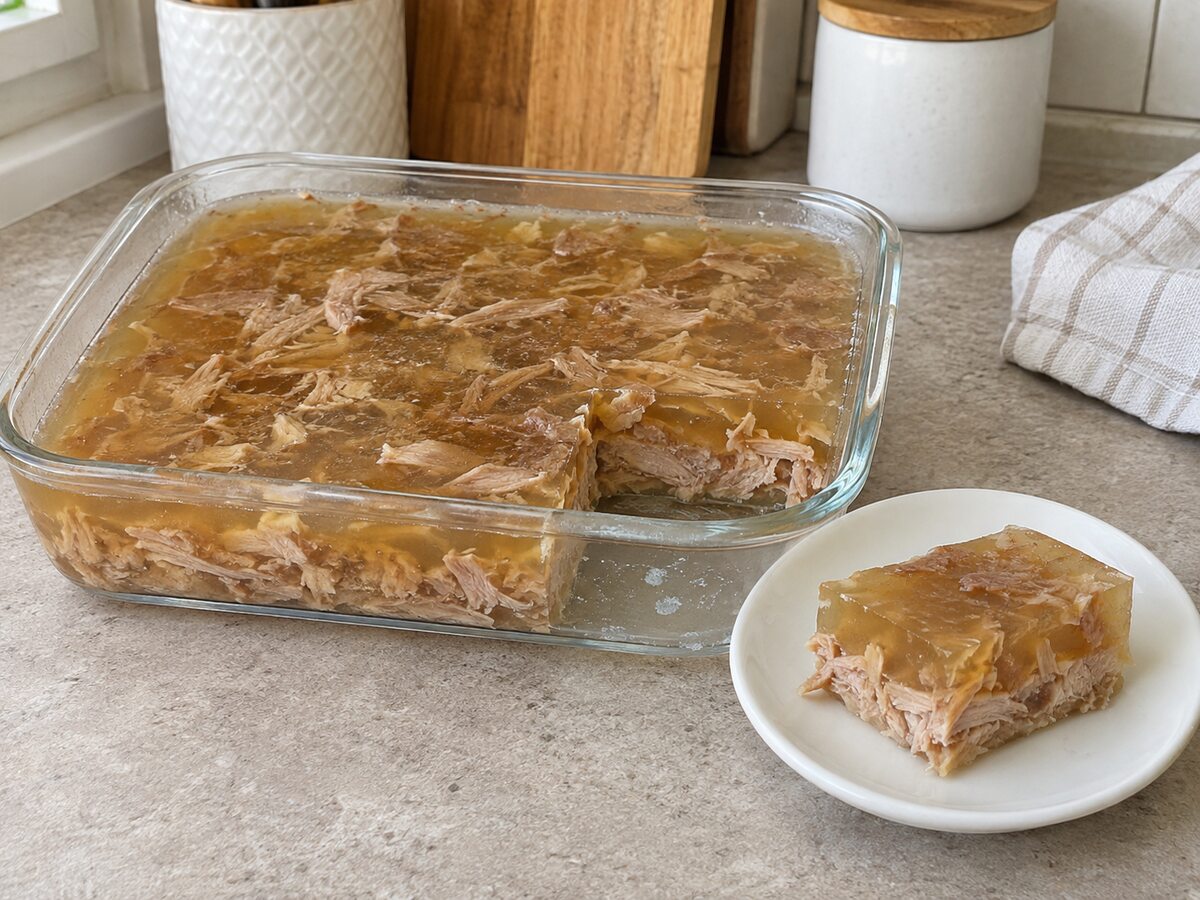
Refrigerate until set. Refrigerate at 4 °C (40 °F) or below within 2 hours of cooking. Do not leave the full pot on the counter to cool. Chill for 6-8 hours, or overnight, until the kholodets holds its shape when sliced. Serve with mustard or horseradish.


How much water to use and why to test the stock
For 800 g of trotters and 1 kg of hock, start with 2.2 litres. A wide pot takes more water to cover the meat, which can make the stock slower to reduce. If the sample will not set, remove the meat, reduce the liquid by about a fifth and test again. Chill the sample without freezing it: ice does not tell you whether the stock will set in the fridge.
How to keep it clear and store it safely
Skim the foam at the start, keep the heat low and strain the stock after cooking. If a white layer of fat remains after chilling, lift it off with a spoon before serving.
Keep the dishes covered in the fridge at 4 °C (40 °F) or below. Use within 3 days and take out only the portions you plan to serve.
Yield, timing and estimated calories
The recipe makes about 10 small servings. Allow about 30 minutes of hands-on preparation, up to 6 hours on the hob and up to 8 hours in the fridge. For a double batch, use two pots rather than adding extra water to cover a deep pile of meat.
The estimate of 170 kcal per serving assumes around 600 g of cooked trimmed pork and 1.2 litres of skimmed stock. Actual calories vary with the cut and the amount of fat removed.
Recipe video: Pork Trotter and Hock Kholodets
Important: This Russian-language video shows a similar pork trotter aspic. The written recipe also uses pork hock, so the meat-to-water ratio differs.
Illustrations are AI-generated.
FAQ
Can I use pork hock alone? +
Yes, but the set depends on how much skin and connective tissue the hock has. Trotters make the result more reliable in this recipe.
When should I salt the stock? +
Add some salt towards the end of cooking. Taste and adjust after straining and reducing the stock, when you know how concentrated it is.
Do I need to discard the first cooking water? +
No. For this method, skim away the foam early, avoid a rolling boil and strain the finished stock.
Do I need to soak the trotters? +
You can start cooking straight away if your butcher cleaned the trotters. If you prefer to soak them, do it in a covered container in the fridge.
How do I know the hock is cooked? +
The meat should come away from the bone easily and a fork should slide in without much resistance. Check after about 5 hours of gentle simmering.
Can I make kholodets a day ahead? +
Yes. Cook it the day before, chill it promptly in shallow dishes and refrigerate it overnight. Slice just before serving.
- Comment
or post as a guest
Be the first to comment.