
avg —
Rabbit in Sour Cream (Multicooker Recipe)

Instructions
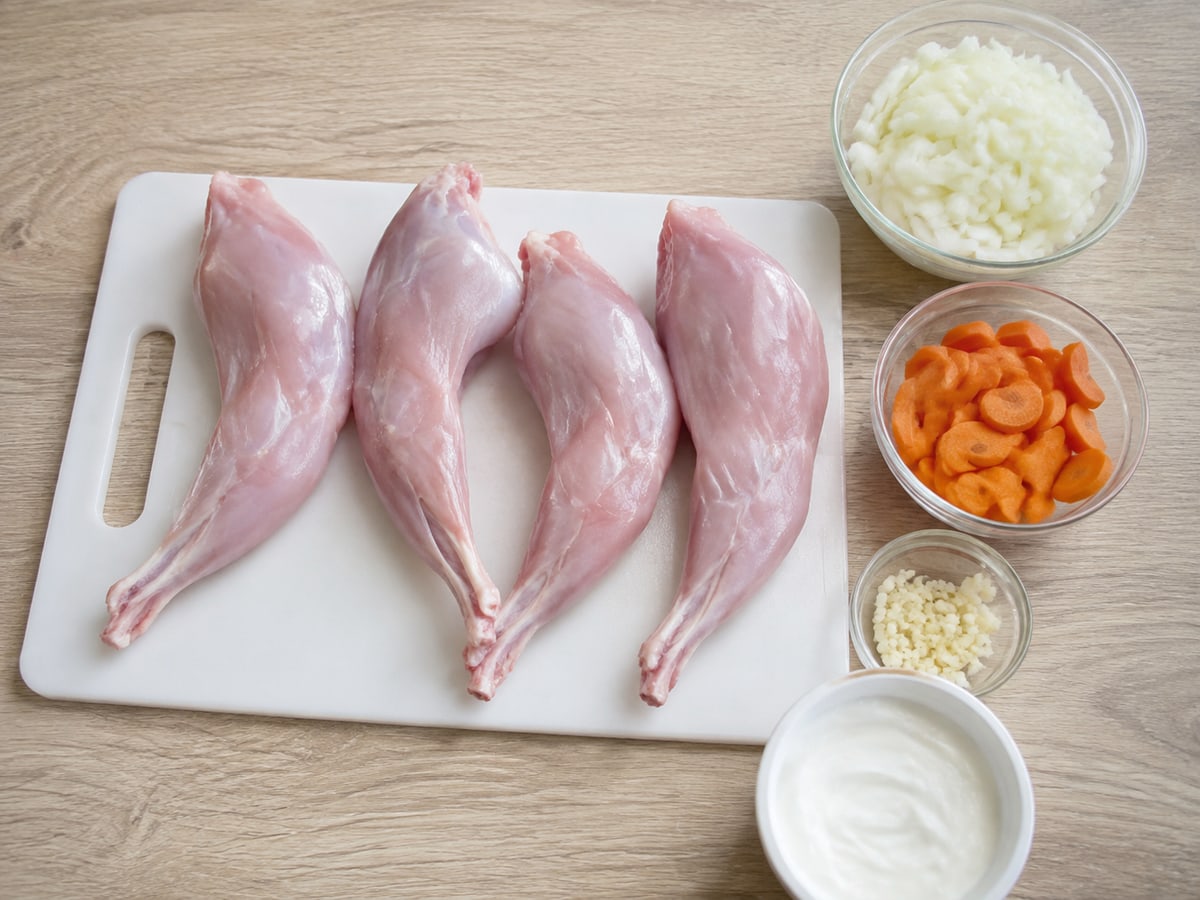
Prepare the rabbit and vegetables. Use 4 rabbit hind legs weighing about 1.2 kg in total, or similarly sized bone-in pieces of farmed rabbit. Thaw frozen meat completely in the refrigerator first. Remove visible bone fragments and pat the meat dry with paper towels. Avoid chopping bones into small fragments. Dice the onions, slice the carrots into 4-5 mm half-moons and mince the garlic. Keep raw meat on a separate board.
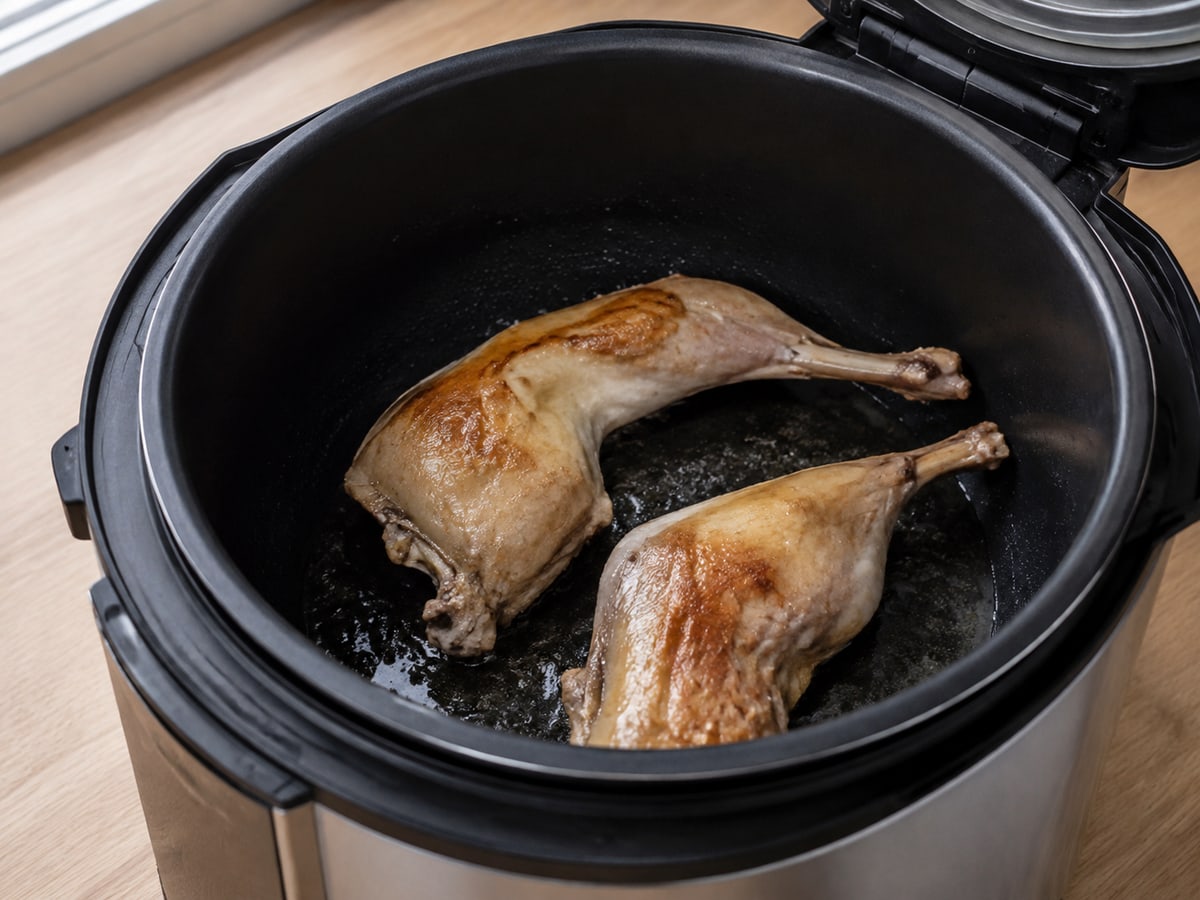
Brown in two batches. Add 20 g oil to the multicooker bowl and select Sauté or Fry with the lid open, if the manufacturer permits it. Brown the rabbit in two uncrowded batches for 4-5 minutes per side, just until golden patches form. Do not aim for a dark, dry crust. Transfer to a clean bowl. If your appliance cannot sauté, brown the meat in a skillet first.
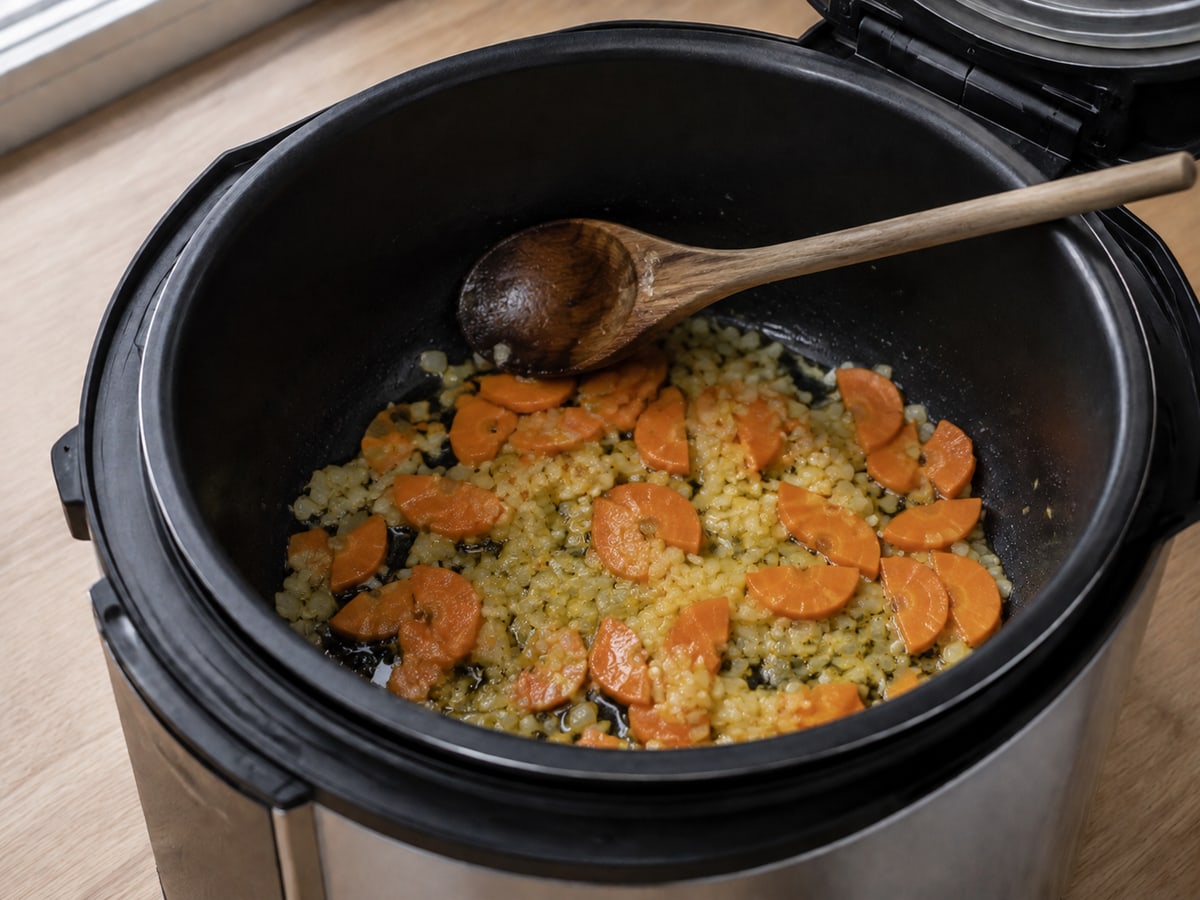
Soften the vegetables. Add the remaining 5 g oil, onions and carrots. Cook for 6-7 minutes, stirring with a wooden or silicone spatula, and add the garlic for the last minute. Pour in the hot water and gently loosen the light-brown cooking residue. Do not scrape black, burnt residue into the sauce.
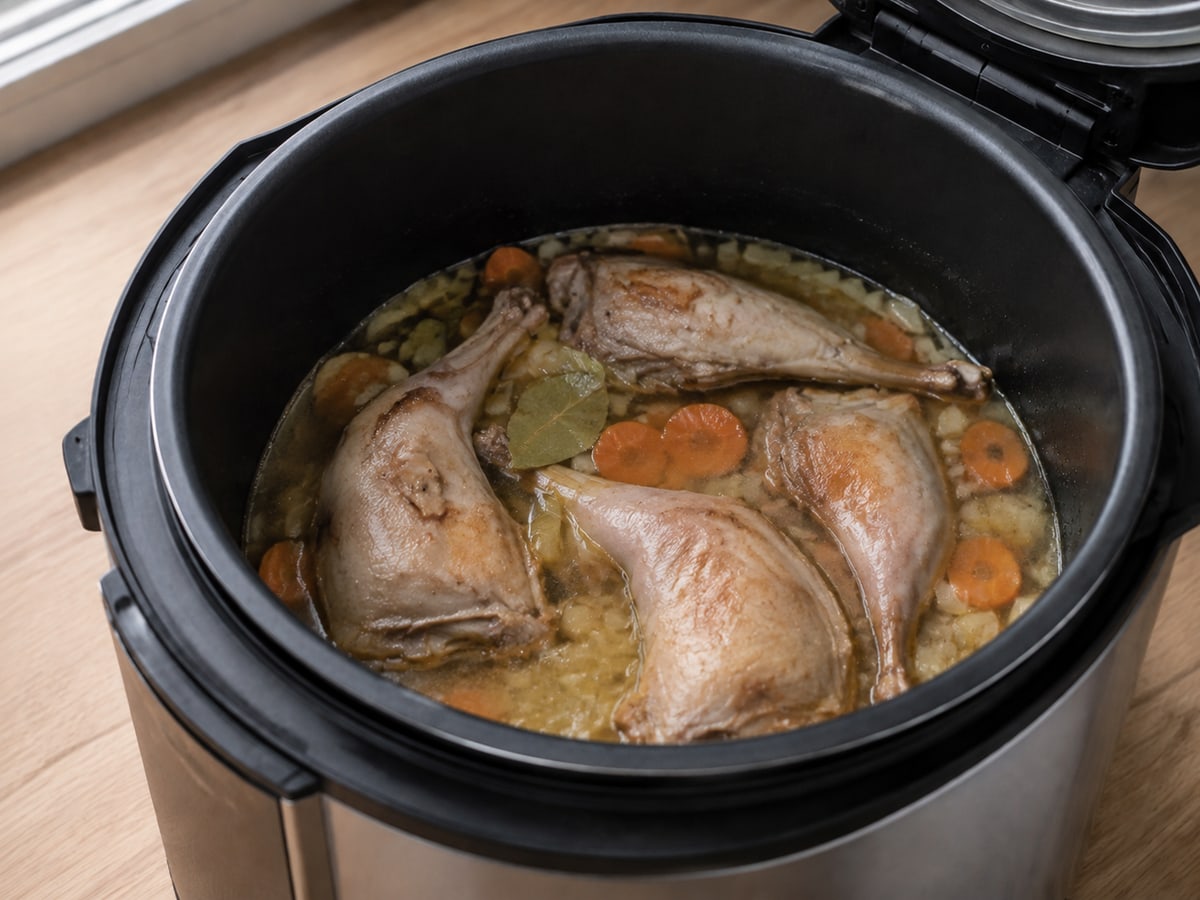
Braise without pressure. Return the rabbit and its juices to the bowl. Add the salt, pepper and bay leaf. The liquid should cover the bottom and reach roughly halfway up the meat. Close the lid and select a gentle, non-pressure Stew or Braise program for 90 minutes. Check tenderness and liquid after 60 minutes. Add hot water in 30-50 ml splashes if the bottom is getting dry. A fork should enter the meat near a joint easily while the leg still holds together. A food thermometer in the thickest flesh, away from bone, must read at least 71°C (160°F). Tougher rabbit may need another 20-30 minutes.
Temper the sour cream. Once the rabbit is tender, stop the heat and remove the bay leaf. If the cooking liquid is watery, lift the rabbit into a clean dish and reduce the liquid with the lid open before adding dairy. In a separate bowl, gradually mix the sour cream with 3-4 tablespoons of hot cooking liquid. This warms it and helps it blend into the sauce.
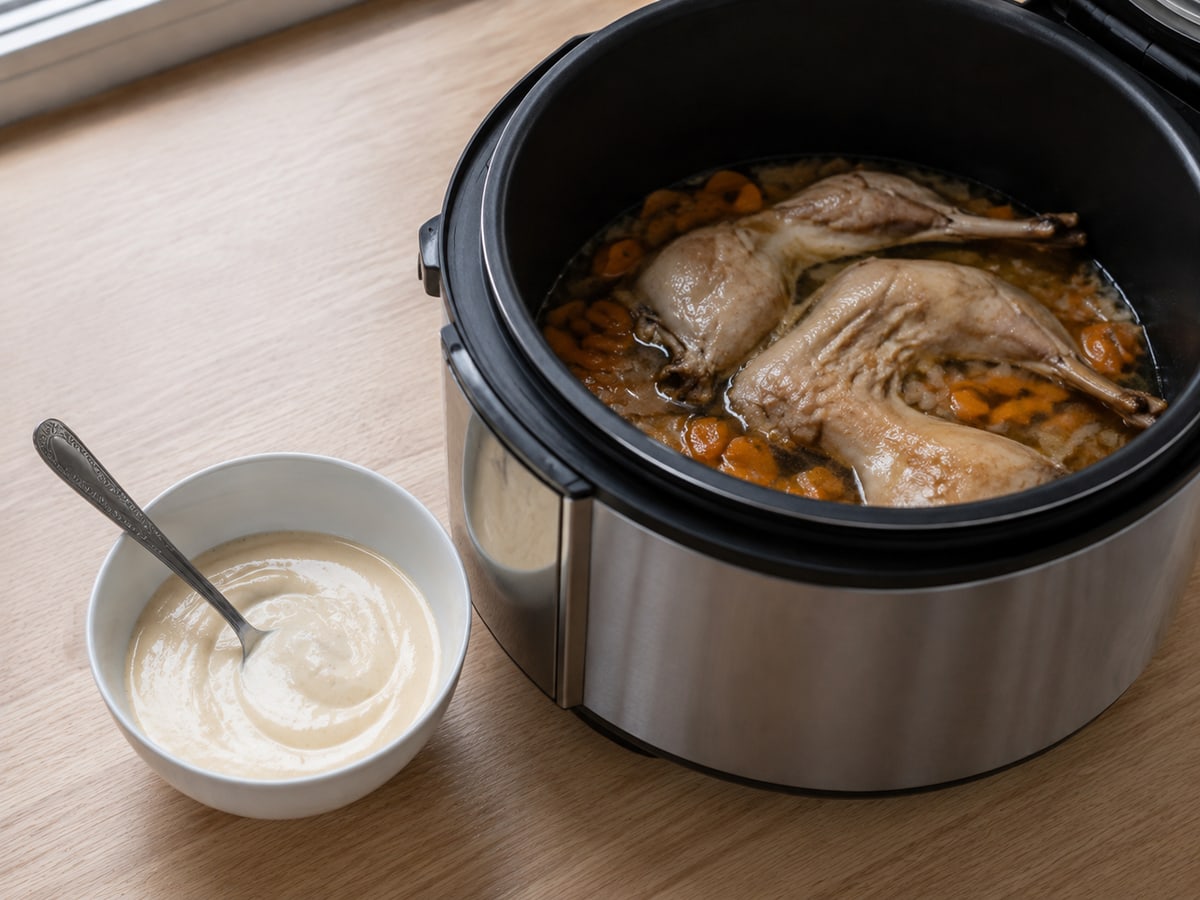
Finish gently and serve. Return the rabbit to the bowl if you removed it. Carefully stir the warmed sour cream into the sauce without breaking up the legs. Heat gently on the non-pressure stew setting for about 5 minutes, avoiding a rolling boil. Stop earlier if your appliance boils the sauce vigorously. Taste and adjust the salt, then scatter over the dill. Serve with mashed potatoes, rice or buckwheat.
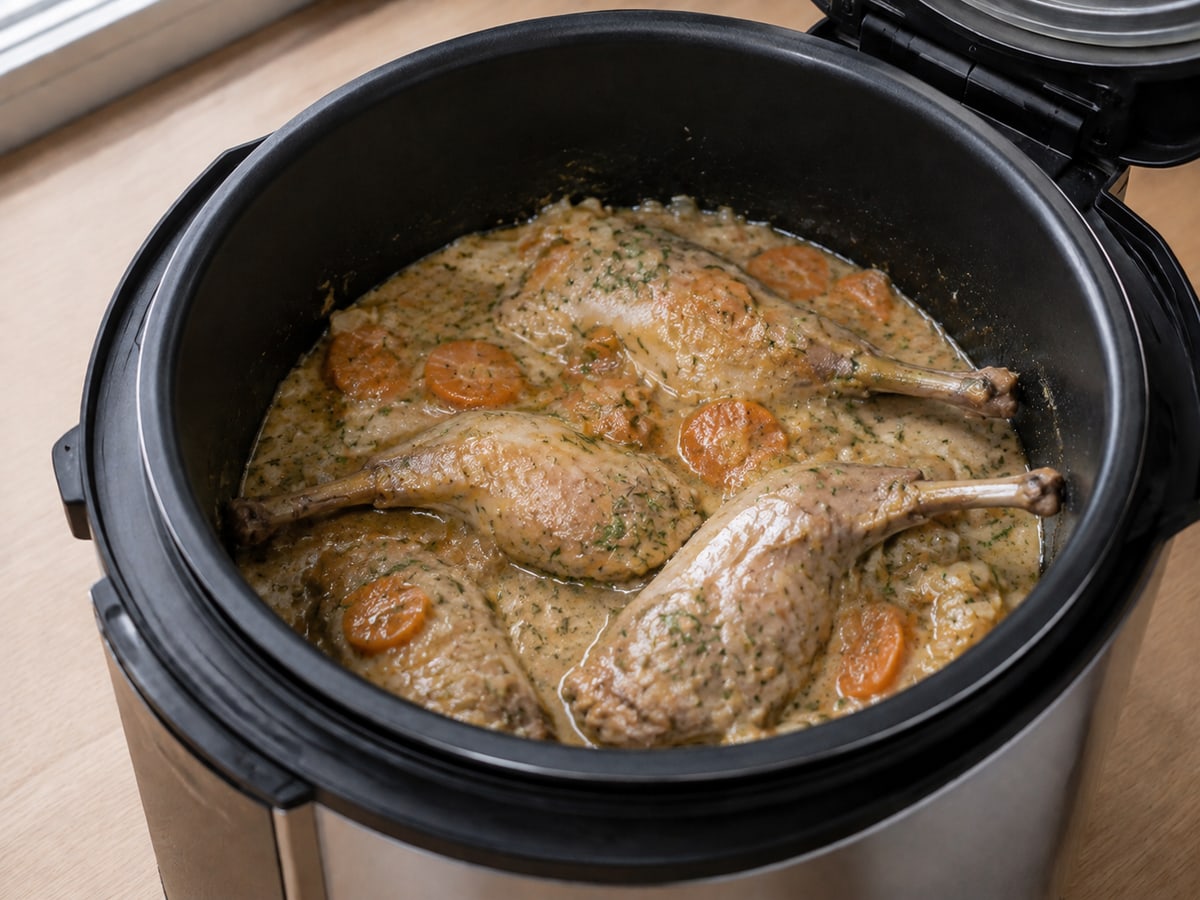


Rabbit, appliance and serving notes
The base recipe makes 4 servings without a side dish. The 1.2 kg rabbit weight includes bones. The estimate of about 500 kcal per serving assumes roughly 900 g edible raw meat and all the sauce divided between four people. Actual calories vary with the bones, meat and sour cream. The serving control scales the ingredients, not the cooking time.
Four similarly sized hind legs are convenient for even cooking. Jointed farmed rabbit also works, but check smaller saddle pieces earlier and remove them once tender. Older animals may need longer. This method is for farmed rabbit, not wild hare.
Use a 4-5 litre electric multicooker with a gentle, non-pressure stew or braise program. Allow roughly 2 hours 20 minutes overall, with about 35-40 minutes of hands-on work. Thawing and optional soaking are extra. Do not use delayed start with raw meat. For shopping, 1.2 kg is approximately 2.6 lb and 200 ml water is a little over 3/4 US cup. Metric weights are the recipe reference.
Multicooker, pressure cooker or slow cooker?
- Non-pressure multicooker. The recipe uses a gentle simmer, with browning first and sour cream added last.
- Electric pressure cooker. Do not use the 90-minute setting under pressure. Pressure cooking requires its own liquid quantity, timing and release method. Follow the appliance instructions.
- Traditional slow cooker. LOW and HIGH are not direct equivalents of a multicooker stew program. This recipe does not provide a tested slow-cooker schedule.
- Sour cream. Full-fat, around 20%, is easier to blend smoothly. Adding it after the rabbit is tender avoids prolonged boiling of the dairy.
Troubleshooting
If the rabbit is still chewy, check the liquid and keep braising without sour cream, testing every 15-20 minutes. Safe temperature and tenderness are separate checks: reaching 71°C (160°F) does not necessarily mean the connective tissue has softened.
For watery gravy, lift out the cooked rabbit and reduce the liquid uncovered before adding sour cream. Flour is not needed in the main recipe. Thin a sauce that is too thick with a little hot water. Once dairy is added, avoid vigorous boiling.
Serving and leftovers
Serve one leg per person with the vegetables and sauce. Remove bones carefully before serving to children and check for small fragments. Mashed potatoes, rice or buckwheat work well, but side dishes are not included in the calorie estimate. For another sour-cream meat dish, try beef paprikash, or browse more meat dishes.
Refrigerate leftovers in shallow containers within 2 hours and keep at 4°C (40°F) or below for up to 3-4 days. Reheat the portion needed to 74°C (165°F) in the centre with a splash of water if necessary. Sour cream sauce may separate after freezing.
Recipe video: Rabbit in a Redmond multicooker
Important: Russian-language video with mustard in the sauce. This recipe omits mustard and adds sour cream at the end.
Images were generated with AI.
FAQ
How long does rabbit take in a multicooker? +
Allow about 90 minutes of gentle non-pressure braising after browning, followed by about 5 minutes with the sour cream. Start checking at 60 minutes. The rabbit, cut size and appliance all affect the timing. Continue until tender and safely cooked.
Is this an Instant Pot pressure-cooker recipe? +
No. The timing is for a non-pressure multicooker stew program, not Pressure Cook. Use an electric pressure cooker only if its instructions provide a suitable non-pressure mode. Pressure settings, minimum liquid and pressure release need a separate tested method.
Can I use a regular slow cooker? +
This is not a timed LOW or HIGH slow-cooker recipe. Those settings may cook differently and take substantially longer. Use a recipe calibrated for your slow cooker rather than transferring the 90-minute timing.
Does rabbit need soaking? +
Fresh farmed rabbit does not require soaking. If you prefer, soak it in cold water in the refrigerator for 1-2 hours to mellow its aroma, then pat dry. Soaking cannot make spoiled meat safe.
How do I stop sour cream from splitting? +
Use full-fat sour cream, warm it gradually with a few spoonfuls of hot cooking liquid, and add it only after the rabbit is tender. Heat gently afterwards without a rolling boil.
How much water should I add? +
Start with 200 ml for 1.2 kg bone-in rabbit in a 4-5 litre bowl. Cover the bottom without submerging the meat. Add 30-50 ml at a time if needed and follow your appliance instructions. Vegetables will release more liquid.
Can I skip browning the rabbit? +
Yes. Put the rabbit, vegetables, water and seasonings in the bowl and braise without pressure until safely cooked and tender. The sauce will be paler and milder. Add sour cream near the end.
How should I store and reheat leftovers? +
Refrigerate in shallow containers within 2 hours. Keep at 4°C (40°F) or below for up to 3-4 days. Reheat only what you need to 74°C (165°F) in the centre, stirring the sauce gently.
- Comment
or post as a guest
Be the first to comment.