avg —
Carbonara Pasta with Bacon and Two Types of Cheese

Instructions
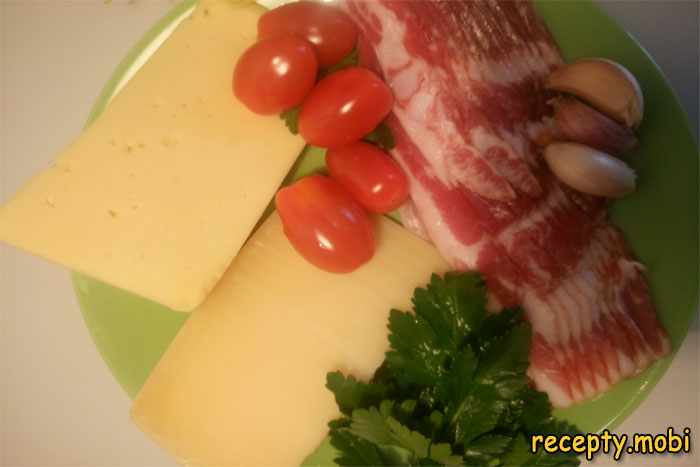
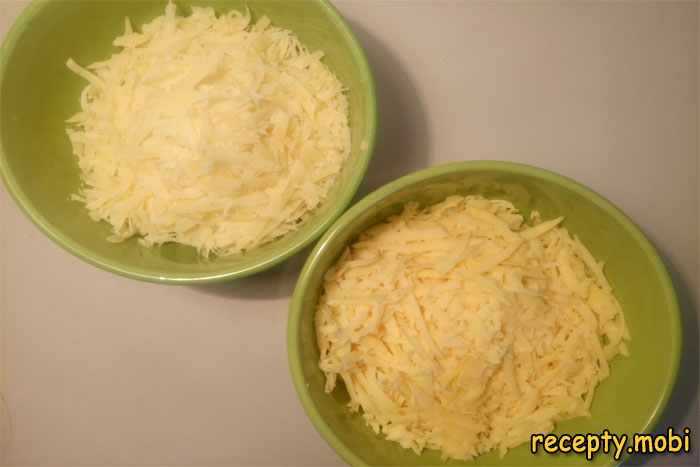
First, put a large pot of water on the fire and bring it to a boil. Clean the bacon from the rind and cut it into small pieces. Now grate both cheeses on a fine grater and mix them thoroughly. In a medium-sized bowl, beat the eggs with a pinch of black pepper and set aside.
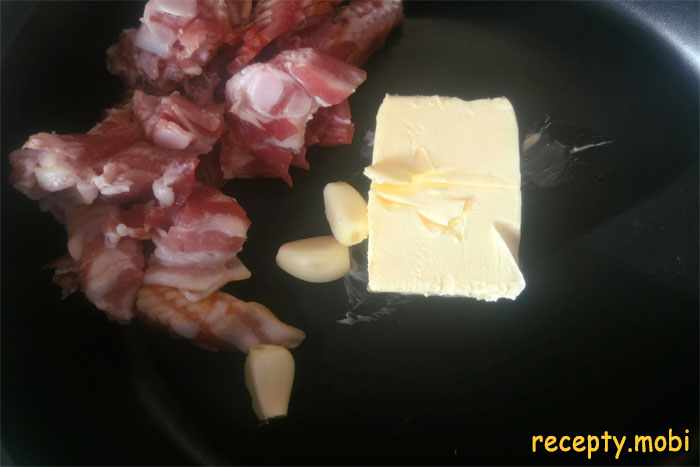
In the boiling water on the stove, add one teaspoon of salt, then add the spaghetti. Then wait for the water to boil again, cover the pot with a lid, and cook for another 10 minutes over medium heat (some types of spaghetti require longer cooking times). Crush a clove of garlic with the blade of a knife. While the spaghetti is cooking, fry the bacon together with the garlic in butter for five minutes. The bacon should turn golden, usually 5 minutes of frying over medium heat is enough. Now, having transferred its aroma to the bacon, the garlic should be discarded.
The fried bacon should always be warm, so leave the skillet with it on the lowest heat in the oven. Remove the cooked spaghetti from the water with a fork or special tongs and add them to the bacon. It is not a problem if some water gets into the pan with the pasta. Leave half a cup of the water in the pot in which the spaghetti was boiled.
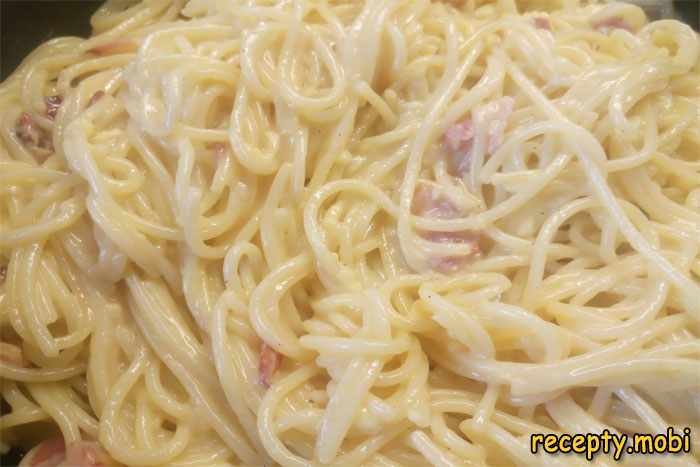
Mix most of the cheese with the eggs. Use the remaining cheese to sprinkle the dish before serving. Take the skillet with the spaghetti and bacon, pour in the mixture of eggs and cheese, mixing it with a fork. Twisting the spaghetti onto the fork and lifting can help mix them well. The egg mixture coats the pasta nicely. The resulting pasta can be salted if necessary. To ensure the spaghetti is not too dry, you can add a small amount of the water that we poured into the cup after boiling the pasta.
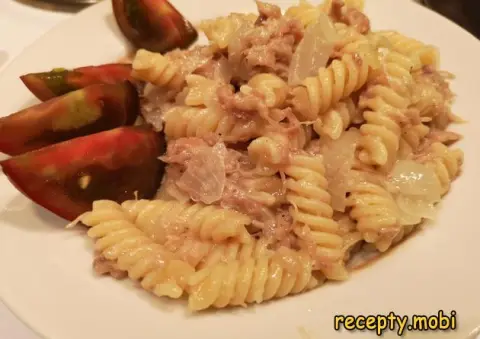
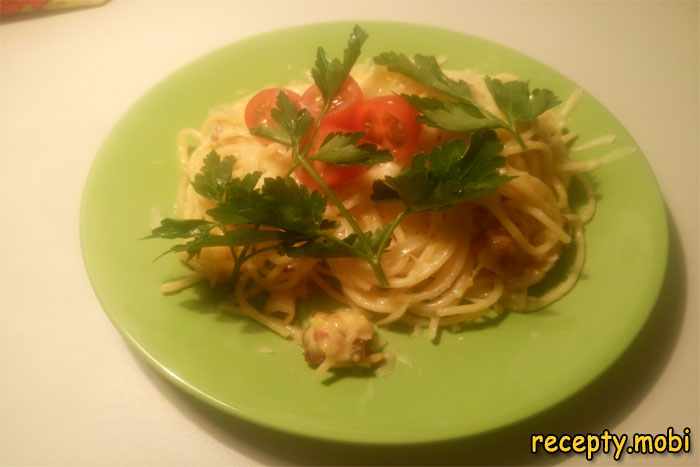
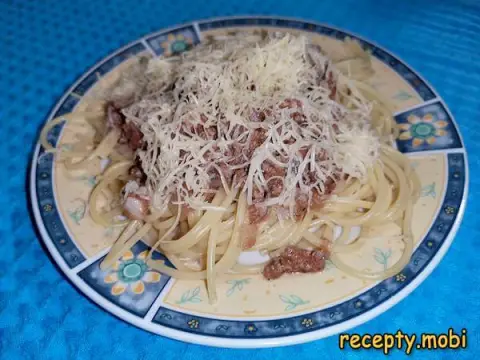
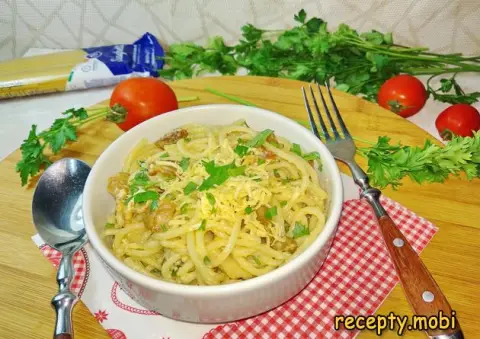
To serve, place the spaghetti on a serving plate, winding them onto a fork with long tines. Sprinkle the pasta with grated cheese and ground pepper. Cut several cherry tomatoes in half, place the halves on top of the pasta, and also add a few parsley leaves or any other greens. Enjoy your meal!
Tips
- 1
Use authentic Italian cheeses (pecorino + parmesan) for the best finished signature flavor. Generic cheese substitutes produce flat one-dimensional results; properly authentic pecorino plus parmesan produce the proper signature complex savory character authentic to traditional Italian carbonara preparations. Pecorino provides sharp tangy notes; parmesan provides nutty depth. The cheese quality matters more than home cooks typically realize for finished pasta quality and overall Italian-meal success consistently across batches reliably across various traditional culinary occasions throughout the year.
- 2
Use proper egg-cheese emulsion technique (off-heat) for finished proper creamy sauce without scrambling. Adding eggs to hot pan scrambles them producing inferior results; off-heat egg-cheese mixing with hot pasta produces the proper signature creamy emulsion character authentic to traditional Italian carbonara preparations. The same off-heat emulsion principle elevates many egg-pasta preparations including pasta with canned tuna and onion and similar Italian pasta preparations across various traditional culinary occasions throughout the year reliably.
- 3
Reserve pasta cooking water for finished proper sauce consistency. Discarding all pasta water produces dry inadequate results; reserved starchy pasta water adjusts sauce consistency producing the proper signature silky character authentic to traditional Italian preparations. The patient pasta-water-reservation principle pays back significantly in finished pasta-quality consistently across batches and various Italian pasta preparations throughout the year for proper traditional results worth showcasing reliably across various entertaining occasions throughout the year for proper trattoria-style results.
- 4
Pair the finished carbonara with traditional Italian accompaniments for proper presentation. Sprinkle with grated cheese, freshly ground pepper, cherry tomatoes, fresh parsley, alongside Italian salad, or with crusty bread for proper finished family-meal applications. Pair with crusty homemade bread for substantial dinner spreads, alongside Caesar salad for traditional Italian accompaniment, or with chilled white wine for elegant Italian-style dinner presentations worth showcasing across various entertaining occasions reliably.
FAQ
Can I use pancetta instead of bacon? +
Yes, pancetta is the most authentic Italian choice and works producing distinct character. Each option produces distinct character: bacon is most universally available, pancetta is most traditional Italian-style, guanciale (cured pork cheek) is most authentic Roman, prosciutto is most refined. Use 100 g of any to replace bacon. Skip the rind-removal step for thinly-sliced pancetta or guanciale. Choose based on availability and authenticity preference for proper finished variations consistently throughout the year reliably.
How long does carbonara keep? +
Best consumed immediately for peak texture and flavor. Stored covered in the refrigerator, the carbonara keeps for 1-2 days but loses creamy character upon reheating. Reheat gently in pan with splash of pasta water or cream to restore texture. The carbonara does not freeze well due to egg-cheese emulsion structure changes. Best consumed fresh same-day for the brightest most appealing finished restaurant-style results across various entertaining occasions reliably.
Can I use only one type of cheese? +
Yes, using only parmesan or only pecorino works as simplified version producing distinct character. Each option produces distinct character: both cheeses combined are most traditional and complex, parmesan-only is most universally appealing, pecorino-only is sharpest, grana padano is most economical substitute. Use 100 g total cheese to replace 50 g each variety. Choose based on availability and personal preference for proper finished variations consistently throughout the year reliably.
Why does my egg sauce scramble? +
Three usual causes: pan too hot when adding eggs (must be off heat), pasta too dry without water (need pasta water), or pouring eggs directly onto hot bacon. Address removing pan from heat first, adding reserved pasta water, and gradually mixing eggs while tossing pasta. The combination of off-heat technique, pasta water, and gradual mixing produces dramatic creamy-emulsion quality reliably across various Italian carbonara preparation sessions throughout the year for proper traditional restaurant-style results consistently.
- Comment
or post as a guest
Be the first to comment.