avg —
Marinated Milk Mushrooms for Winter

Instructions
Set aside 500 g of freshly gathered mushrooms.
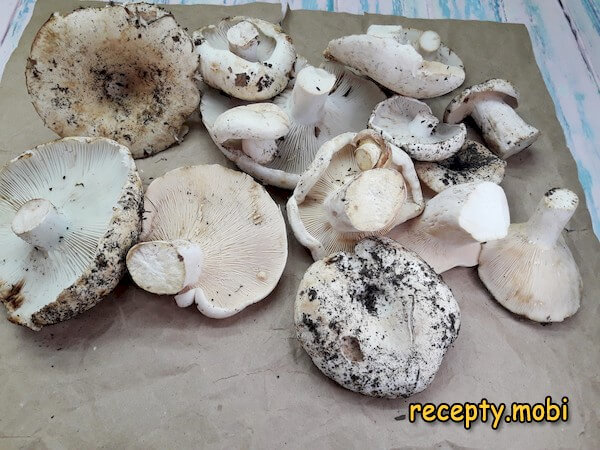
Cover them with water and arm yourself with a small brush and a knife. With these simple tools, scrub the milk mushrooms thoroughly, rinsing each one under running water at the end.
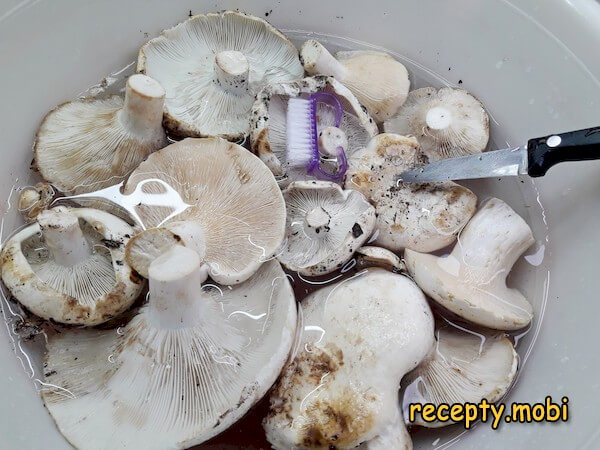
Put the cleaned mushrooms in a bowl.

Now soak them for 2 days in fresh water, and be sure to change it no fewer than 5 times a day. Over this time the excess bitterness leaves the milk mushrooms, with only a faint hint of it remaining.
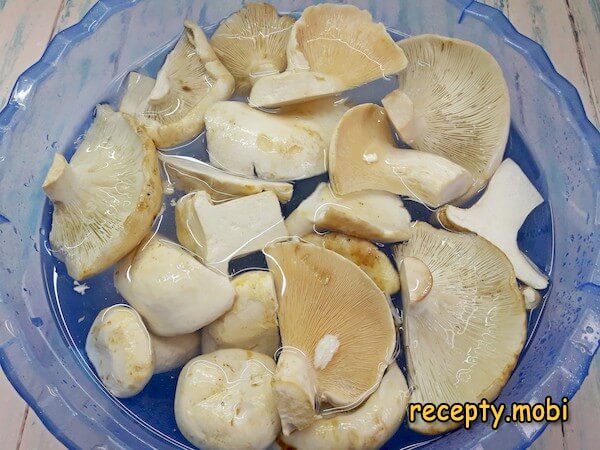
Cut the large soaked mushrooms into several pieces so they fit through the neck of the jar, and put them in a pot.
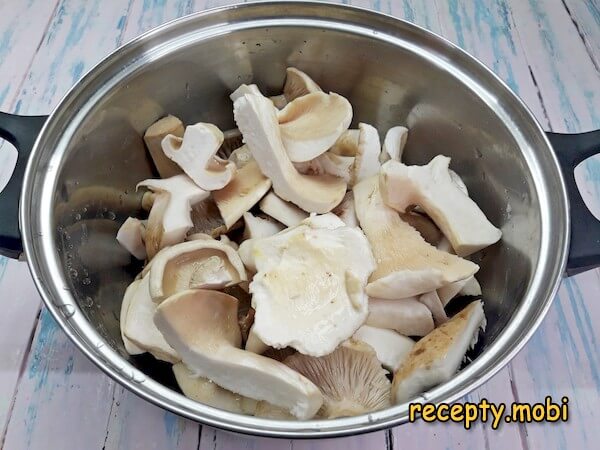
Add water so the mushrooms float freely, turn on the stove, and boil for 15 minutes this time.
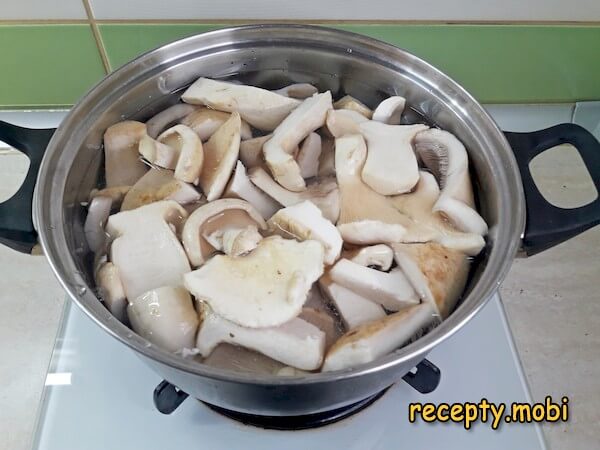
As it comes to the boil, a thick foam will start to gather – this needs to be skimmed off.
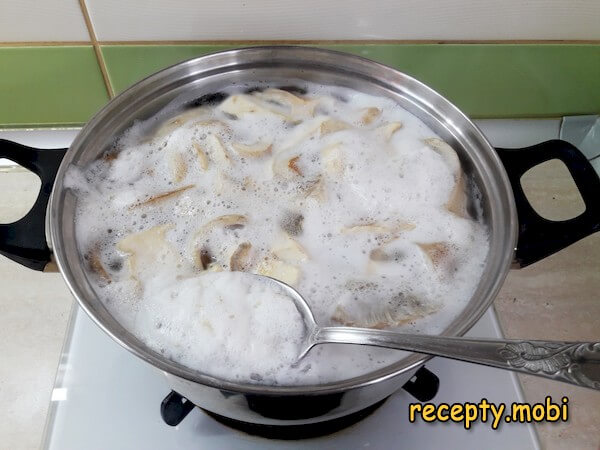
Once boiled, tip the milk mushrooms into a colander. Douse them with cold water, washing away the last of the foam and any stray specks.
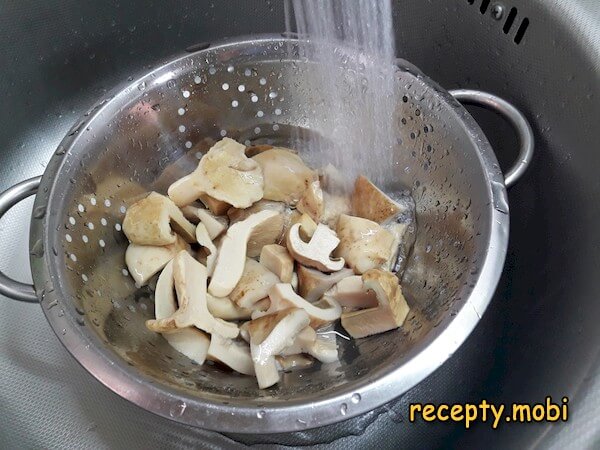
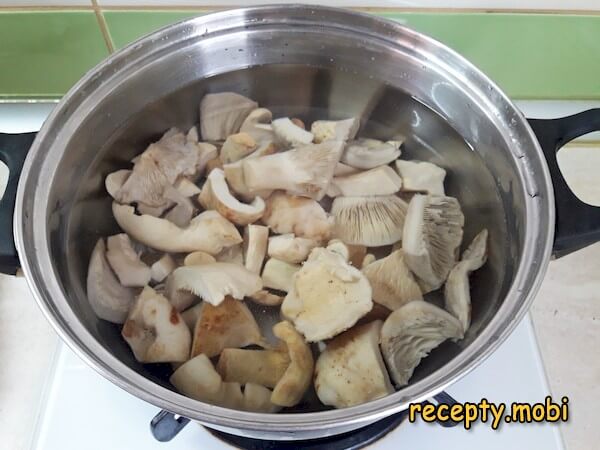
Return the mushrooms to the pot for boiling and this time boil them for half an hour. If foam gathers again, skim it off.
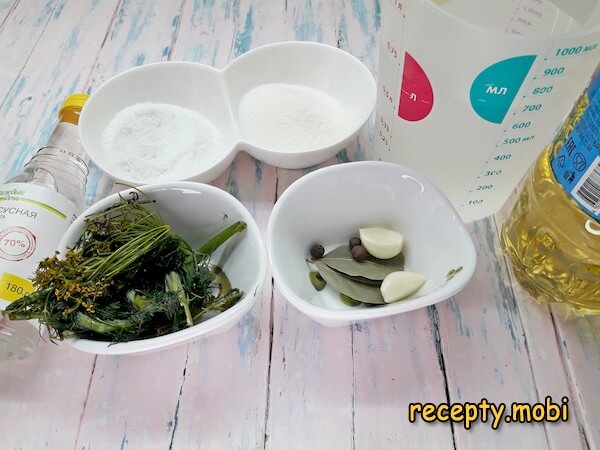
Meanwhile, get the ingredients for marinating ready.
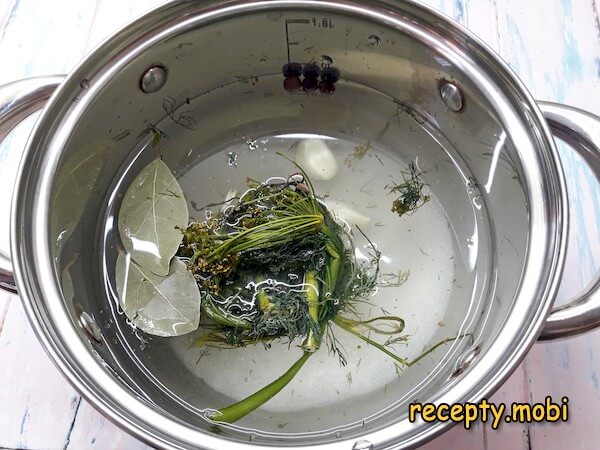
Combine all the listed ingredients (except the vinegar and oil) in a pot. Set it over the heat.
After boiling, rinse the mushrooms once more and pour the boiling marinade over them. Boil for 8 minutes.
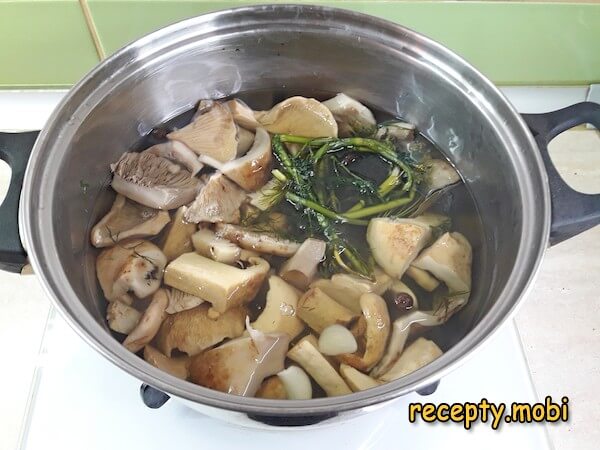
Pour in the vinegar acid and keep boiling for a further 2 minutes.
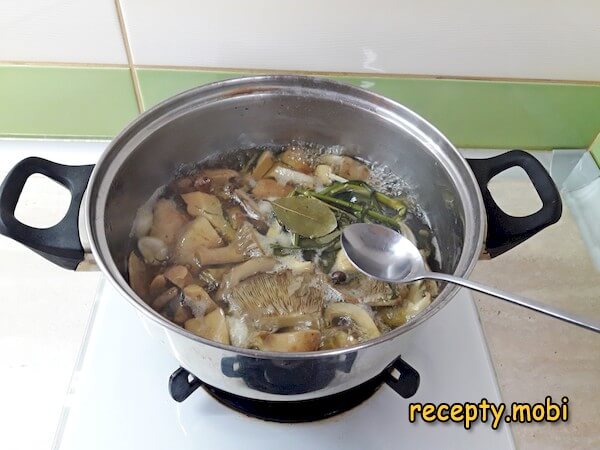
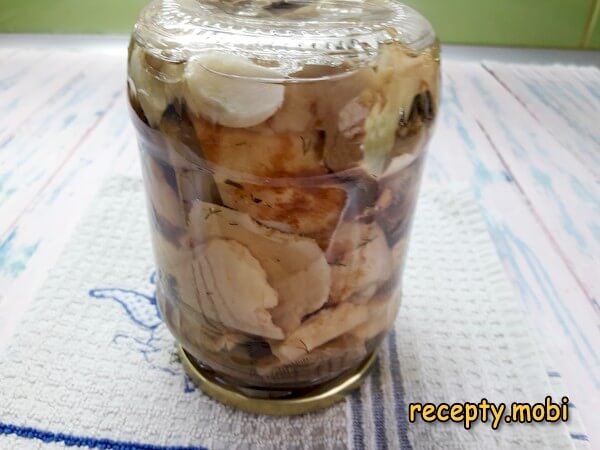
Pack the milk mushrooms into a sterile jar together with the marinade, so that as little air space as possible is left at the top.
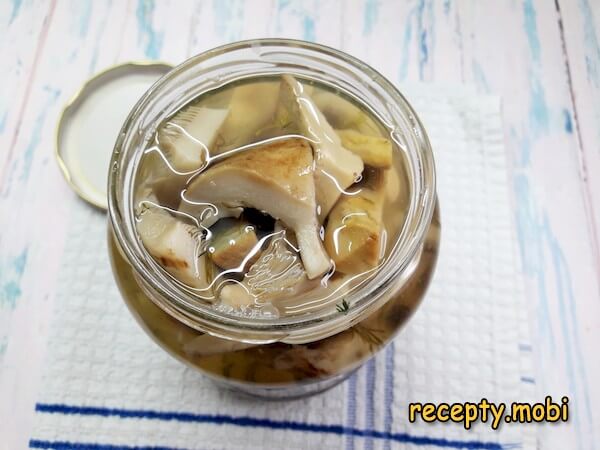
Add the vegetable oil.
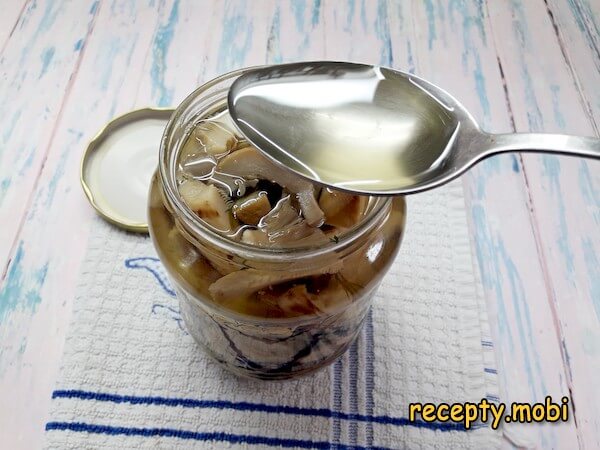
Screw on a boiled lid. Wrap the jar and turn it upside down.


Tips
- 1
SOAKING FOR 2 DAYS – the secret against bitterness. Milk mushrooms contain a bitter milky juice. Changing the water 5+ times a day is essential.
- 2
DOUBLE BOILING – the secret of safety. The first boil is 15 minutes (with rinsing), the second is 30 minutes in clean water. This is how all the harmful substances are removed.
- 3
VINEGAR RIGHT AT THE END – the secret of aroma. During a long boil the acetic acid "boils away". Add it 2 minutes before turning off the heat.
- 4
OIL ON TOP – a "protective plug". A layer of vegetable oil over the mushrooms keeps air from reaching the food and protects against botulism. The same principle works for other kinds of marinated mushrooms for winter.
FAQ
Which milk mushrooms should you choose? +
Ideally, freshly gathered white or yellow milk mushrooms. Size: young ones with caps of 5–10 cm, not overgrown. Colour: white or creamy-yellow, with the characteristic funnel-shaped cap. The smell is a slightly fruity, mushroomy one. Not suitable: wormy ones (with little holes), overgrown ones (with a dark underside), dry ones, or any with mould. Genuine forest milk mushrooms (not "shop-bought button mushrooms") are the premium option. Do not use mushrooms from unknown sources – it is dangerous. Before salting, check each specimen down to the stem. Young, firm milk mushrooms give a crunchy appetiser.
Why soak milk mushrooms? +
Milk mushrooms are classed as conditionally edible mushrooms. When fresh they contain a milky juice that is very bitter and slightly poisonous. Soaking for 2 days with regular water changes (at least 5 times a day) completely removes this bitterness and the toxins. Without soaking, milk mushrooms are inedible. Change the water for cold water – warm water speeds up the spoiling of the mushrooms. On the first day the water turns a brownish colour – this is normal (the bitter substances are coming out). By the end of the 2 days the water should be clear. This is an essential step for all milk mushrooms.
How long do milk mushrooms keep? +
In sealed jars in a cool place (a cellar or the fridge) – up to 1 year. Once opened, in the fridge – 1 month (under a layer of oil – 2 months). Do not keep them at room temperature for longer than 6 months. Write the canning date on the jars – it matters for mushroom preserves. If a lid bulges – throw it out at once (risk of botulism!). Signs of spoilage: a cloudy marinade, a change in smell, mould. Do not sniff doubtful mushrooms if you suspect a problem – it is dangerous. Always use sterilised containers and boiled lids. Freshly made jars are at their "star" best a month after canning.
What should you serve milk mushrooms with? +
The Russian classic: with hot boiled potatoes (on the author's advice), finely chopped onion and sour cream. With black or rye bread. With a shot of cold vodka – the "country" way to serve them. With pelmeni and vareniki – the "winter" serving. With roast meat or duck. With pies and potato pancakes. For a "festive table" – as a platter with herbs. With salted cucumbers and sauerkraut – a "mushroom appetiser". With light beer – unusual, but tasty. With rassolnik or shchi as an appetiser. For an "office snack" – handy. A versatile mushroom appetiser for the Russian table.
- Comment
or post as a guest
Be the first to comment.