
avg —
Pickled Pattypan Squash (Patissons) without a Water Bath

Instructions
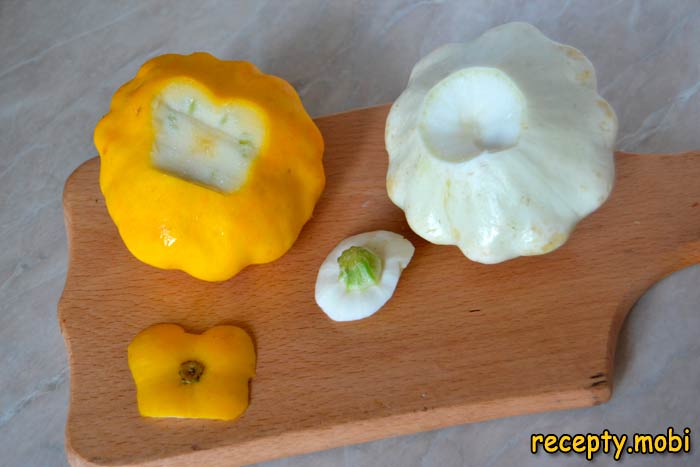
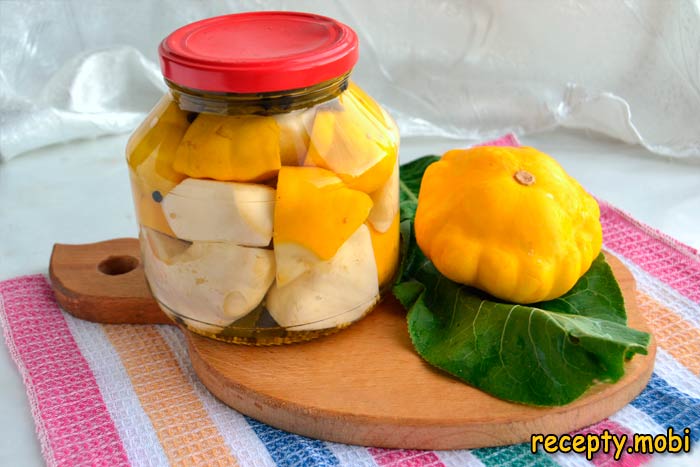
I take young, fresh patissons with firm, springy flesh, 5–7 cm across. I rinse them under cold water, then cut out the stems with a sharp knife and trim the tips on the opposite side. The stems give bitterness during pickling, so removing them is essential.
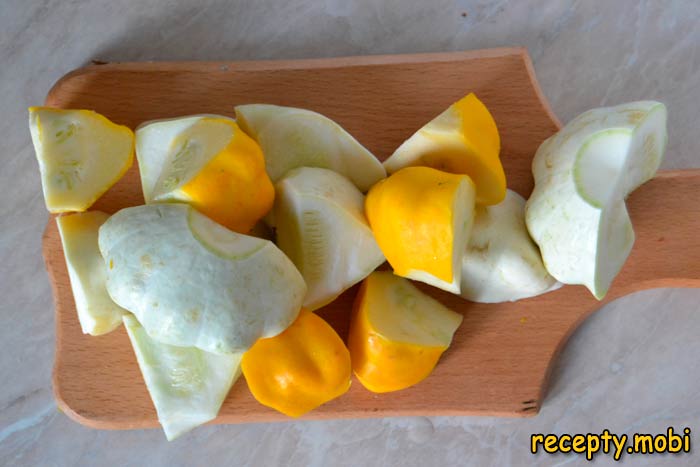
I cut the larger patissons into wedges 1.5–2 cm thick, and leave small ones up to 5 cm across whole for an attractive presentation. Pieces of the same size are important for even pickling, so that every piece is soaked through at the same time.
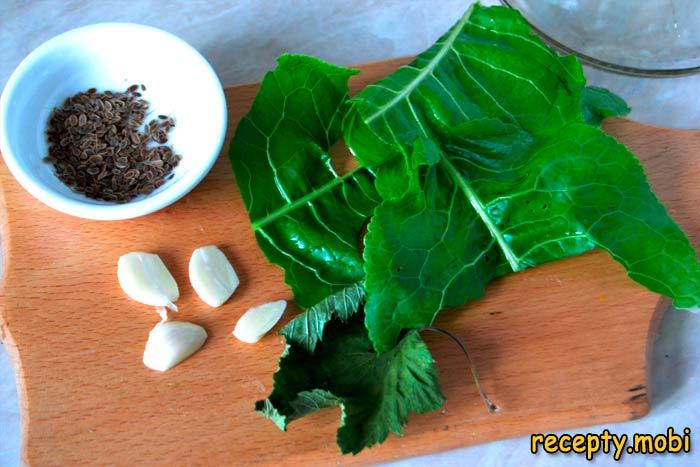
I wash litre jars in warm water with baking soda and sterilise them for 15 minutes in the oven at 120 °C or over the steam of boiling water. On the bottom of each sterile jar I place an "aromatic cushion": peeled garlic, a fresh horseradish leaf (a natural preservative) and dill umbrellas.
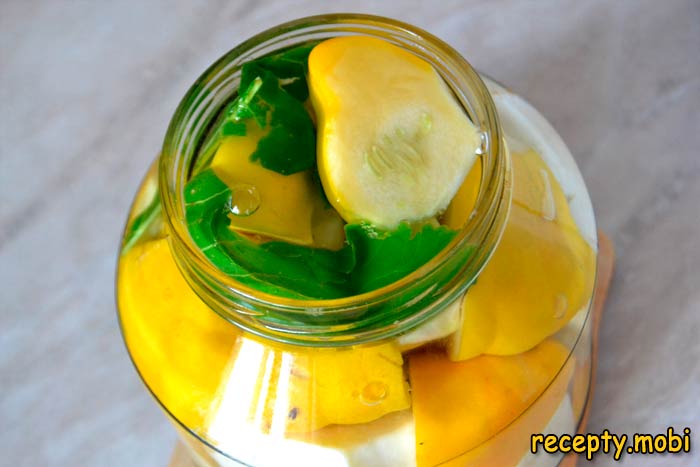
I pack the jars tightly with the prepared patissons, arranging the pieces neatly for a nice appearance. On top I cover them with a second horseradish leaf – it protects the top layer from mould and adds an extra preserving effect.

I pour boiling water over the patissons in the jars and let them stand for 5 minutes to warm the vegetables through. I drain the water back into the pot, bring it to the boil again and pour it over the patissons a second time. This "double pour" replaces sterilising in boiling water and is a simpler, quicker method.
I cover the jars with boiled metal lids and leave them for 15 minutes under a towel for even warming. After that I drain the water from the jars into a measuring cup – this way I can see the exact volume for calculating the marinade.
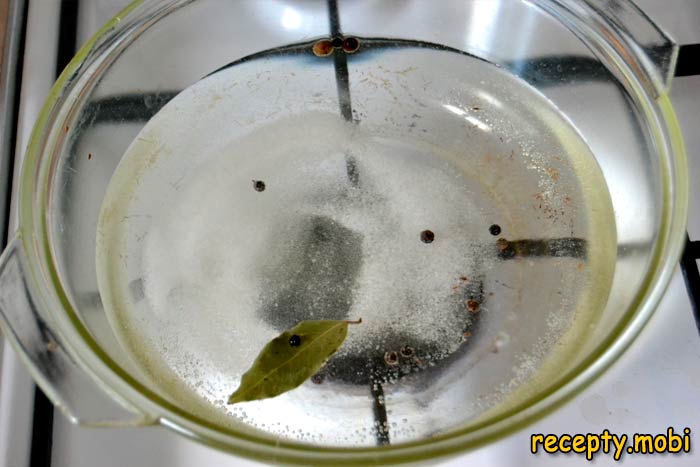
I make the marinade: into the pot with the drained water from the jars I add salt, sugar and spices (bay leaf, allspice and black peppercorns, mustard seeds). I put it on the heat and bring it to the boil, then simmer for 2–3 minutes so the salt and sugar dissolve completely and the spices release their aroma.
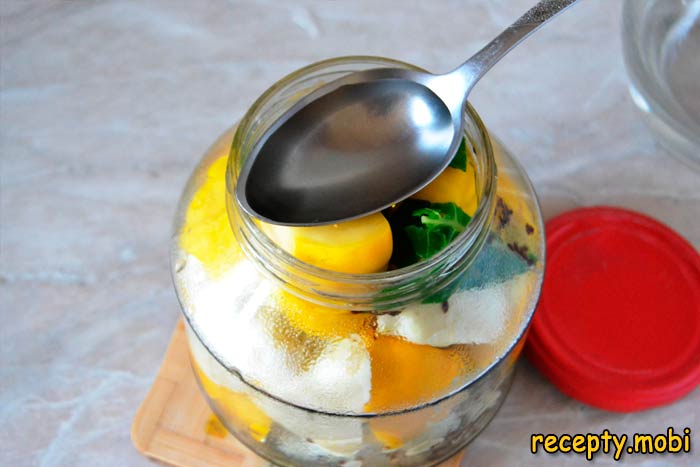
I half-fill the jars with the boiling marinade, add 3 tablespoons of 9% vinegar straight into each jar (for reliable preservation), and top up with marinade right to the brim. I add the vinegar at the end so it does not evaporate while the marinade boils in the pot.
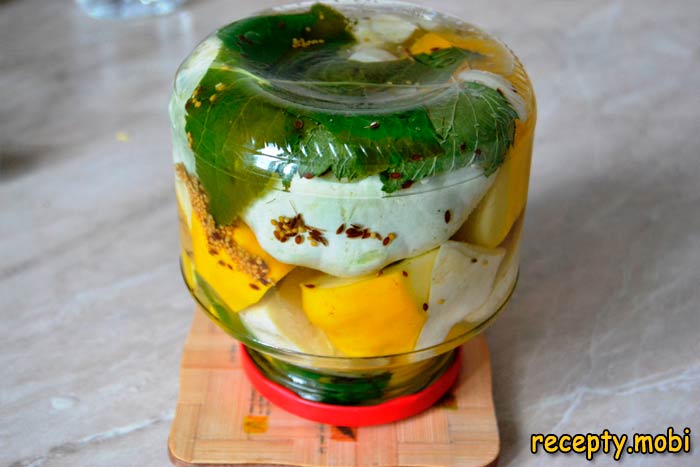
I immediately seal the jars airtight with a sealing machine. I turn them upside down to check the seal, then wrap them in a thick blanket for 12 hours until completely cool – this creates an extra vacuum and ensures long storage.
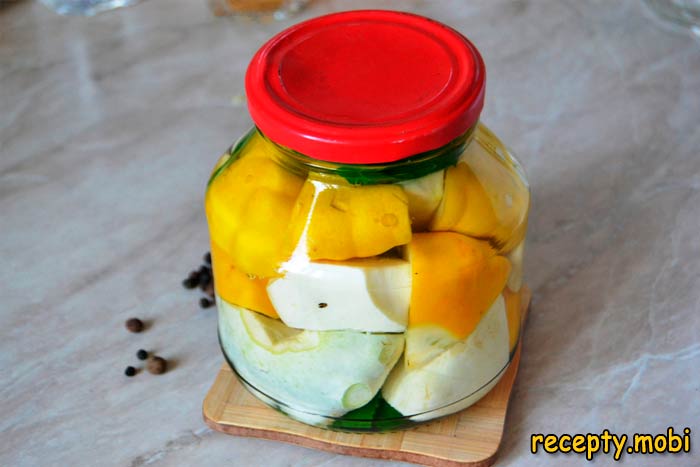
The pickled patissons are ready! I store them in a cool, dark place (cellar, pantry) at 5–15 °C for up to a year. In winter I serve them as a snack with meat or potatoes, or as a dish in their own right for the festive table.


Tips
- 1
For attractive preserves, use patissons of different colours – white, yellow and green. The jar ends up looking like a colourful "salute".
- 2
Young patissons 5–7 cm across come out crispy. Overripe large ones turn soft and watery.
- 3
Instead of dill umbrellas you can use 2 teaspoons of dill seeds. I pickle pickled cucumbers on a similar principle.
- 4
Be sure to turn the jars upside down and wrap them in a blanket – this creates a vacuum and ensures long storage.
Types of pickled pattypan squash: which method to choose
Pattypan squash can be pickled in different ways, and the method shapes the flavour, firmness and shelf life. Below are the main options so you can find the one that suits you.
| Method | What it involves | Result |
|---|---|---|
| Hot pour without sterilisation | The squash is filled twice with boiling marinade straight in the jar, and the vinegar goes in at the end. | Quick, and the squash stays firm and crunchy. This is the method from the recipe above. |
| With jar sterilisation | The filled jars are heated in a pan of water for 10-15 minutes before sealing. | The most reliable for storage, though the squash comes out a little softer. |
| With citric acid | Citric acid is used instead of vinegar, about 1 tsp per litre of water. | A mild, less sharp flavour with no smell of vinegar. |
| Spicy "ogonyok" style | Hot chilli, plenty of garlic and dill umbels are added to the marinade. | A piquant snack to go with meat and potatoes. |
| Mixed with other vegetables | The squash is pickled together with cucumbers, courgettes and tomatoes. | A pretty jar and a range of flavours in one batch of preserves. |
If you fancy several vegetables in a single jar, take a look at this mixed cucumbers and tomatoes for the winter or this vegetable medley without sterilisation: pattypan squash fits right in.
How to choose pattypan squash for pickling
The flavour of the finished preserve is set back in the garden and on the shop shelf. For pickling it is not the looks that matter but how ripe and firm the fruit is.
- 5-7 cm in size. Young, small squash tastes best: the flesh is dense, the seeds are soft and the skin is thin.
- Firm and heavy. The fruit should be springy, with no dents or soft sides. Softness is a sign that it is overripe.
- Light, even skin. No spots, cracks or signs of rot. Dark specks often mean the squash has started to spoil.
- Young seeds. Cut one open: if the seeds are large and hard, the squash is overripe and will go mushy in the jar.
- A fresh cut at the stem. A dry, darkened stalk tells you the vegetable was picked a while ago.
What keeps pattypan squash crunchy
The big question when pickling is how to keep that signature firmness and crunch. A few simple tricks do the job.
- Tannin-rich leaves. An oak, cherry, horseradish or currant leaf in the jar releases tannins that keep the flesh dense.
- Do not overcook. If you blanch the squash, keep it in boiling water for no longer than 3-5 minutes, or it will turn mushy.
- Cold water after blanching. Rinse the fruit with cold water: the sudden change in temperature locks the crunch in.
- A strong marinade. Enough salt and vinegar tightens the cells and stops the vegetable from going soft.
- Horseradish root or leaf. It also keeps the brine from clouding and adds a gentle kick.
Sterilisation and the safety of your preserves
Pattypan squash, like courgettes, is a low-acid vegetable. That means that without enough acid the jar can develop the dangerous botulism bacterium, which changes neither the taste nor the smell. So acid in the marinade is not only about flavour, it is also about safety.
- Vinegar or citric acid are a must. For long storage at room temperature acid is always needed, and it must never be left out entirely.
- Clean jars and lids. Wash the jars with baking soda and heat them, and boil the lids. Food safety guidance advises against sealing preserves in poorly washed containers.
- Cool, dark storage. A cellar or the bottom shelf of the fridge: the cooler it is, the longer and more safely the jar keeps.
- Check before eating. A bulging lid, cloudy brine, bubbles or a sour smell are all a signal to throw the jar out without tasting it.
- Low-acid versions go in the fridge only. If you make the squash with no vinegar at all, keep it only in the cold and eat it within a couple of weeks.
Common mistakes and how to avoid them
Pattypan squash is less forgiving than cucumbers, so a couple of small things decide whether the jar turns out well or not.
- They went soft. You used overripe fruit or left it in the boiling water too long. Choose young squash and blanch it briefly.
- Hollow inside. A large squash with a loose centre: small and medium fruit works better for the jar.
- The brine went cloudy. The fruit was poorly washed or there was too little acid. Rinse thoroughly and do not cut back on the vinegar.
- The lid bulged. Sterility was broken or there was not enough acid. A jar like this must not be eaten.
- They darkened. You used iodised salt or hard water: go for plain rock salt and filtered water.
The same tricks work with related vegetables too, for example with crunchy pickled courgettes for the winter.
Video

FAQ
Which patissons are best for pickling? +
Young, firm ones with thin, tender skin, 5–7 cm across – they come out as crispy as possible and hold their shape during pickling. Their seeds are still small and soft, and the skin does not need peeling. Large, overripe patissons (10+ cm) have big, hard seeds, coarse skin and soft flesh – they are not suitable for pickling. Patissons of different colours (white, yellow, green) give a lovely visual effect in the finished jar.
Can patissons be made without vinegar? +
Yes, replace the vinegar with citric acid at a rate of 1 teaspoon per litre jar. Citric acid gives a milder sour note and is considered a more "natural" alternative to vinegar. You can also use freshly squeezed lemon juice (3–4 tablespoons per jar), but the storage life will be shorter – citrus is a weaker preservative than vinegar. For long storage (more than 6 months) lemon juice is not effective enough. Wine or apple cider vinegar also work – each gives the marinade its own character.
How long do pickled patissons keep? +
In a cool, dark place (cellar, pantry) at 5–15 °C – up to a year without loss of quality. In the second year the texture may become less crispy, but the flavour is preserved. Once a jar is opened, move it to the fridge and use within 10–14 days. Signs of spoilage – mould on the surface, cloudy marinade, a bulging lid, an off smell – mean you should throw such jars out without regret, for your health and safety.
What to serve pickled patissons with? +
Classic pairings: with fried or baked meat (pork, beef, turkey), boiled potatoes with dill, baked or fried fish, or kebabs. They make an ideal snack with strong drinks. For the festive table – as part of an assortment of appetisers alongside other pickles and marinades. Do not pour away the marinade left after the patissons – it makes an excellent base for borscht or solyanka. Patissons can also be sliced into salads or added to vinaigrette.
Do you need to soak pattypan squash before pickling? +
Young squash does not have to be soaked, a good rinse is enough. Larger fruit can sit in cold water for 1-2 hours: that makes it springy and helps it soak up the marinade better.
Why did my pattypan squash turn out soft? +
The usual reason is overripe fruit or blanching that went on too long. Choose young squash of 5-7 cm, keep it in boiling water for no longer than 3-5 minutes and add a horseradish or oak leaf to the jar for firmness.
Can you pickle pattypan squash together with courgettes and cucumbers? +
Yes, squash goes wonderfully with courgettes, cucumbers and tomatoes in one jar. Cut the vegetables into roughly equal pieces so they soak up the shared marinade evenly.
Do you have to sterilise jars of pattypan squash? +
The jars and lids need to be washed and heated thoroughly in any case. The recipe itself, with its double hot pour, lets you skip the extra sterilisation of the filled jars, but acid in the marinade is essential for that.
Why did the brine in the jar go cloudy? +
Cloudy brine comes from poorly washed fruit, a shortage of acid or fermentation that has begun. If the lid has bulged as well, do not eat what is in the jar. Clear brine with a little sediment from the spices is perfectly normal.
How can you tell a pattypan squash is right for the jar? +
A good squash is firm and heavy, with light, even skin and soft seeds at the cut. If the flesh is loose and the seeds are large and hard, the fruit is overripe and will go soft in the marinade.
Related preserves
- Comment
or post as a guest
Be the first to comment.