avg —
Refrigerator-Pickled Tomatoes with Beets

Instructions
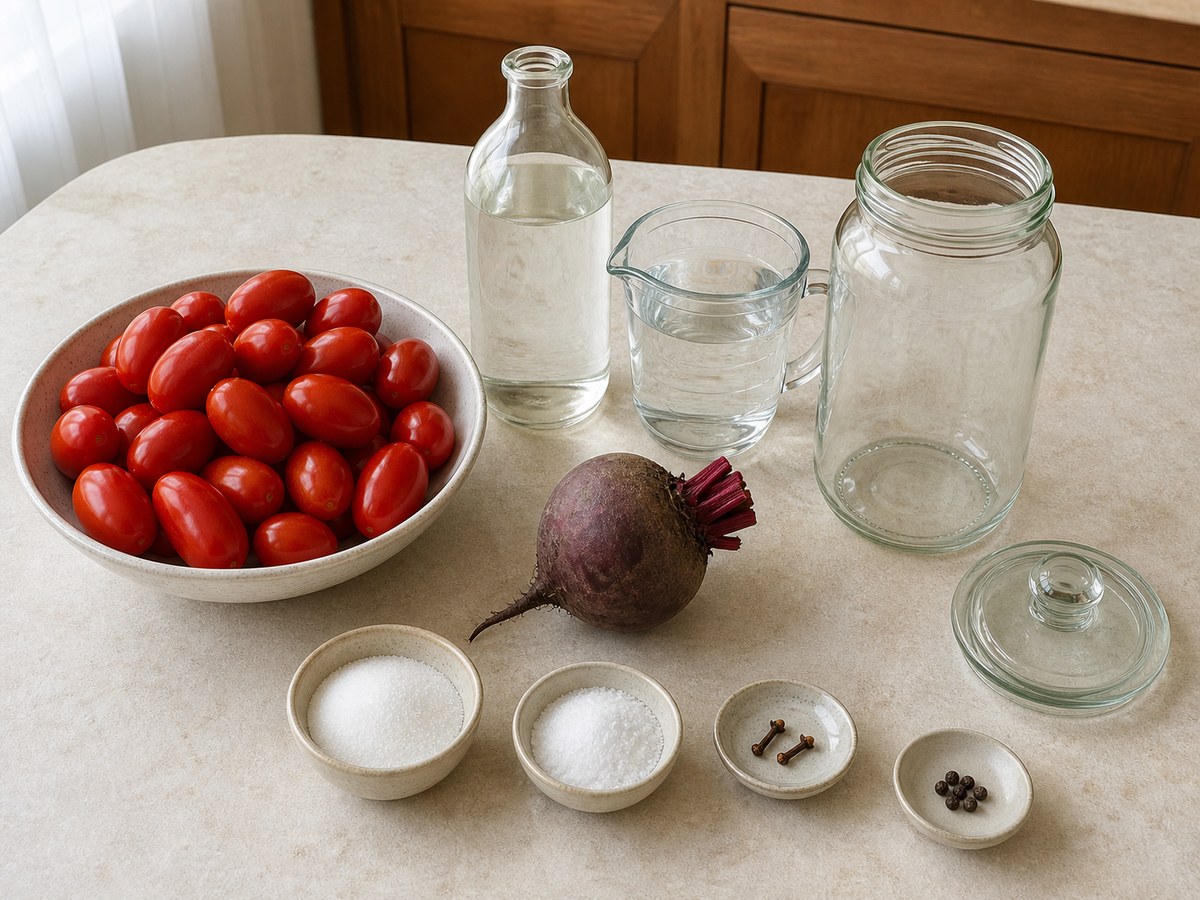
Prepare the jar and ingredients. Wash a one-litre glass storage jar and lid in hot soapy water, rinse thoroughly and scald them with boiling water. Check the glass for chips or cracks. Measure every ingredient in advance, especially the vinegar and water.
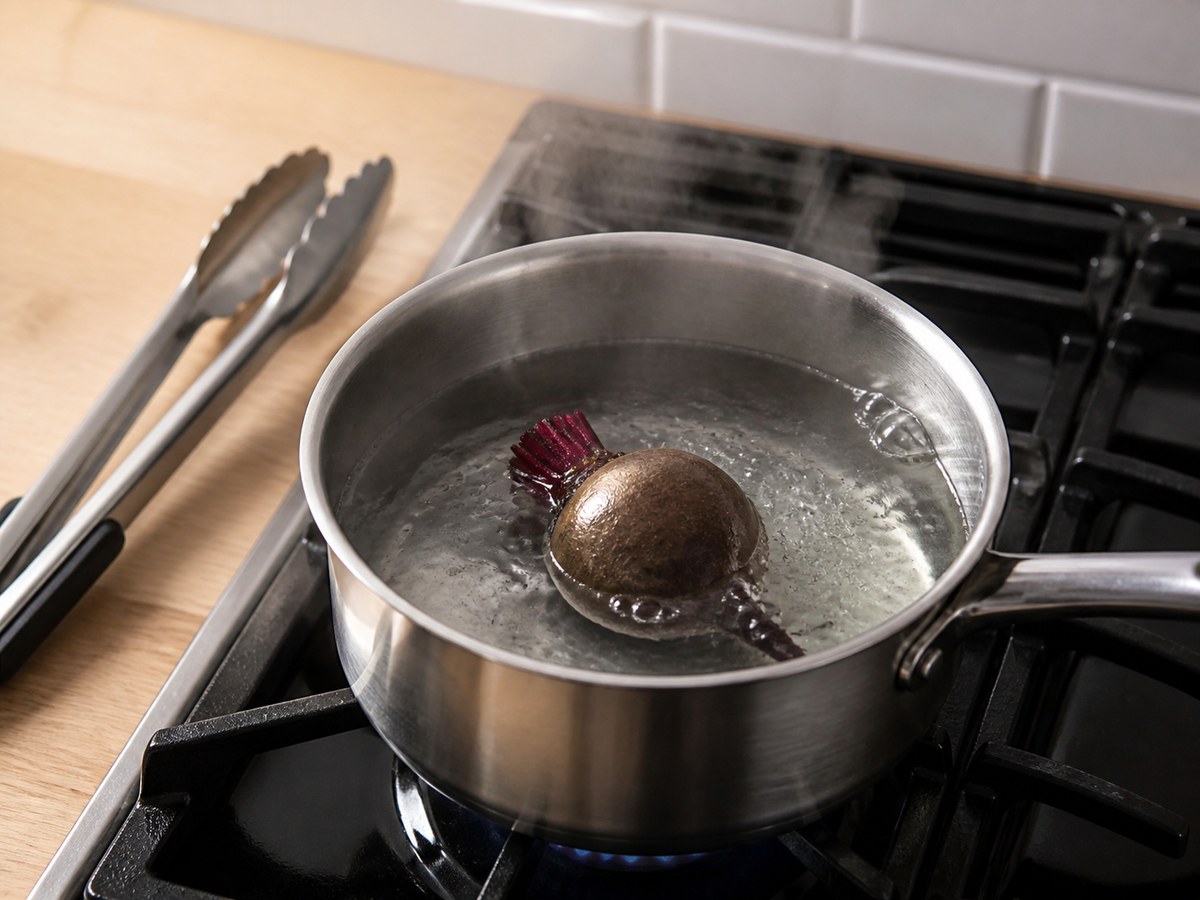
Cook the beet. Scrub the beet and leave a short root tail to reduce colour loss. Cover it with water and boil for 25–30 minutes. A thin knife should enter with slight resistance; the beet should not become completely soft.
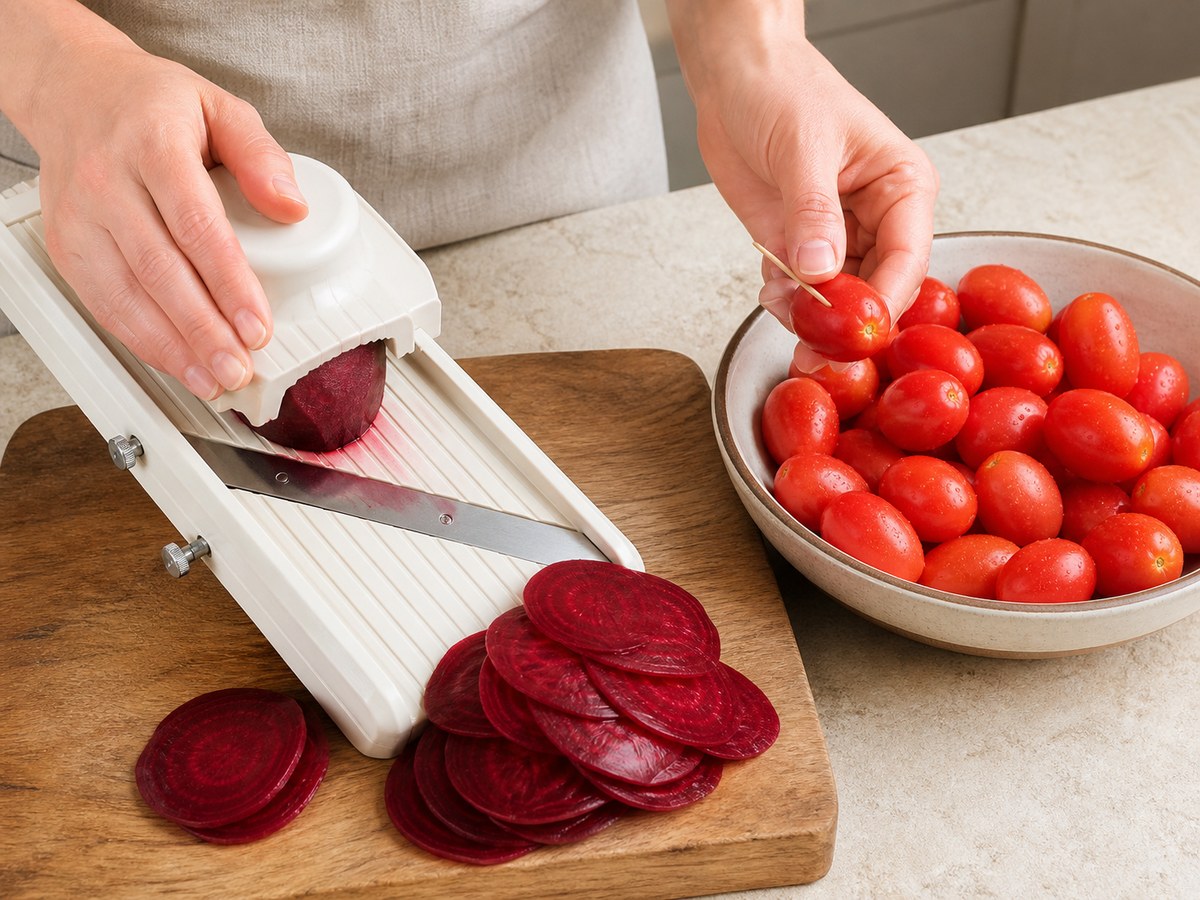
Slice the beet and prick the tomatoes. Cool and peel the beet, then cut it into 2–3 mm rounds. Wash and dry the tomatoes and make one shallow puncture near each stem end with a wooden toothpick. Do not use damaged or overripe fruit.
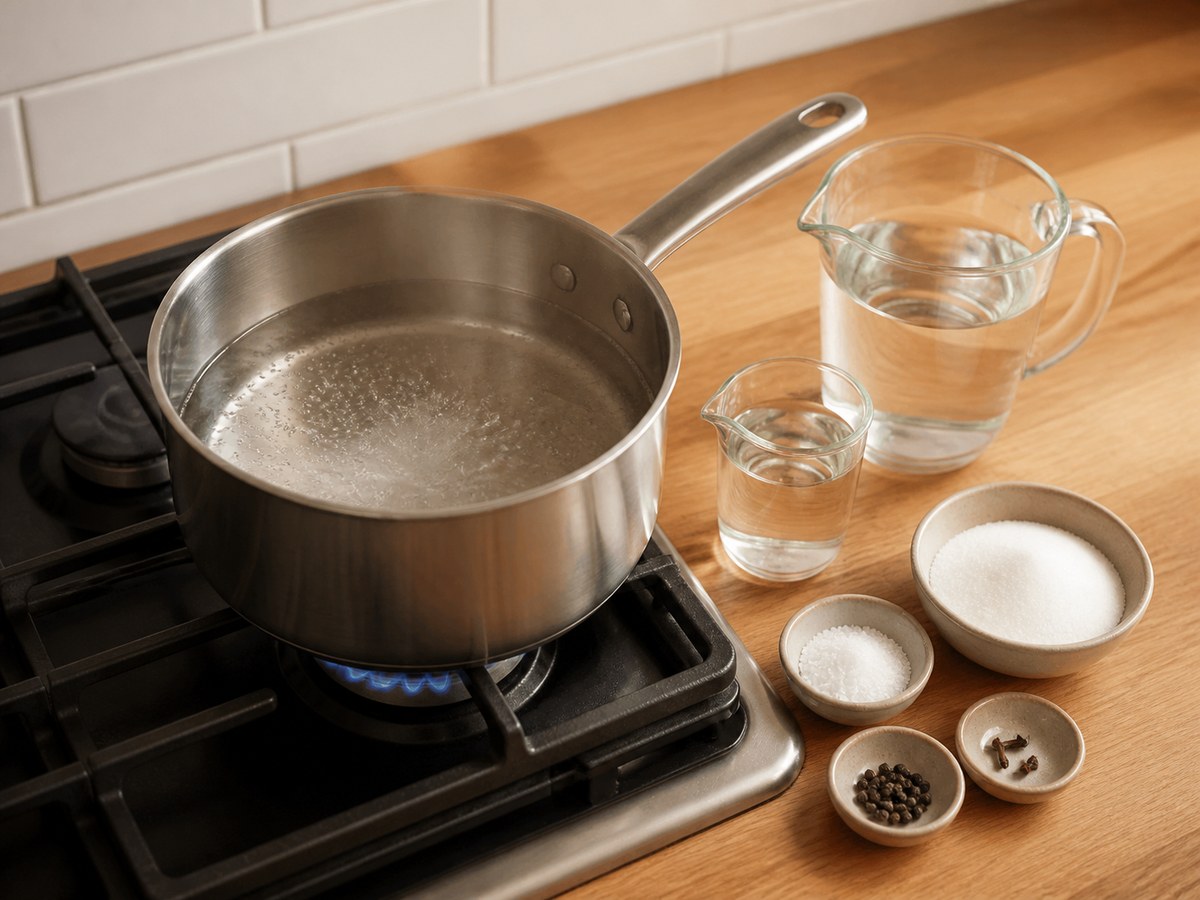
Make the brine. In a non-reactive saucepan, combine 300 ml of 5% vinegar, 150 ml fresh water, sugar, salt, peppercorns and cloves. Stir, bring to a full boil and boil for one minute. Avoid breathing vinegar steam directly above the pan.
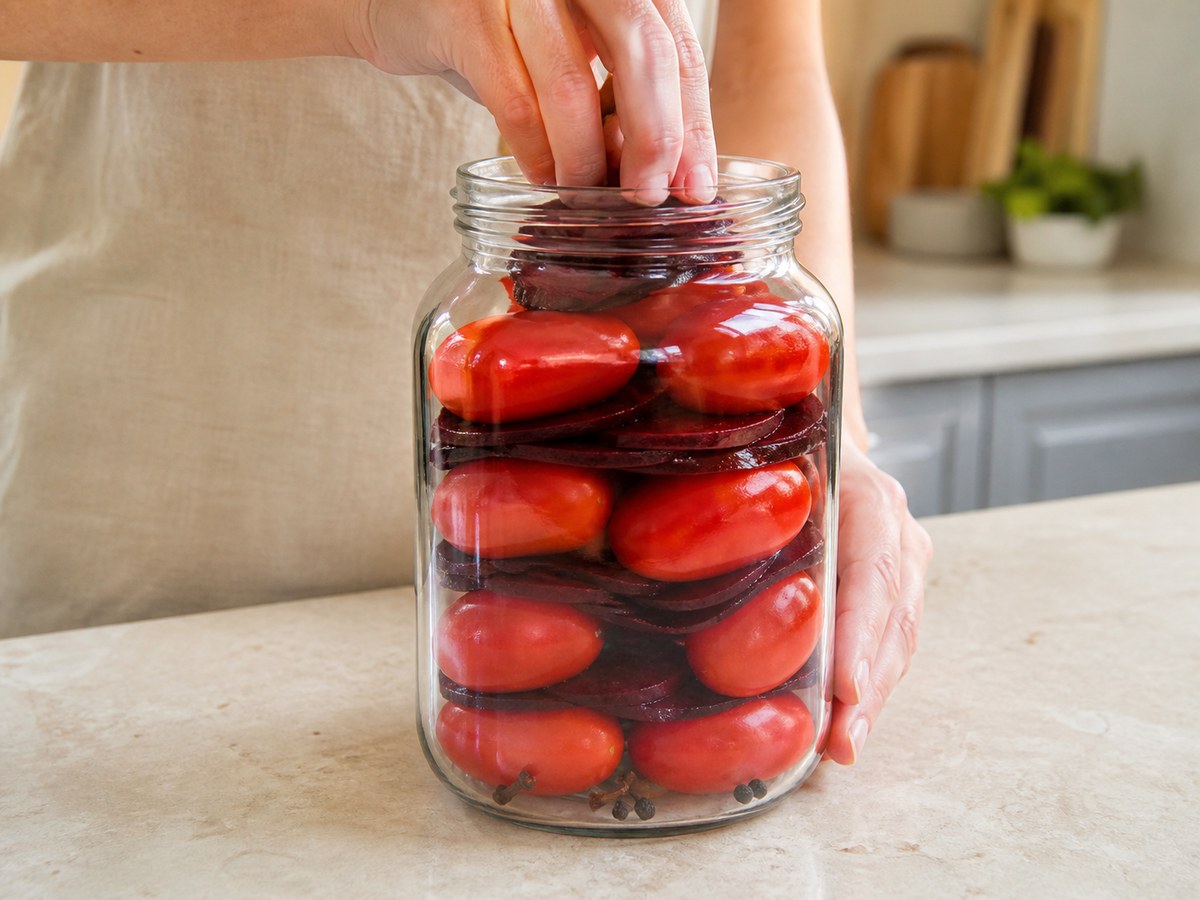
Pack the jar. Layer the tomatoes and beet rounds without pressing or crushing the fruit. Leave enough space for brine to flow around every piece and approximately 1.5 cm at the top.
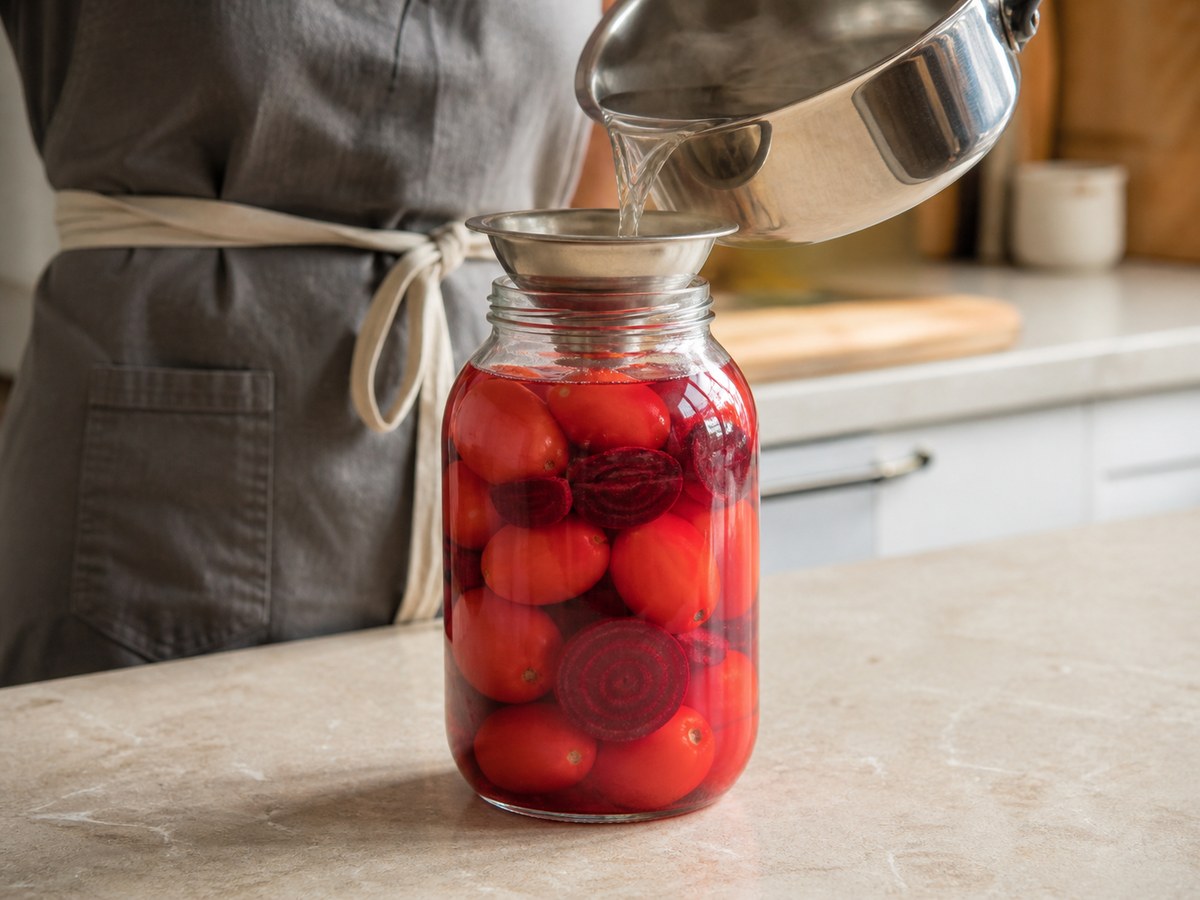
Add the hot brine. Stand the jar on a folded towel and pour slowly until the vegetables are fully covered. Slide a clean plastic utensil around the inside to release bubbles. Cover loosely while the jar cools.
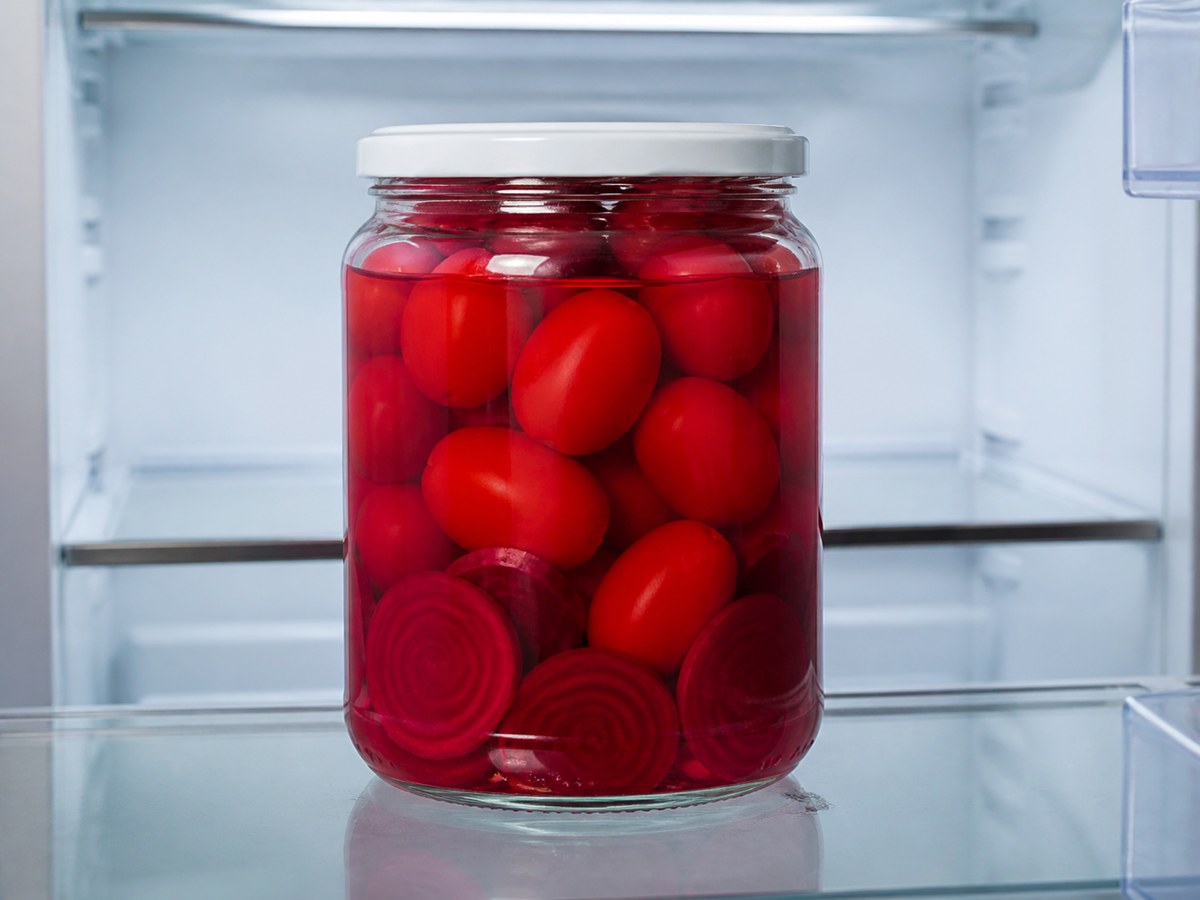
Cool promptly and refrigerate. Do not leave the jar at room temperature for longer than two hours. Close it tightly after cooling and place it on a refrigerator shelf rather than in the door. Leave for at least 24 hours and use within 14 days.


Why this recipe is refrigerator-only
Beets are a low-acid vegetable, while the natural acidity of tomatoes varies. A water-bath time cannot be borrowed from ordinary pickled tomatoes for a mixture of whole tomatoes and beets: heat penetration and acid distribution depend on fruit size, beet thickness and packing density.
This recipe therefore makes no claim that the jar can remain on a shelf through winter. The high proportion of 5% vinegar gives a distinctly pickled flavour, while constant refrigeration controls microbial growth. For shelf-stable storage, use only a research-tested process written for the exact vegetable combination and jar size.
Choosing tomatoes, beets and vinegar
- Tomatoes: choose small, firm, ripe but not soft fruit; evenly sized plum tomatoes are easiest to pack.
- Beet: use a small undamaged root without woody fibres; it is easier to slice thinly after cooking.
- Vinegar: use only a commercial product clearly labelled 5% acidity.
- Salt: plain salt is best; iodised salt may make the brine cloudier but never replaces vinegar.
For a faster tomato dish without beet, try this quick tomato snack. If you enjoy the ruby colour, see the separate recipe for pickled cauliflower with beetroot.
Storage and signs of spoilage
Write the preparation date on the jar. Keep it at 4°C/40°F or below for no more than 14 days. The vegetables should remain covered with brine; use a clean fork and never return food from a serving plate to the jar.
Discard everything without tasting if you see mould, slime, foam, a swollen lid, strong unexplained bubbling or an unpleasant odour. Do not attempt to rescue questionable pickles by boiling them.
Flavour, calories and serving ideas
After 24 hours the vinegar flavour is still bright; on days two and three it becomes more balanced. The beet colours the brine and tomato surface while the fruit retains its own flavour. A 100 g serving with a little brine contains approximately 30 kcal.
Serve the tomatoes and beet slices cold with potatoes, poultry or meat. Open the jar only when needed and return the remainder to the refrigerator promptly.
Recipe video: Pickled tomatoes with beets
Important: The video complements this recipe. Use the exact quantities, temperature, timing and storage guidance in this article, as the creator's version may differ.
The hero and step images were created with AI and are used as visual guides. Follow the stated weights, vinegar acidity, refrigeration temperature and storage limit rather than estimating quantities from the pictures.
FAQ
Can tomatoes with beets be stored at room temperature? +
No. There is no research-tested home water-bath process for this combination of whole tomatoes and beets. Keep this version refrigerated at 4°C/40°F or below at all times.
Why not simply process the jar for 15 minutes? +
Beets are a low-acid vegetable and tomato acidity varies. An arbitrary processing time cannot guarantee safe heat penetration or even acidification throughout the jar.
What vinegar should I use for the brine? +
Use commercially made vinegar clearly labelled 5% acidity. Homemade vinegar and products with unknown acidity are not suitable for this recipe.
Can I substitute 9% vinegar for 5% vinegar? +
Do not dilute 9% vinegar by eye. The simplest reliable option is to buy ready-made 5% vinegar and measure exactly 300 ml, keeping the stated vinegar-to-water ratio.
Does the beet need to be cooked before pickling? +
Yes. Cooking makes it tender enough for thin slicing and rapid refrigerator pickling. Discard the cooking water and use fresh water in the brine.
Why prick the tomatoes with a toothpick? +
One shallow prick near the stem end reduces the chance of split skins and helps the brine enter the tomato. A single small puncture is enough.
How long do refrigerator-pickled tomatoes with beets keep? +
Keep the closed jar refrigerated for no more than 14 days. Use a clean fork each time and return the jar to the refrigerator promptly after serving.
When are the tomatoes ready to eat? +
Allow at least 24 hours. The colour and flavour deepen on days two and three, but there is no need to wait longer than one week before opening the jar.
- Comment
or post as a guest
Be the first to comment.