avg —
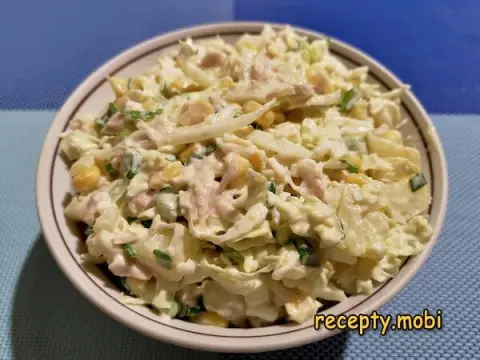
Chicken Salad with Beijing Cabbage and Corn

Instructions
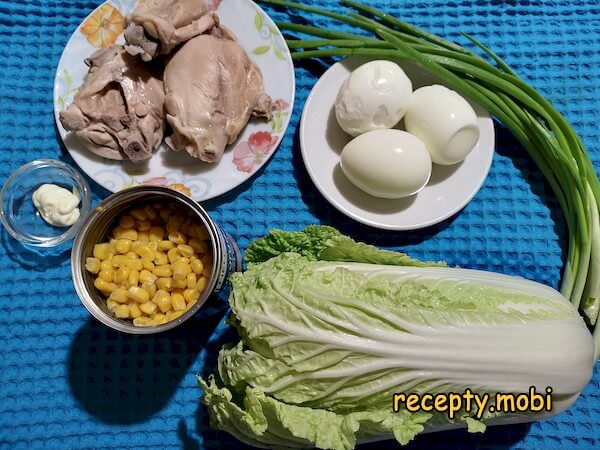
I prepare the ingredients I need for the chicken salad with Beijing cabbage and corn. I boil the chicken thighs: I lower them into boiling salted water and boil them for 20–25 minutes after the water comes back to the boil. The time depends on the size of the thigh. I boil the eggs and remove the shells. I drain the liquid from the canned corn. It is best to use homemade mayonnaise.
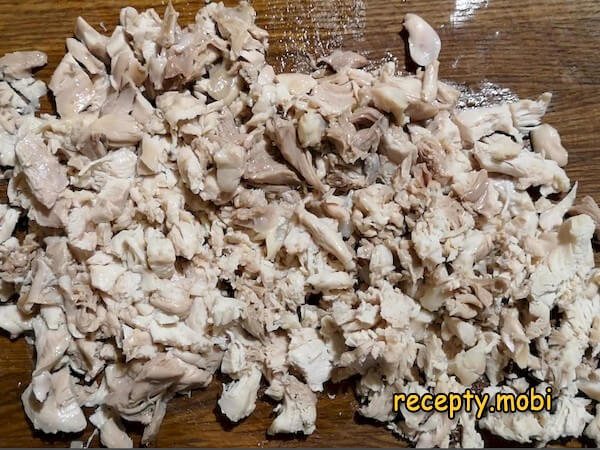
I separate the meat from the bones of the boiled thighs and cut it into small pieces.
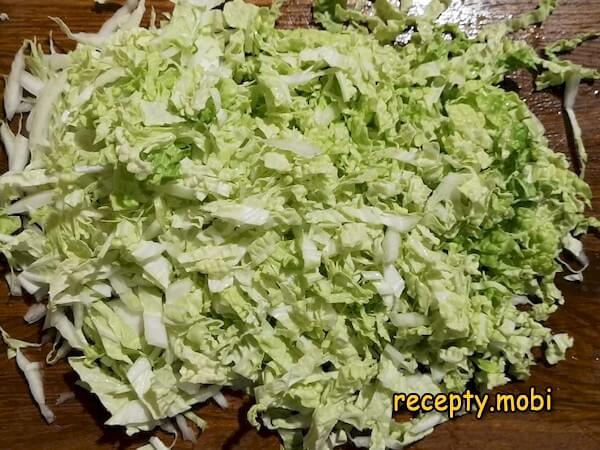
I chop the Beijing cabbage into small pieces.
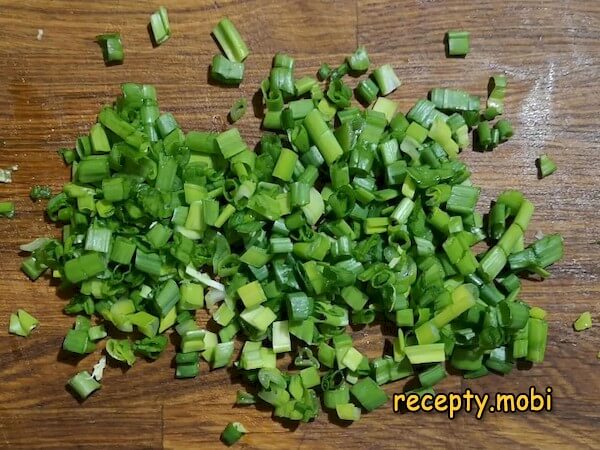
I finely chop the green onions.
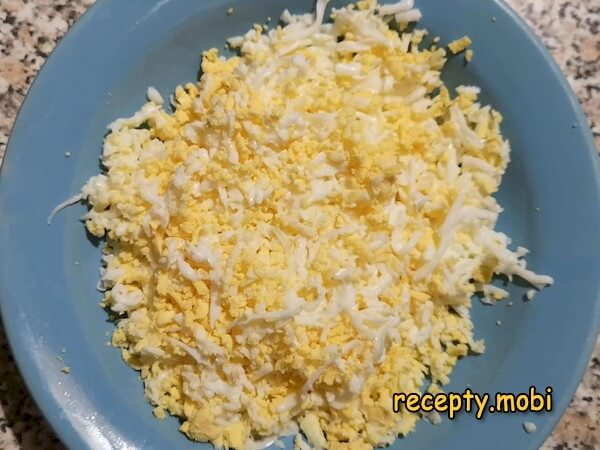
Using a vegetable grater, I grate the boiled eggs.
I transfer the prepared chicken meat, eggs, green onions, Beijing cabbage and corn into a deep bowl.
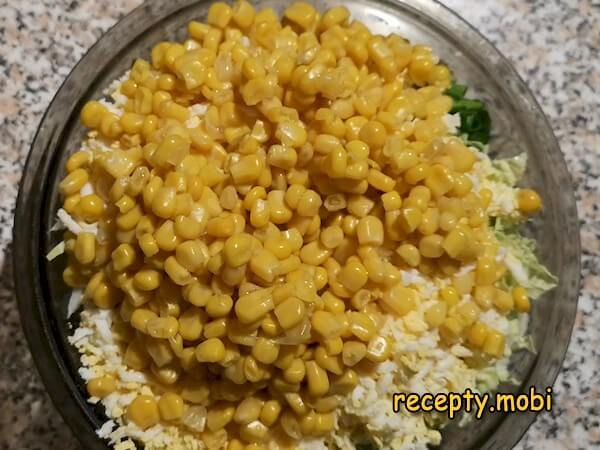
I pour about 130 g of mayonnaise into the salad and mix everything together.
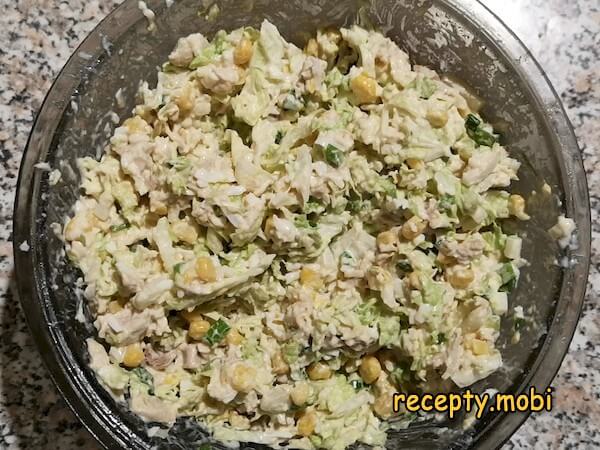
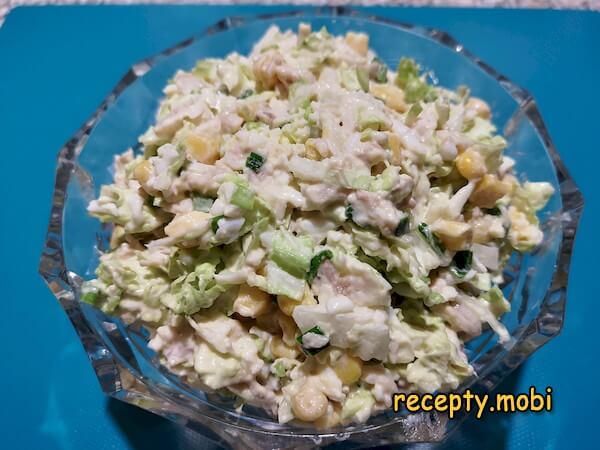
The chicken salad with Beijing cabbage and corn is ready. I transfer it to a salad bowl and serve it at the table.


Tips
- 1
THIGHS, NOT BREAST – the secret of juiciness. Breast meat is dry after boiling. Thighs stay juicy even after 25 minutes – the meat is tender and full of flavour.
- 2
A GRATER FOR THE EGGS – the secret of texture. Cubes or julienne strips are coarse. Grated eggs coat the other ingredients, making the salad uniform.
- 3
DRAIN THE CORN – the secret of consistency. Otherwise the salad will run and the mayonnaise will be watered down. Five minutes in a sieve and the corn is dry.
- 4
HOMEMADE MAYONNAISE – the secret of flavour. Shop-bought mayonnaise is "chemical", while your own, made with olive oil, is delicately creamy. Five minutes with a blender and your fresh sauce is ready. The same principle works in other kinds of chicken and cabbage salads.
Video

FAQ
Which chicken should I choose? +
Ideally, boneless chicken thighs (300 g of clean meat after boiling). Alternatives: a whole bone-in chicken thigh (450 g raw = 300 g of meat), boiled chicken breast (300 g – the "diet" option, but drier), ready-made smoked chicken breast (300 g – the "budget" option), boiled turkey (300 g – more tender), chicken wings (450 g raw = 300 g of meat), baked chicken from ready-cooked (300 g – quick). Fresh chilled chicken from the "eco" segment is the premium option. Do not use: shop-bought boiled chicken leg with preservatives, or smoked balyk. For the "classic" version, thighs or breast are a must.
What can I use instead of Beijing cabbage? +
Alternatives: Iceberg lettuce (200 g – crunchy, but less juicy), Romaine (200 g – more tender), young white cabbage finely shredded (200 g – the "budget" option), Savoy cabbage (200 g – more tender than ordinary cabbage), a 50/50 mix of iceberg and Beijing (100 g of each – the premium option), Chinese bok choy (200 g – the "premium Asian" option). Fresh Beijing cabbage from the farm is the premium option. Do not use: wilted cabbage, or red cabbage (it will change the colour of the salad). For the "classic" version, fresh firm Beijing cabbage is a must.
How long does the salad keep? +
In the fridge, in a tightly closed container, 1–2 days. Any longer and the Beijing cabbage will go soft and the mayonnaise will separate. Before serving, let it stand for 10 minutes at room temperature; you can stir it with a spoon. I do not recommend the freezer – the structure will be completely destroyed. A fresh salad is at its "star" best 30 minutes after it is made (once it has "settled" in the cold and the aromas have come together). On the second day the flavour holds, but the texture is worse (the cabbage releases juice). Do not leave it at room temperature for longer than 2 hours – eggs with mayonnaise spoil quickly.
What should I serve the salad with? +
A classic starter: with a slice of rye bread or toast. With a cup of broth or a light soup. With slices of hard cheese. With boiled potatoes (a quick dinner). With a cup of green tea for an afternoon snack. With a glass of freshly squeezed apple juice. With a glass of dry white wine (Chardonnay). With a light beer for a weekend dinner. With slices of salted pickles. With fresh herbs on the side. With garlic croutons. With a glass of kefir. For a "family celebration", with other salads. A universal starter for any occasion.
- Comment
or post as a guest
Be the first to comment.