avg —
Boiled Pork Tongue for Salads, Aspic, and Snacks

Instructions
I thoroughly clean the pork tongue of the surface film, leftover fat and salivary glands with a knife or a stiff brush. I rinse it under cold running water. I cover it with fresh water so that it sits 5–7 cm above the tongue and bring it to the boil. I boil it for 15 minutes over high heat for an initial cleaning, then I drain this first water — it contains impurities, excess fat and grime that make the broth cloudy. I pour in clean hot water and carry on cooking.
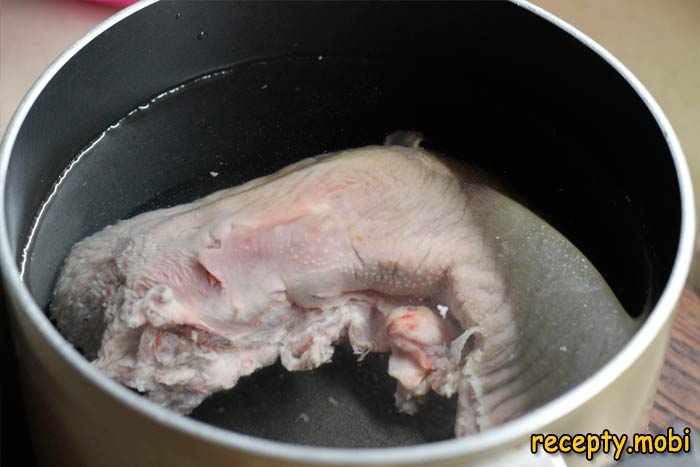
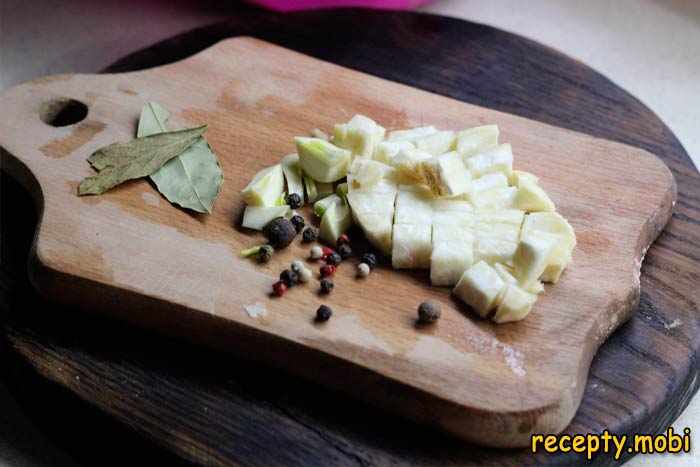
I peel and chop the celery root into small pieces, and I peel the garlic (3 cloves) and leave the cloves whole. I add the vegetables to the broth along with the mixed peppercorns (1/2 teaspoon) and the bay leaves (2 pcs). I salt to taste after about an hour of cooking — salt added at the start slows down how the meat cooks. I simmer it covered over low heat for 1.5 hours. I check it for doneness with a sharp knife — it should slide easily into the thickest part of the tongue without resistance.
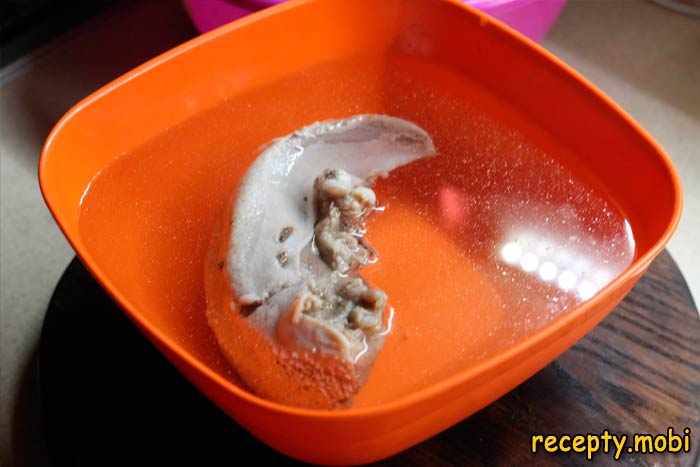
I lift the cooked tongue out with a slotted spoon and drop it straight into a large bowl of ice-cold water with ice cubes for 5 minutes. This is the thermal shock — a sharp change in temperature that makes the skin pull away from the meat. Without this step you would have to scrape the skin off with a knife and lose a layer of meat with it.
I take the cooled tongue out of the ice water and peel off the skin with a sharp knife — after its cold bath it comes away easily in large strips or even like a stocking. If the skin will not come off in some places, the tongue has not cooled enough — hold it in the ice water for another 3–5 minutes. The peeled tongue turns out smooth and a delicate pink.
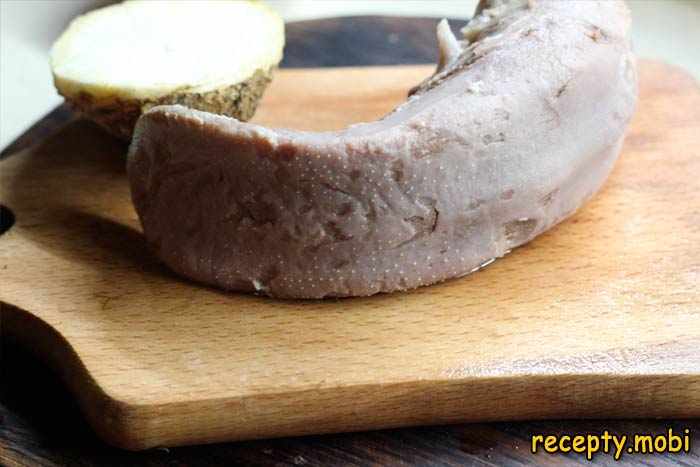
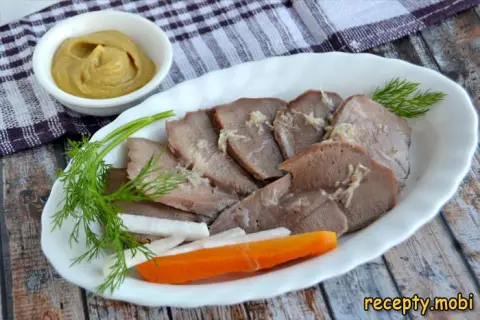
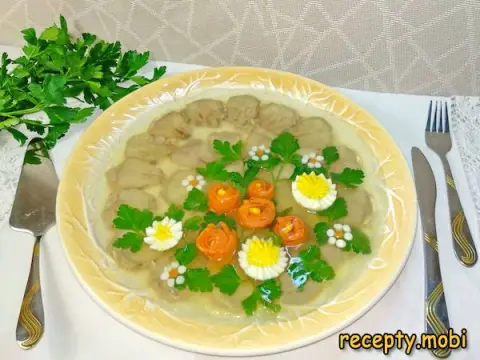
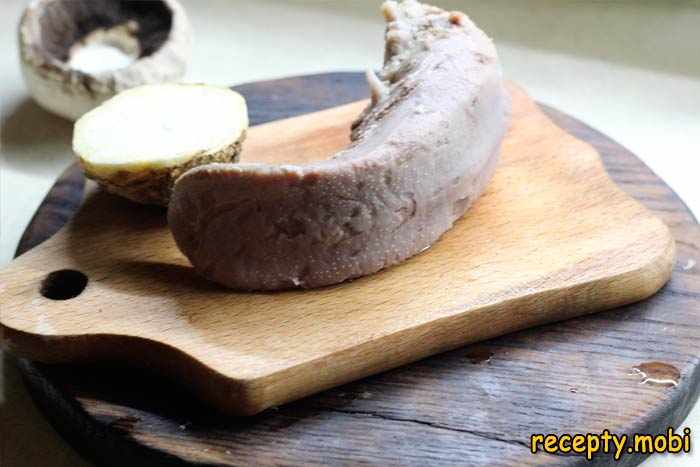
The boiled pork tongue is ready! Use it as intended: for salads (Tsarsky, layered ones with cheese), aspic set with gelatine, sliced cold cuts for the festive table, or sandwiches with mustard and horseradish. Do not pour away the cooking broth — strain it and use it for soup or sauce.


Tips
- 1
Always drain the first water after 15 minutes of boiling — it carries away excess impurities, fat and grime. The broth will be cleaner and clearer.
- 2
The ice bath after cooking is the secret to easy peeling. The skin comes away in large strips with no effort.
- 3
Celery root gives the broth its characteristic aroma, but you can manage without it. I cook beef tongue on a similar principle.
- 4
The cooked tongue keeps in the fridge for up to 3 days in a tightly closed container with the broth — that way it will not dry out.
FAQ
How can I tell for sure that the tongue is done? +
A sharp knife should slide easily into the thickest part of the tongue without resistance, just like into a boiled potato. If it goes in with a "creak", cook it for another 15–30 minutes over low heat. The internal temperature of a cooked tongue on a kitchen thermometer is 90–95 °C. A cooked tongue is also pierced easily with a fork, and the meat is soft and tender. The cooking time depends on the size: a small pork tongue takes 1.5 hours, a large one up to 2.5 hours. Do not rush — an undercooked tongue will be tough.
Why is the skin hard to peel off the tongue? +
The main reason is that the tongue has not cooled enough in the ice water. Hold it longer (5–10 minutes) in very cold water with ice to strengthen the thermal shock. Another reason can be that the tongue is not cooked through — if it is underdone, the skin clings to the meat. Check it for doneness with a knife: if it goes in easily, the tongue is ready. If the skin still will not come off, scrape it away with a sharp knife, carefully cutting it off in thin strips.
Can I boil pork tongue in a multicooker? +
Yes, a multicooker works well. Use the "Stew" or "Boil" mode for 2–2.5 hours depending on the size of the tongue. The advantages of a multicooker are automatic temperature control, no need to watch the broth, and energy saving. Add the tongue, spices, vegetables and water, and the multicooker does the rest. After the ready signal, be sure to transfer the tongue to ice water for easy peeling — without this step the skin will not come off well.
What do you serve boiled pork tongue with? +
Classically as sliced cold cuts with mustard, homemade horseradish or horseradish relish — the traditional Russian way to serve it. On sandwiches with dark Borodinsky bread and butter. As an ingredient for salads (Tsarsky, layered ones with mushrooms and cheese), and aspic set with gelatine and herbs. Alongside the tongue, serve pickled cucumbers, marinated mushrooms and homemade kvass. For the festive table, pair it with cold appetisers (salmon, caviar) and strong drinks (vodka, brandy). A delicacy for special occasions.
- Comment
or post as a guest
Be the first to comment.