avg —
Fried Dumplings with Sour Cream in a Skillet

Instructions
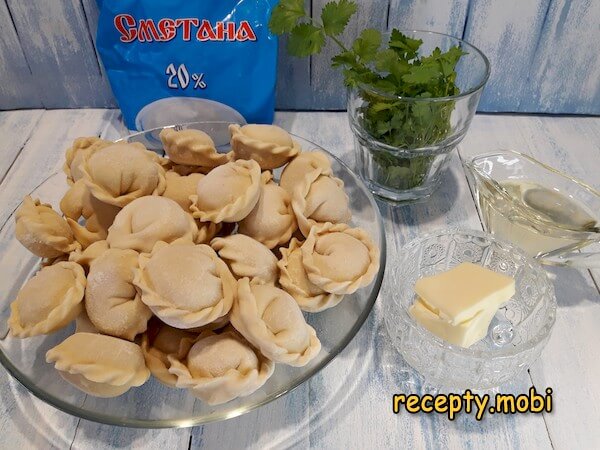
I get the ingredients ready. The dumplings must be well frozen, so there is no need to take them out in advance. Any fresh herbs will do – parsley, dill, green onion tops or cilantro.
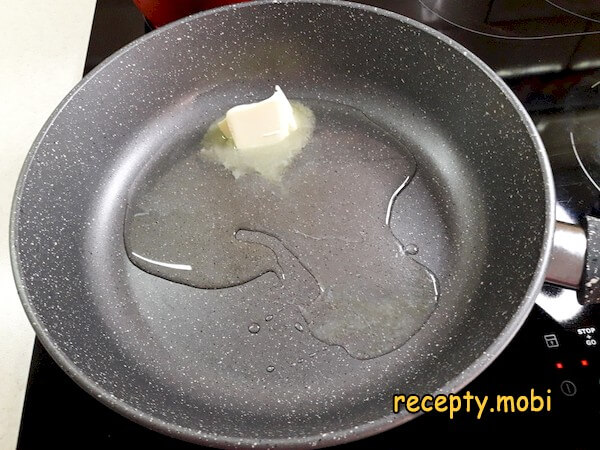
In a skillet I melt the butter together with the vegetable oil.
I add the frozen dumplings – they should be arranged in a single layer.
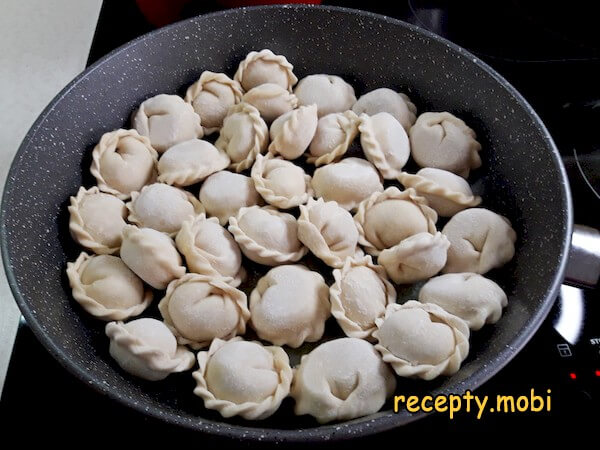
Over medium heat I fry the dumplings so that they take on a golden, crisp crust on both sides. This takes about 5 minutes.
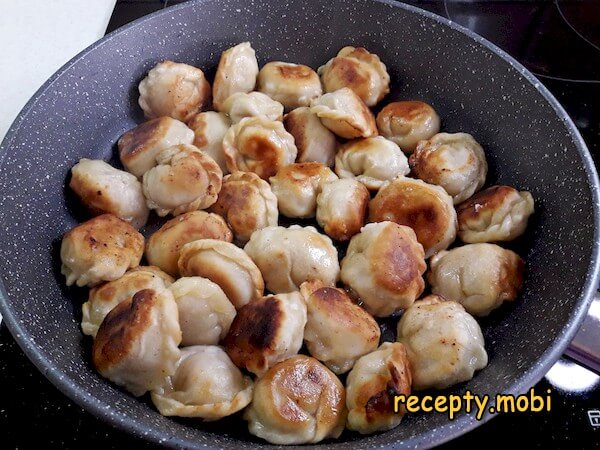
I add the sour cream to the skillet.
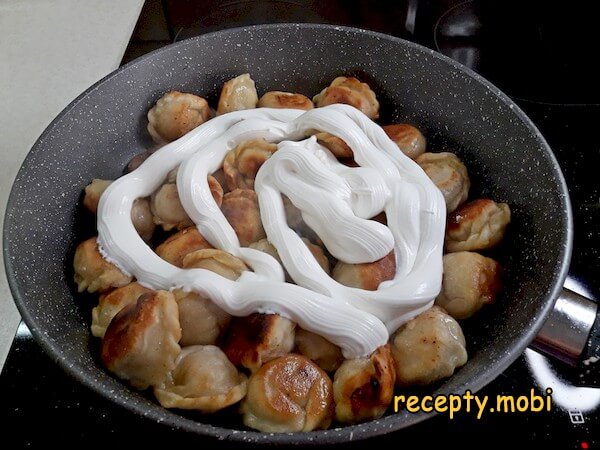
Straight away I thin it with the water and stir the whole mixture together.
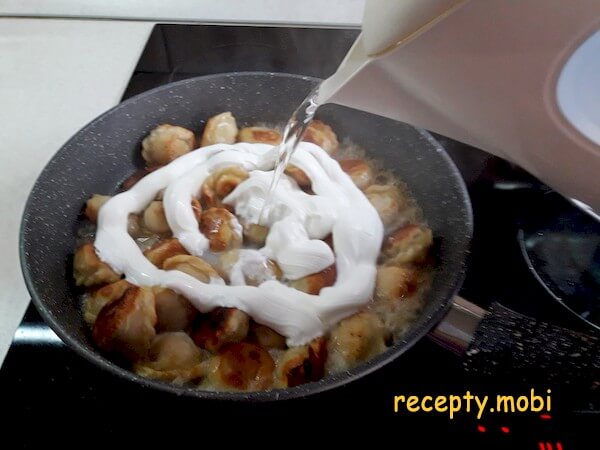
I salt the sauce a little (without overdoing it, since salt has already been added to the filling and the dough).
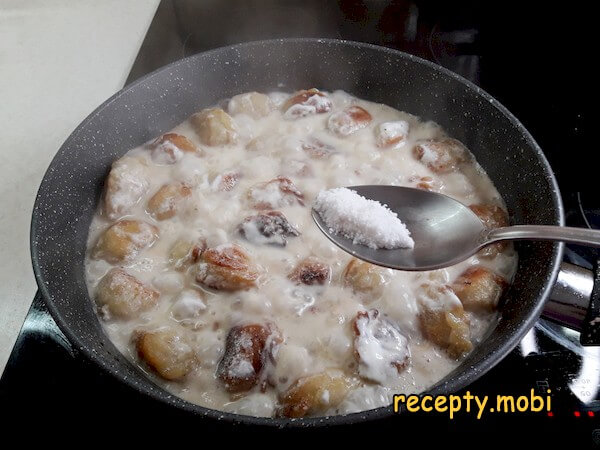
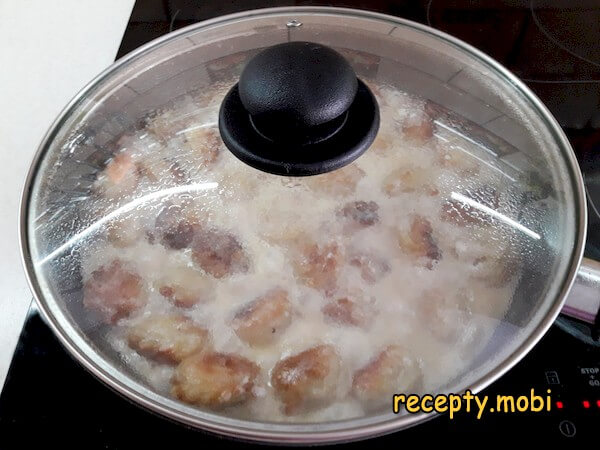
I cover the skillet with a lid and gently stew the contents over low heat for 7–10 minutes.
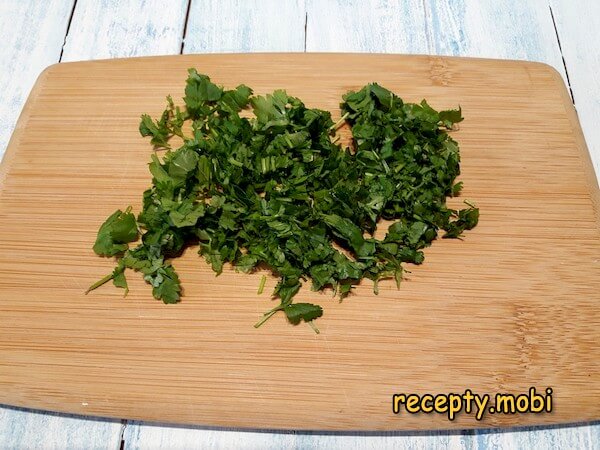
Meanwhile I chop the herbs, which I will then sprinkle over the dish when serving.
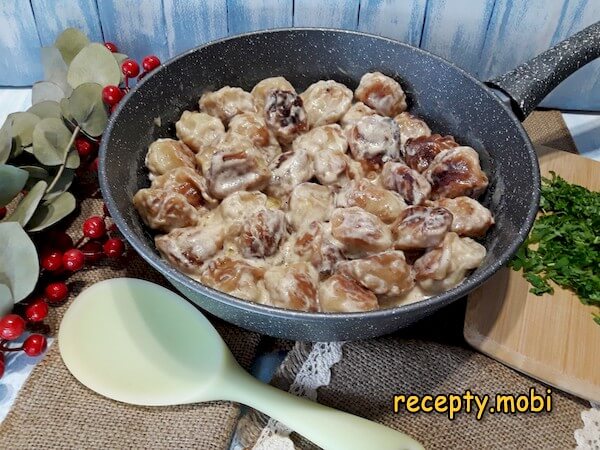
The fried dumplings with sour cream in a skillet are ready. The herbs can be served separately and added to the plate if you like. Give it a try, and enjoy your meal!


Tips
- 1
FROZEN – the secret to their shape. Thawed dumplings stick together and fall apart in the pan. Only frozen ones hold their shape until a crust forms.
- 2
A SINGLE LAYER – the secret to the crust. Dumplings piled in a heap steam from the inside instead of frying. A single layer in the pan gives a golden crust on both sides.
- 3
AN OIL MIX – the secret to the flavour. Butter alone burns; vegetable oil alone is bland. 30 ml of vegetable oil plus 35 g of butter gives the perfect frying without scorching.
- 4
SOUR CREAM + WATER – the secret to the sauce. Plain sour cream curdles. Thinned with water, 100 plus 150, it becomes a silky sauce that soaks into the dumplings. The same principle works with other kinds of dumplings and vareniki in sauce.
Video

FAQ
Which dumplings should I choose? +
The ideal choice is homemade with real mince filling (700 g – premium). Alternatives: Sibirskaya Kollektsiya (700 g – "classic"), Caesar premium (700 g – premium), Dmitrogorskie (700 g – "quality"), Ostankino (700 g – "classic"), Miratorg dumplings (700 g – premium), chicken dumplings (700 g – "light"), mushroom dumplings (700 g – "meat-free option"). Hand-shaped homemade ones from Mum are the premium choice. Do not use: dumplings made with soy protein, or cheap "student" ones with dough and no meat. For a "classic" result you must use real dumplings with 100% meat filling.
What can I use instead of sour cream? +
Alternatives: 20% cream (100 ml – "premium, more delicate"), plain Greek yogurt (100 g – "lighter"), full-fat 3.2% kefir (100 ml – "budget, with a tang"), 30% rich sour cream (100 g – "classic"), a mix of sour cream and cream cheese (50 plus 50 g – "premium, thicker"), mascarpone (100 g – "premium, an Italian accent"), ryazhenka (100 ml – "more delicate, a slightly sweet note"). Thick country sour cream is the premium choice. Do not use: sour cream product (made with vegetable fats), or sour cream past its date. For a "classic" result you must use sour cream of at least 20% fat.
How long do fried dumplings keep? +
In the fridge in a tightly sealed container – 1–2 days. Any longer and the dough turns soggy and the crust disappears. Before serving, reheat in a covered pan for 5–7 minutes over low heat. In the microwave – 2–3 minutes under a cover. I do not recommend freezing them, as the sauce will separate. Fresh and warm from the pan they are the "stars" (maximum crust and aroma). On the second day the flavour holds, but the texture is softer. Do not leave them at room temperature for longer than 4 hours. It is best to cook them for "a single sitting".
What should I serve with fried dumplings? +
A weekday classic: with extra sour cream in a little dish. With sharp Russian mustard. With ketchup or tomato sauce. With a garlic-yogurt sauce. With fresh dill and parsley. With slices of pickled cucumber. With sauerkraut. With spicy adjika. With slices of borodino bread. With a shot of cold vodka. With a mug of dark unfiltered beer. With hot borscht or shchi. With a green salad dressed in oil. With fresh tomatoes in rounds. For a "family dinner" they are universally good. Fried dumplings are perfect for a cold day and a quick supper after work.
- Comment
or post as a guest
Be the first to comment.