avg —
Herring Forshmak

Instructions
I get the ingredients ready. I take the butter out ahead of time so it softens. Only sour varieties of apple will do, and the wine vinegar can be replaced with apple vinegar.
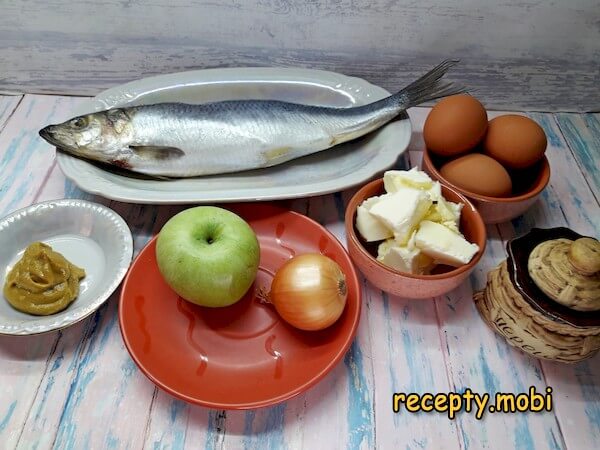
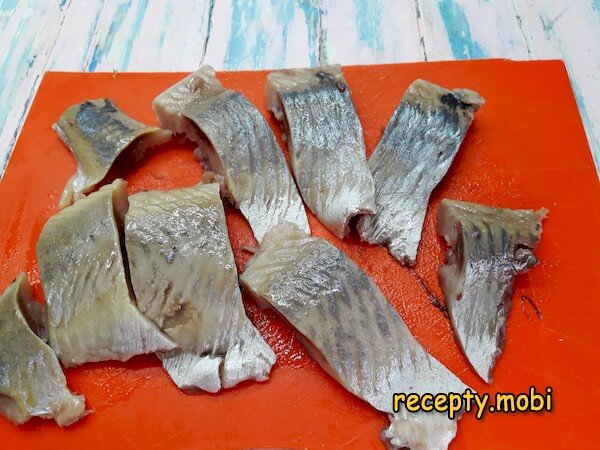
I fillet the whole herring and remove the skin. If there is roe, it goes into the filling too; the milt from male fish, however, can be bitter and spoil the whole flavour, so it is best left out of the mix.

First I cut the fillet into large pieces.
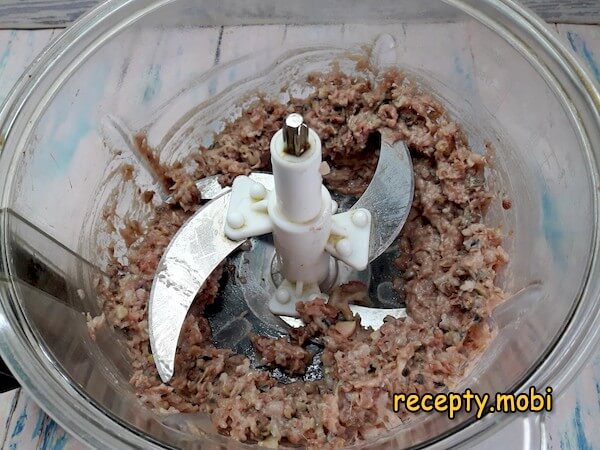
Next it needs to be ground, either in a meat grinder or in a food-processor chopper, but try to leave some small whole pieces in the mixture – they give the finished dish a more pronounced flavour.
I grate the onion finely.

I add the onion pulp to the herring filling.

I boil the eggs soft, which means the yolk should stay slightly runny – this way it lightly tints the fish filling, giving it a more pleasant shade. Once the eggs come to the boil, this takes 3 minutes.

I peel the apples, grate the flesh on the fine holes of a vegetable grater, and discard the core with the seeds.
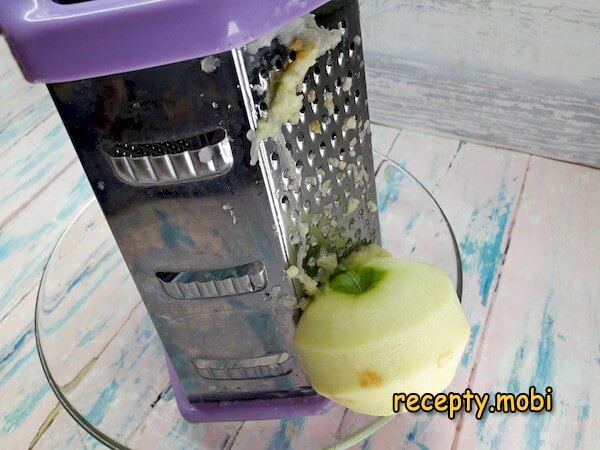
I add the resulting pulp to the filling.
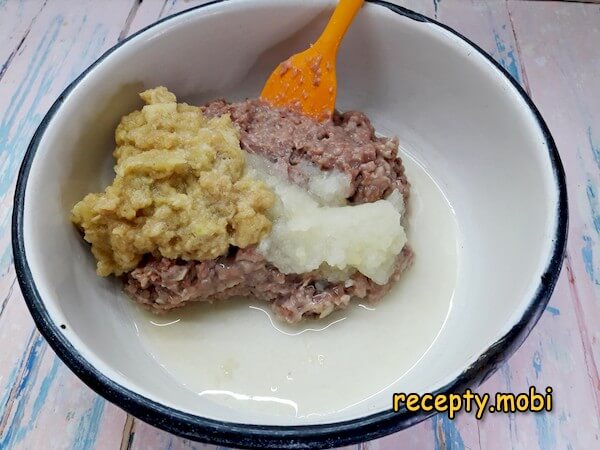
I add the semi-liquid yolks to the mass, then mash them with a fork, along with the whites grated finely on a small grater.

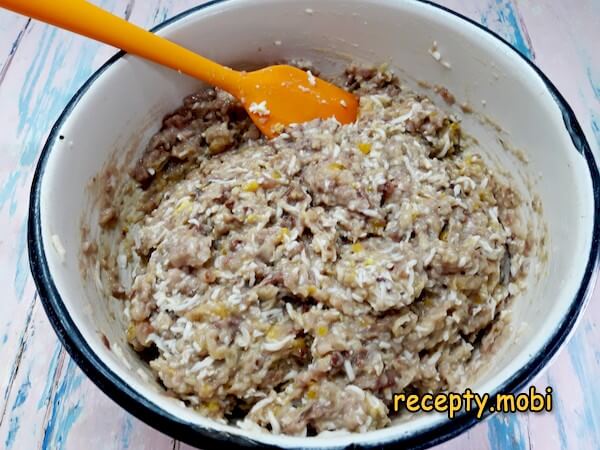
I mix the mass until all the ingredients are evenly distributed.
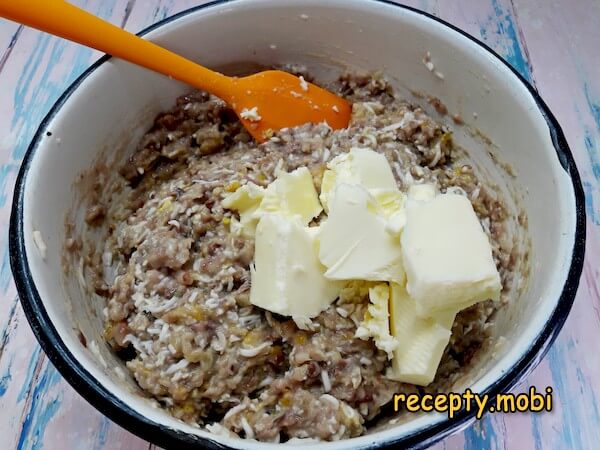
I season the mixture with butter and mash it in.
For a special sharpness and a piquant flavour, I add the mustard, wine vinegar and ground pepper. I mix everything once more.

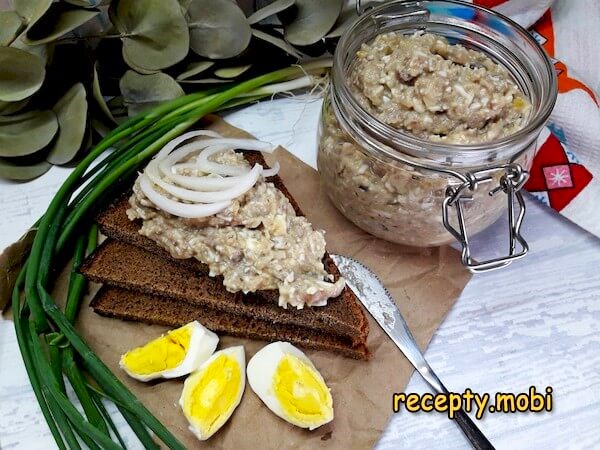
Herring forshmak gains its final flavour after a short rest in the refrigerator (about 15 minutes). I serve this appetizer spread on rye bread or croutons, but it can also be served in a shared salad bowl. Stored in a tightly closed glass container, forshmak keeps for up to two days, though it is usually eaten very quickly.


Tips
- 1
Remove the milt – the secret against bitterness. The roe goes into the filling (it adds colour), but the milt does not. It tastes bitter and spoils the flavour.
- 2
Soft-boiled eggs – the secret of colour. A slightly runny yolk tints the fish filling a gentle creamy shade.
- 3
Sour apples – the secret of balance. Sweet varieties upset the flavour balance. Antonovka or Granny Smith are ideal.
- 4
15 minutes in the refrigerator – the secret of flavour. Fresh forshmak is brighter after it has rested. The same principle works with other kinds of fish pâté.
Video

FAQ
Which herring should I choose? +
Ideally, fresh lightly salted Atlantic or Pacific herring (1 pc, about 500 g). Alternatives: iwashi sardine (500 g – smaller, but tastier), barrel-cured lightly salted herring (500 g – the premium choice), preserves in oil (500 g – the "budget" choice; drain the oil). Fresh herring in brine is a premium option (firm, with no signs of drying out). Do not use: salted or smoked herring (it spoils the flavour), or rusty herring with yellow spots. For a premium version, choose Icelandic iwashi. Fillet it yourself – the fillet comes out cleaner.
What can I use instead of mustard? +
Alternatives: Dijon mustard (2 tsp – milder), wholegrain mustard (2 tsp – the premium choice), grated horseradish (1 tsp – sharper), a mix of mustard and mayonnaise (1 tsp each – the "Russian" version), or no mustard at all (a milder flavour). Fresh mustard from a jar is a premium option. Do not use: honey mustard (it spoils the flavour) or sweet mustard. For the "Jewish classic", a sharp table mustard is essential. For a premium version, use freshly made homemade mustard.
How long does forshmak keep? +
In a tightly closed glass container in the refrigerator – up to 2 days. Any longer and the herring releases its juices, the pâté goes runny and loses its freshness. Before serving, take it out 5–10 minutes ahead (when too cold, it "mutes" the flavours). I do not recommend the freezer – the structure will separate. For "lunch on the go", a small jar is handy. Fresh forshmak is at its "star" best 15 minutes after it is made (once it has "settled"). On the second day the flavour is deeper and brighter. Do not leave it at room temperature for longer than 4 hours – the herring will turn sour.
What should I serve forshmak with? +
The Jewish classic: on rye bread or dark (Borodinsky) bread. On croutons or buttered toast. With a cup of Jewish chicken broth before the meal. With a shot of cold vodka – the "Russian-Jewish" classic. With a dry white wine (Sauvignon Blanc) – the premium pairing. With baked potatoes. With fresh vegetables. With green tea – a "light" meal. With salted cucumbers or pickled mushrooms. With boiled potatoes. With a slice of lemon on the side. With cabbage pirozhki. With a cup of coffee. A versatile Jewish appetizer before the main course.
- Comment
or post as a guest
Be the first to comment.