avg —
How to dye eggs with brilliant green

Instructions
I prepare the ingredients. The eggs must be white – this way the colour comes out the most beautiful and not too dark. Instead of a nylon stocking, you can take 3 squares of cheesecloth, so that each egg can be placed inside like in a little pouch. The amount of water depends on the size of the pot in which the eggs will be boiled. In any case, the liquid should reach the top of the eggs.
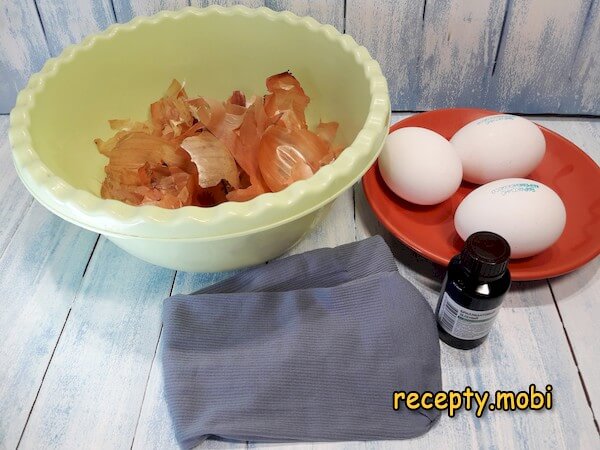
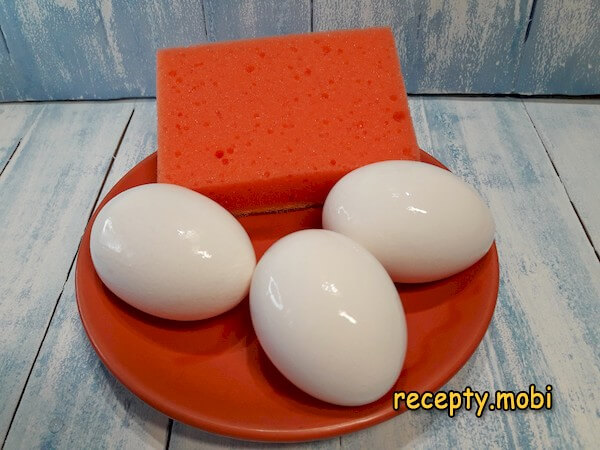
First of all, I wash the eggs with a sponge and baking soda to remove any stamps and possible dirt.
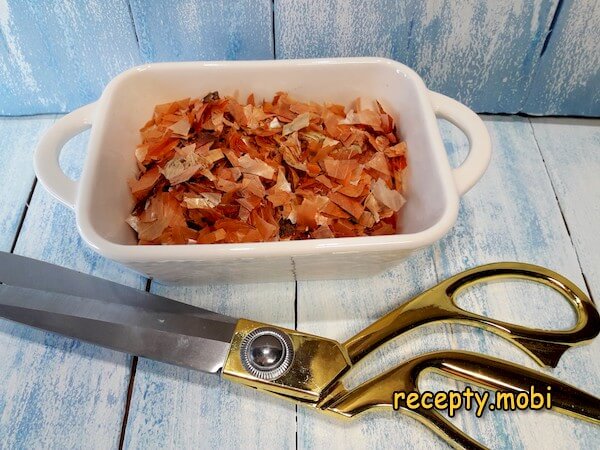
I cut the onion skins into very small pieces using scissors.
I moisten the egg with water and roll it in the onion-skin pieces (this way they stick better).

I cut the nylon stocking into 3 parts, tie each piece at one end with thread (making a sort of little bag), and put some chopped onion skin inside. I place an egg inside, pull the edges tight, and tie it closed.
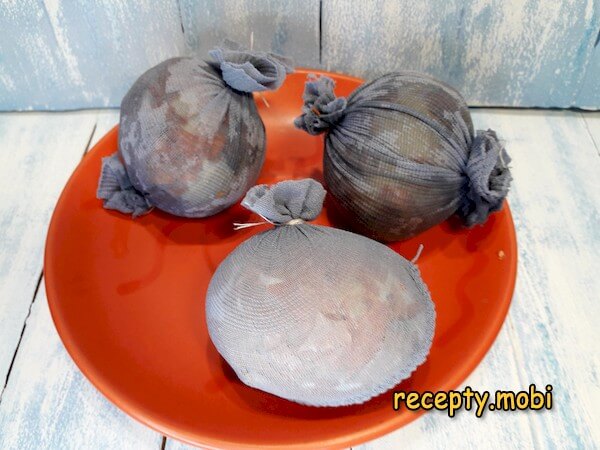
I put the little bags into the pot and pour in water up to the top of the eggs. I set the eggs on the heat.
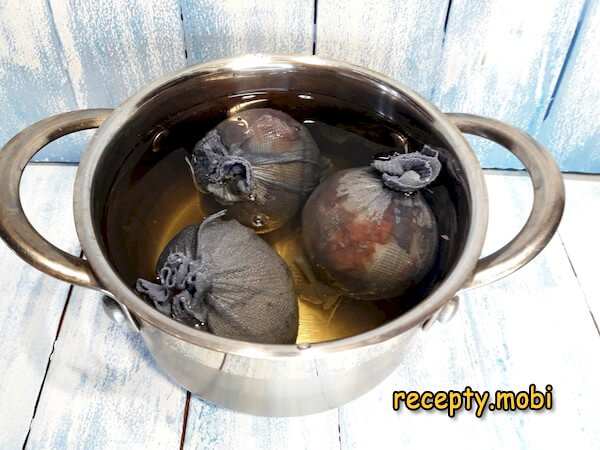
I boil the eggs for 10 minutes.
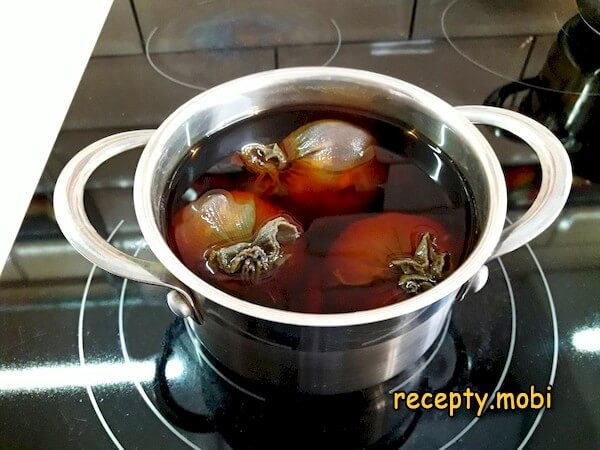
Next, I don't turn off the heat, but pour the whole bottle of brilliant green into the pot.
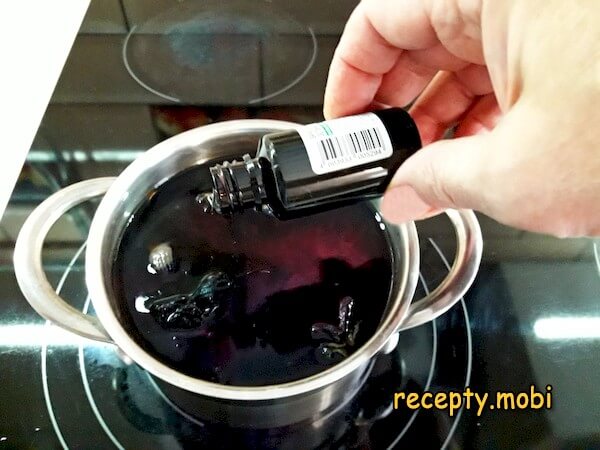
After 5 minutes, I switch off the stove. I scoop the bags with the eggs out with a spoon and transfer them into cold water.
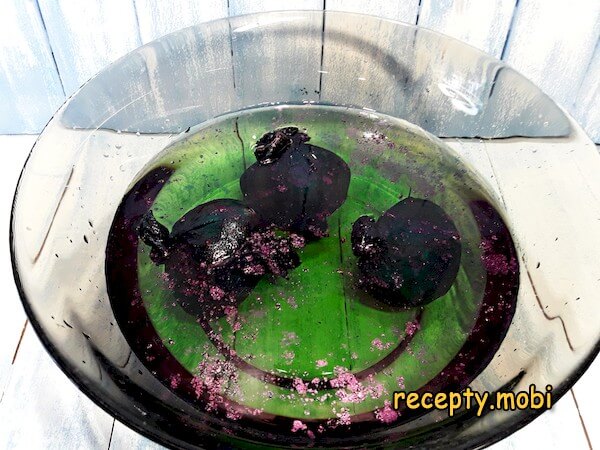
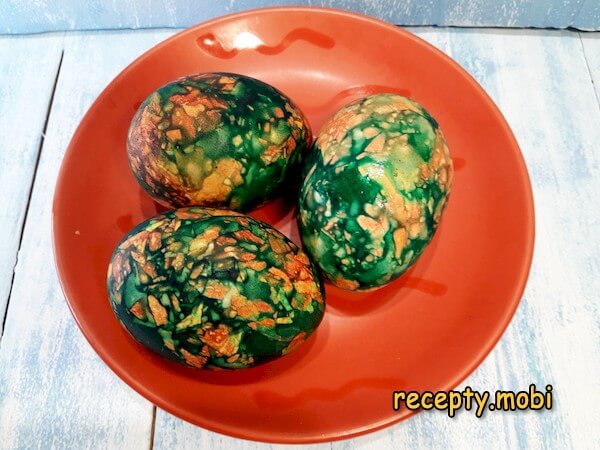
Once the eggs have cooled, I take off the wrapping and clean off the onion skin. The places where the onion was have turned orange, and all the free space has taken on a brilliant-green colour.
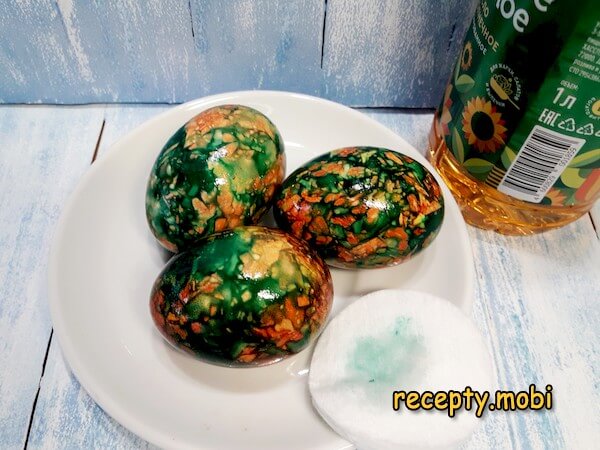
For a nice glossy shine, I wipe the shell with a cotton pad soaked in any vegetable oil.


Tips
- 1
ONION SKIN IN A WET NYLON – the secret of the marble effect. The pieces of skin stick to the wet egg and leave a pattern – like marble veins.
- 2
BRILLIANT GREEN AFTER BOILING – the secret of intensity. Added straight away with the water, the colour disperses. Added after 10 minutes of boiling, the brilliant green sits densely on the cooked egg.
- 3
NYLON BAGS – the secret of the pattern. Without them the onion skin falls off. The nylon presses the pieces tightly against the shell, forming the "marble".
- 4
COLD WATER AT THE END – the secret against deformation. Rapid cooling fixes the colour and makes it easier to clean off the onion skin afterwards. The same principle works in other kinds of natural dyeing of Easter eggs.
FAQ
Is brilliant green safe for dyeing eggs? +
Brilliant green is safe for dyeing the shell – it does not penetrate through an intact shell to the egg white. Modern medicine even uses it as an antiseptic on the skin of newborns. However, if the shell cracks during boiling, the dye can reach the white – such eggs are better used in salads rather than served as decoration. Blue/green alternatives: hibiscus tea with vinegar (blue), red cabbage juice (blue), spinach juice (green). For the "classic marble egg", brilliant green with onion skin is a must.
What can replace the nylon stocking? +
Alternatives: cheesecloth in 20×20 cm squares (3 pcs – wrap with the skin), thin cotton fabric (3 squares – the same idea), nylon tights (3 bags – the "budget" option), netting bags from vegetables (3 bags – convenient), empty paper tea bags (3 pcs – for small eggs), gauze bandage (3 squares). Fresh, plain nylon is the premium option. Do not use: plastic bags (they will melt), dyed synthetics (they will colour the eggs in the wrong way). For the "classic marble effect", a tightly fitting nylon or cheesecloth is essential.
How long do marble eggs keep? +
In the refrigerator in an open container – up to 1 week. At room temperature – no more than a day. Brilliant green from the onion holds well on the shell for 2–3 weeks and does not wash off. I don't recommend the freezer – the yolk will turn rubbery. Freshly dyed eggs look their best right after they have cooled and the wrapping is removed (once the marble pattern appears). On the second day the shade is brighter. Don't leave them at room temperature for longer than 4 hours on Easter day. Ideally, dye them 1–2 days before the holiday.
What other natural dyes are there for eggs? +
Alternatives to brilliant green: onion skin on its own (dark-brown, ginger tones – the most classic method), turmeric (yellow – see the separate recipe), beetroot juice (pink – see the separate recipe), hibiscus tea (blue-violet – see the separate recipe), spinach juice (green, without brilliant green), blueberries or blackberries (violet), coffee (beige-brown), turmeric + baking soda (green), red pepper skin (red), mulberry juice (violet). All natural dyes are safe for food. For the "classic marble effect", brilliant green with onion skin is a must.
- Comment
or post as a guest
Be the first to comment.