avg —
Brine Soup with Beans and Pickled Cucumbers – Classic Recipe

Instructions
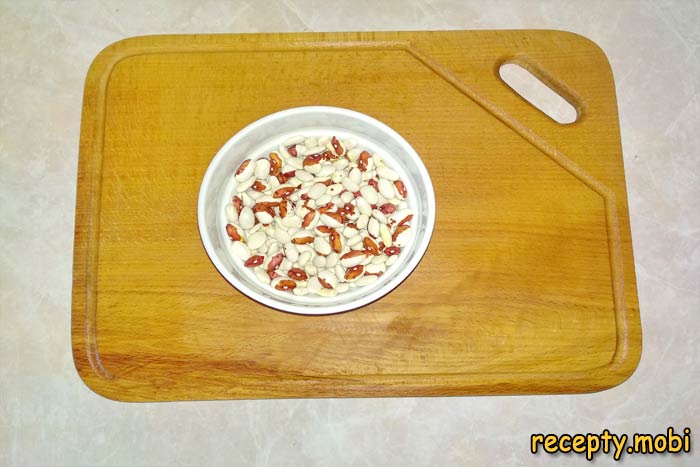
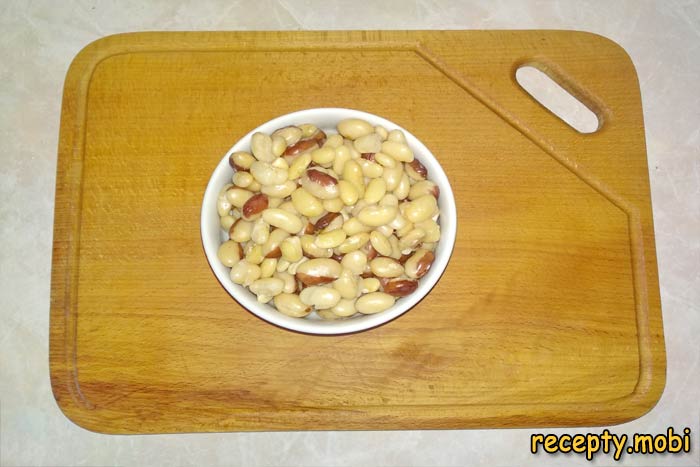
I prepare the beans (½ cup) – pick them over for debris, rinse thoroughly and cover with clean cold water for 2 hours to soak. Soaking cuts the cooking time in half and removes the substances that cause bloating. Without soaking, the beans would cook for 2–3 hours instead of 40–60 minutes.
After 2 hours I rinse the soaked beans in clean water, put them in a pot, cover with fresh water and boil over low heat without salt for 40–50 minutes until fully cooked. Salt added at the start of cooking slows the beans down twofold – salt only at the end, or do not salt them at all (you will add salt to the whole rassolnik later).
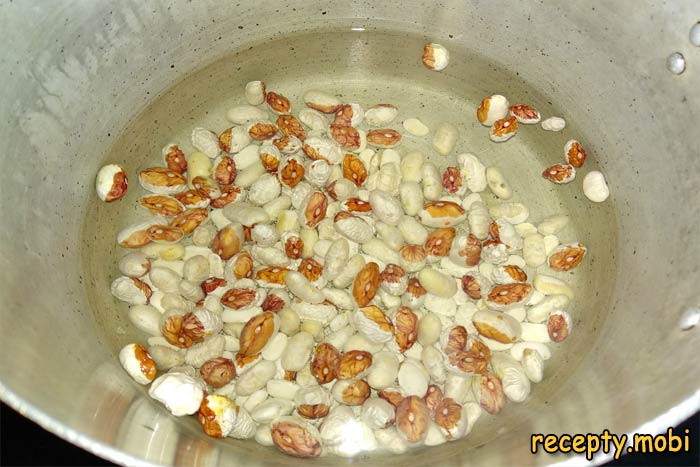
The cooked beans took about 40 minutes – I check by piercing with a fork; they should be soft but hold their shape. I drain them in a colander and leave them to drip. Cooked beans should not boil down to mush – that is a sign of overcooking.
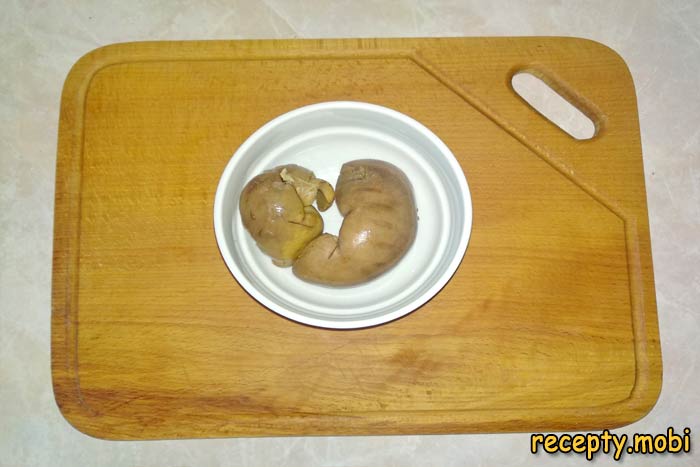
Various offal is traditionally added to rassolnik: chicken hearts, gizzards or pork kidney (1 pc). I took a pork kidney – it gives the dish its characteristic “Russian” flavour.

I cut the pork kidney lengthwise, remove the ureters and membranes with a sharp knife, and rinse it thoroughly under running water. I cover it with fresh clean water, put it on the stove and bring to a boil. I cook it for 5–10 minutes, drain the water, and rinse the kidney and the pot under running water. I cover the clean kidney a second time, cook for 10 minutes, and drain the water again. Boiling it twice with a change of water completely removes the specific “kidney” smell – after this treatment you can work with the kidney further without any problems.
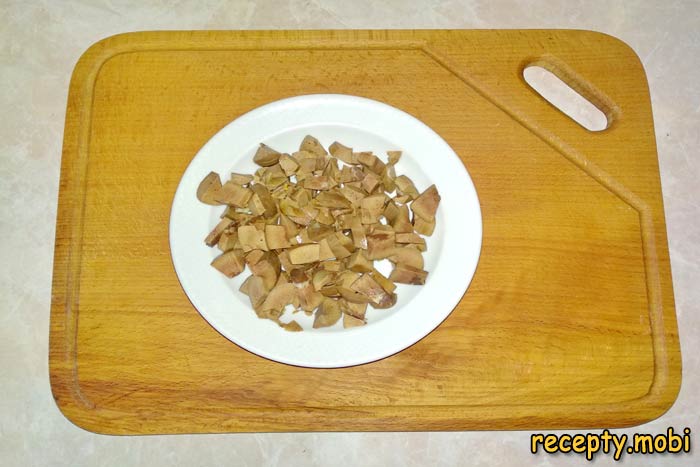
I cut the cleaned and boiled kidney into thin 5 mm strips or medium 1 cm cubes. Strips “work” better in the soup and look attractive in the finished dish. Cubes are the classic “Russian” format for rassolnik. It is up to you.
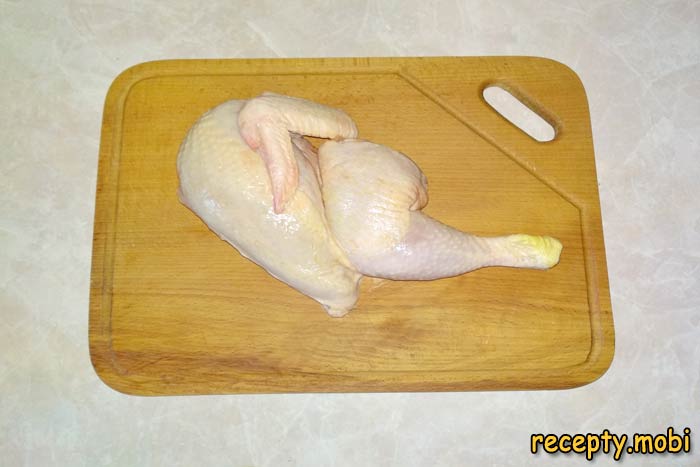
I move on to the main part – cooking the chicken broth. I cut half of the chicken carcass into portioned pieces, cover with 2 litres of clean water and bring to a boil. I carefully skim off the foam with a slotted spoon for a clear broth. I add ½ of the carrot and a piece of onion for aroma. I lower the heat, salt and pepper, and cook over low heat for 30–40 minutes until the chicken is done.
Meanwhile I prepare the vegetable dressing. I cut the remaining onion (1 pc) into medium 5 mm cubes and fry it in a pan with vegetable oil (2 tbsp) for 5 minutes until translucent.
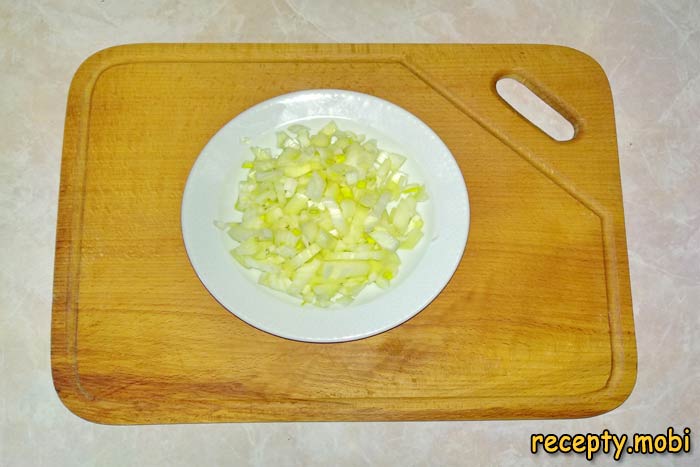
I prepare the rest of the vegetables: carrot (1 medium-sized pc), pickled cucumbers (3 pcs) and potatoes (2 large pcs). I wash all the vegetables thoroughly and peel them. The potatoes can be put straight into cold water so they do not darken before cooking.
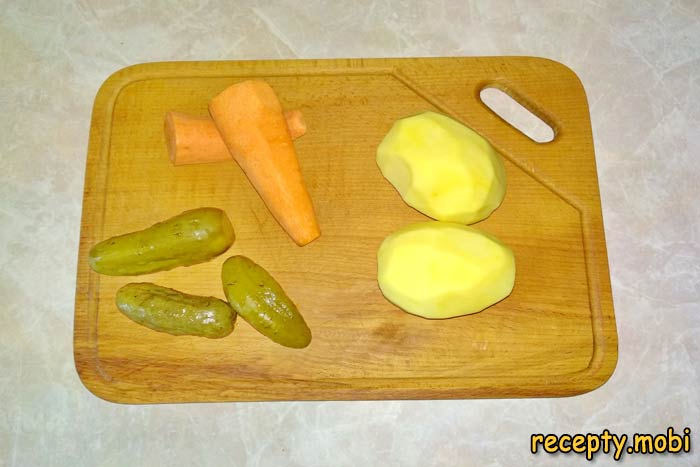
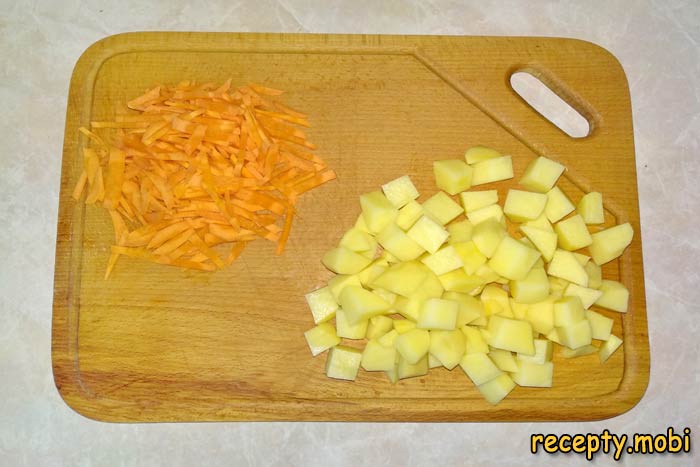
I cut the carrot into fine 3–5 mm strips and add it to the pan with the onion. I sweat the vegetables over medium heat for 5 minutes until soft. I cut the potatoes into 1.5 cm cubes and add them straight to the pot with the almost-ready chicken broth. I also add the boiled beans and the chopped kidney. The pieces of carrot and onion can be taken out of the broth – they have given up their flavour.
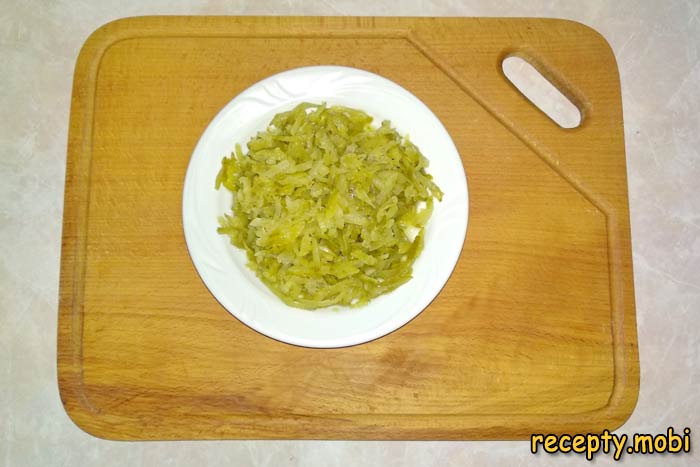
The pickled cucumbers (3 pcs) can be cut into thin 3–5 mm strips or small cubes, but for quick cooking it is more convenient to grate them on a coarse grater. Grated cucumbers spread through the soup faster and release their characteristic sourness. I add them to the pan with the vegetables and stew together for 3–5 minutes.
When the cucumbers have softened in the pan, I add tomato paste (1 tbsp) or homemade tomato sauce (½ cup), along with salt and spices (black pepper, allspice). I stir everything in the pan thoroughly until smooth.
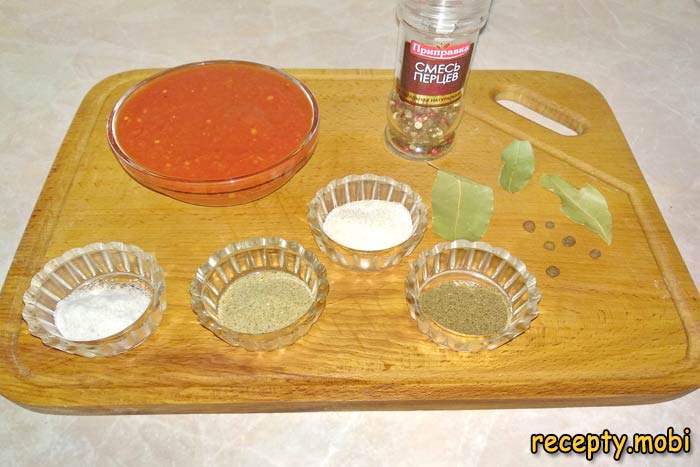
I stew the dressing for 5–10 minutes over low heat. I add 100 ml of cucumber brine (or 2 ladles of chicken broth if there is no brine). Only now do I taste the dressing – if needed, I add a little sugar (1 tsp) to balance the acidity of the cucumbers and the tomato.
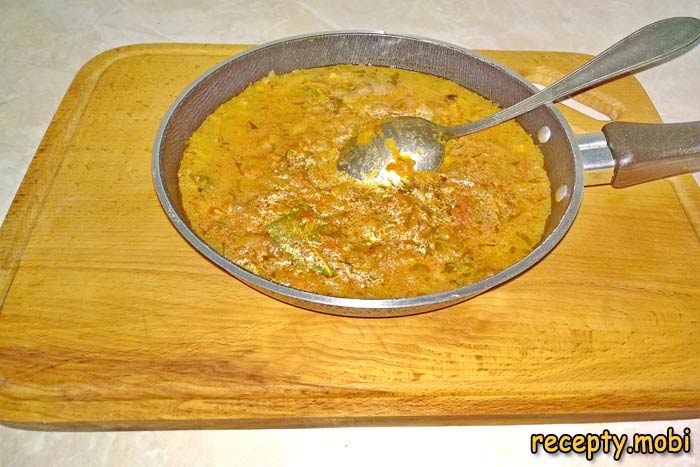
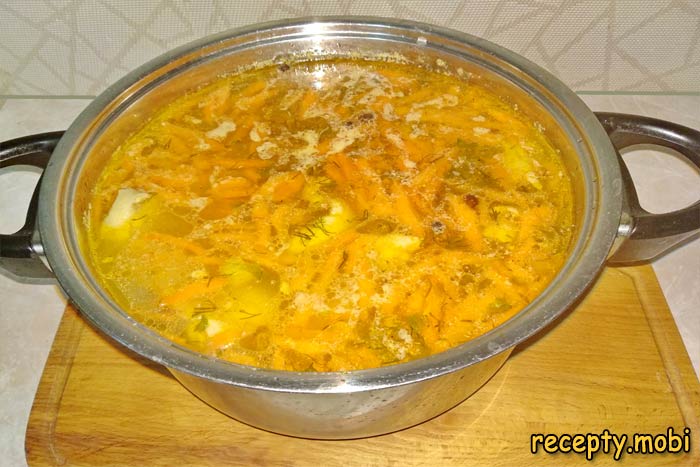
I check the readiness of the potatoes in the pot – they must be fully cooked (15–20 minutes). CRITICAL RULE: add the dressing with cucumbers to the pot ONLY after the potatoes are fully cooked! The cucumbers give acidity, and undercooked potatoes will turn “woody” – they will not soften any further. When the potatoes are done, I add the dressing and the bay leaf (3 pcs) and cook everything together for another 10 minutes over low heat. I take the pot off the stove and let it steep for 15 minutes under the lid.
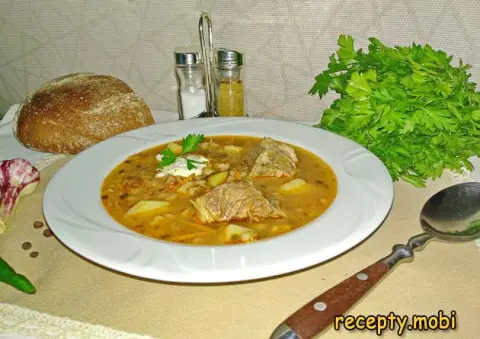
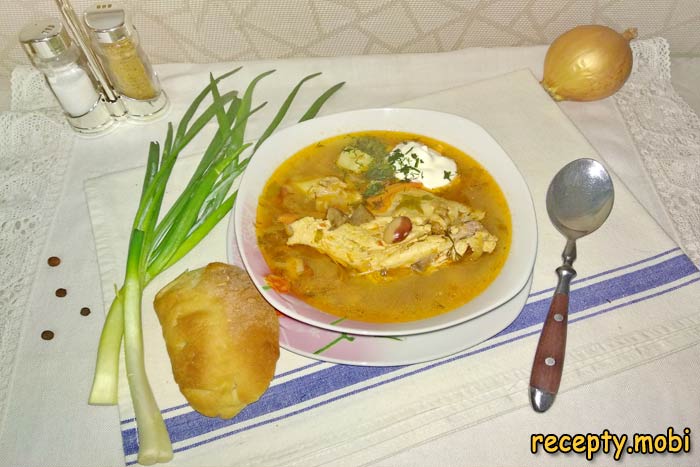
The rassolnik with beans and pickled cucumbers is ready! I ladle it into deep bowls, add a tablespoon of homemade sour cream and a pinch of finely chopped fresh dill to each. I serve it hot with fresh dark Borodino rye bread – a “Russian canteen” classic.


Tips
- 1
Add the dressing with pickled cucumbers to the pot ONLY after the potatoes are cooked – the acid “sets” the starch and the potatoes stay “woody”.
- 2
Boil the pork kidney twice with a change of water – this completely removes the specific “kidney” smell. Without it the dish will be unpleasant.
- 3
Add sugar (1 tsp) to the dressing – it balances the acidity of the cucumbers and the tomato without making the soup sweet. I cook rassolnik with pearl barley on a similar principle.
- 4
Be sure to serve it with 20% sour cream and fresh dill – the classic “Russian canteen” way of serving rassolnik.
FAQ
Can rassolnik be made without offal (kidneys)? +
Yes, rassolnik turns out tasty without offal too – it will be “lighter” in flavour, without the specific “kidney” note. Replace the kidneys with extra meat: chicken breasts and thighs, a piece of beef (200 g, cooks for 1.5 hours), or pork ribs (200 g). Chicken hearts or gizzards also work – an offal alternative with a mild flavour. For a lean, meat-free version – vegetable broth plus more beans (1 cup) for heartiness. Each substitution gives its own character. Pork kidneys are the “classic” of Soviet rassolnik, but not acceptable to everyone.
What can replace the beans in rassolnik? +
Classic alternatives will do: pearl barley (3 tbsp, soak overnight, cook for 1 hour before adding to the soup), round rice (3 tbsp, add to the soup 20 minutes before it is done), buckwheat (3 tbsp, the same as rice). Pearl barley is the most “classic” grain for rassolnik in Soviet recipes. Beans are the modern, “lightened” variant. You can combine beans and pearl barley 50/50 for an interesting texture. For a lean version – chickpeas or white beans (milder in flavour). Each grain gives the soup its own character.
How long does cooked rassolnik keep? +
Cooked rassolnik keeps in the fridge for up to 3 days in a tightly closed pot. On the second and third day the flavour becomes richer – the tastes finally come together and the sourness is distributed evenly. Before serving, reheat over low heat until fully warmed through; do not bring it to a strong boil repeatedly. You can freeze it in portions for 1–2 months in airtight containers – before eating, thaw it completely in the fridge and bring it to a boil. It is ideal for cooking ahead for a family week.
What to serve rassolnik with at the table? +
Classically with 20% sour cream (1–2 tbsp per bowl), fresh dill or parsley, and fresh dark Borodino rye bread. For snacks – with meat or cabbage pies, or vatrushki. For drinks – kvass, cranberry mors, light beer (for a men’s dinner), or compote for a non-alcoholic option. For a family dinner in winter – with homemade pastries and fresh vegetables. It is ideal as a “Russian” first course for a family dinner in the cold season – a warming, aromatic and nourishing soup with its traditional sourness.
- Comment
or post as a guest
Be the first to comment.