avg —
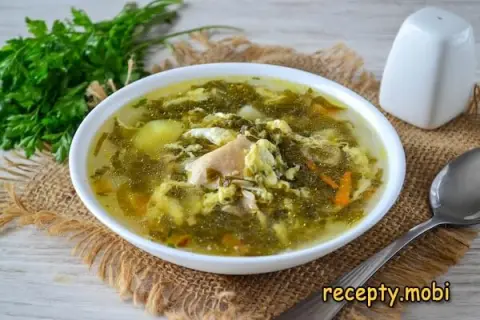
Chicken Millet Soup with Potatoes

Instructions
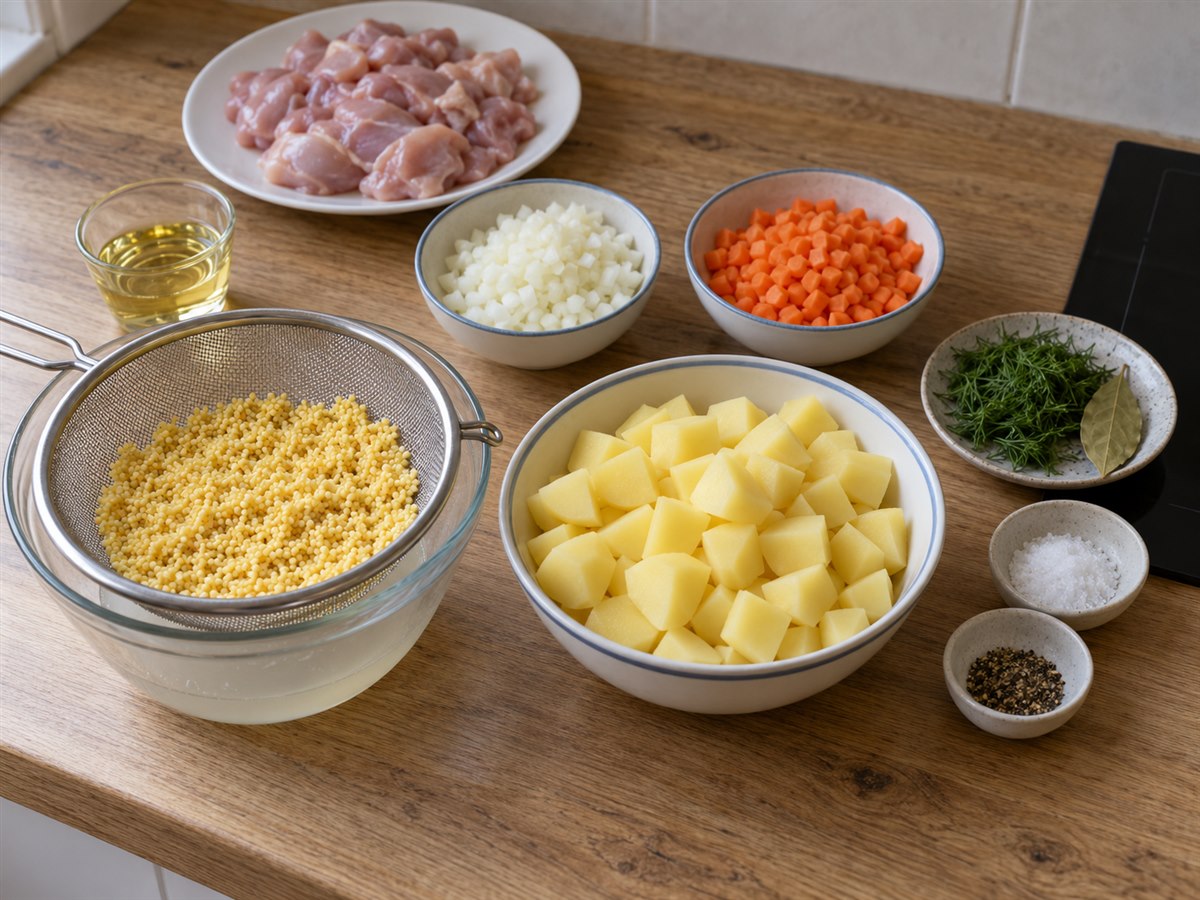
Prepare the ingredients. Finely chop the onion, dice the carrot small and cut the potatoes into roughly 1.5 cm cubes. Pick over the millet, rinse under running water in a fine sieve and drain. Wash and dry the dill. On a separate board, cut the chicken into 2-3 cm pieces. Do not rinse raw poultry under the tap. Wash hands, knife and board after handling it.
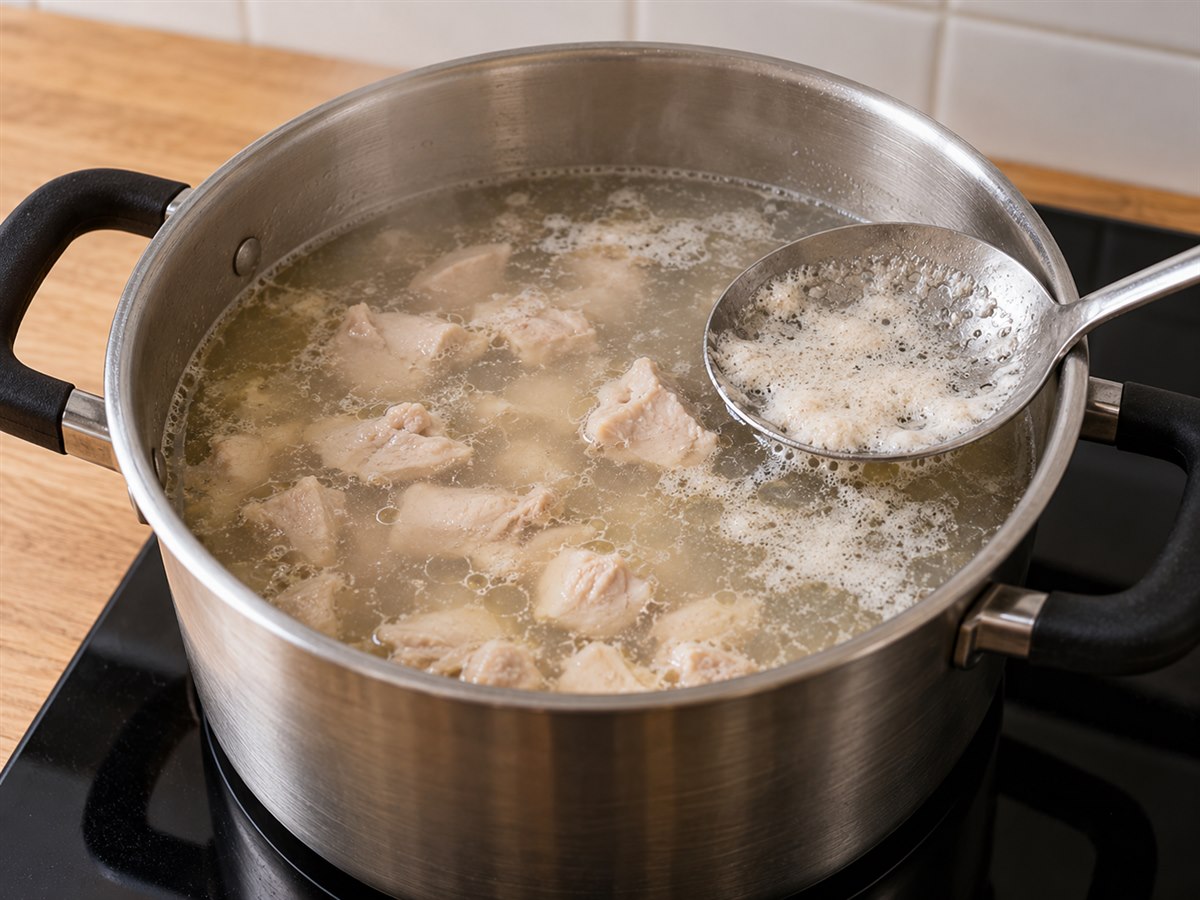
Start the chicken broth. Put the chicken into a saucepan of about 4 litres and add 1.8 litres cold water. Bring to a boil. Skim off the foam, add the bay leaf and lower the heat. Simmer gently for 15 minutes with the lid partly on. Keep the broth in the pot, it is the base of the soup.
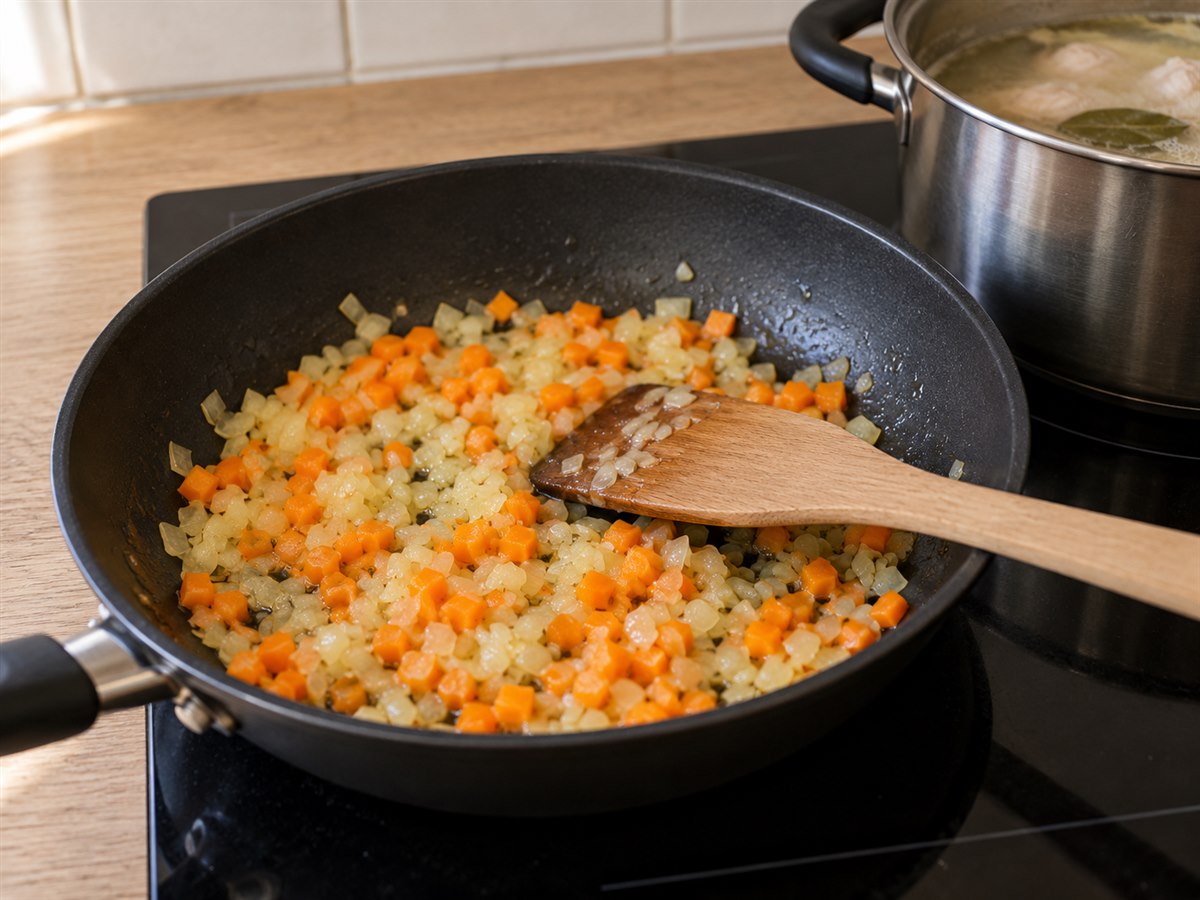
Soften the vegetables. While the chicken simmers, heat the oil in a frying pan. Add the onion and carrot and cook over medium heat for 5-7 minutes, stirring. The onion should turn translucent and the carrot should soften a little, without a dark crust. Remove the pan from the heat and set aside until needed.
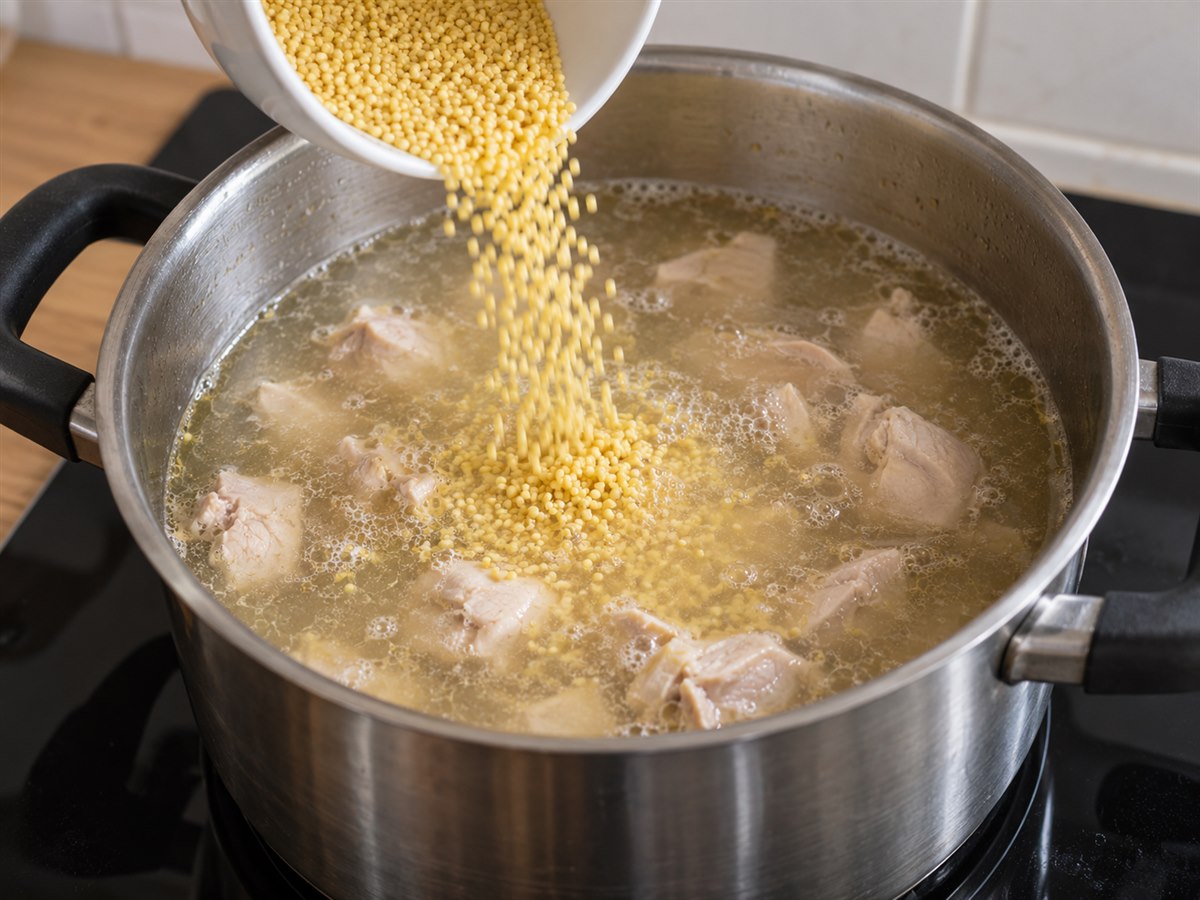
Add the millet. Tip the rinsed grain into the gently simmering chicken broth. Stir along the bottom and simmer for 5 minutes. The millet goes in before the potatoes because it needs longer to soften. Keep a gentle simmer rather than turning up the heat to rush the cooking.
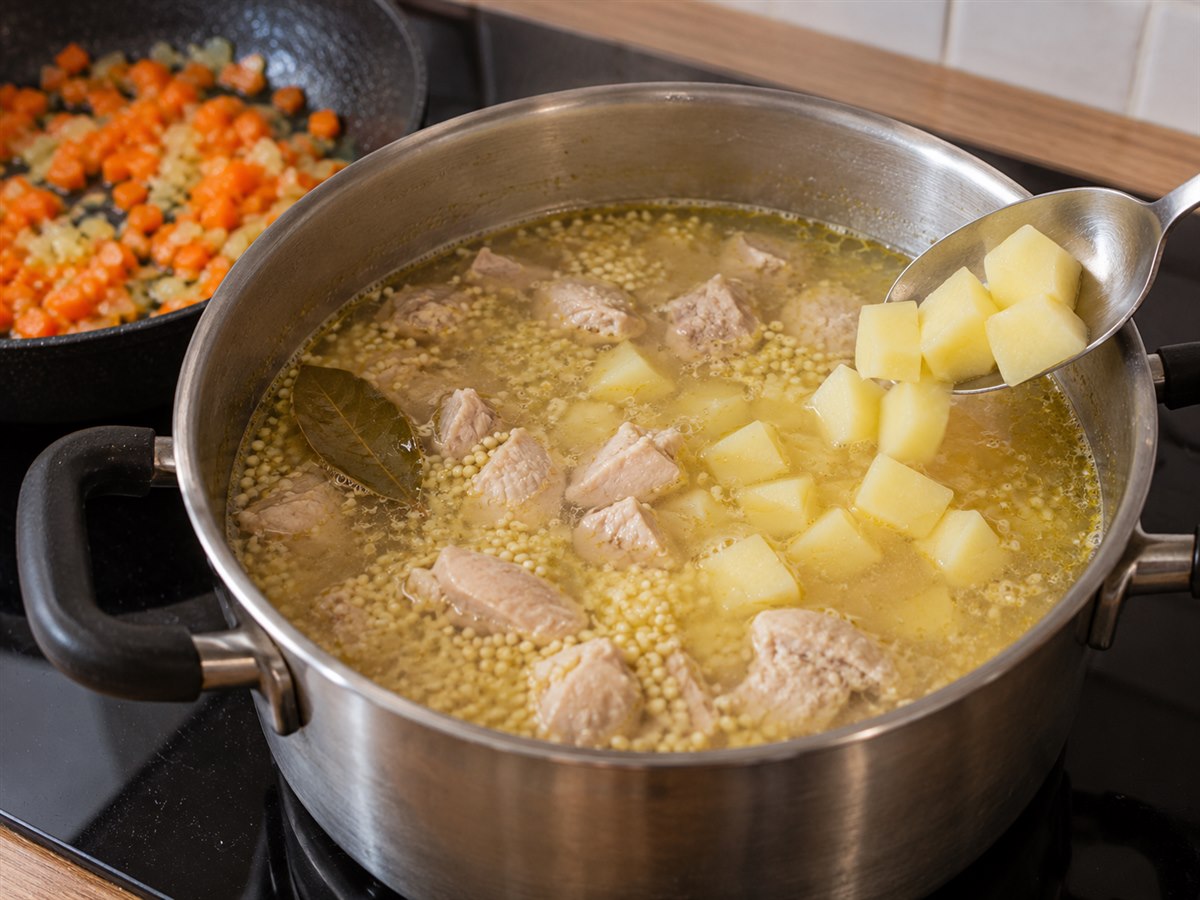
Cook the potatoes. Add the potatoes and salt. Once simmering resumes, cook for 12-15 minutes. Stir in the softened onion and carrot with any oil left in the frying pan, then simmer for another 3 minutes. The millet will have cooked for about 20-23 minutes. If the grain or potatoes are still firm, continue cooking and check again.
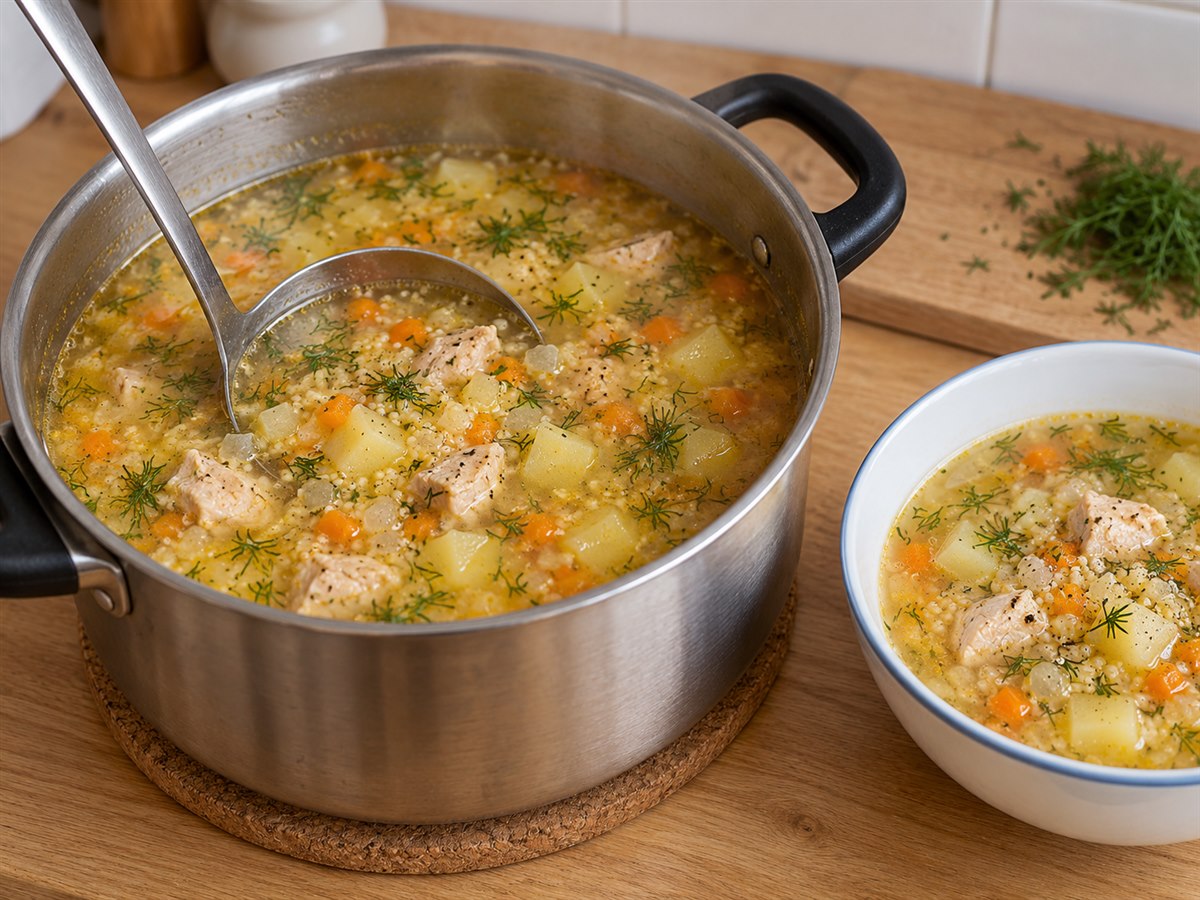
Check and serve. A potato cube should split easily with a spoon, and the millet should have no hard centre. Check the thickest chicken piece with a food thermometer: it must reach at least 74 °C or 165 °F. Add the pepper and chopped dill and remove the bay leaf. Take off the heat, rest for 2 minutes and divide into 6 servings. Optional sour cream and bread are served separately.


About this peasant-style soup
Peasant soup is a broad name, not one fixed recipe across every household or canteen. This version combines chicken, millet and potatoes without cabbage or tomatoes. Thigh meat provides flavour without simmering a whole bird for hours. Use boneless, skinless fillets as listed, otherwise the edible meat quantity and cooking time will differ.
Preparing the millet
Use ordinary food-grade hulled millet, not flakes or ready-cooked porridge. Weigh 60 g dry, pick it over, rinse in a fine sieve and drain. Do not pour the bowl of rinsing water into the soup. Grain with a clearly rancid smell should not be rescued by scalding it.
Allow roughly 20-23 minutes for millet in this soup, but taste several grains rather than relying on the clock alone. They should have no dry, hard centre. Take account of the packet directions if they differ. Our guide to cooking millet explains more about the grain.
Keeping the soup brothy
Do not increase the dry millet by eye. Even a small amount expands considerably while cooking. Cut potatoes evenly and choose a variety that holds its shape where possible. A gentle simmer and careful stirring protect the cubes better than a rolling boil.
If the soup is already too thick, add a little hot water and bring back to a boil. Extra salt is not a fix for excess grain. For a different soup using millet, see Ukrainian kapusniak with sauerkraut.
Servings and calorie estimate
The yield is 6 servings, not a measured cooked weight. About 215 kcal refers to one-sixth of the pot without sour cream or bread. All 20 g oil and 60 g dry grain are included. Chicken thigh fat content and the products actually used will affect the result.
Scale ingredient amounts when changing servings, not cooking time in direct proportion. A larger batch needs a larger pot. For calories per 100 g, weigh the finished soup without its saucepan and use that actual cooked weight. We have not measured it.
Storage and reheating
Refrigerate leftovers in shallow containers within 2 hours, or within 1 hour if the room is above 32 °C or 90 °F. Keep at 4 °C or 40 °F or below and use within 3 days.
Stir during reheating, bring the soup to a boil and check it reaches at least 74 °C or 165 °F throughout. Reheat only the portion needed. Millet softens further and absorbs some of the broth during storage.
Recipe video: Peasant-style chicken and millet soup
Important: Related Russian-language video. Its quantities and ingredient cuts differ from this version.
Images are AI-generated.
FAQ
What is peasant-style millet soup? +
The name covers several rustic vegetable and grain soups. This version uses chicken, millet, potatoes, onion and carrot. It is not presented as the only authentic recipe and does not contain sauerkraut.
How much millet goes into the soup? +
Use 60 g dry millet with 1.8 litres water, 400 g potatoes and 400 g chicken for 6 moderately hearty servings. Adding substantially more grain can make the soup very thick after standing.
Why does millet taste bitter? +
Old grain or surface residues can contribute to bitterness. Choose millet without a rancid smell, store it as directed on the packet and rinse before cooking. Rinsing cannot make spoiled grain suitable to eat.
Do I add millet or potatoes first? +
Add the millet first, followed by potatoes after 5 minutes. With potatoes cut into approximately 1.5 cm cubes, this helps the grain soften without overcooking the potatoes. Potato type and the particular millet can affect timing.
Can I skip frying the vegetables? +
Yes. Add the raw onion and carrot with the potatoes and simmer until tender. If omitting the oil, remove all 20 g from the calorie calculation. The flavour and colour will be milder than with softened vegetables.
Can I make it without meat? +
For a separate meatless version, omit the chicken and use water or vegetable stock. Start with the millet once the liquid boils, then follow the remaining order. The flavour, cooking time and nutrition will change. Sour cream remains optional and is not suitable for a vegan version.
Can I replace the millet? +
Rice makes a different grain soup. Follow its packet timing and check it alongside the potatoes. Pearl barley cannot simply replace millet for the same 20-minute simmer. It is easier to cook barley separately until tender first.
Why is the soup thicker the next day? +
Millet keeps absorbing liquid in storage. Reheat only the portion needed and add a little water if necessary, then check the salt. Do not add more dry grain to the finished soup.
- Comment
or post as a guest
Be the first to comment.