avg —
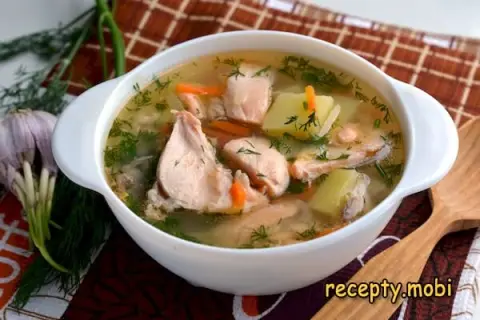
Carp Fish Soup over a Fire

Instructions
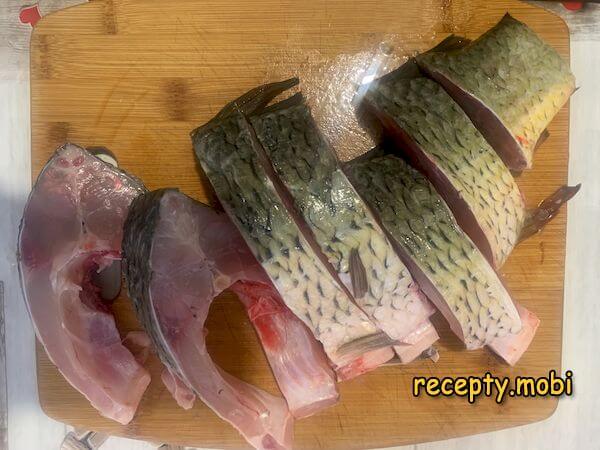
First I deal with the fish. For this soup you can choose any fish – river or even sea. Carp suits best. You can also take crucian carp, perch or pike. I clean the fish of scales – it is easiest to scrape with a knife against the grain. Then I empty the belly of the entrails and remove the black membrane. Large fish I divide into steaks, cutting each one into halves.
I build a fire and heat the water in a vessel – a cauldron or a large cast iron pot. I bring the water to a boil. The fire should give an even heat – without "tongues" of flame that would cover the cauldron with soot.
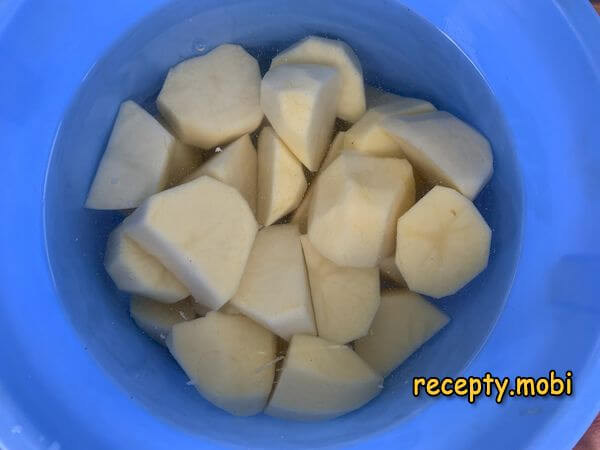
While the water comes to a boil, I cut the potatoes. I peel the tubers and cut them into large pieces. The onion can be chopped either coarsely or finely – it depends on your preference. Out in nature I usually cut it coarsely – it looks nice and is quick.
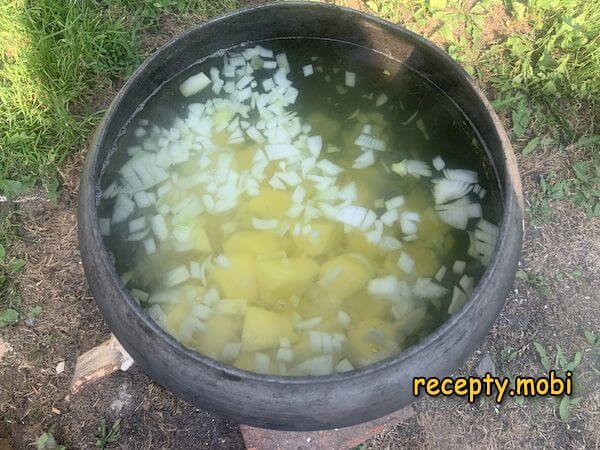
As soon as the water boils, I add the potatoes and the onion to it and cover with a lid. I wait for it to return to a boil. At this stage you can add some grain if you like – millet or rice (100–150 g). I add salt to taste.
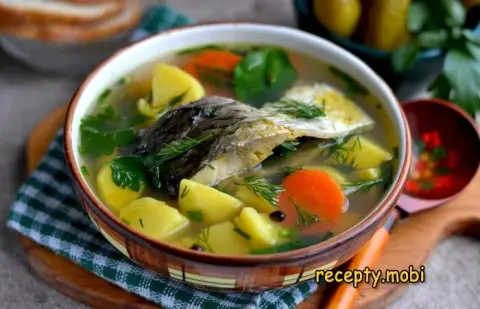
After it boils again, I keep an eye on the potatoes. As soon as they are almost done, I put the fish into the broth. Carp, like any other fish, cooks quickly: 5–7 minutes is optimal, depending on the size of the pieces. The carp head will help you judge doneness – when the eyes turn white, the fish is ready.
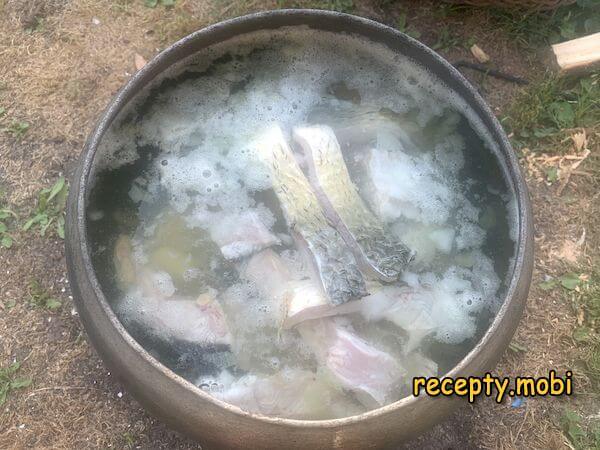
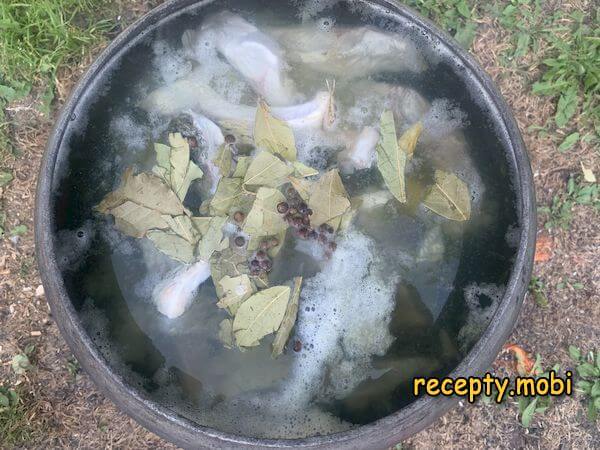
One or two minutes before the carp is done, I add the fresh herbs, peppercorns and bay leaves to the soup. I taste the broth for salt – it may need a little more. As soon as the fish is ready, I take the cauldron off the fire, but I do not rush to ladle it out. I let the broth rest under the lid for 2–3 minutes – and then you can enjoy a fragrant fish soup.


Tips
- 1
Always scrape off the BLACK MEMBRANE inside the belly of the fish – it gives bitterness and spoils the taste of the soup. This is especially important for river fish.
- 2
The FIRE should give an even heat without high "tongues" of flame – otherwise the cauldron gets covered with soot and the food heats unevenly. Use deciduous wood (birch, oak) – it gives off less resin.
- 3
The carp HEAD is an excellent guide to doneness: as soon as the eyes turn completely white, the fish is ready. This is a secret of experienced anglers.
- 4
Over a fire it is good to add a SHOT OF VODKA right at the end – it softens the "muddy" aftertaste of river fish and changes nothing in the flavour (the alcohol evaporates quickly). A similar trick works in other fish soups.
FAQ
Which fish to choose besides carp? +
Great choices for fish soup: pike (a classic, a more "aggressive" flavour), pike-perch (a tender, clear soup), perch (a bright flavour, but plenty of bones), catfish (rich and fatty), burbot (for lovers of the exotic), cod (for a sea version). Small river fish (ruffe, gudgeon) will give a rich broth, but it needs careful straining. Salmon fish (salmon, trout) are too delicate – they "muddy" the soup. The ideal for fish soup is a mix of 2–3 kinds (carp + perch + pike) – that makes a "royal soup".
How do you keep the cauldron from getting sooty? +
The rules. Wood – only well-dried deciduous kinds (birch, oak, aspen). Coniferous (pine, spruce) give off a lot of resin and smoke. The heat should be even, without "tongues" of flame – cook over smouldering coals rather than an open fire. Hang the cauldron 15–20 cm above the heat. For protection, rub the outer surface of the cauldron with soap before cooking: afterwards the soot washes off easily with water. If it has already got sooty, rub it with vinegar and let it stand for 10 minutes before cleaning.
How long does the soup keep? +
In the open air in cool weather – 3–4 hours. In the refrigerator (if you managed to bring it home) – 1–2 days. Longer is not worth it – the fish quickly loses freshness and an unpleasant smell appears. To keep it on a trip, use a thermos or a cool bag. Out in nature after supper it is better to share the leftovers with your picnic neighbours straight away than to carry them home. I do not recommend freezing the soup – after thawing the fish falls apart into mush.
Can it be made on a gas stove or in the oven? +
It can, but the taste will be different – without the "campfire" note and the light wisp of smoke. On the stove use a thick-walled pot (a cast iron roaster), cook over medium heat with the lid on. In the oven – in a ceramic pot at 180 °C (40 minutes). To imitate the "fire", add 2–3 drops of liquid smoke right at the end (carefully – it is a concentrate!). But real fish soup is only made over an open flame. The smell of smoke, of a live fire, of fresh air – that is half the taste of this dish.
- Comment
or post as a guest
Be the first to comment.