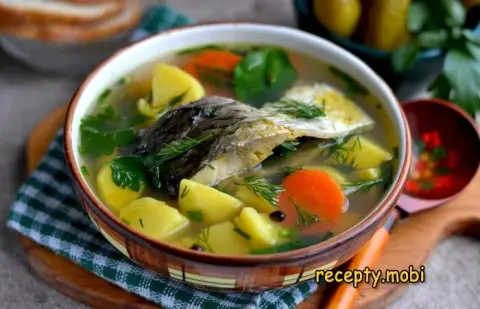
avg —
Cioppino Recipe: Italian-American Seafood Stew

Instructions
Prepare the seafood. Thaw it in the refrigerator, drain and pat dry. Check the fish for pin bones and cut it into 3 cm pieces, then slice the squid into rings. Scrub the mussels and discard cracked shells or any open mussels that do not close when tapped.
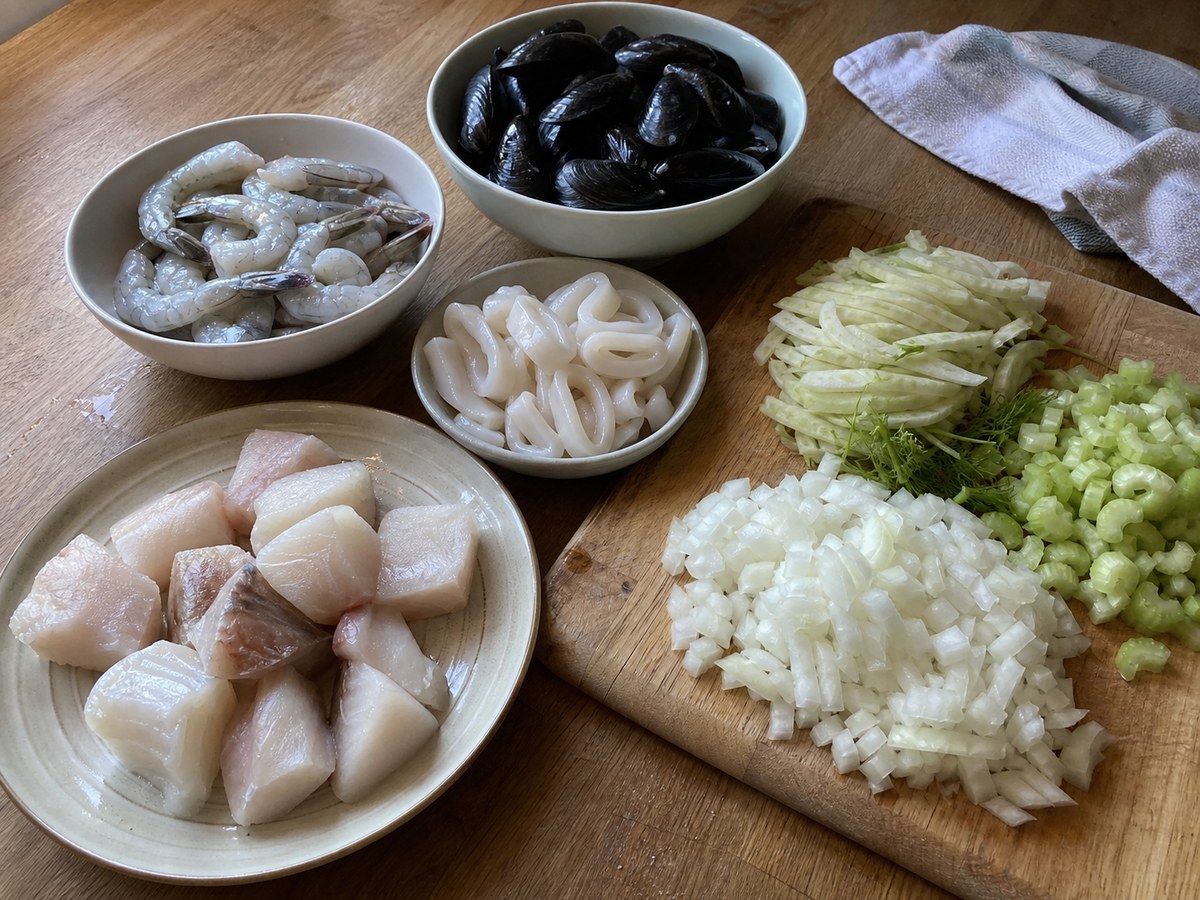
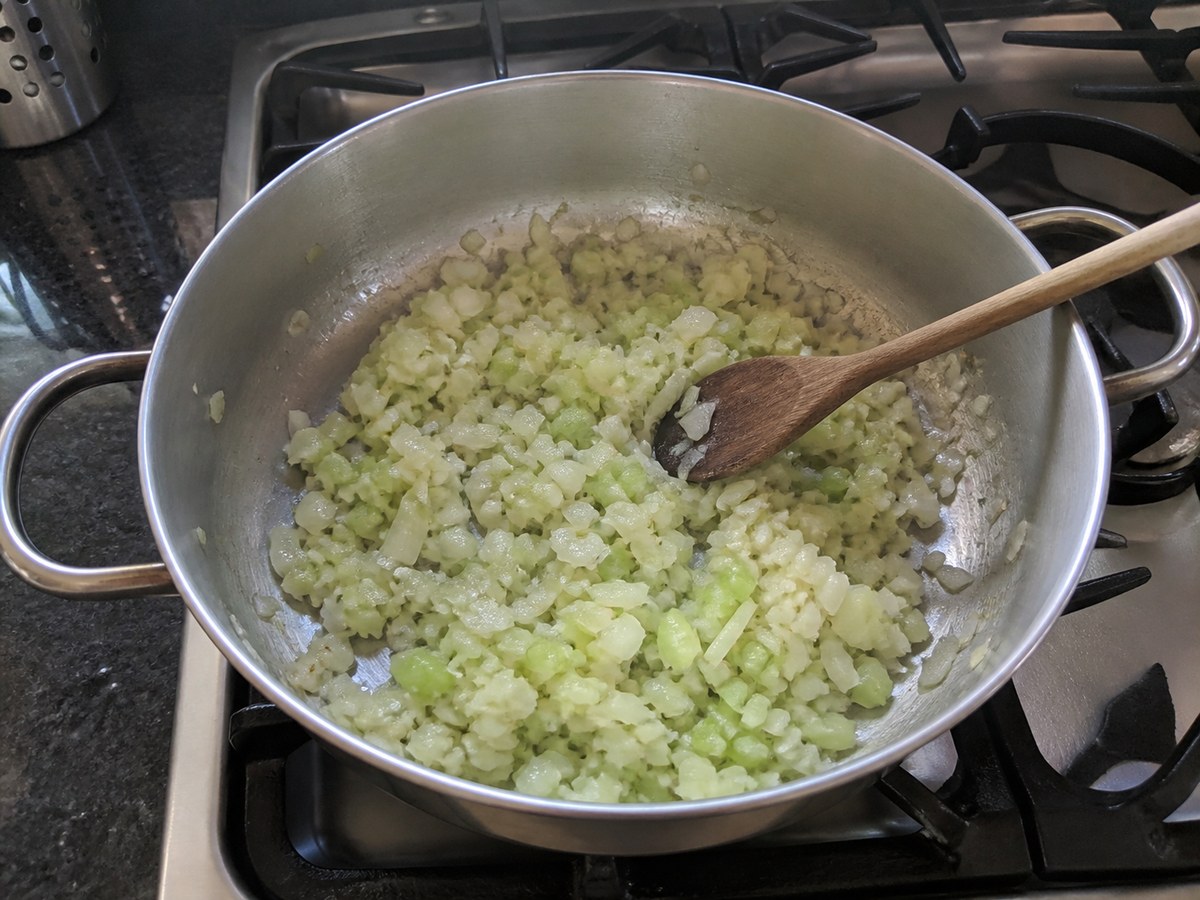
Soften the vegetables. Heat the olive oil in a wide saucepan. Add the finely chopped onions, fennel and celery and cook over medium heat for 8 minutes. They should become soft and translucent without deep browning.
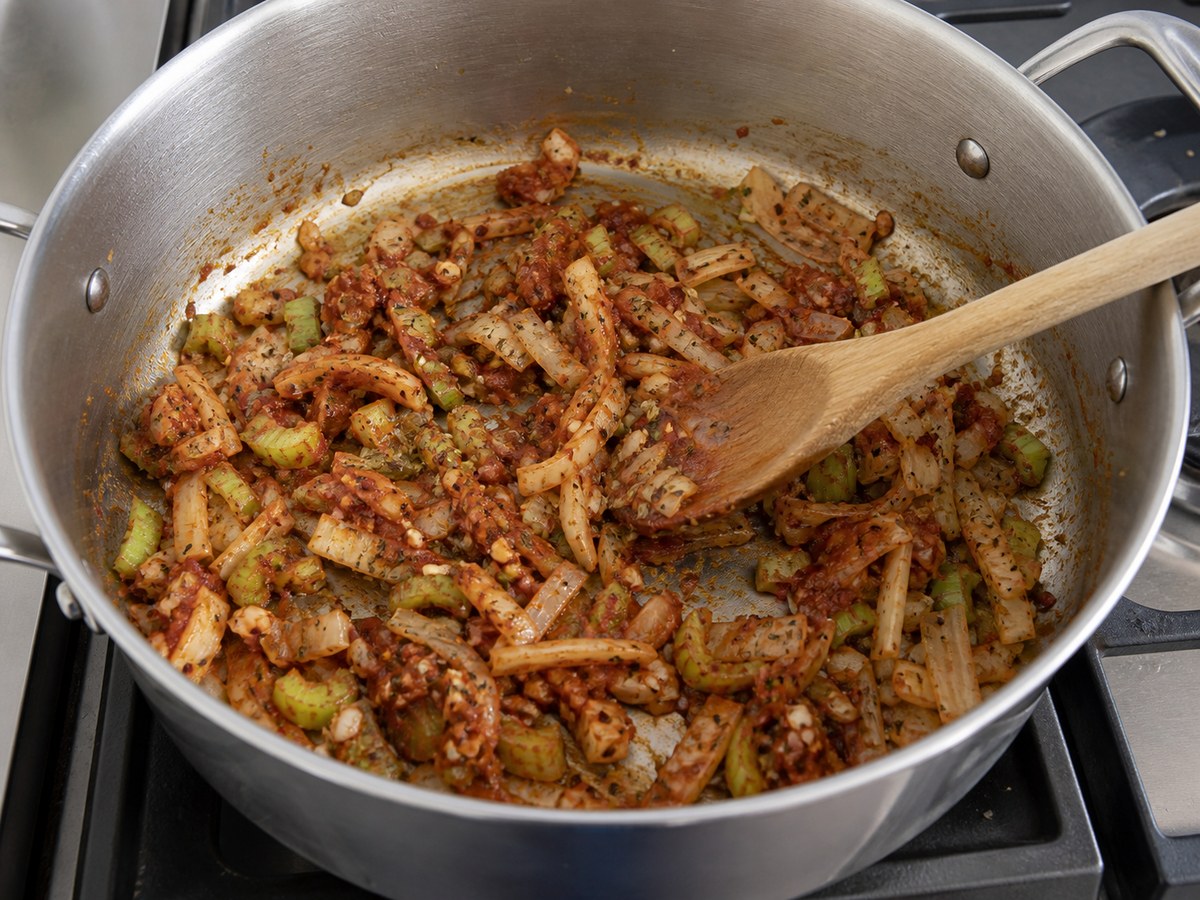
Cook the tomato paste and spices. Add the minced garlic, tomato paste, oregano and red pepper flakes. Cook for 2 minutes, stirring constantly, until the paste darkens slightly and smells aromatic.
Add the wine. Pour in the white wine and scrape the flavourful residue from the bottom of the saucepan. Boil for 4-5 minutes until the liquid is reduced by roughly half and the harsh alcohol aroma has gone.
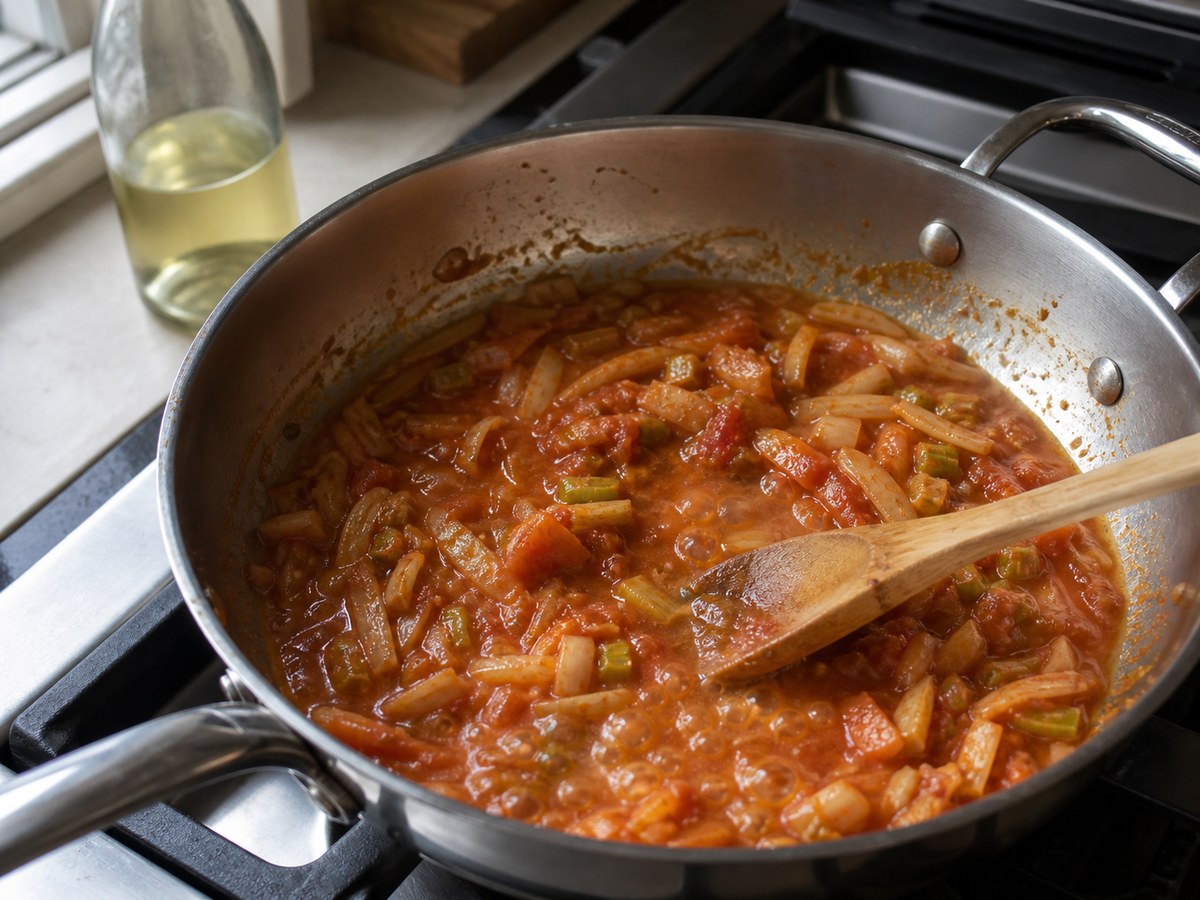
Simmer the tomato broth. Add the chopped tomatoes, fish stock and bay leaves. Bring to a gentle simmer and cook uncovered for 25 minutes. The broth should become concentrated and slightly thicker without turning into a sauce.
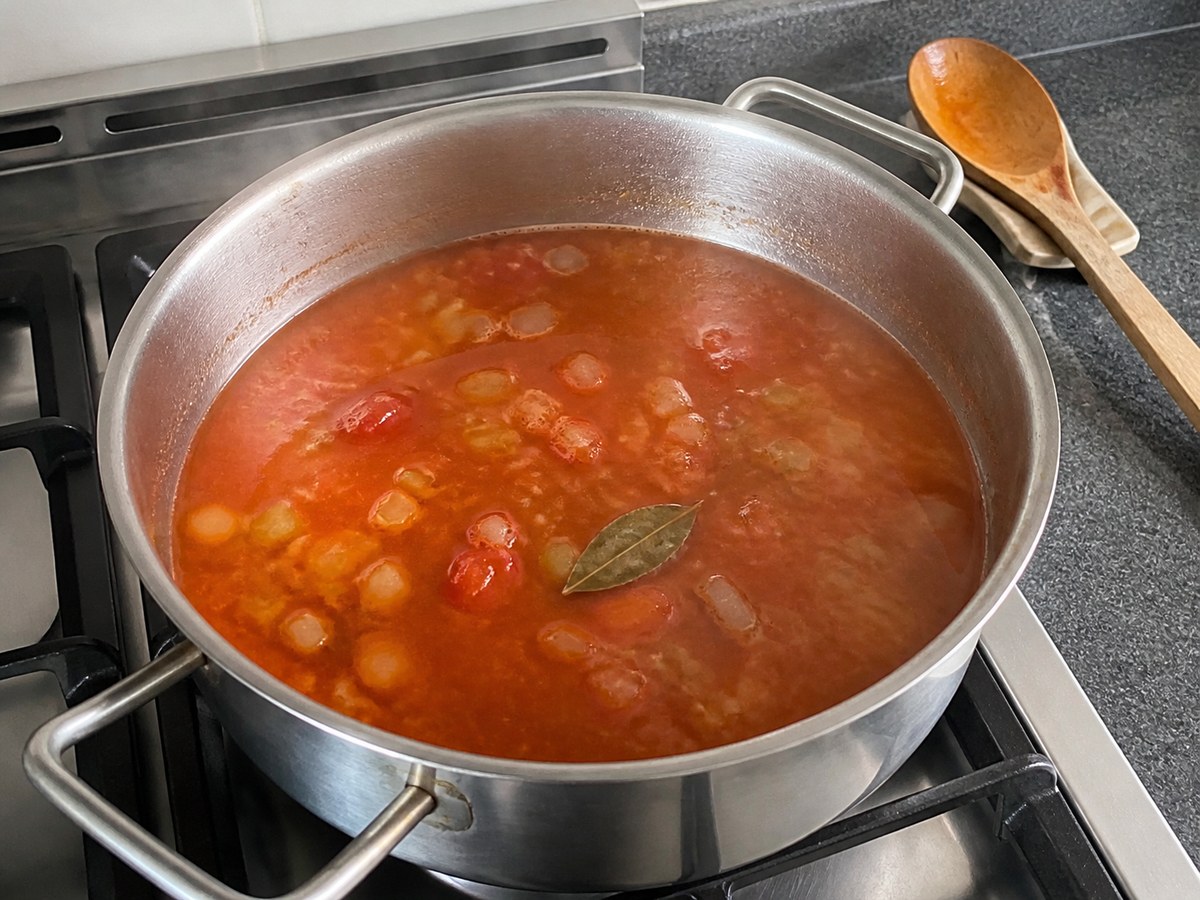
Add the seafood in the correct order. Add the fish and squid first and simmer for 3 minutes. Add the prawns and mussels, cover and cook for another 4-5 minutes. The prawns should be opaque, the fish should flake and any mussels that remain closed must be discarded.
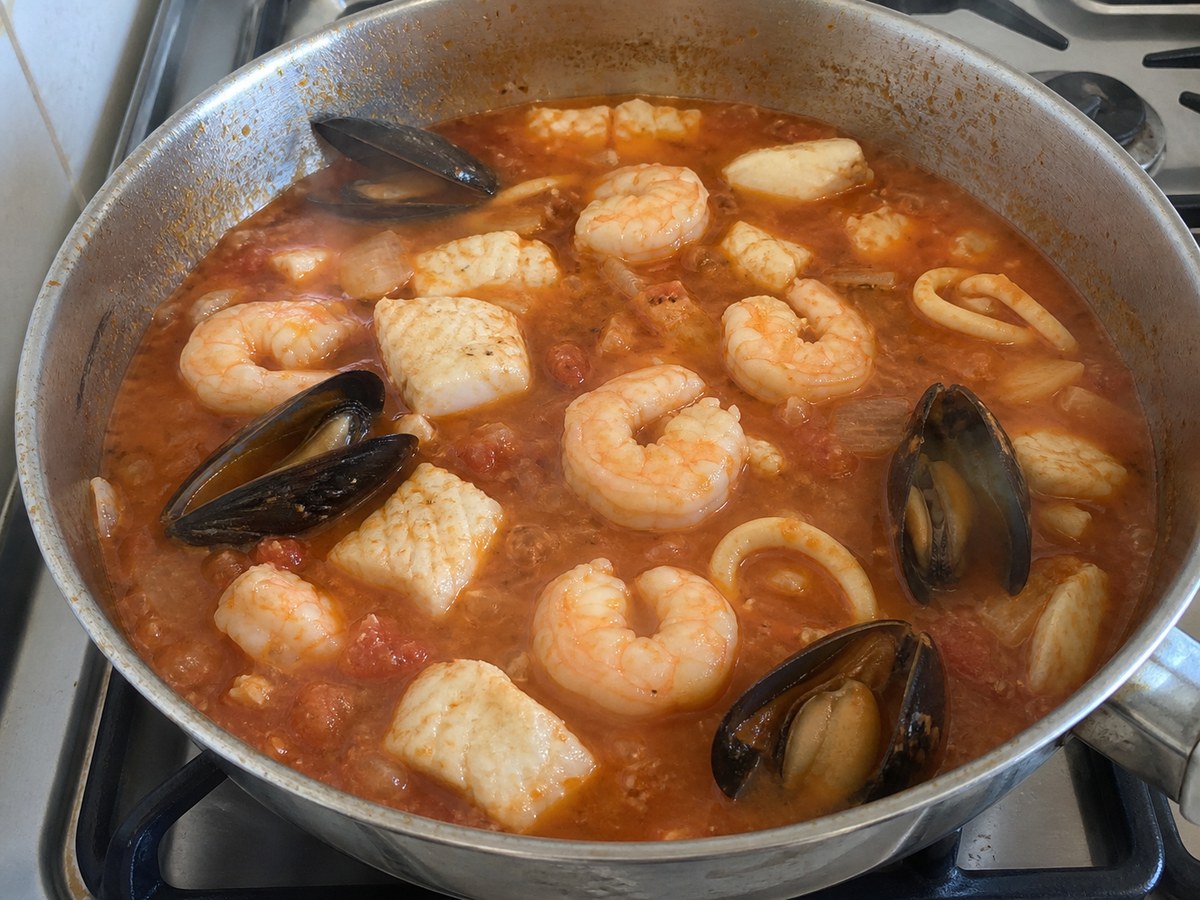
Season and serve. Remove the bay leaves, add the black pepper and only then taste for salt. Stir in the chopped parsley, remove from the heat and rest for 5 minutes. Serve with lemon and toasted bread.
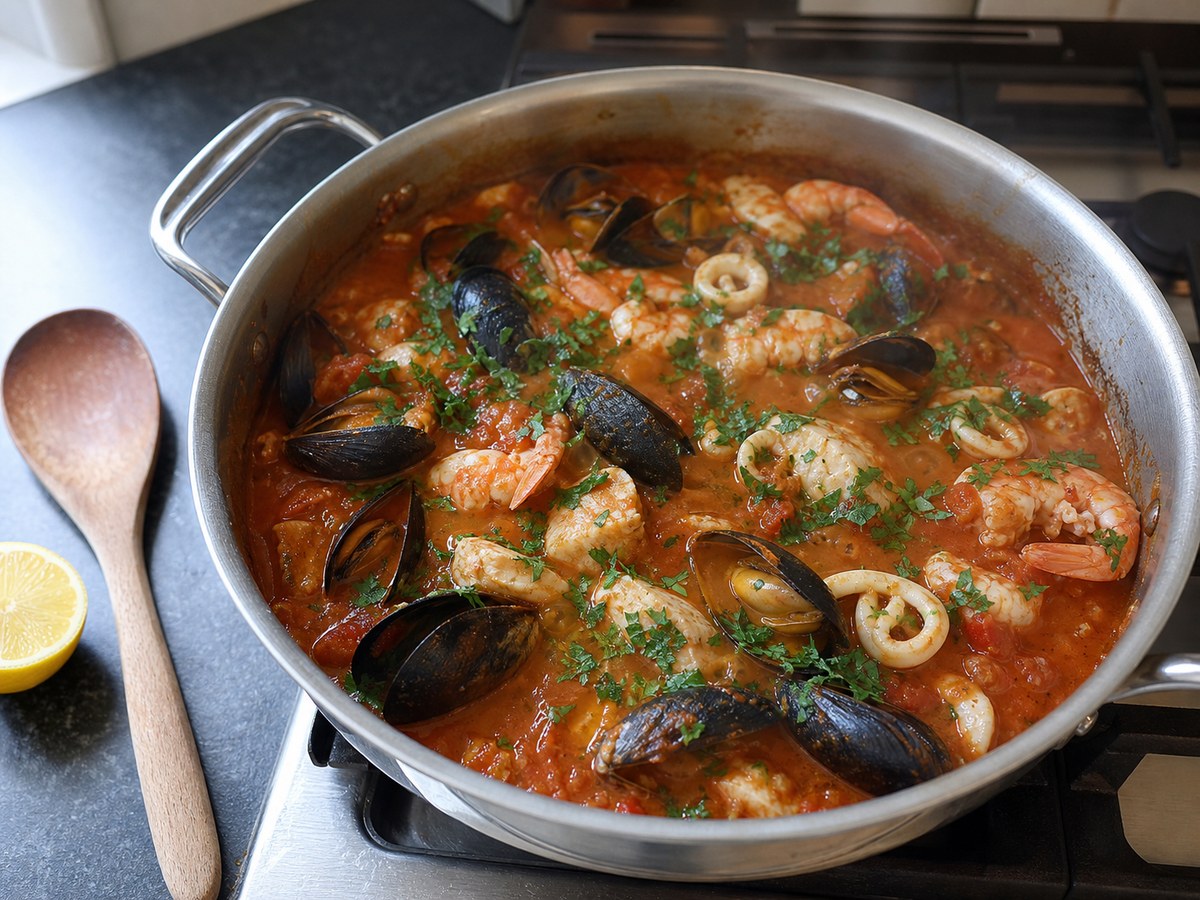


What cioppino is
Cioppino is often described simply as Italian seafood soup, but Italian-American is more accurate. It developed in San Francisco among fishing communities of Italian origin. The guiding idea remains Mediterranean: several kinds of fish and shellfish are cooked briefly in an aromatic tomato broth.
Cioppino is not a smooth tomato soup. Its broth is rich and substantial, while the fish pieces, prawns and mussels remain distinct. For a meat-free tomato option, see our fresh tomato soup.
Choosing the fish and shellfish
Use a firm boneless white fish such as cod, haddock, hake, halibut or sea bass. Very delicate fillets break apart quickly, so cut them into large pieces and avoid vigorous stirring after they go into the broth.
Fresh mussels should smell clean and briny, and closed shells must be free of cracks. An open mussel may close when tapped. If it does not, discard it. After cooking, discard every shell that remains closed.
Using frozen mixed seafood
Frozen mixed seafood works, but check whether it is raw or pre-cooked. Thaw raw seafood completely in the refrigerator, drain it and pat it dry. Add squid and large fish pieces first, followed by prawns and mussels.
If the mixture is already cooked, it needs only 2-3 minutes in the finished tomato broth to heat through. Longer cooking makes squid tough and prawns dry.
Replacing the white wine
Wine contributes both aroma and acidity. For an alcohol-free version, replace 200 ml wine with 180 ml unsalted fish stock. Stir in 20 ml lemon juice at the end, tasting after each half of the quantity.
Do not use sweet grape juice because it makes the tomato broth cloying. Lemon is best added at the end, as prolonged cooking weakens its fresh aroma.
How to avoid overcooking seafood
- Fish and squid. Large pieces need 3 minutes before the remaining seafood is added.
- Raw prawns. They are ready when opaque and curved into a relaxed C shape.
- Mussels. They normally open within 4-5 minutes under a lid.
- Pre-cooked seafood mix. Heat it for only 2-3 minutes.
Common mistakes
- Adding everything together. Prawns finish before firm fish and become dry.
- Not reducing the wine. The broth retains a harsh alcoholic smell.
- Salting before the seafood. Mussels and prepared stock may already contain salt.
- Boiling vigorously. Fish breaks apart and squid turns tough.
- Adding thawing liquid. It dilutes the broth and can bring an unpleasant aroma.
Serving and storage
Serve the stew immediately after its short rest with parsley, lemon and crusty bread. Our oven-baked garlic bread is a good accompaniment. Keep bread out of the shared saucepan so any leftover broth does not become soggy and thick.
Cool leftovers promptly, transfer them to a covered container and refrigerate at 4°C or below for no more than 24 hours. Reheat only the portion needed until piping hot without prolonged boiling.
How the recipe was tested
The recipe fixes the weight of every seafood component, the wine and broth reduction, and separate timings for fish, squid, prawns and mussels. These control points produce a concentrated broth without overcooking the seafood.
Recipe video: Tomato seafood soup
Important: The video shows a closely related method. Use the quantities and timings in this article.
Images are AI-generated visual guides to the cooking stages.
FAQ
What is cioppino? +
Cioppino is a tomato-based Italian-American seafood stew that developed among Italian fishing communities in San Francisco. It combines fish and shellfish with wine and aromatic vegetables.
Can frozen mixed seafood be used? +
Yes. Thaw it completely in the refrigerator, drain it and add it near the end. A mix containing pre-cooked seafood needs only 2-3 minutes of reheating.
What can replace the white wine? +
Use another 180 ml fish stock and stir in 20 ml lemon juice at the end. The flavour will be less wine-forward but will retain the acidity the broth needs.
Which fish is best for cioppino? +
Use a firm boneless white fish such as cod, haddock, hake, halibut or sea bass. Cut delicate fillets into large pieces so they do not break apart.
Why did the seafood become rubbery? +
It was almost certainly cooked too long. The fish and squid cook for 3 minutes before the prawns and mussels are added for only another 4-5 minutes.
Should frozen seafood be thawed first? +
Yes. Thaw it slowly in the refrigerator and pat it dry. Excess water dilutes the tomato broth and makes the cooking time harder to control.
How can cioppino be made less spicy? +
Leave out the red pepper flakes. Add black pepper in small amounts at the end, tasting the broth after each addition.
How long does seafood stew keep? +
Cool it promptly and refrigerate it in a covered container at 4°C or below for no more than 24 hours. Reheat once without prolonged boiling.
- Comment
or post as a guest
Be the first to comment.