avg —
Cabbage Soup with Pork

Instructions
I prepare the ingredients for the cabbage soup with fresh cabbage and pork.
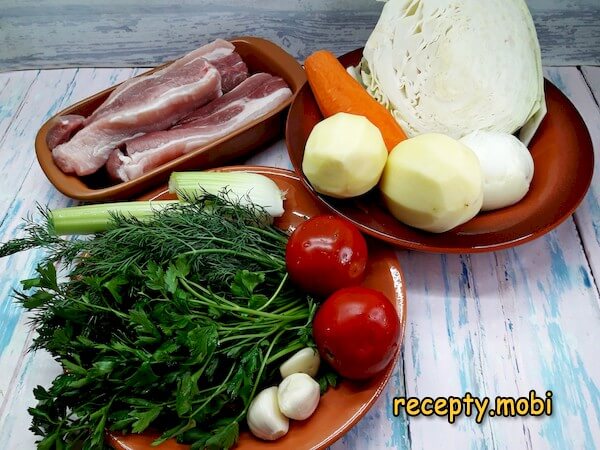
To stop them darkening, I place the peeled potatoes in cold water until needed.

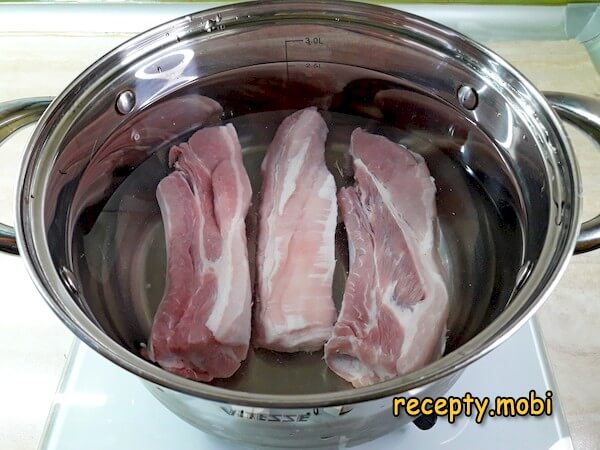
I place the ribs in a 3-litre pot and cover them with 2 L of purified water.
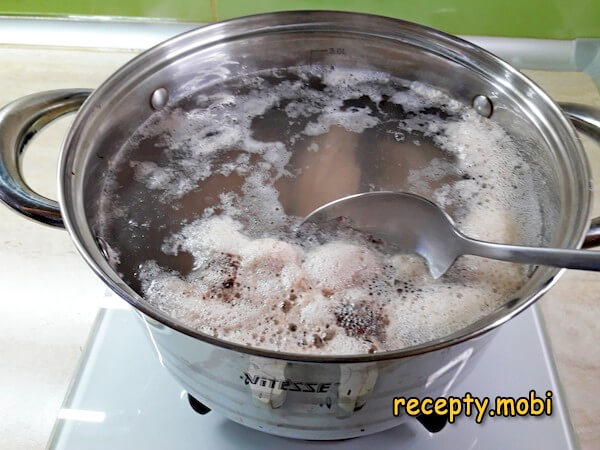
I boil the meat over medium heat, skimming off the foam before it comes to a boil. It will take 1.5 hours for the meat to become very tender and detach easily from the bone.
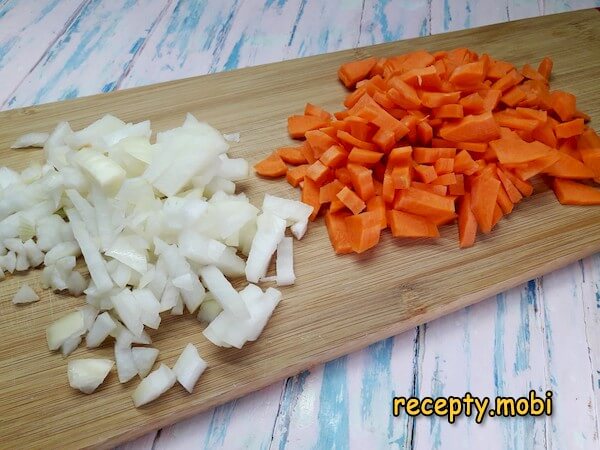
Meanwhile, I prepare the other ingredients. There is no need to chop the onion finely – medium cubes will do. So the carrot stands out nicely among the vegetables, I do not grate it but cut it into thin little rectangles.
I finely shred the cabbage (a special knife helps a lot with this).

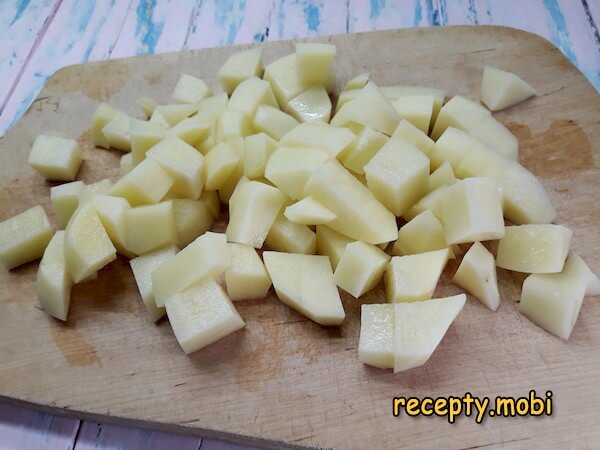
When the meat is almost ready, I dice the potatoes.
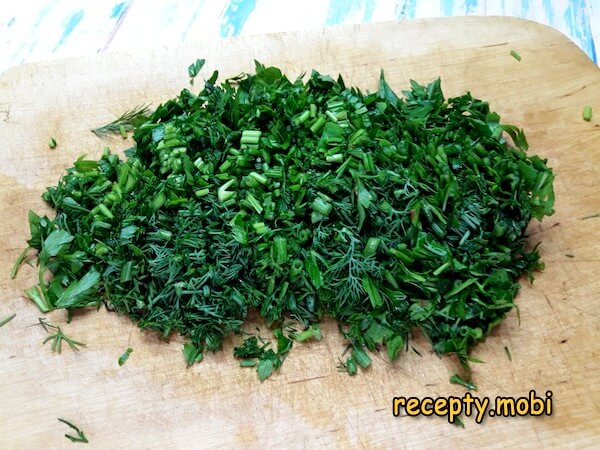
I chop the herb mix.
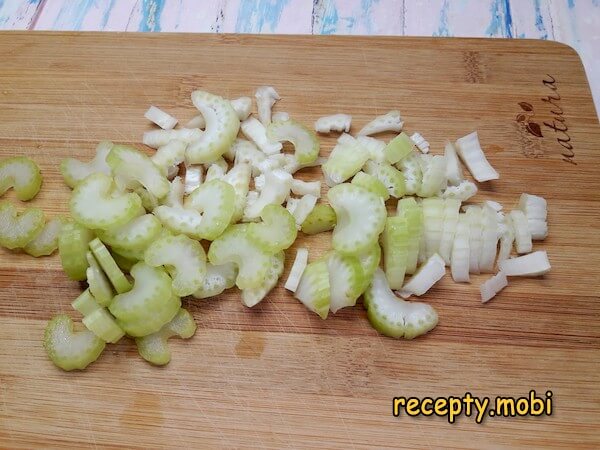
I cut the celery stalk.
After the stated time, I remove the meat from the broth and leave it to cool.
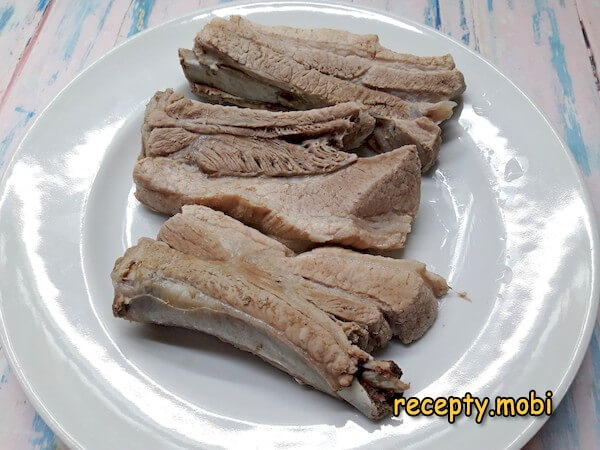
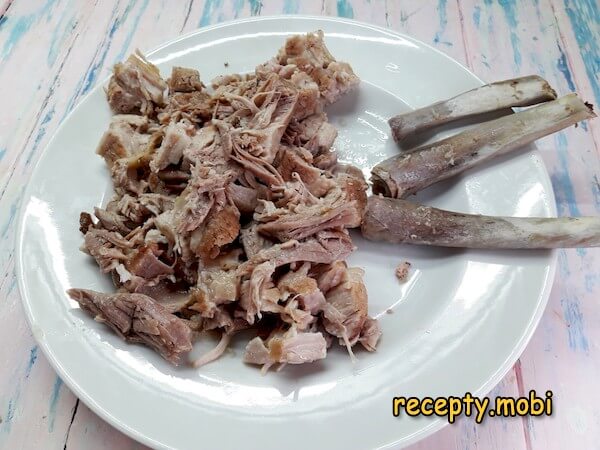
I take it off the bone, then cut it into pieces.
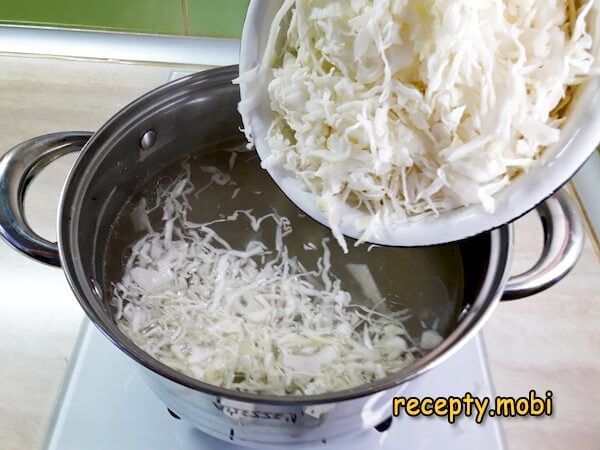
I add the cabbage to the pot.
As soon as it starts to boil, I add the potatoes.
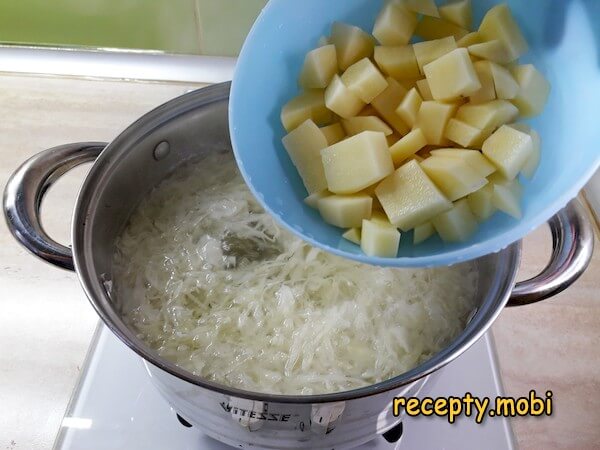
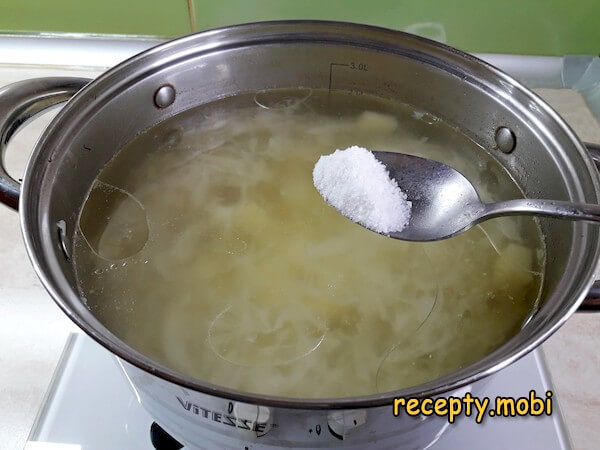
After it returns to a boil, the soup can be salted and cooked until the potatoes are done.
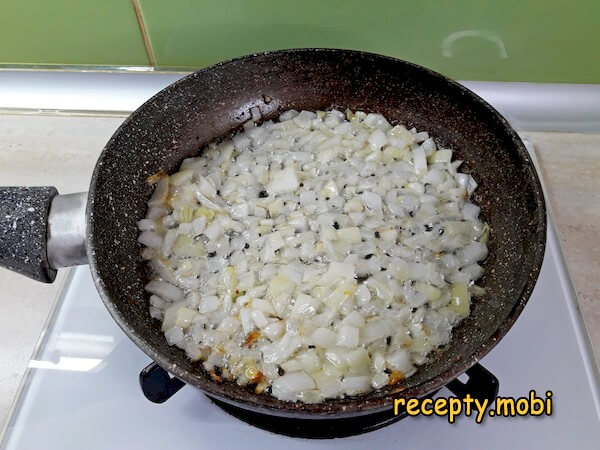
I make the sauté. In oil, or in fat skimmed from the surface of the broth, I sauté the onion until it shows the first signs of browning.
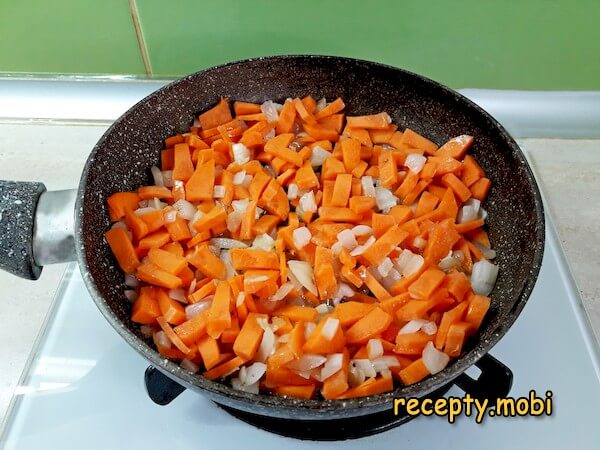
I add the carrot and fry for 5 minutes.
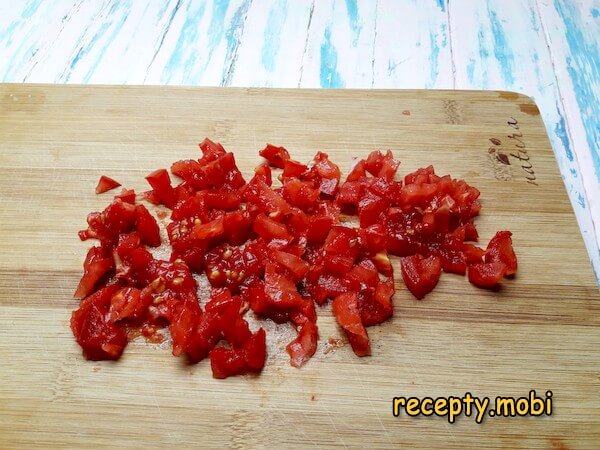
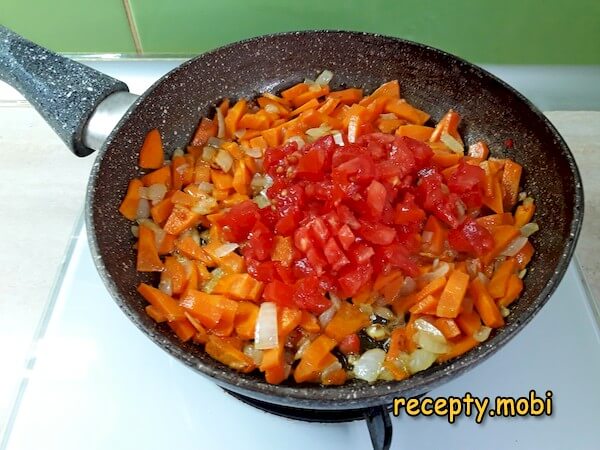
I finely chop the tomatoes.
I add them to the pan. I sauté everything together for a couple of minutes.
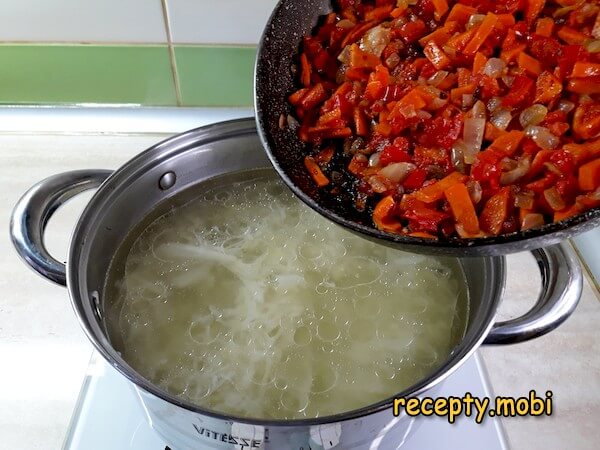
When the potatoes are soft, I transfer the sauté to the pot.
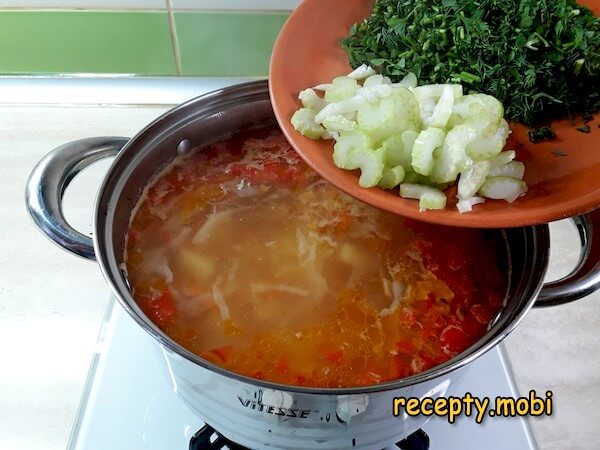
I add the celery right away. I taste the broth for salt and sufficient acidity – if the tomatoes are very sweet, the soup needs a little souring, so I pour in some apple vinegar.
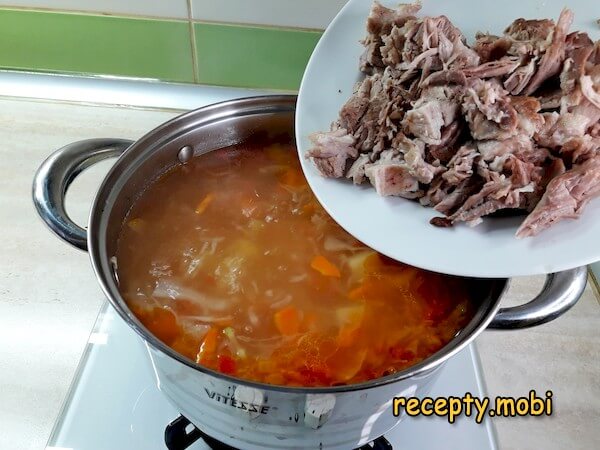
I add the meat to the pot.
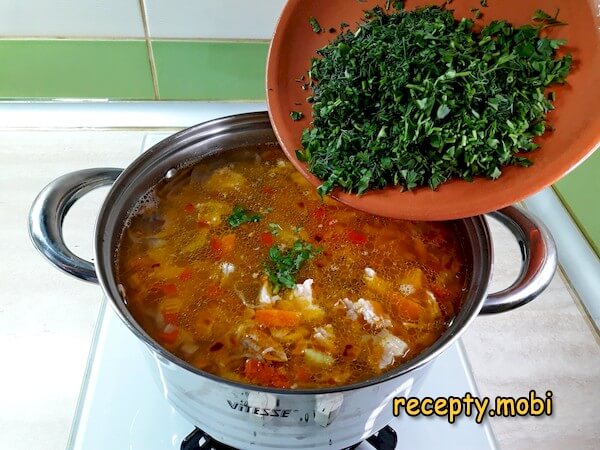
Followed by the herbs.
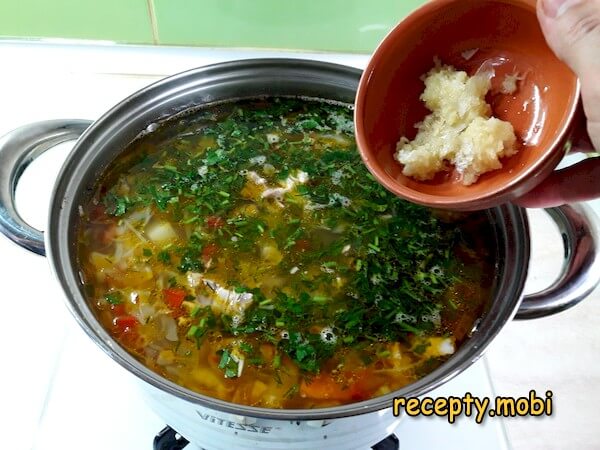
And also the garlic crushed through a press. Once the soup boils, I cover it with a lid, remove it from the heat and let it rest for 15 minutes.
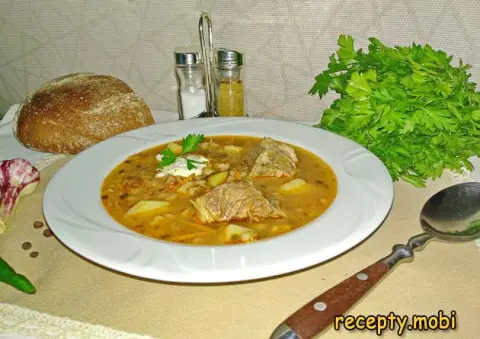
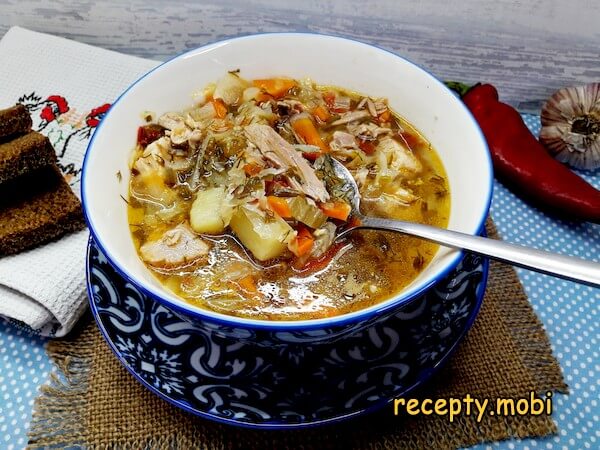
Rich, fragrant and very tasty cabbage soup with fresh cabbage and pork will not sit around unclaimed for long – it gets eaten in the blink of an eye, all because it is impossible to eat just one serving without asking for more. I usually serve the shchi with sour cream and fresh herbs.


Tips
- 1
MEAT ON THE BONE is the secret to a rich broth. Pork ribs or meat from the spine give the most fragrant, gelatinous broth.
- 2
DO NOT SKIMP ON MEAT is the secret to a thick soup. 500 g to 2 L of water is ideal. Less than that means watery shchi.
- 3
DO NOT GRATE THE CARROT is the secret to good looks. Little rectangles are visible in the soup, whereas grated carrot "dissolves" into the broth.
- 4
VINEGAR WITH SWEET TOMATOES is the secret to balance. Tomatoes give little acidity – 0.5–1 tbsp of apple vinegar brings back the character of the shchi. The same principle works in other kinds of Russian shchi and borscht.
FAQ
Which pork should I choose? +
Ideally, pork ribs with a layer of meat, or meat from the spine (on the bone). Alternatives: pork brisket with bones (500 g), bone-in ham (500 g), chicken drumsticks (700 g – the "budget" option), beef brisket (500 g – the premium option). Fresh chilled meat is the premium choice. Do not use: pure meat with no bone (the broth will not be rich), shop-bought mince (it ruins the idea of shchi), or a dumpling cut (too little meat). For premium shchi, use farm-raised home pork. Frozen ribs will do after they have fully thawed.
What can replace the tomatoes? +
Alternatives: tomato paste (15–20 g – the "budget" option, available all year round), grated tomatoes in their own juice (150 g – the winter option), tomato purée (120 g), natural ketchup (30 g – not recommended). Fresh sweet varieties (Bull's Heart, Pink Giant) are the premium choice. Do not use: green tomatoes (they taste bitter) or ketchup with sugar. For an "autumn" version use fresh tomatoes; for a "winter" version use tomato paste. If you use paste, no vinegar is needed (it is already sour), and the shchi will turn out brighter.
How long does shchi keep? +
In the fridge in a covered pot – 3 days. Any longer and the herbs and cabbage will lose their freshness. Before serving, reheat over low heat for 10–15 minutes. In the freezer, in portions – up to 1 month. Thaw it in the fridge for 8–10 hours. Fresh shchi is at its "star" best 30–60 minutes after cooking (once it has "rested"). On the second day the flavour is deeper and brighter – this is why people often call it a "second-day Russian dish". Do not leave it at room temperature for longer than 4 hours – the meat and herbs spoil. It is ideal to cook just enough for "one or two servings".
What to serve shchi with? +
The Russian classic: with sour cream (1 tbsp per bowl). With fresh herbs (parsley, dill). With a slice of dark bread and butter. With garlic croutons. With sour cream mixed with chopped garlic. With cabbage pies for a "double" lunch. With a shot of cold vodka for a "Russian" presentation. With garlic crisp-breads. For a "camping" lunch, in a thermos. With hot tea and lemon after the meal. With meat or cabbage pirozhki. With kulebyaka. With a crust of fresh bread for a simple presentation. It is a versatile, filling Russian soup for family meals.
- Comment
or post as a guest
Be the first to comment.