avg —
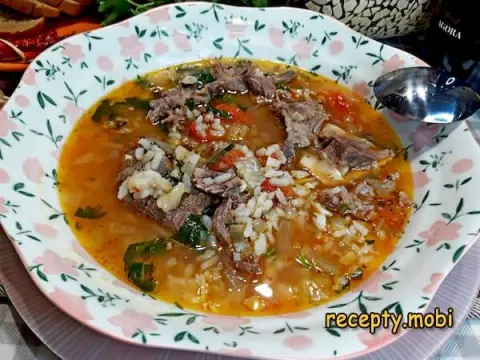
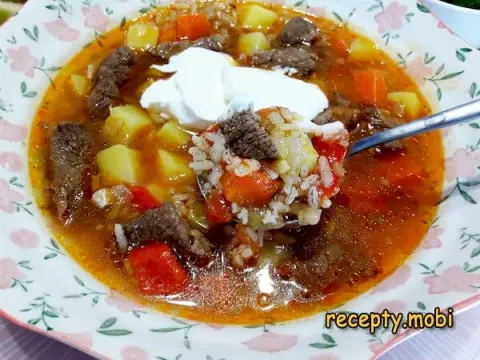
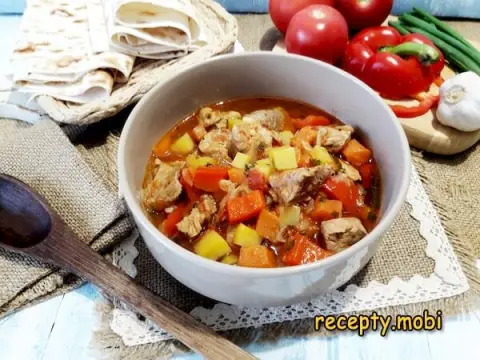
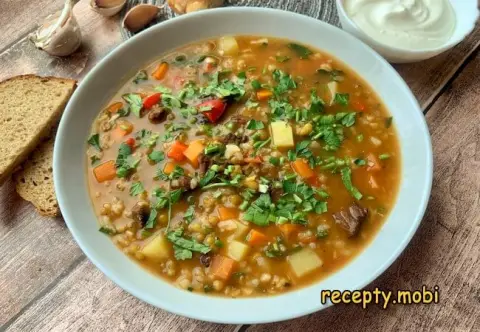
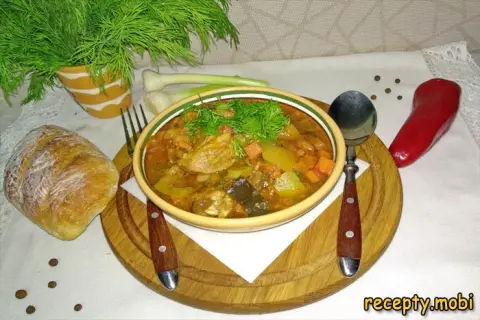
Kharcho soup in a multicooker-pressure cooker made of pork with rice

Instructions
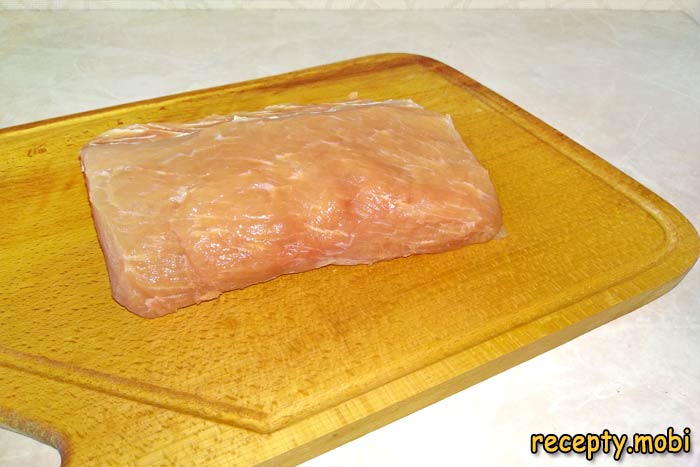
I cut the pork with ribs (550 g) into portion-sized pieces of 3–4 cm together with the bones – the bones make the broth rich. I switch the multicooker to the "Fry" mode and sauté the meat in the bowl with vegetable oil for 10–15 minutes until golden brown on all sides. Searing "seals" the meat juices inside the pieces and makes the soup more flavourful.
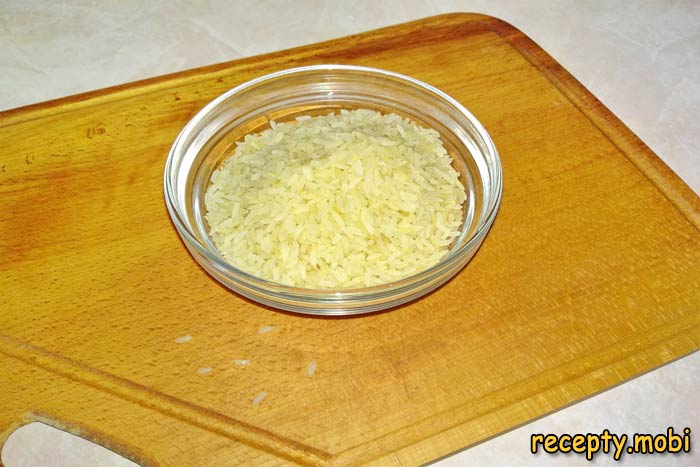
I rinse the steamed rice (120 g) in several changes of water until the water runs clear – this removes excess starch and dust. I use steamed rice specifically – it does not boil over in the soup and keeps its shape even after long cooking. Ordinary round rice would "fall apart" in the soup and turn it into porridge. I set the rinsed rice aside.
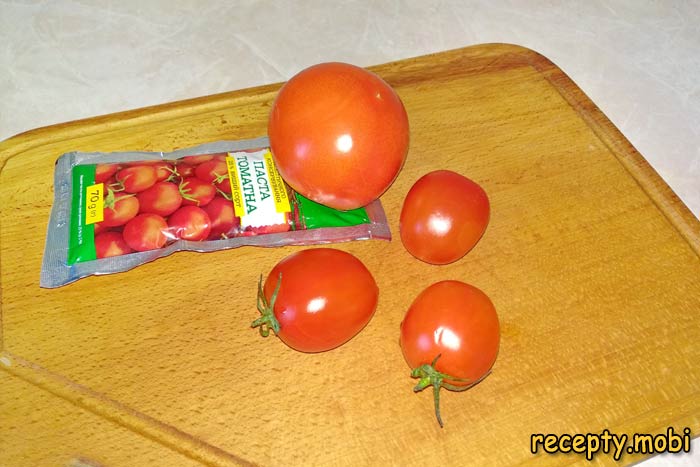
In a separate frying pan I heat vegetable oil, add the tomato paste (70 g) and sauté it for 1 minute to release the aroma (the paste should darken). Then I add the fresh tomatoes (5 pcs), cut into large pieces, and simmer for 5–7 minutes until the tomatoes are completely softened. Tomatoes together with tomato paste make the double tomato base of kharcho.
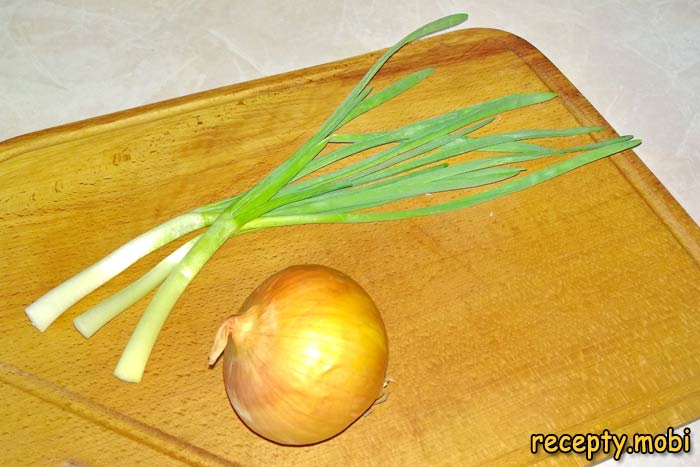
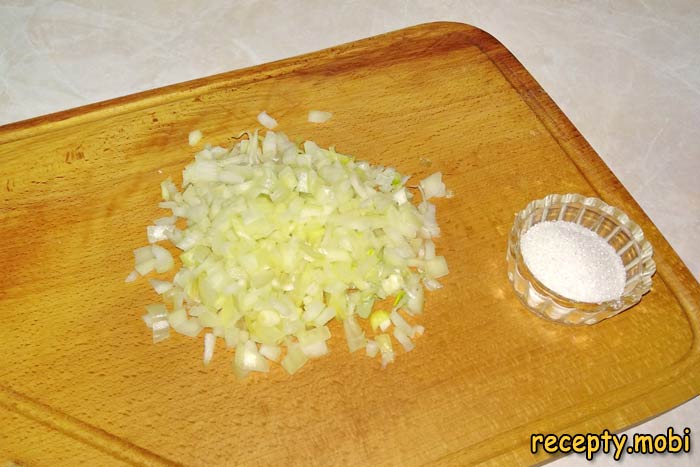
I prepare the onion (1 pc) – I peel it and cut it into small 5–7 mm cubes. I do not cut the green onions (4 stalks) yet – I will leave them for the final garnish in the finished soup. The onion works as the base of the fried dressing, while the green onions add a fresh accent to the finished dish.
I add the onion to the tomatoes in the frying pan and sauté for 5–7 minutes until soft and translucent. I add sugar (2 tbsp) – this is the secret to balancing the acidity of the tomatoes and the tomato paste. Sugar does not make the soup sweet – it neutralises the sharp acidity and brings out the meaty flavour.
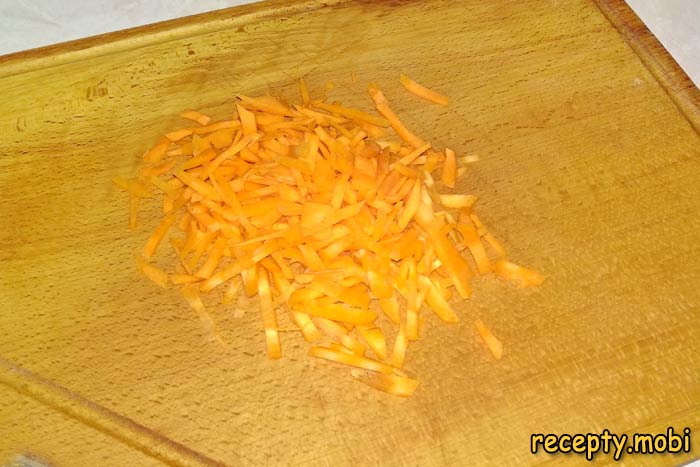
I peel the carrot (1 pc) and cut it into thin strips of 3–5 mm. There is no carrot in classic Georgian kharcho, but in my version it gives the soup sweetness, colour and good looks. Strips work better in the soup than cubes or grated carrot – the "Georgian" approach to cutting vegetables.

I add the carrot to the tomato dressing and simmer for another 5 minutes until soft. The carrot should soften slightly but keep a light crunch – if overcooked it will turn to mush during further cooking in the pressure cooker.
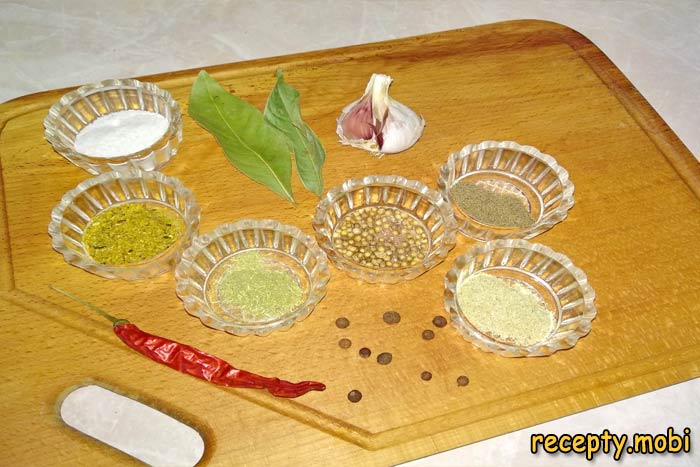
I add the whole "Georgian trio" of spices to the dressing: khmeli-suneli (1 tsp) – an aromatic Georgian blend, ground coriander (1 tsp) – a spicy citrus aroma, utscho-suneli (1 tsp) – a unique Georgian spice made from blue fenugreek, thyme (1 tsp) – a warming note. I also add finely chopped garlic (3 cloves), black pepper and salt. I simmer for 1–2 minutes to release the spices.
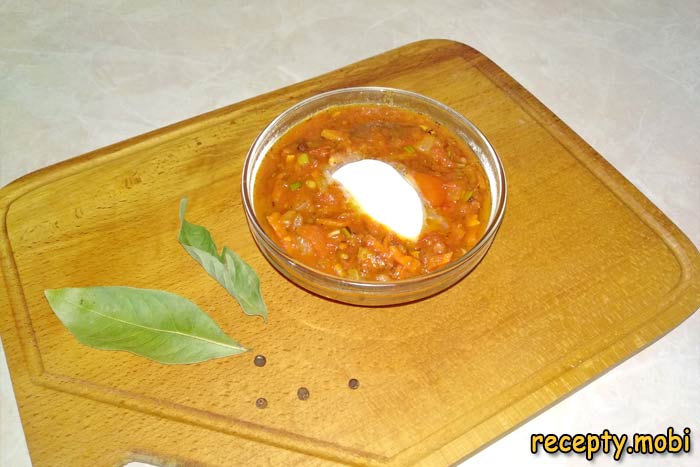
I add 200–300 ml of water to the dressing to loosen it and a piece of butter (20 g) for a lovely golden colour and a creamy note. Butter is the secret to kharcho's colour: it gives glossy little oil "stars" on the surface of the soup, just like in restaurants.
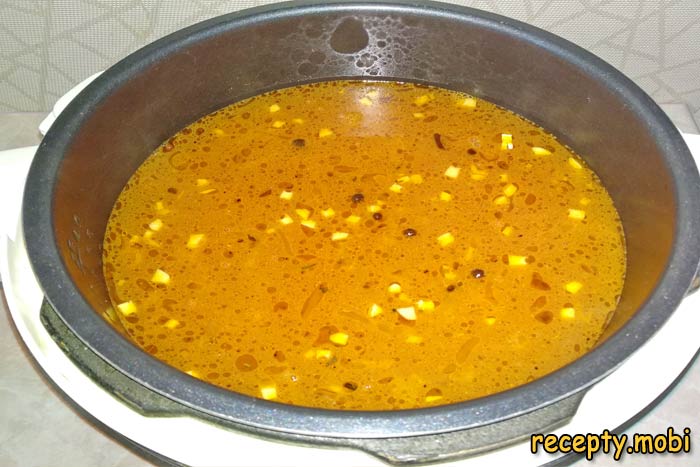
To the seared meat in the multicooker I add the rinsed rice, the prepared tomato dressing with vegetables and spices, pour in 2 litres of hot water and add the bay leaves (3 pcs). I close the lid, switch to the "Pressure" mode and cook for 50 minutes. After the readiness signal I leave it under the lid for another 10 minutes to rest.
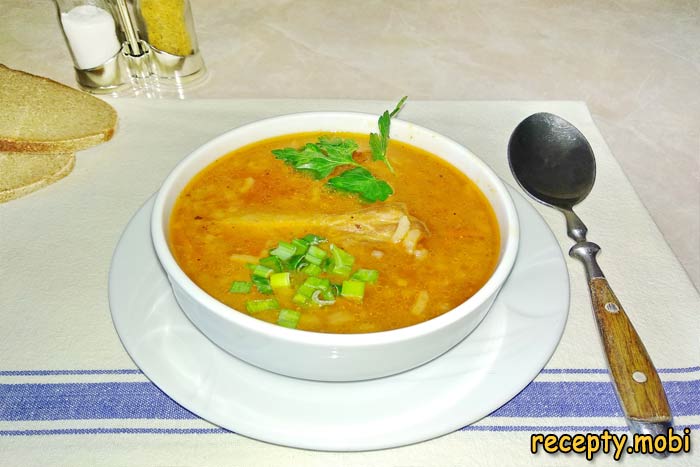
I open the lid, check that the meat is done (it should come away from the bone) and the rice (soft but not overcooked). I adjust the saltiness to taste. I serve it hot in deep bowls with fresh green onions, chopped parsley and coriander. You can add a spoonful of adjika or sour cream if you like. The kharcho soup in a multicooker-pressure cooker is ready!


Tips
- 1
Use steamed rice specifically – it does not boil over in the soup and keeps its shape, while ordinary round rice will turn into porridge over 50 minutes of cooking.
- 2
Sugar (2 tbsp) is a must – it balances the acidity of the tomatoes and the bitterness of the fried onion, and it does not make the soup sweet.
- 3
In an ordinary multicooker without a pressure function, cook for 1.5 hours on the "Soup" mode, searing the meat beforehand. I cook classic beef kharcho on a similar principle.
- 4
Serve with Georgian adjika for those who like it spicy, with lavash and dry red wine (Saperavi, Kindzmarauli) – an authentic Georgian way to serve it.
FAQ
Can kharcho be made with beef? +
Do you need carrot in kharcho?
There is no carrot in the classic Georgian recipe – authentic kharcho consists only of meat, rice, walnuts, tomatoes and a large amount of fresh herbs with Georgian spices. With carrot you get a "modernised" version of the soup – it gives sweetness, a nice orange colour and more benefit. The taste does not change much – the Georgian spices still dominate. Decide for yourself: the classic without carrot or the modern version with it – both variants have a right to exist. In my recipe the carrot adds a sweet balancing note.
How long does the finished kharcho keep? +
The finished kharcho keeps in the fridge for up to 3 days in a tightly closed pot. On the second day the soup is even tastier – the flavours finally come together and the rice absorbs all the aromas of the spices. Before serving, reheat it on the stove or in the microwave until fully warmed through. Do not bring it to the boil repeatedly – this spoils the taste. You can freeze it in portions in airtight containers for 1–2 months – before eating, defrost it completely in the fridge and bring it to the boil. Ideally, eat it within 2 days for the best taste.
What to serve kharcho with? +
Classically with Georgian lavash or mchadi (corn flatbreads), Adjarian or Imeretian khachapuri, and fresh herbs (parsley, coriander, basil, tarragon). For sauces – Georgian adjika (spicy) or tkemali (sweet and sour), and sour cream to tone down the heat. For drinks – Georgian dry red wine (Saperavi, Mukuzani, Kindzmarauli), light beer or homemade kvass. For those who like it hot – fresh chilli pepper sliced into rings on the plate. It is ideal for a family lunch in the cold season – a warming, aromatic, nourishing "Georgian" soup.
- Comment
or post as a guest
Be the first to comment.