avg —
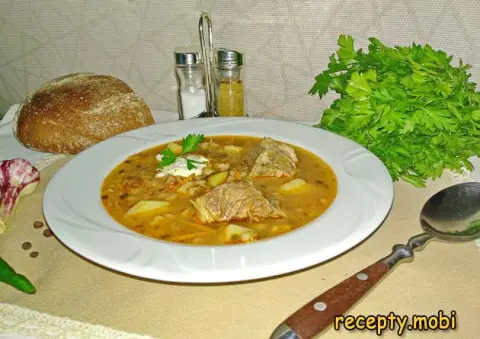
Mastava Uzbeck Style

Instructions
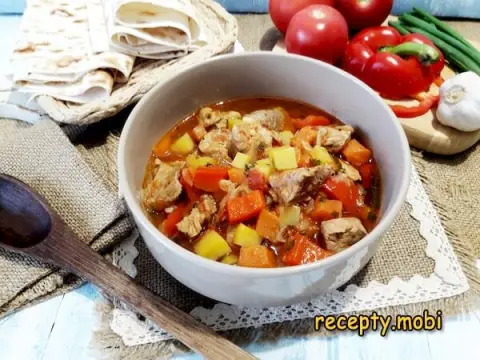
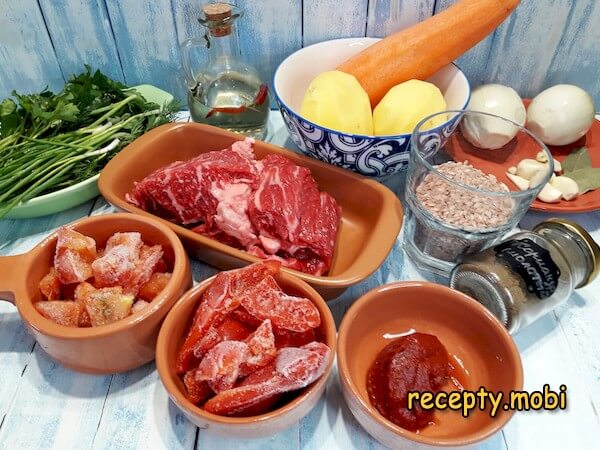
I prepare the ingredients. The meat should have layers of fat, as that is what makes it juicy and tender. The bell pepper and tomatoes can be taken from the winter stocks in the freezer, but if they are fresh, it is better to scald the tomato with boiling water and slip off its thin skin first. Any rice can be used, but a special pilaf rice for Uzbek pilaf is best – it holds its shape and does not boil down to mush.
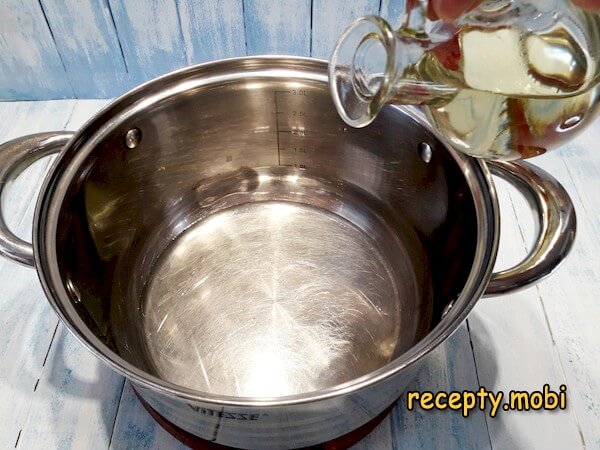
I pour 3-4 tablespoons of vegetable oil into a cauldron or heavy-bottomed pot and heat it well – it is the thick bottom that gives even heating and a proper fry.
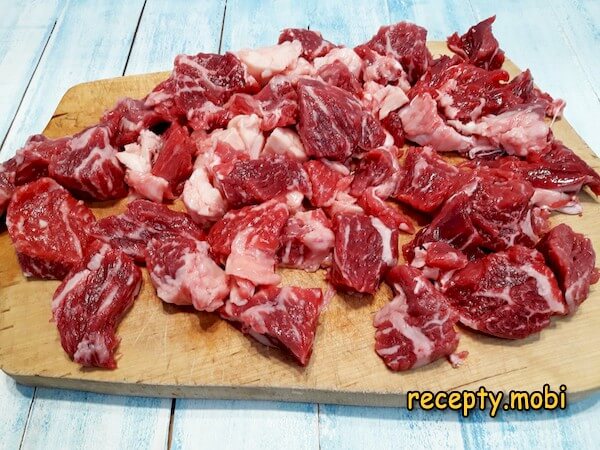
Meanwhile, I cut the meat into small cubes – about 1×1 cm is ideal for mastava.
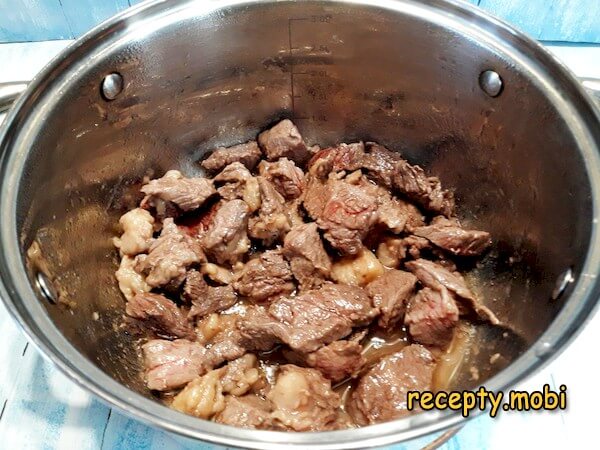
I fry it over high heat in the oil until it changes colour – a golden crust should form rather than the meat releasing its juices.
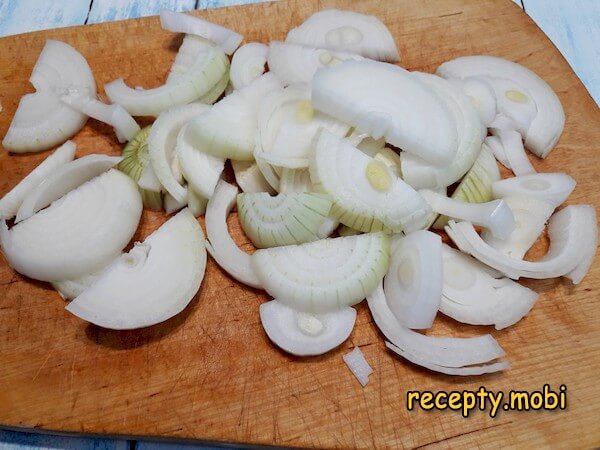
While the meat fries, I prepare not-too-thin half-rings of onion – the Uzbek tradition calls for noticeable pieces of onion that do not "disappear" in the soup.
I add them to the pot – to the lightly golden meat.
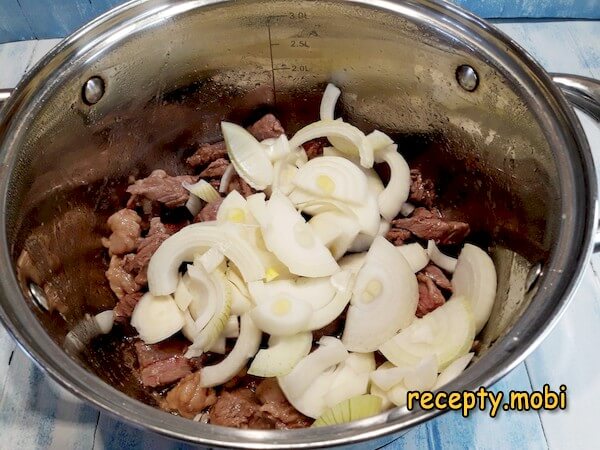
And I fry them too (about a couple of minutes) – the onion should turn translucent with a light golden tinge.
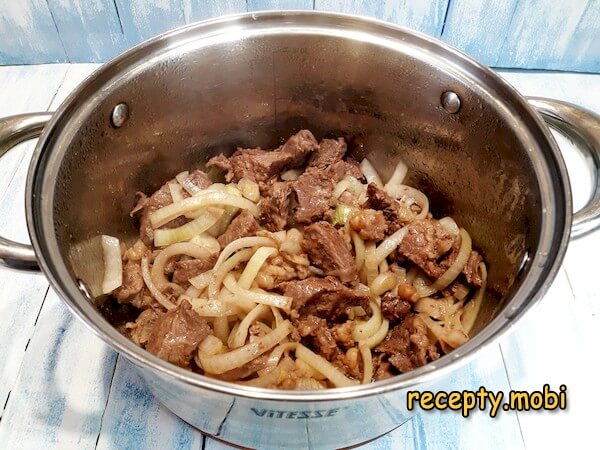
I cut the carrot into medium cubes – about 7×7 mm to match the meat.
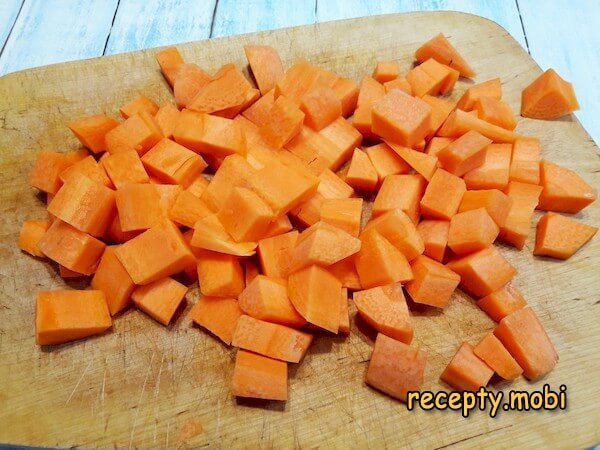
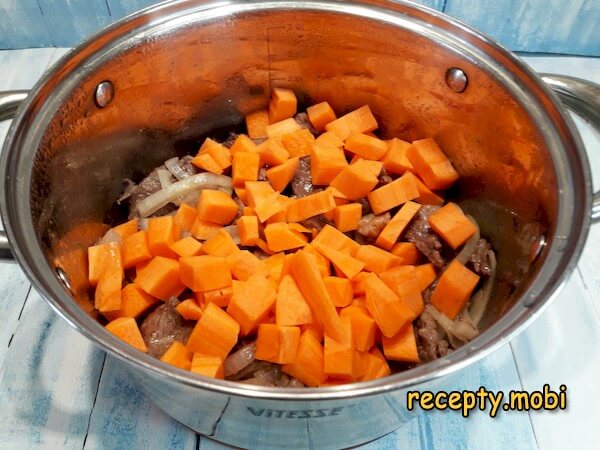
I transfer it to the meat with the onion – all three ingredients will "get along" together in the fry.
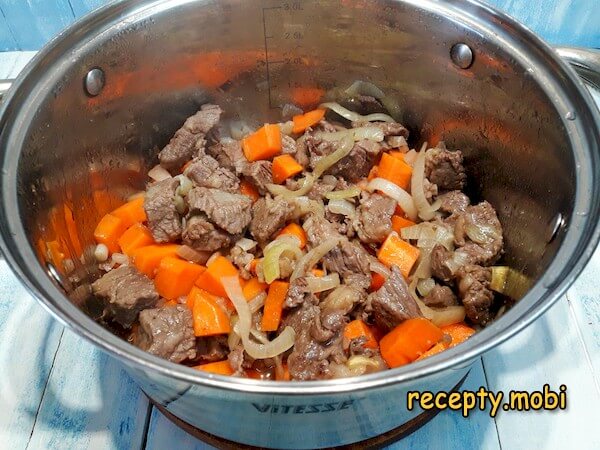
I fry everything together, without lowering the heat, for another 3-4 minutes – the carrot should turn slightly golden.
I cut the bell pepper into medium pieces – 1×1 cm squares or 5×40 mm strips.
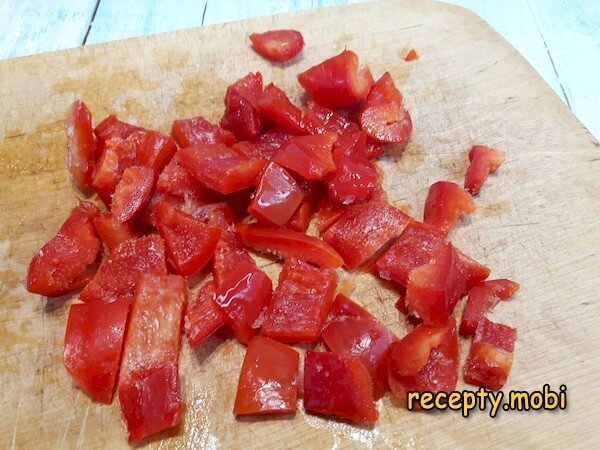
I fry it for a couple of minutes in the shared pot – the pepper adds "colourful" notes and a soft sweetness.
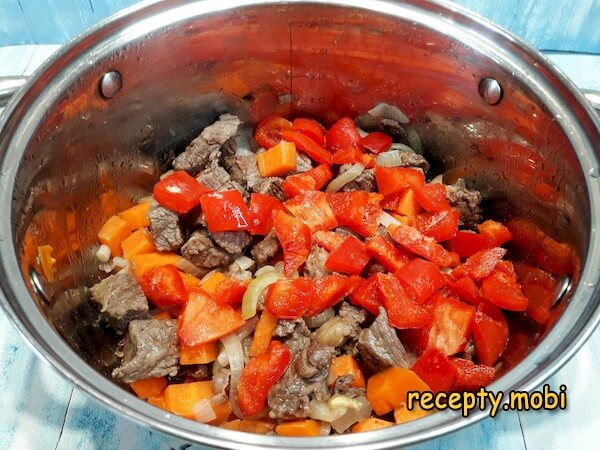
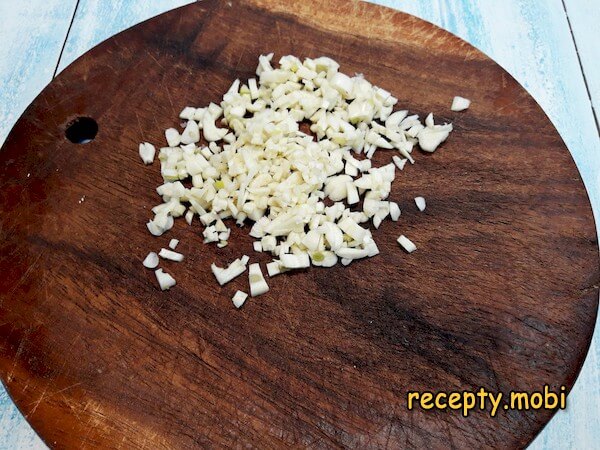
Meanwhile, I finely chop the garlic – not through a press, but with a knife, so that the pieces can be felt.
I season the hot vegetables with it – the garlic will open up in the hot oil and give off its aroma.
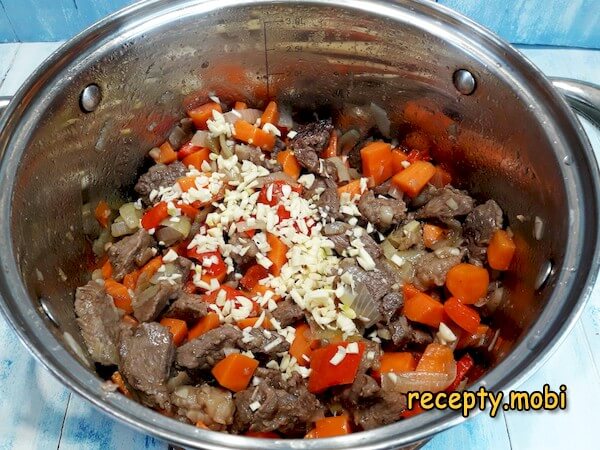
Right away I add the diced tomatoes to the mixture. I fry everything again for 3-4 minutes – the tomatoes should release their juice and slightly break down.
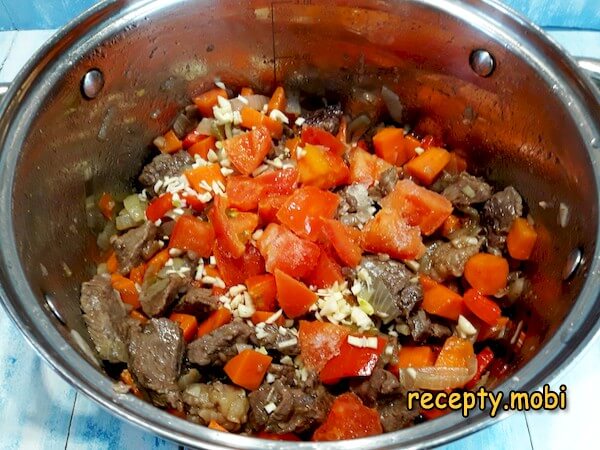
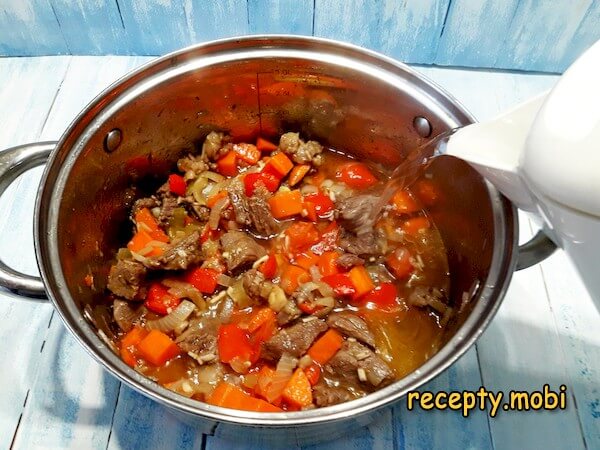
Next I pour in boiling water – it is the boiling water (not cold) that keeps the meat juicy.
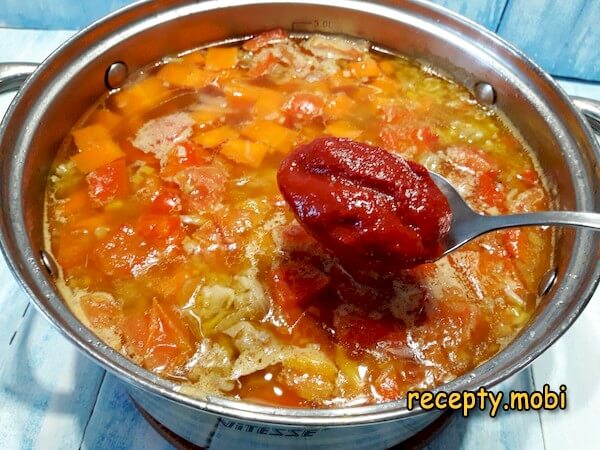
For a more pronounced flavour and a rich colour I add the tomato paste – it gives the soup a beautiful reddish colour.
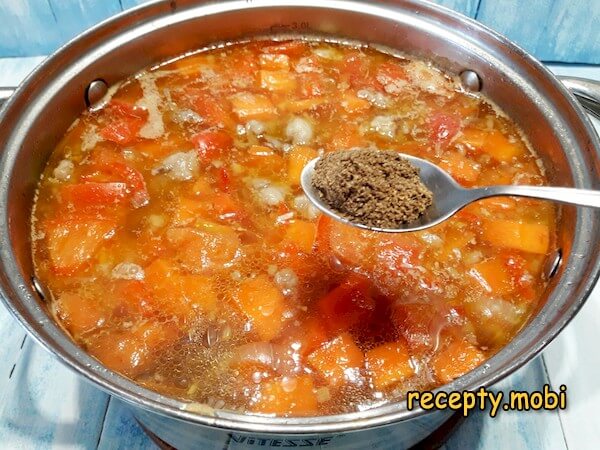
I sprinkle in the unchanging Eastern spice – dried coriander. This is the "heart" of mastava's aroma.
I bring the soup to a boil, reduce the heat, and salt the soup, tasting as I go – Uzbek soup is salted to taste, not "by the recipe".
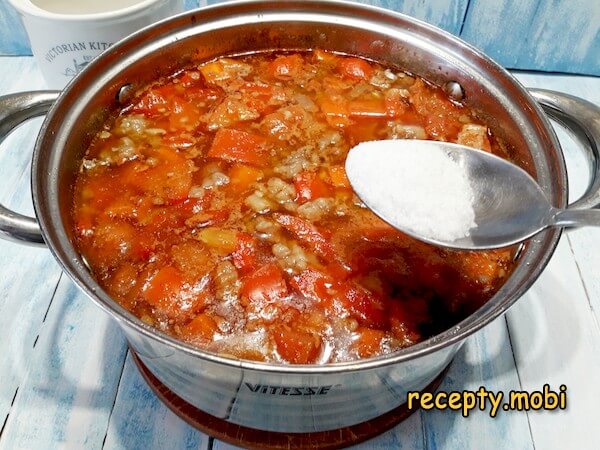
Foam will start to appear on the surface – it needs to be skimmed off with a spoon and removed, so that the broth stays clear.
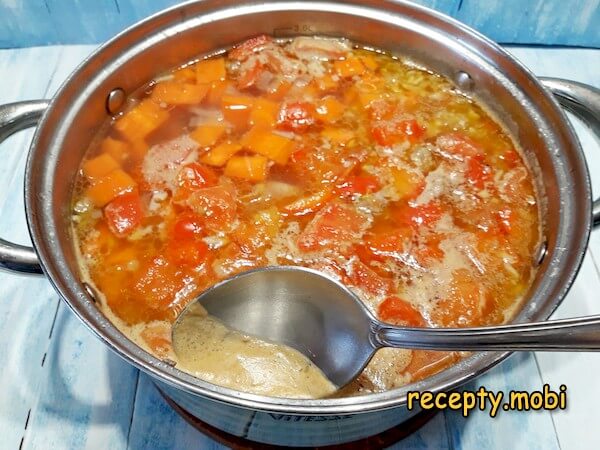
I cook the soup for about half an hour (until the meat is noticeably softened). Meanwhile, I cut the potatoes into medium cubes.
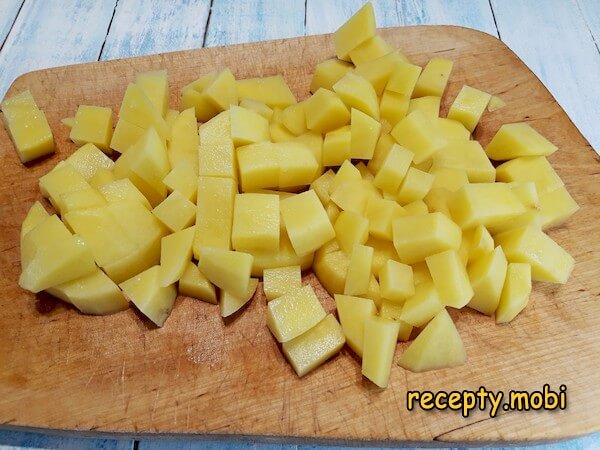
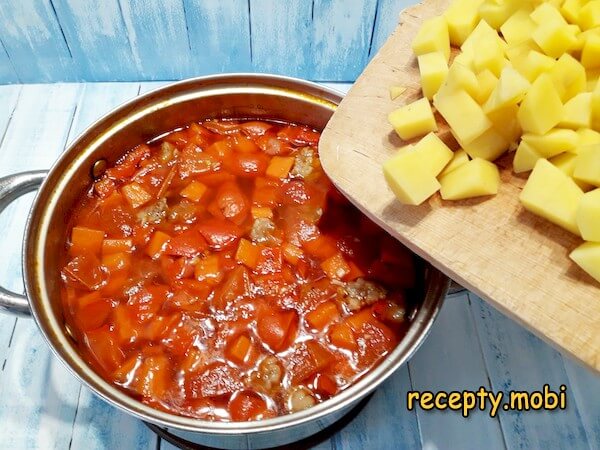
After that time I add them to the pot and cook for 10 minutes – the potatoes should keep their "firmness" and not boil to mush.
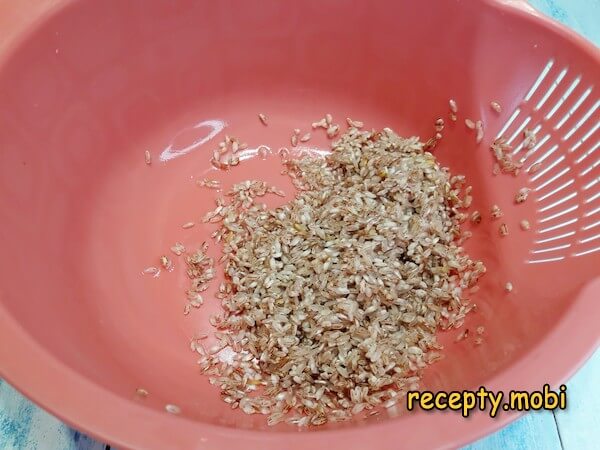
I rinse the rice several times under running water – until the water that drains off becomes clear.
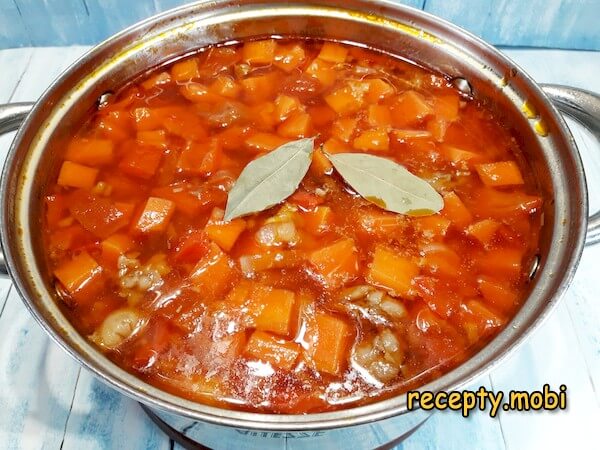
I season the soup with bay leaves – the aroma of "Uzbek soup" with bay leaf is a classic.
And with rice – it is the rice that turns the soup into a "liquid pilaf".
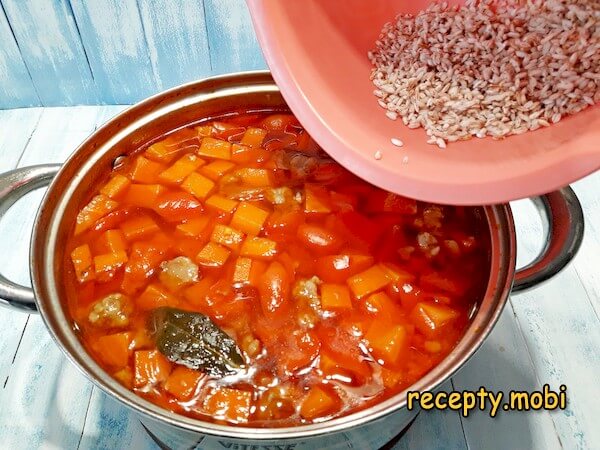
If desired, you can add hot pepper. I cook the mastava for another 10 minutes – this is exactly the time the rice needs to swell and cook through.
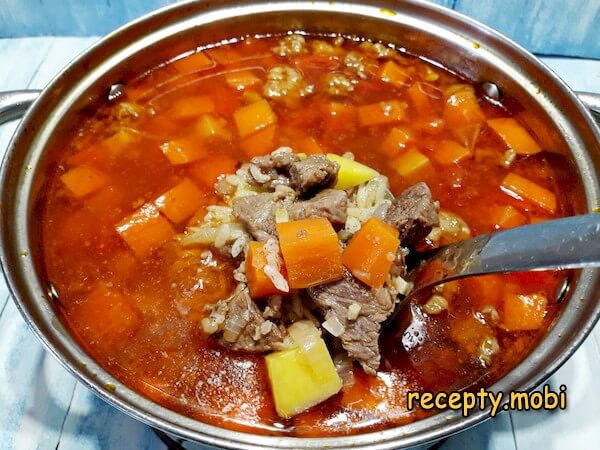
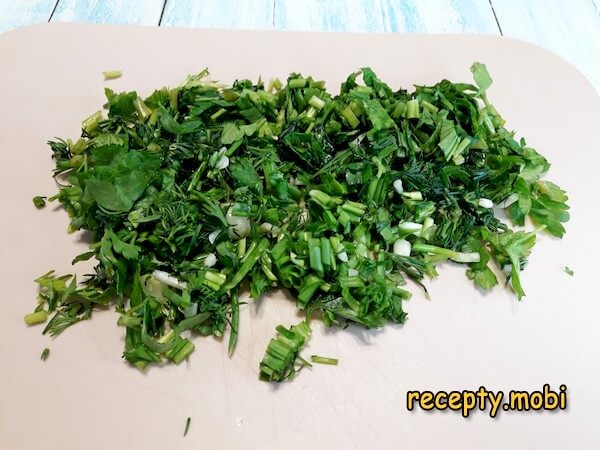
I finely chop all the herbs. There is no need to add them to the pot – they are served separately and placed directly into each plate. This is the Uzbek tradition of "fresh serving".


Tips
- 1
FRYING AT THE START – the secret of the "fried soup". The fundamental difference between mastava and an ordinary meat soup is that the meat and vegetables are first fried over high heat in a cauldron, and only then covered with water. This gives that very "caramel" depth of flavour that is impossible with simple boiling. A thick-bottomed cauldron + high heat + pieces that are not piled into a heap – these are the three conditions of a proper fry. Without it, mastava will not be mastava.
- 2
THE ORDER OF ADDING – the secret of harmonious doneness. Each ingredient goes in at its own moment. The meat first (it needs long cooking). Onion, carrot, pepper, garlic and tomato are fried one after another at intervals of 2-4 minutes. The potatoes go in after 30 minutes of simmering the broth. The rice another 10 minutes later. The herbs are not cooked at all and are added to the plate. This "time cascade" ensures that each ingredient is cooked perfectly rather than turning into mush.
- 3
MEAT WITH LAYERS OF FAT – the secret of the right broth. Lean meat gives a "lean" broth without the characteristic "oily" sheen. Ideally use lamb with tail fat (the classic) or beef from the ribs / shoulder with marbling. During frying the fat melts into the oil, perfumes all the other ingredients, and in the broth gives golden "droplets". A similar principle of a "fatty base" works in veal shurpa with a fried base.
- 4
RICE, NOT GROATS – the secret of the "liquid pilaf". Mastava is not just a "soup with rice", but specifically the Uzbek relative of pilaf, which is why rice plays a key role here. Pilaf rice is best (devzira, lazer, Uzgen rice) – it holds its shape and does not boil down. Long-grain basmati works too, but gives a more "European" character. A similar principle of "groats in soup" is used in mashkhurda Uzbek style – another thick "liquid-pilaf" soup.
FAQ
How does mastava differ from shurpa and pilaf? +
All three are Uzbek dishes of meat with vegetables, but they differ in consistency and technique. Mastava is a thick soup with fried vegetables and rice, a "liquid pilaf". Shurpa is a clear meat broth with cubed vegetables, where the meat is cooked without frying. Pilaf is a "dry", crumbly dish of meat, onion, carrot and a large amount of rice, cooked without water (only the zirvak, with water added by the volume of the rice). In other words, mastava is the "middle" option between shurpa and pilaf.
Can the meat in mastava be replaced? +
Yes, there are classic substitutions. Lamb (the classic) is the most authentic option. Beef is the "city" version, a little less aromatic. Chicken (thigh or drumstick) is a quick, lighter option, with the cooking time cut to 20 minutes. Pork is not classic, but a workable option for those who do not eat lamb. Duck is a rare "gourmet" option with a deep flavour. For a lean mastava – mushrooms (button or porcini) with plenty of fried vegetables. The main thing is that the frying at the start remains obligatory.
Which rice is best for mastava? +
"Pilaf" rice is ideal: devzira (the classic), Uzgen rice, lazer – they hold their shape and absorb the aromas. Alternatives: basmati (long-grain, elegant), jasmine (more "Asian", but workable), Krasnodar round-grain (affordable, but gives a more "slimy" character). Categorically unsuitable: parboiled rice (loses the authentic texture), wild rice (too dense). Before adding it, be sure to rinse it thoroughly until the water runs clear, otherwise the soup will turn cloudy.
What to serve with mastava? +
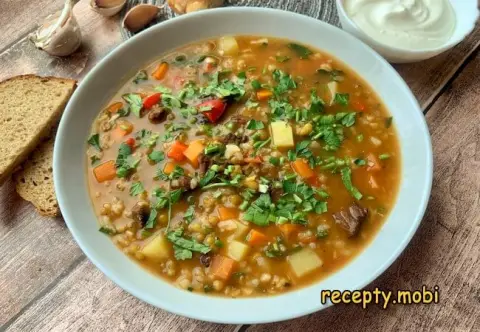
The Uzbek classic is with sour cream or thick katyk (homemade yogurt), and separately a generous handful of fresh herbs (cilantro, green onion, parsley, dill), Uzbek flatbreads or dark bread. In the East they also add pickled tomatoes with garlic and marinated hot pepper. For drinks: hot green tea (the classic after mastava), dried-fruit compote. On a large table mastava comes as the "first course", after which pilaf and manti are served – the Uzbek meal becomes complete.
- Comment
or post as a guest
Be the first to comment.