avg —
Zucchini and Potato Puree Soup

Instructions
I gather the ingredients. So that the zucchini and potato puree soup turns out more tender and purees easily, it is best to take potato varieties that readily fall apart when cooked. For the zucchini, young ones are more suitable, as they do not need to be peeled.

I cut the onion and carrot roughly, since they will later be pureed or, if there is no blender, rubbed through a sieve.

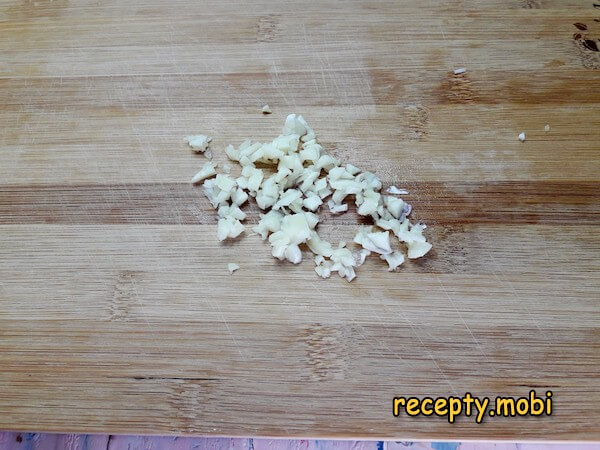
I finely chop the garlic.
In a 3-litre pot, I heat the oil and add all the chopped vegetables at once.
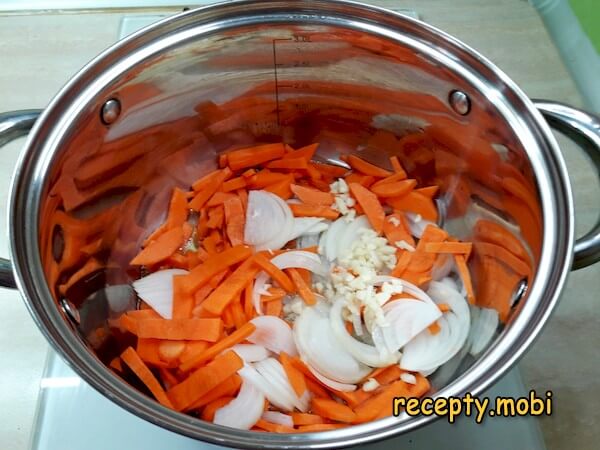
I sauté everything briefly, just 2–3 minutes.

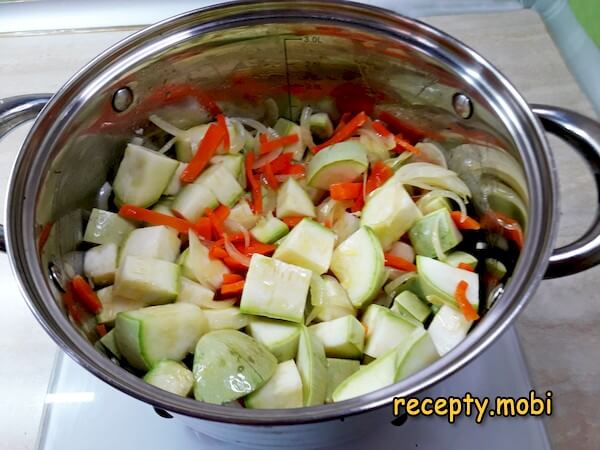
During this short time, I quickly cut the zucchini into cubes, first setting aside a few thin zucchini rounds to fry and use later as a garnish.
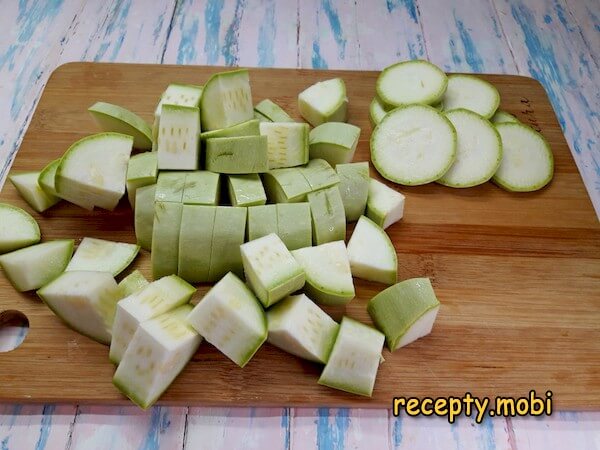
I add the cubes to the pot right away.
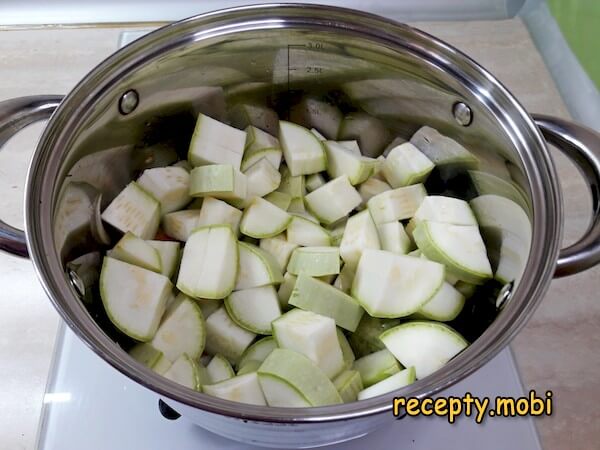
I stir the mixture, lifting the original, already slightly sautéed vegetables up from the bottom.
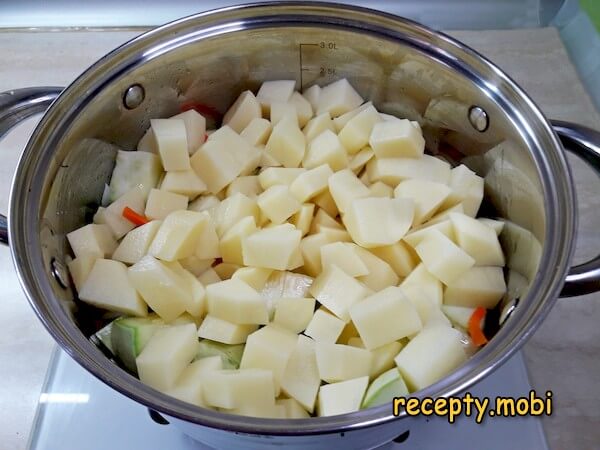
I cut the potato into pieces of a similar size or slightly smaller, so that it cooks at the same time as the zucchini.

I add the potato pieces to the pot. I set the heat to its lowest setting.
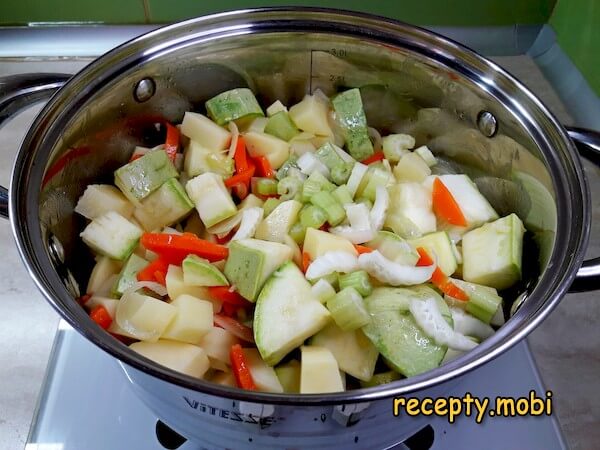
I slice the celery into rings, leaving the upper part with the leaves for seasoning the soup later.

I add the slices to the pot, having first stirred the mixture again.
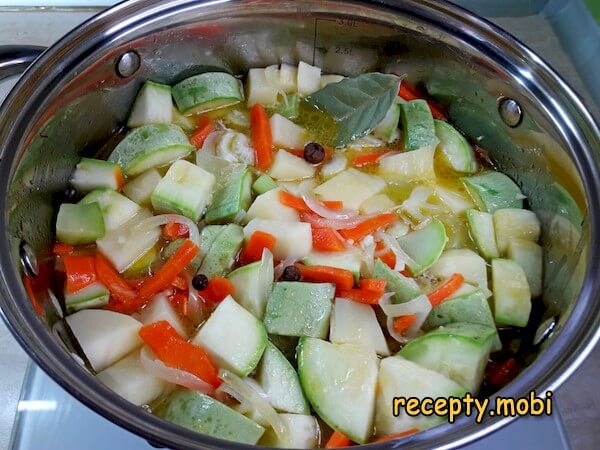
I pour in the broth, but it is not worth pouring it all in at once, since the vegetables will still need to be pureed with a blender, and this is easier to do in a thicker mixture.
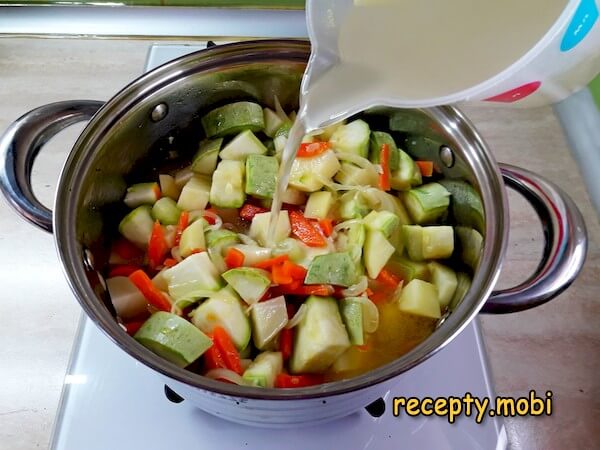
The liquid should therefore stop about 2 centimetres below the top layer. I add the bay leaf and peppercorns, but do not stir them into the main mixture, so they can be easily removed later. I put the lid on the pot and cook the vegetables until soft, going by the readiness of the potato. This takes 20 minutes.
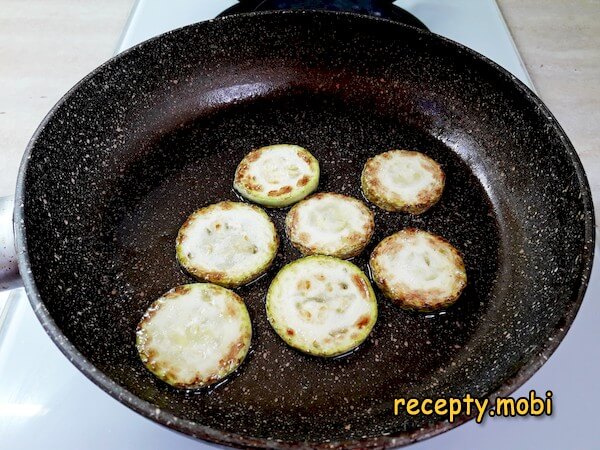
Meanwhile, I fry the zucchini rounds for the garnish.
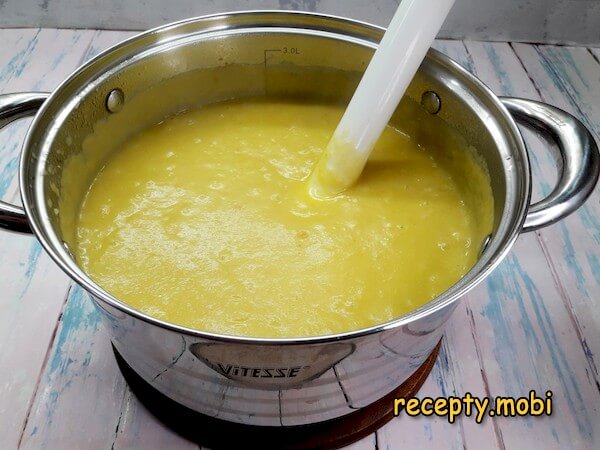
I take out the bay leaf and the peppercorns. Carefully, so as not to get burned by hot drops, I puree the soup with a blender.
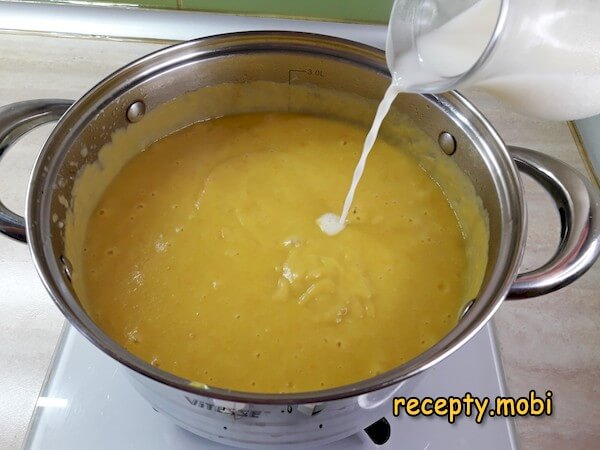
I put the pot back on the heat and stir in the cream. If I want a thinner puree soup, I also add the remaining broth. At this stage I check the dish for salt, since the broth was most likely already salted.
I add the chopped celery top and the parsley. As soon as the first bubbles appear, I turn off the stove.

The zucchini and potato puree soup is ready. I serve the soup right away, while it is hot, together with croutons or soft bread.



Tips
- 1
Floury potatoes are the secret to tenderness. Varieties that fall apart easily give an airy puree, while waxy varieties make it grainy.
- 2
Young zucchini are the secret to texture. There is no need to peel them. With older zucchini, cut out the flesh with the seeds.
- 3
Do not add all the broth at once, which is the secret to pureeing. A blender works more effectively in a thicker mixture, so add the rest of the broth afterwards.
- 4
Take out the bay leaf and peppercorns, which is the secret to smoothness. Pepper and bay leaf in the blender will leave small grains, so remove them before pureeing. The same principle works in other kinds of vegetable puree soups.
FAQ
Which zucchini should I choose? +
Young courgettes or white-fruited zucchini are ideal, as they have tender flesh and few seeds. Yellow courgettes are an alternative that gives the soup a bright colour, and pattypan squash makes an unusual choice. Fresh zucchini are firm and glossy, with no dents or spots, and a size of 18–22 cm is best. Overgrown ones with tough skin and large seeds are not suitable; cut all of that out. For a children's soup, use only young zucchini with thin skin.
What can I use instead of cream? +
Alternatives include milk for a lighter version, cream of 20–22% for a more delicate result, or sour cream (about 200 g plus 50 ml of broth) for a Russian touch. Coconut milk makes a vegan option, and Greek yoghurt works for a lighter take. Fresh cream of 10–15% is the classic choice. For a diet version, use low-fat milk or water; for a richer one, use 33% cream (about 150 ml plus 100 ml of broth).
How long does the soup keep? +
In the refrigerator, in a covered pot, it keeps for 2–3 days. Any longer and the vegetable puree loses its tenderness and the cream may separate. Before serving, reheat it gently over low heat for 5–10 minutes without boiling. Frozen in portions, it keeps for up to 2 weeks; thaw it in the refrigerator for 6–8 hours. The soup is at its best 30–60 minutes after cooking, and on the second day the flavour is deeper. Do not leave it at room temperature for longer than 4 hours, as the cream and vegetables spoil. When reheating, do not bring it to a vigorous boil, or the cream will curdle.
What should I serve the soup with? +
The classic match for puree soup is garlic croutons or crackers. Fried zucchini rounds make a decorative serving, and a drizzle of olive oil on top works well too. It is good with grated cheese, with a slice of fresh bread and butter, or with cheese crackers. Serve it with fresh herbs such as parsley, dill or basil, or alongside sour cream on the side for the Russian version. For a light lunch, pair it with grain bread, or serve it before boiled fish as a light first course. It is a wonderfully tender soup for the whole family.
- Comment
or post as a guest
Be the first to comment.