avg —
Barley Porridge with Water in a Multicooker

Instructions
I prepare the ingredients for cooking pearl barley porridge with water in a multicooker. In this example a TEFAL multicooker is used, but on a device from another manufacturer you should carry out exactly the same sequence of actions given in the recipe.
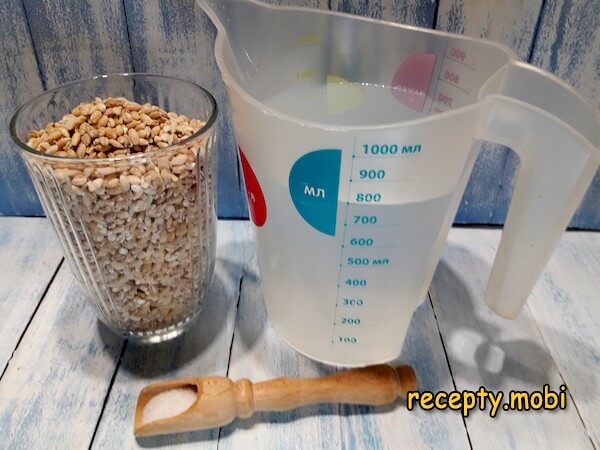
I rinse the grain thoroughly several times until the water runs clear – rinsing removes the surface starch and dust, without which the porridge would turn out slimy and heavy in texture.
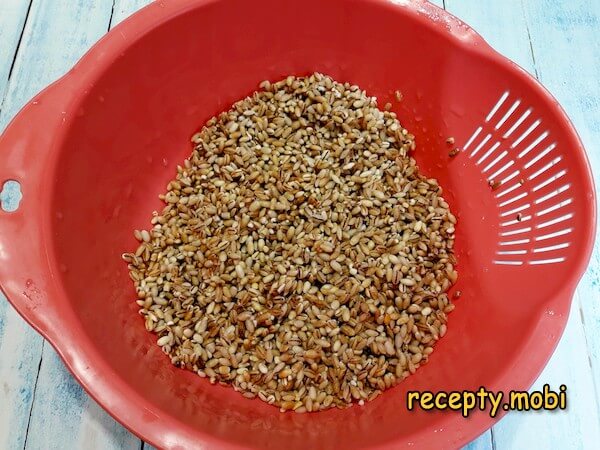
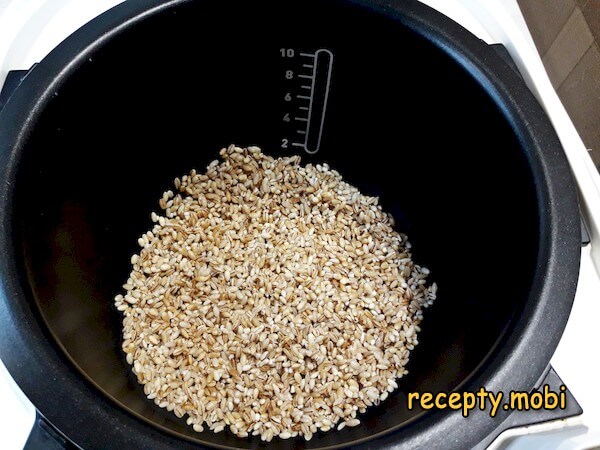
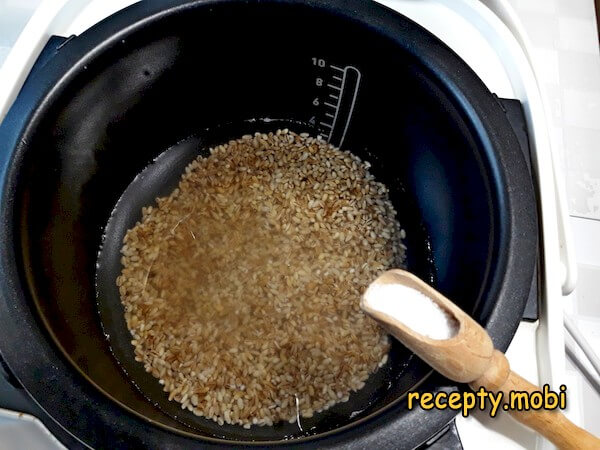
I transfer the clean grains into the multicooker bowl and level them out – an even layer across the base ensures uniform heating and cooking.
I carefully pour in the water – a ratio of 1 part grain to 2.5–3 parts water for crumbly barley. If you want it more viscous, use 1 to 4.
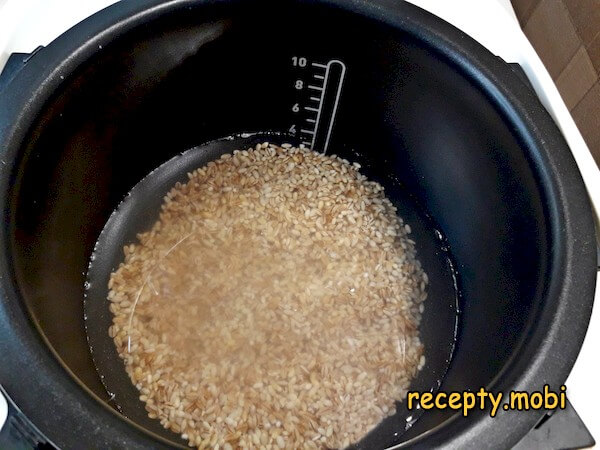
I add the salt straight away and close the multicooker lid – at this stage the salt will distribute evenly throughout the whole volume during cooking.
I set the programme. You can choose any product type – in this case it does not matter, because the time will be set manually. Next I move the pointer to the "Stewing" process and set the cooking duration (that is, the time) – 1 hour and 30 minutes. I press the start button.
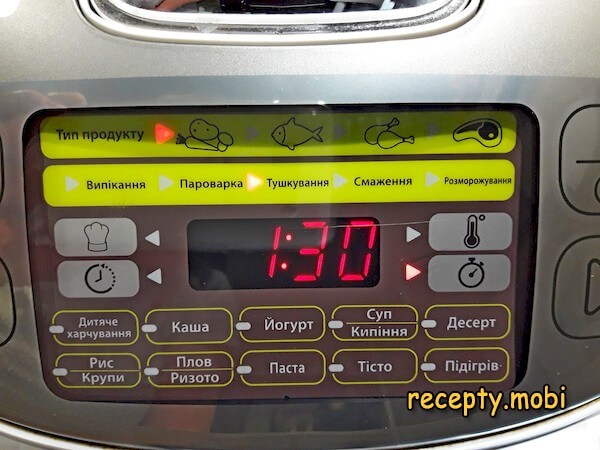
During these one and a half hours you can get on with other things – the multicooker does all the work itself and does not need to be watched. When the process finishes a signal will sound, after which you should press the "Reset programme" button (that is, "Stop") and open the lid. If the multicooker is not switched off, it will automatically switch to the keep-warm mode and hold the porridge warm for another half hour, then turn itself off.
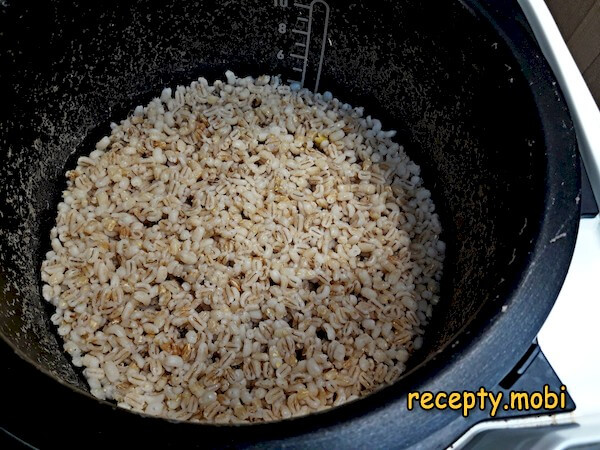
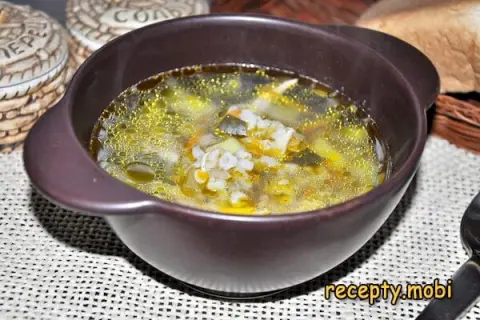
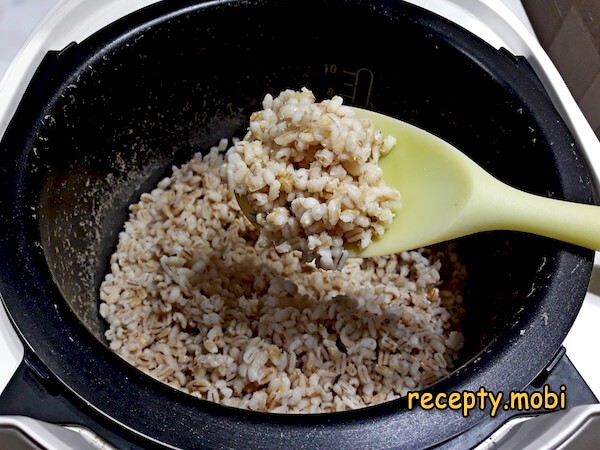
The porridge has turned out soft and crumbly, and its grains are tender and separate easily from one another. This is exactly the texture of properly cooked pearl barley.


Tips
- 1
NO SOAKING – the secret to saving time. On the hob, pearl barley needs to be soaked for 6–8 hours, otherwise it will take 2–3 hours to cook. In the multicooker, the "Stewing" mode for 1.5 hours fully replaces pre-soaking – the grains have time to swell and cook through in a single cycle. This is the secret that makes pearl barley practical for everyday cooking without planning the night before.
- 2
2.5–3 PARTS WATER – the secret to a crumbly texture. A ratio of 1:2.5 gives a crumbly porridge with separate grains, while 1:3 gives a softer, more paste-like one. Less than 1:2.5 and the porridge will turn out half-cooked, with grains that are hard inside. More than 1:4 and it will be watery, like a soup. For classic crumbly pearl barley the optimum is 1:2.67 (as in this recipe). The same calculation principle is explained in the article "How to cook pearl barley correctly".
- 3
RINSING IS ESSENTIAL – the secret against sliminess. Pearl barley is coated with surface starch, which during cooking turns into an unpleasant slime. Rinsing in several changes of water until completely clear removes the starch – the finished porridge comes out crumbly and pleasant in texture. Without rinsing the result will be slimy and less appetising.
- 4
USE IN RASSOLNIK – the secret of a part-ready base. Pearl barley cooked in the multicooker is handy to use as a ready base for other dishes – especially for rassolnik. Following the principle of rassolnik with chicken, pearl barley and pickled cucumbers, the ready barley is added to the finished broth – saving 1.5 hours on making the soup.
FAQ
Do you need to soak pearl barley before cooking it in a multicooker? +
No, this is the main advantage of the multicooker over the hob. On the hob, pearl barley must be soaked for 6–8 hours or even overnight so that it cooks in a reasonable time. In the multicooker, the "Stewing" programme for 1.5 hours gives a perfect result without any pre-soaking – the grains have time to swell in the hot water and cook through to softness in a single cycle. If you have the time and inclination, soaking will not hurt, and then you can shorten the cooking time to 1 hour.
Which programme should you choose on the multicooker? +
The "Stewing" programme with the time set manually to 1.5 hours is ideal. Some models have a special "Porridge" or "Grains" programme – this works too, but it usually has a fixed time of 40–60 minutes, which may not be enough for pearl barley. If your multicooker does not have "Stewing", the following are suitable: "Soup" (also a long, slow simmer) and "Milk porridge" (with the time set manually). Not suitable: "Pilaf" (gives the wrong texture for pearl barley) and "Baking" (the temperature is too high).
How long does cooked pearl barley porridge keep? +
In the fridge in an airtight container – up to 4 days without losing flavour. Before serving I reheat it in the microwave for 1–2 minutes or in a frying pan with a little butter. You can freeze it in portions for 2 months – it thaws straight in the frying pan in sunflower oil or in the microwave. Frozen-and-thawed pearl barley is good for rassolnik or pilaf – no one will tell it from freshly cooked. For breakfast you can cook it the night before and simply reheat it in the morning with butter and fresh herbs.
What do you serve pearl barley porridge with? +
It is a universal side dish. The classics are with stewed meat or goulash (especially beef), with chicken in gravy, or with a liver gravy. With fish: with stewed mackerel or herring, or with pan-fried trout. Vegetable additions: fried onion with carrot (a classic with pearl barley), mushrooms (button or wild), or grilled courgettes. For breakfast: with butter and fresh herbs as a dish on its own, or with curd cheese and fruit. Lenten version: with vegetables sautéed in vegetable oil, with beans, or with dried fruit. Pearl barley goes well with everything that goes well with buckwheat.
- Comment
or post as a guest
Be the first to comment.