avg —
Pilaf with Pork in a Multicooker – Simple and Hassle-Free

Instructions
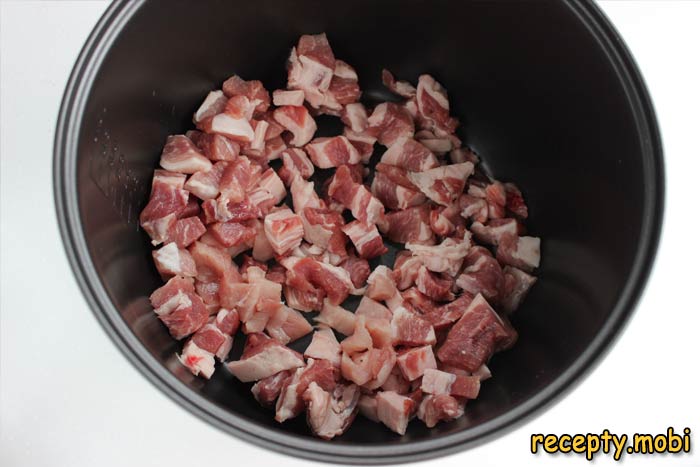
Cut the pork shoulder into evenly sized pieces of about 1x1 cm. Shoulder is the ideal cut of pork for pilaf: moderately fatty, tender, and nicely marbled. Cuts that are too lean, such as loin, will give you dry pilaf. Pour the oil into the multicooker bowl, switch on the ‘Fry’ mode, and fry the meat until golden brown, about 10 minutes, stirring occasionally.
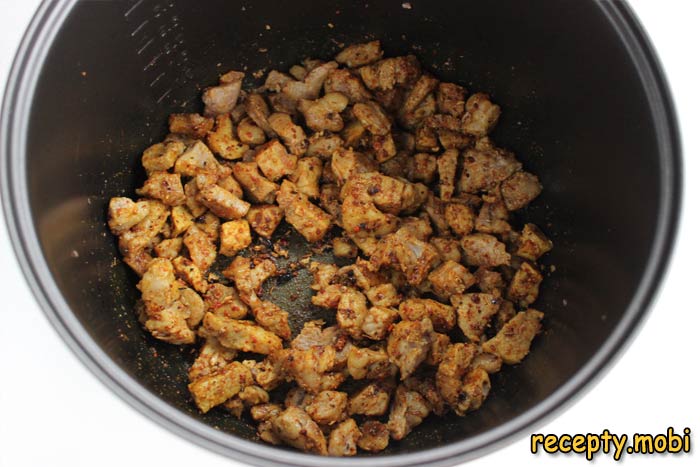
Sprinkle the fried meat with ready-made pilaf seasoning or a classic blend (cumin, coriander, barberry, turmeric). Fry for another 1-2 minutes so the spices release their aroma in the hot oil. This is the Indian technique of ‘blooming the spices’ – without it the spices stay raw and bland.
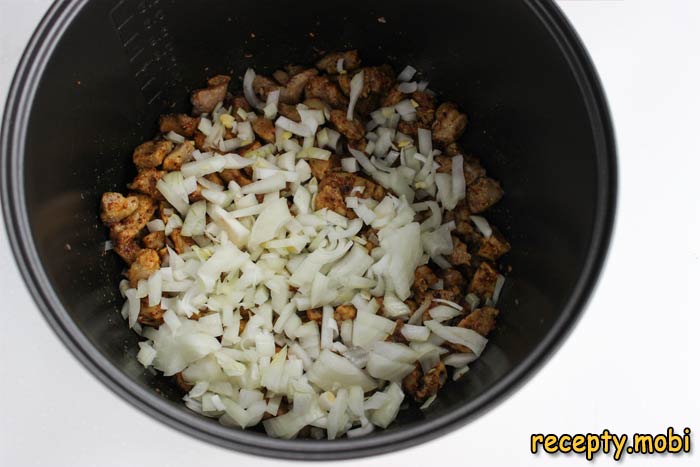
Add the diced onion. Fry for 5 minutes until soft and lightly golden. The onion gives the pilaf its characteristic sweetness and depth of flavour. Dice of 5-7 mm is best – pieces that are too small will dissolve into the pilaf, while large ones will stay firm.
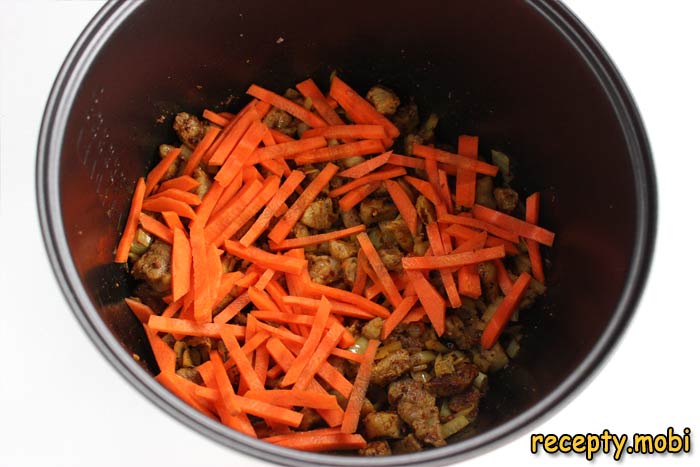
Cut the carrot into thin long sticks (do not grate it!) and add it to the meat and onion. Fry for another 5 minutes until the carrot softens. Matchsticks are the correct Uzbek way to cut carrot for pilaf. Grated carrot makes the pilaf mushy, whereas matchsticks keep their texture. Turn off the frying mode.
Rinse the basmati rice under running water until it runs completely clear – 5-6 times. Rinsing removes the starch and keeps the rice crumbly. Spread the rinsed rice over the meat and vegetables in an even layer and smooth it lightly. Push whole unpeeled garlic cloves deep into the layer – a whole head gives the ‘raisins’ of the finished pilaf.
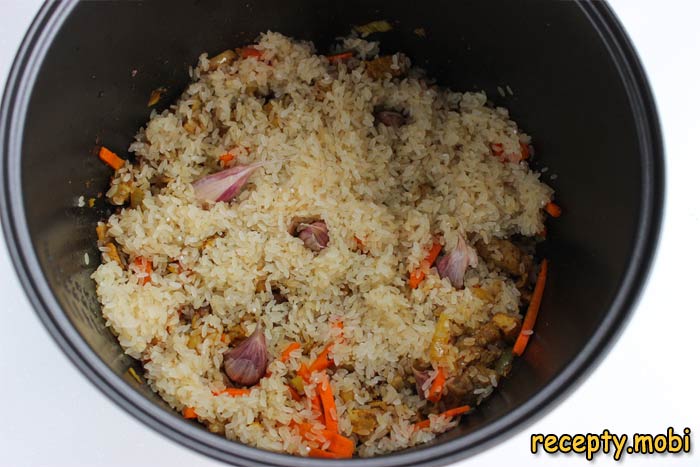
Pour in the water strictly in a 1:1.5 ratio (1 cup of rice to 1.5 cups of water) in a thin stream over a spoon so as not to disturb the layers. The water should cover the rice by 1 cm. Add salt to taste if your pilaf seasoning contains no salt. Keeping to the exact water ratio is the key to a crumbly result.
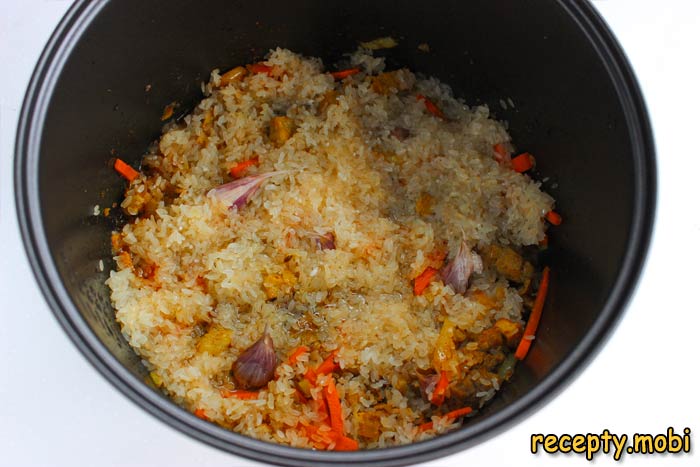
Close the multicooker lid and switch on the ‘Pilaf’ mode for 40 minutes. If there is no ‘Pilaf’ mode, use ‘Porridge’ or ‘Grain’. After the signal sounds, open the lid, gently stir the pilaf with a fork from the bottom up, and leave it under the lid for another 15 minutes to steam through. This pause is the secret to restaurant-quality pilaf.
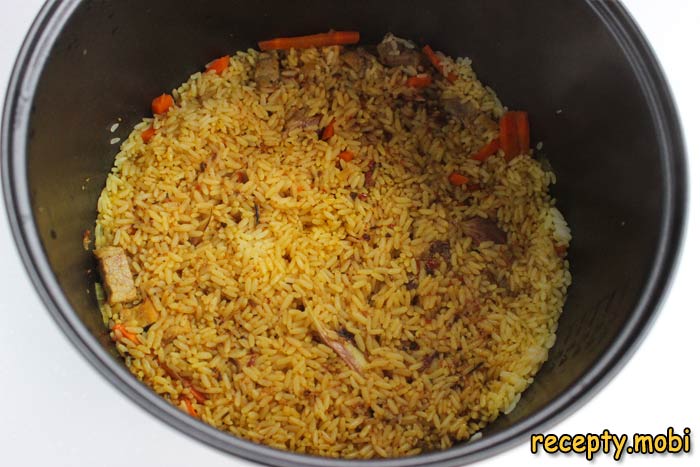
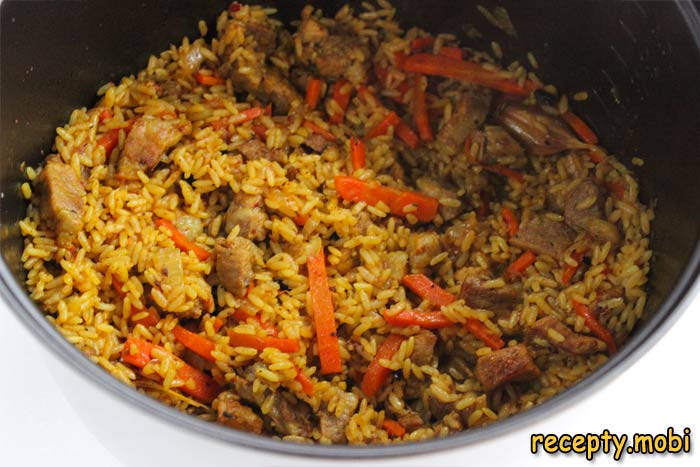
The pork pilaf is ready! Crumbly, aromatic, with a golden crust on the bottom (if you are lucky with your multicooker – this crust is called ‘kazan-zira’ and is considered the tastiest part). Serve it hot on a large plate. Garnish with fresh herbs (coriander, parsley) and serve with the vegetable salad ‘achichuk’.


Tips
- 1
For lean meat (pork loin, chicken fillet) add more vegetable oil – 5-6 tablespoons. Pilaf without fat turns out dry.
- 2
Keep the ratio of rice to water strictly at 1:1.5 for a crumbly result. More water and the pilaf turns to mush; less and the rice stays undercooked.
- 3
Leave the garlic in its skin in the pilaf – this protects it from burning and gives a milder aroma. I use a similar principle for chicken pilaf in a multicooker.
- 4
Let the pilaf rest under the lid for 15 minutes after cooking – this steaming gives the signature crumbly texture and brings together the flavours of all the components.
Video

FAQ
Which multicooker mode should I use for pilaf? +
The ‘Pilaf’ mode is best – it is specially set for the right temperature and time. If you do not have it, use ‘Porridge’ or ‘Buckwheat’ for 40 minutes, or ‘Multi-cook’ at 100 °C for 35-40 minutes. After cooking, be sure to leave it on ‘Keep Warm’ for 15 minutes to steam through. Every multicooker is a little different – go by the look of the pilaf: the rice should have absorbed all the water but not be overcooked.
Can I make pilaf with other meat? +
Yes, pilaf is versatile when it comes to meat: classic lamb (the Uzbek version, the most authentic), beef (leaner and firmer), chicken (the most dietary and quickest – cut the frying down to 7 minutes), and veal (more tender than beef). Pork is not traditional in Uzbek cuisine for religious reasons, but it works beautifully in home pilaf thanks to its juiciness. You can mix two kinds of meat – for example, lamb and beef 50/50, a classic Uzbek option.
How long does cooked pilaf keep? +
In the refrigerator in a tightly closed container – up to 3 days without losing quality. On the second and third day the flavour becomes even richer as the spices and meat fully soak into the rice. Reheat it in a pan with a couple of spoonfuls of water under the lid for 5 minutes, or in the microwave for 2-3 minutes. You can freeze it for up to 1 month in an airtight container – thaw and reheat before use. Pilaf does not lose its flavour when reheated properly.
What can I serve with pilaf? +
The classic Uzbek ‘achichuk’ – a salad of tomatoes, cucumbers, onion and coriander with green radish. Pickled vegetables (cucumbers, tomatoes, pickled cabbage). Flatbreads or unleavened bread – in Central Asia pilaf is eaten with flatbreads. Unsweetened green tea – the classic Uzbek drink to help digest a rich pilaf. For a festive presentation – with pomegranate seeds on top for decoration and a light tang.
- Comment
or post as a guest
Be the first to comment.