avg —
How to make clarified butter at home

Instructions
I open the package with one kilogram of butter. I take butter with the highest fat content – no less than 82.5%. Margarine or "spread" are absolutely unsuitable: they contain a lot of vegetable fats, and you will not get clarified butter from them.
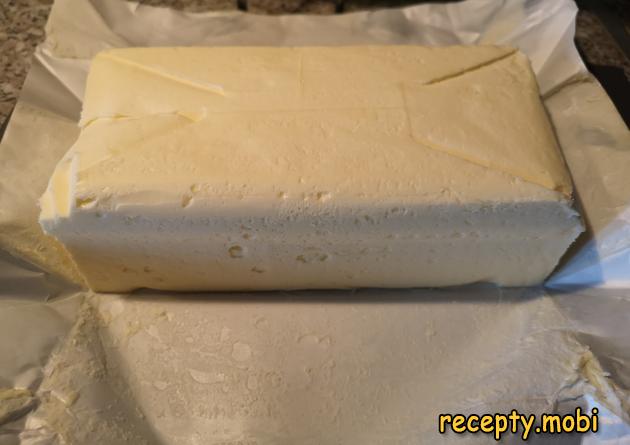
So that the butter fits into the pot, I cut it into several pieces with a knife. This way it melts faster and more evenly – a whole one-kilogram block would take a very long time to melt, and the outer edges might already start to "boil".
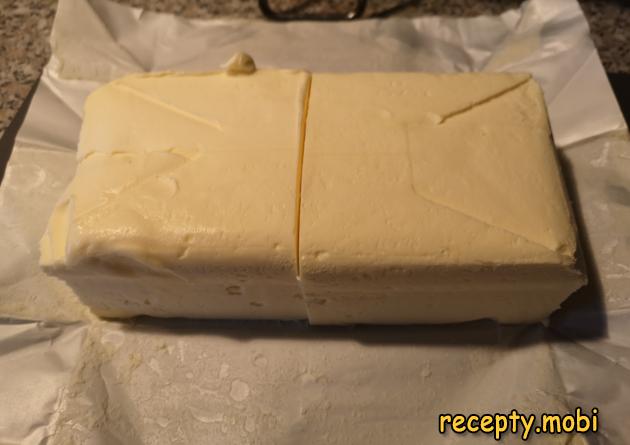
I transfer the butter into the pot and put it on the stove. I set the heat below medium – a high temperature will "burn" the milk protein before the butter has time to render.
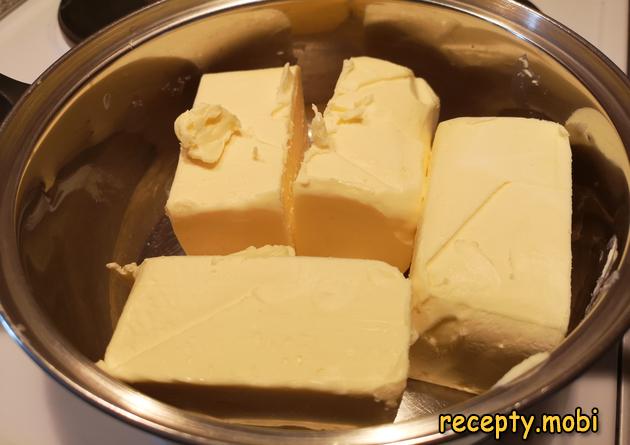
I let the butter melt slowly. There is no need to rush at this stage – the process should be smooth and controlled.
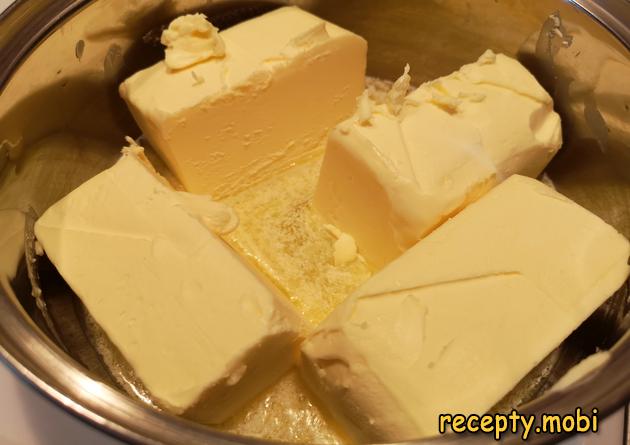
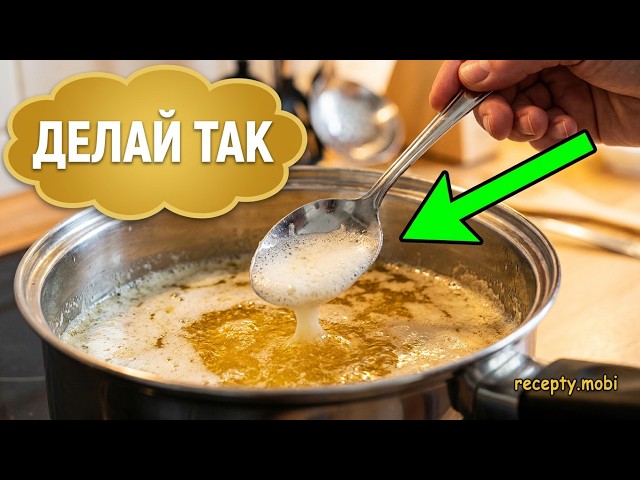
As it heats, a white foam will appear on the surface. To help the butter melt completely, I stir it. The foam is the milk protein, which separates from the pure fat.
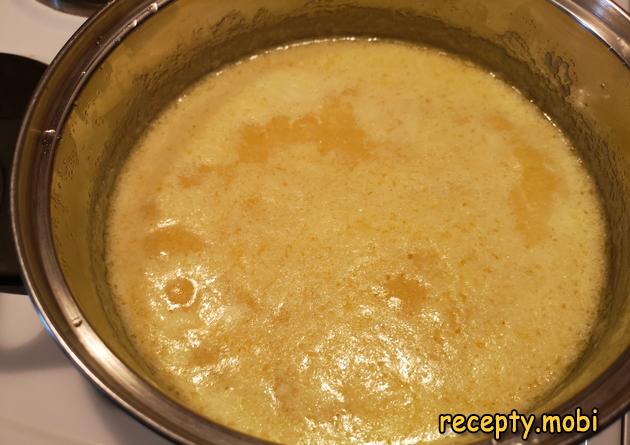
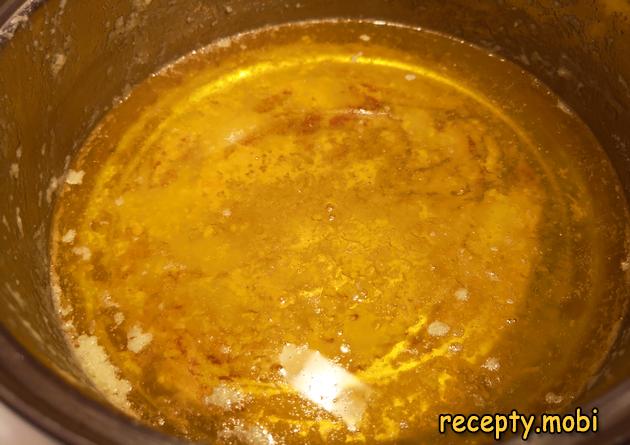
After it comes to a boil, I turn the heat down to the very minimum – so that the butter keeps boiling barely noticeably. The rendering process depends on the amount of butter – in my case it took 1 hour. As soon as the mass becomes completely transparent with a golden colour – that is the sign it is ready. Do not let the protein that has settled at the bottom of the pot burn – otherwise the butter will take on a bitter taste.
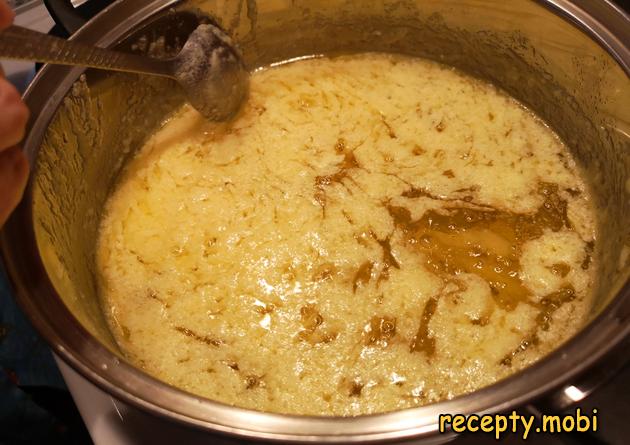
I skim the foam off the surface and take the pot off the heat. The foam can be used in baking – it contains milk proteins and tastes slightly sweet.
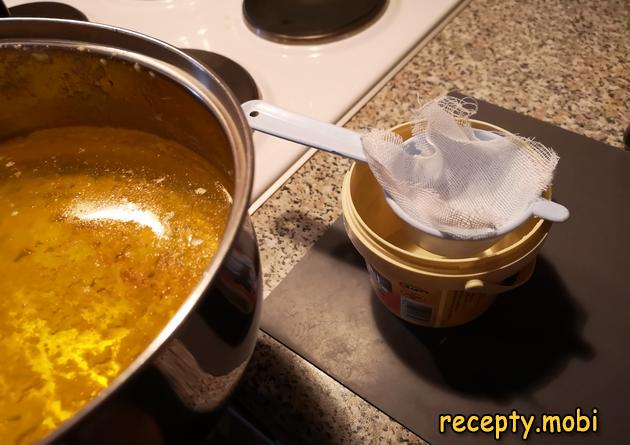
I pour the clarified butter into a clean container through a sieve and cheesecloth (in several layers). Be careful – it is very hot and easy to get burned. The cheesecloth will catch the tiniest protein particles that have settled at the bottom.
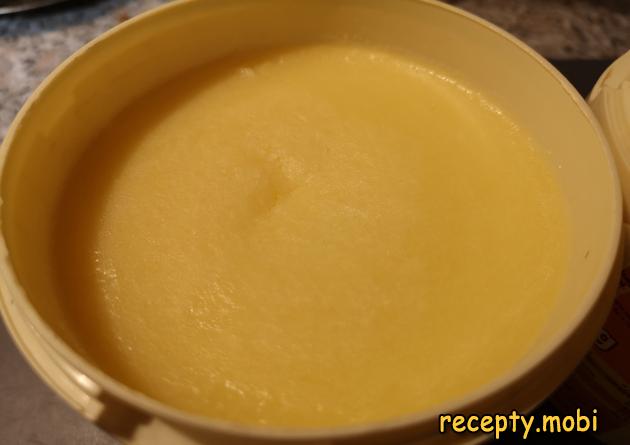
I leave the container open until the butter cools completely – this is needed so that no condensation forms inside the jar. After it has cooled, I cover it with a lid.
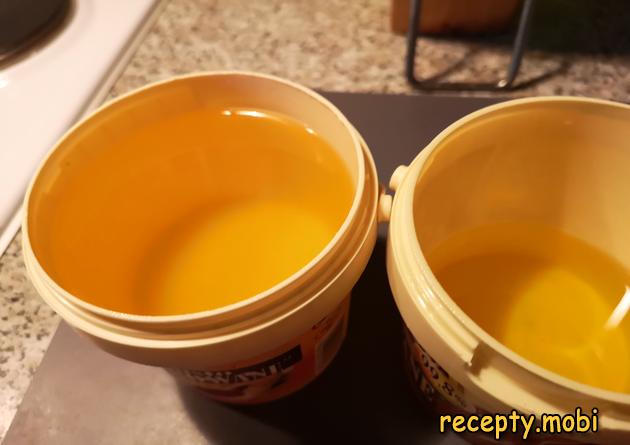
I leave it until it fully sets. Clarified butter keeps in the refrigerator for up to 9 months – significantly longer than ordinary butter.


Tips
- 1
Use butter with the highest fat content – no less than 82.5%. Margarine and spreads are absolutely NOT suitable: they contain vegetable fats and you will not get clarified butter.
- 2
The heat should ALWAYS be at the minimum. A high temperature will burn the milk protein and the butter will turn bitter. Patience is the key to a quality result.
- 3
Strain through SEVERAL layers of cheesecloth – this will remove even the tiniest particles. I use a similar principle in other homemade dairy products.
- 4
Do not cover with a lid while the butter is hot – condensation inside will shorten the shelf life. Only after it has cooled completely.
Video
FAQ
How does clarified butter differ from ordinary butter? +
Clarified butter is butter from which the water and milk protein have been removed. Only the pure fat remains, which gives a number of advantages: (1) it keeps longer – up to 9 months in the refrigerator versus 2–3 for ordinary butter; (2) it does not burn during frying – it "smokes" at 250 °C, while ordinary butter does so at 150 °C; (3) it is better absorbed by the body; (4) it suits people with lactose intolerance (the lactose is removed with the protein). The drawbacks: a lower content of B-group vitamins, and it is more calorific.
How much clarified butter do you get from 1 kg of ordinary butter? +
From 1 kg of good-quality butter you get 750–800 g of clarified butter. This time I ended up with 550 g – it depends on the original quality of the butter. The higher the fat content of the starting product, the greater the yield. From "cheap" butter with impurities the yield will be even smaller. Use good-quality butter (homemade if possible) – cheap butter will not give a good result, either in yield or in flavour. Farmhouse butter is the optimum.
Where can clarified butter be used in cooking? +
Clarified butter is versatile: frying (meat, vegetables – it does not burn), baking (it gives a characteristic "caramel" aroma), greasing baking tins, adding to porridges and soups, Eastern dishes (pilaf, Eastern sweets – an essential ingredient), Indian cuisine ("ghee" is exactly this clarified butter), greasing finished dishes (potatoes, pasta). On its own, it is served with porridges, on sandwiches, with vegetables. Its aroma is far richer than that of ordinary butter.
Can clarified butter be stored at room temperature? +
Yes, unlike ordinary butter, clarified butter can be stored at room temperature for up to 1 month. Without the milk protein it does not "spoil" like ordinary butter. The conditions: a dark, cool place, a tightly closed lid, and no contact with water. In the refrigerator – up to 9 months. In the freezer – up to 1.5 years. It is convenient to keep a small supply at room temperature for current use (it is softer and easier to scoop with a spoon), and the main stock in the refrigerator.
- Comment
or post as a guest
Be the first to comment.