avg —
Homemade Mustard from Powder

Instructions
I prepare the ingredients. The water should be hot – 50–60 degrees. Its amount will be determined during mixing.
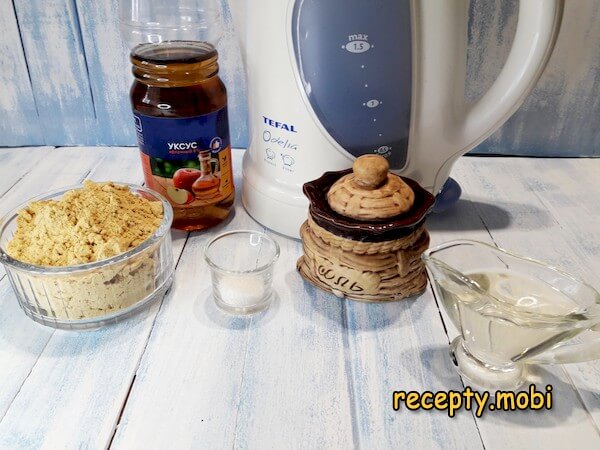
For convenience, I tip the mustard powder into a bowl. I add a little water and start to stir, adding more water as needed. The result should be a thick mass without lumps. I don't prepare the mixture in the jar where the mustard will be stored, because you need to grind the mixture thoroughly until it is uniform, and that is very awkward to do in a small volume. You also need to work quickly so that the mixture doesn't have time to cool.
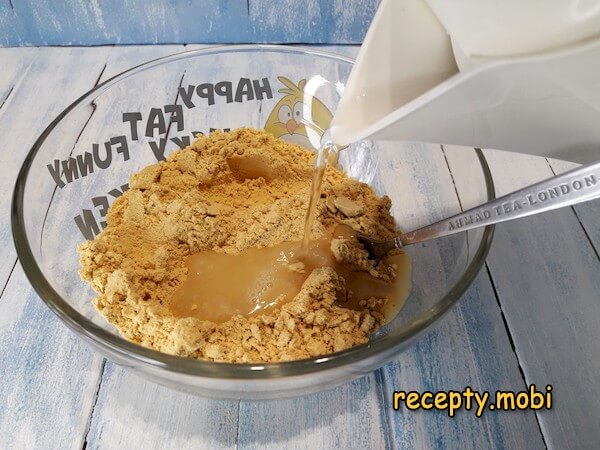
The mass should turn out thick, thicker than sour cream, and should not run off the spoon.
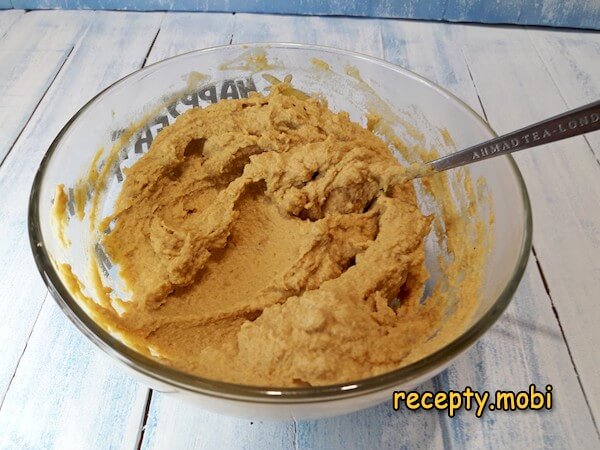
I transfer the mustard into a jar, not all the way to the top. If the mustard layer is 5 centimetres, it is enough to leave 1.5–2 centimetres. I wipe the edge of the jar with a paper napkin.
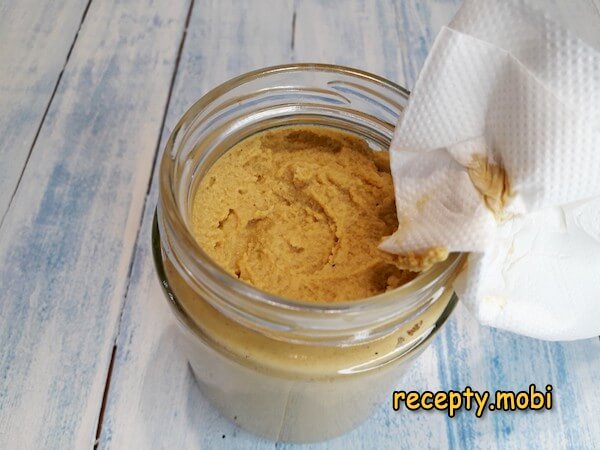
Very carefully, down the wall of the jar, without disturbing the top layer of mustard, I pour in the water seal using the same hot water (its temperature has dropped by about 2 degrees, but that isn't critical).
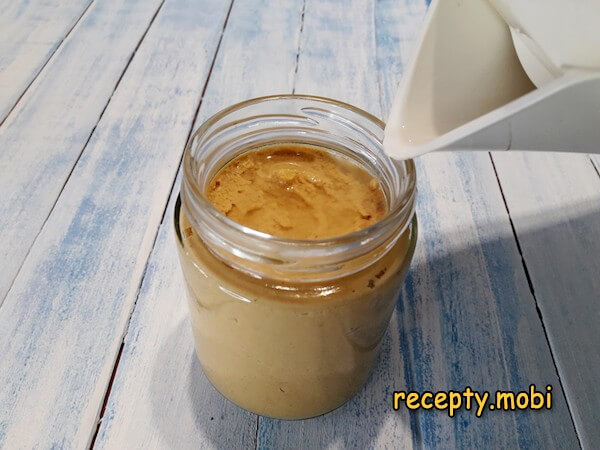
Because the mustard mass is thick, the water won't seep into it and will all stay on top.
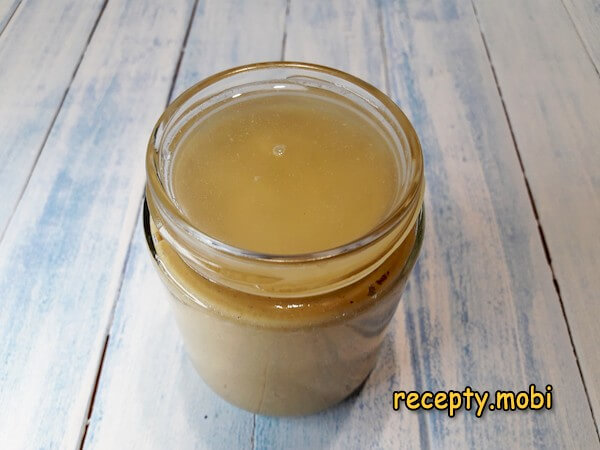
I close the jar with the lid, wrap it in a towel and put it in a warm place for about 4 hours.

After this time I drain off the top layer of water – it has absorbed all the bitterness that is usually present in mustard.
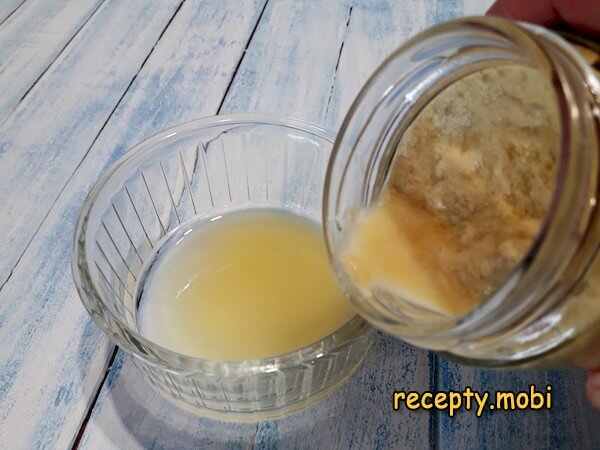
I always add sugar to the jar – it gives the finished product its sharpness.
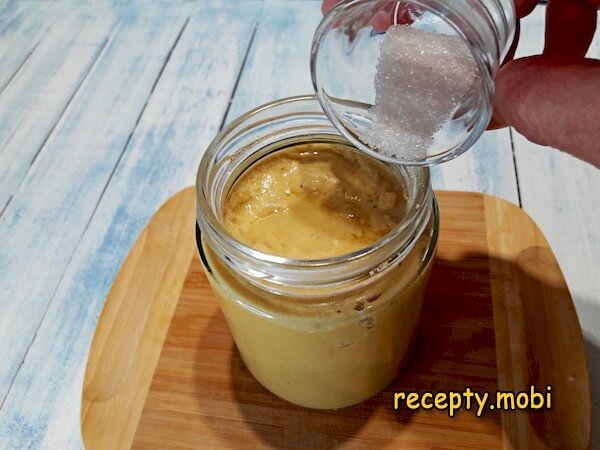
I salt to taste (usually a small pinch is enough).
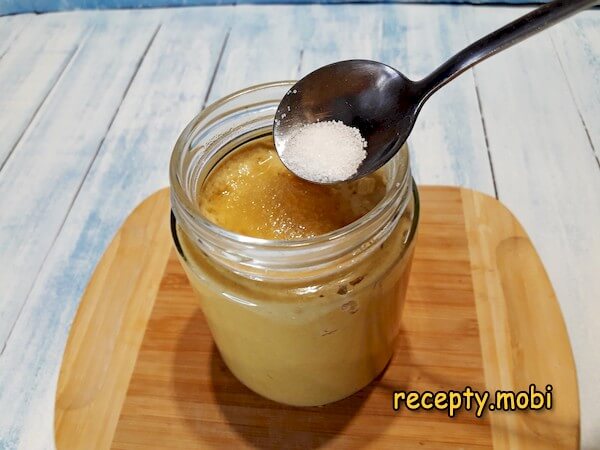
I add the vinegar. I mix everything well.
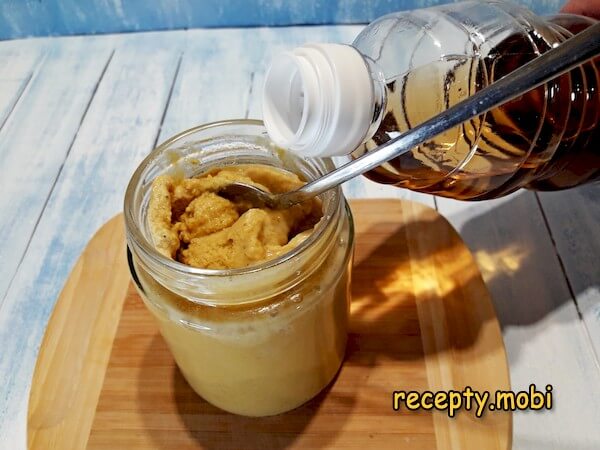
So that the mass becomes more elastic and sauce-like, I pour in the vegetable oil and stir the mixture again.
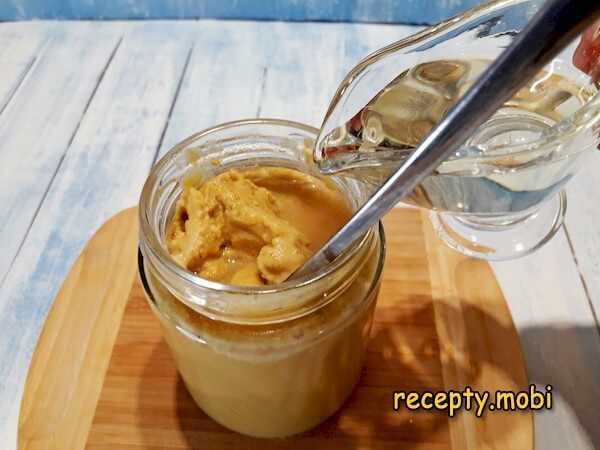
The homemade mustard from powder is ready. It must be stored in a tightly closed jar in the refrigerator. It does not lose its strength and flavour for about two to three months. You can use it not only as a sauce for meat dishes, but also add it to various marinade mixtures.



Tips
- 1
WATER AT 50–60 °C is the secret of strength. Cold water gives weak mustard. Boiling water kills the active enzymes. Only 50–60 °C activates the "burn".
- 2
THE WATER SEAL is the secret against bitterness. The layer of water on top for 4 hours absorbs the bitterness. By draining it off, you get pure strength with no unpleasant aftertaste.
- 3
SUGAR FOR SHARPNESS is the secret of flavour. It seems a paradox, but sugar brings out the burn of the mustard. Without it the mass is bland; with it, it becomes that very pungent condiment.
- 4
OIL AT THE END is the secret of consistency. Without oil the mustard is dry and spreads coarsely. With a tablespoon of oil it is elastic like a sauce and spreads evenly on bread. The same principle works in other kinds of homemade sauces made from powders.
FAQ
Which mustard powder should I choose? +
Ideally, highest-grade mustard powder (90 g – uniform, with no black dots). Alternatives: first-grade mustard powder (90 g – the "budget" option, with black dots), a 50/50 mix of yellow and brown mustard (45 g of each – premium, brighter), Sarepta mustard (90 g – the "classic"), white mustard powder (90 g – "premium French"), ground mustard seeds (90 g – premium), ready-made Dijon mustard (50 g – "budget", no preparation needed). Fresh powder in a sealed pack is the premium choice. Don't use: expired powder (the mustard won't come out strong) or a mix with spices. For the "classic" – use pure mustard powder only.
What can replace apple cider vinegar? +
Alternatives: white wine vinegar (0.5 tsp – premium), white balsamic (0.5 tsp – premium), 9% table vinegar (1/4 tsp – "budget", sharper), lemon juice (1 tsp – "natural"), diluted 70% vinegar essence (a few drops + water), rice vinegar (0.5 tsp – "Asian"). Fresh, unfiltered apple cider vinegar is the premium choice. Don't use: dark balsamic (it will change the colour of the mustard) or salty marinades. For "classic mustard" – use a mild vinegar (apple cider or white wine).
How long does homemade mustard keep? +
In a tightly closed jar in the refrigerator – 2–3 months. Any longer and the mustard loses its strength and aroma. Before serving, let it stand for 5 minutes at room temperature. I don't recommend the freezer – the texture will separate. Fresh mustard is at its "star" 1 day after the water seal is drained (once it has matured). After a week the taste becomes milder, and after a month milder still. Don't leave it at room temperature for longer than 4 hours after opening. Ideally, take it out with a spoon (not a finger) for long storage. On the table – no more than 1 day.
What do you serve homemade mustard with? +
A classic for the meat table: with kholodets and aspic. With boiled sausages and frankfurters. With pelmeni. With baked chicken or turkey. With boiled beef or pork. With ham or buzhenina. With grilled shashlik. With salted lard and black bread. With boiled eggs. With Olivier salad (as a secret ingredient in the dressing). With meat rolls. With ham sandwiches. With steaks or roast beef. With a glass of kvass or beer. For the "Russian table" – it is universal. A spicy homemade sauce for meat.
- Comment
or post as a guest
Be the first to comment.