RU EN
Homemade Teriyaki Sauce
difficulty Easy
0 views this month
0 saved by readers
0 ratings
avg —
Sauces

Homemade Teriyaki Sauce

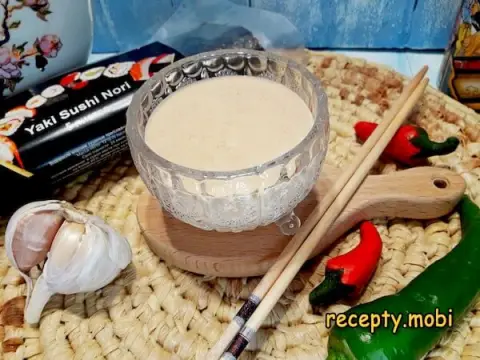
Homemade teriyaki sauce is the foundational Japanese-cuisine condiment that delivers the signature sweet-salty-aromatic flavour profile through a precise balance of soy sauce, sugar, honey, ginger, garlic, and a touch of vinegar.
Time 15 min
Yield 7 servings
Calories 166 kcal
Difficulty Easy
Jump to recipe

Instructions

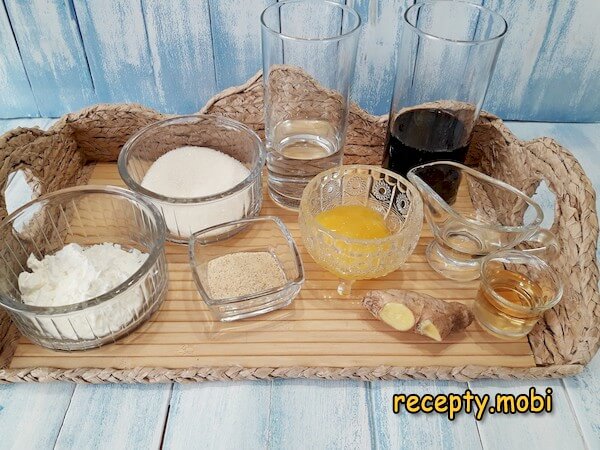
  1. I prepare the ingredients for homemade teriyaki sauce. Dried garlic substitutes well with fresh — about 6-7 medium cloves passed through a garlic press. Both corn and potato starch work for thickening (corn produces slightly clearer thicken; potato is heavier and slightly more gel-like). Soy sauce should be regular Japanese-style — Kikkoman, Yamasa, or similar; avoid overly salty Chinese-style dark soy and reduced-sodium versions (flavour is muted).

    Step 1
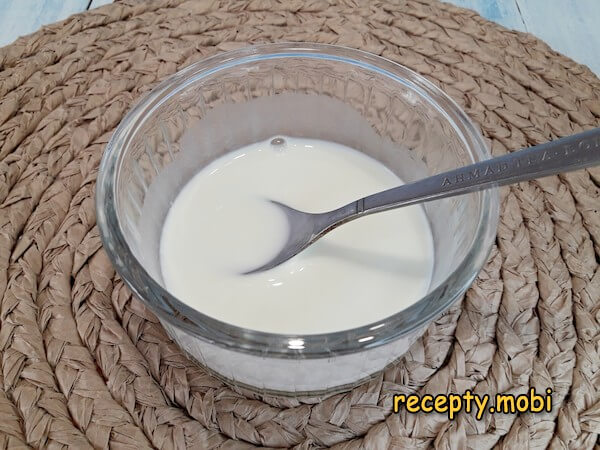
  2. Starch dissolves in 35 ml of water (half the total water amount). The slurry-first approach prevents starch lumps when added to hot sauce later. Stir with a fork until completely dissolved (no white sediment at the bottom).

    Step 2
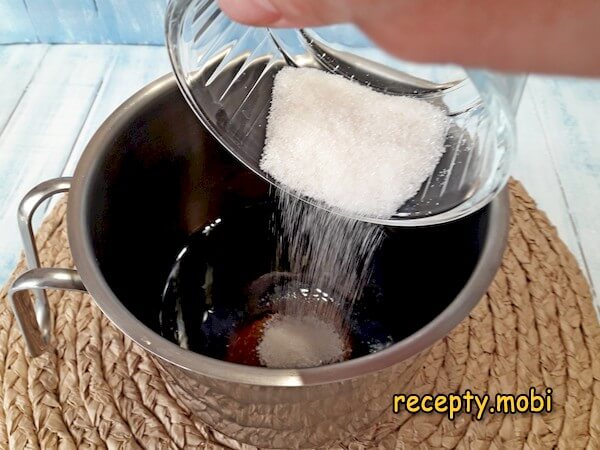
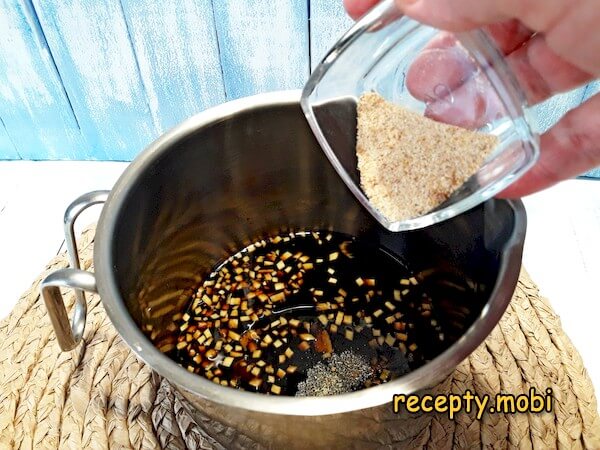
  3. The remaining 35 ml water and the soy sauce go into a saucepan. Sugar follows.

    Step 3
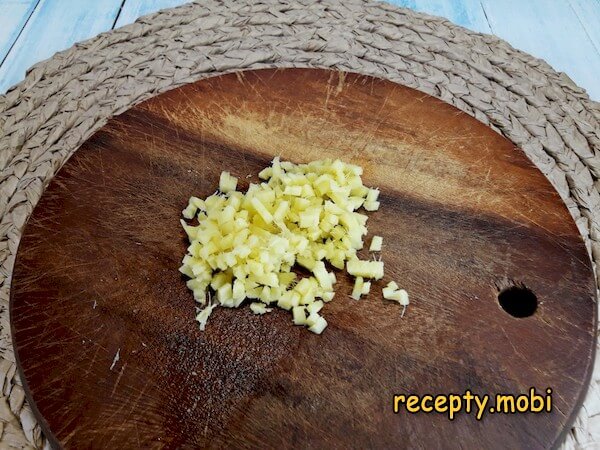
  4. Ginger root peels (use a spoon edge — easier than a peeler), then chops VERY finely (1-2 mm pieces). The fine chop releases more aromatic oils and ensures the ginger character infuses thoroughly.

    Step 4
  5. Chopped ginger and garlic transfer into the saucepan with the soy mixture.

    Step 5
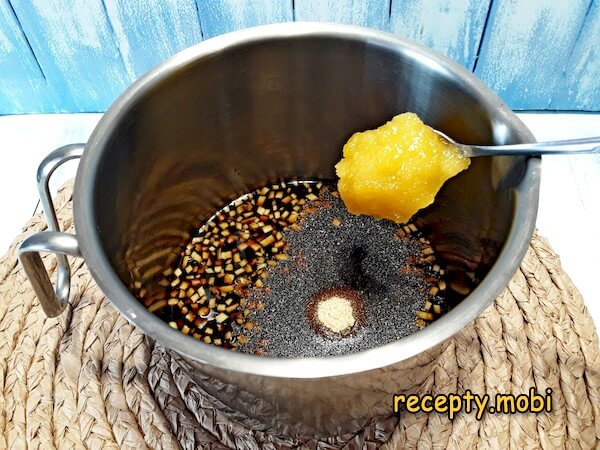
  6. Honey joins the mixture. Honey choice matters: light floral honey (acacia, clover) is neutral; dark forest honey adds noticeable woody character. Pick based on intended use.

    Step 6
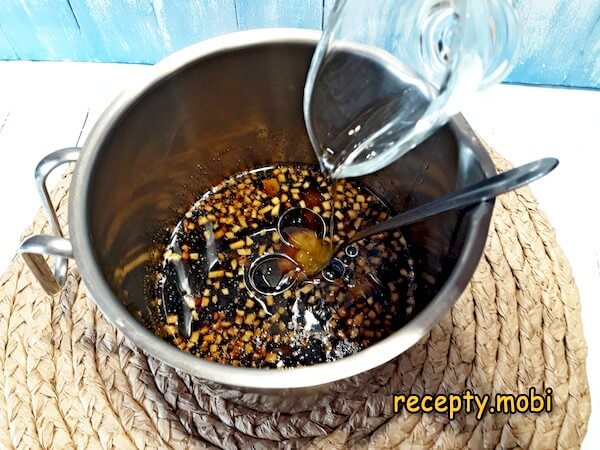
  7. Vinegar and vegetable oil pour in. Stir to combine, place on medium heat. The vegetable oil sounds unusual but contributes to the gloss/shine of the finished sauce when applied to meat surfaces.

    Step 7
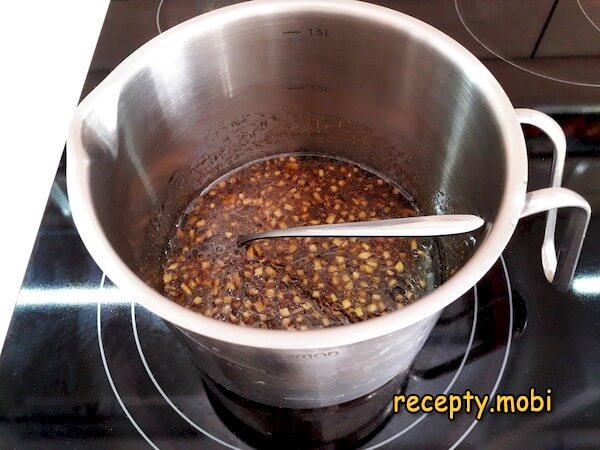
  8. Once boiling, reduce heat and let simmer 2-3 minutes. The brief simmer allows the ginger-garlic aromatics to fully infuse the liquid, melding all flavour components into a unified character.

    Step 8
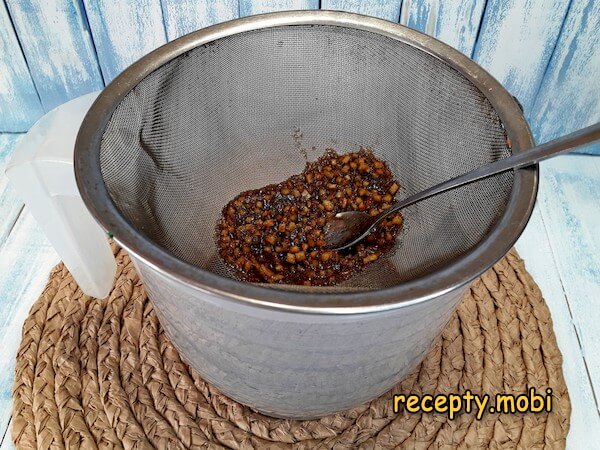
  9. Strain the sauce through a fine metal sieve into another container. Press/squeeze the pulp remaining on the sieve to extract maximum flavour. The strained sauce is silky-smooth, perfect for glaze application.

    Step 9
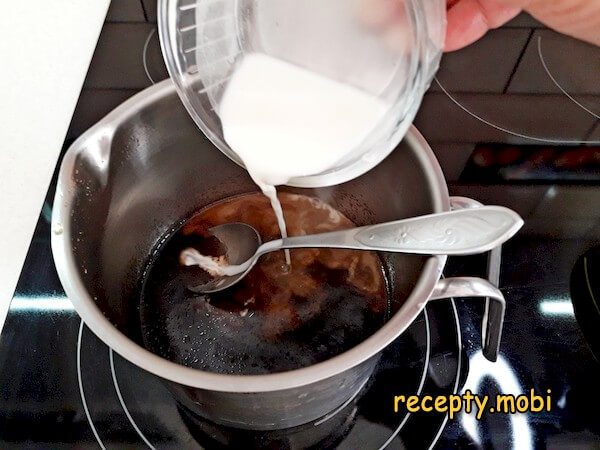
  10. The smooth strained sauce now needs thickening. Pour back into the cleaned saucepan, return to the stove. After boiling, pour the starch-water slurry in a THIN STREAM while stirring constantly.

    Step 10
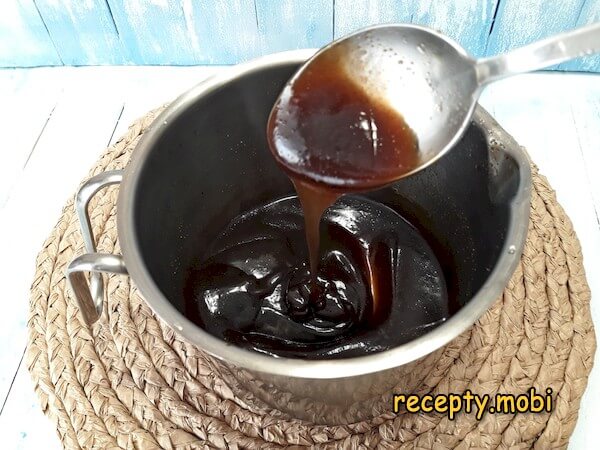
  11. Continue stirring as the sauce thickens. The appearance of the first bubbles signals readiness — remove from heat immediately. Over-thickened teriyaki turns to glue when cooled.The homemade teriyaki sauce competes successfully with any store-bought version. The application range is vast: glaze for finished dishes, marinade for raw proteins (chicken, salmon, beef, tofu), stir-fry sauce, sushi-roll dip, and the signature glossy lacquer for roasted meats and fish.

    Step 11

Tips

  • 1

    THE SLURRY-FIRST METHOD AVOIDS LUMPS. Step 2's starch-dissolved-in-cold-water-first approach is essential. Adding dry starch directly to hot sauce produces immediate clumps that won't disperse no matter how vigorously stirred. The cold-water slurry pre-suspends each starch granule individually, allowing smooth integration when poured into hot liquid. This same principle applies to ALL starch thickening (gravies, sauces, soups). Master this technique once, eliminate lumpy-sauce failures forever.

  • 2

    THE STRAIN STEP DETERMINES FINISH QUALITY. Step 9's straining isn't optional cosmetics — it converts a chunky aromatic infusion into the smooth glossy sauce that defines authentic teriyaki. Unstrained sauce has visible ginger and garlic flecks (rustic look but inconsistent flavour distribution); strained sauce has uniform character and the signature glassy appearance when applied to food. Press the sieve solids hard to extract every flavour drop. For another bright fresh-herb sauce that complements grilled meats from the opposite end of the flavour spectrum, see Greek Sauce Tzatziki.

  • 3

    THE TEMPERATURE-CONTROLLED THICKENING IS DELICATE. Step 11's "first bubbles = remove from heat" instruction matters because starch-thickened sauces continue to thicken as they cool. Pulling exactly at first-bubble produces the right pour-from-spoon consistency at room temperature. Cooking past this point = sauce thickens beyond glaze-consistency into paste. If oversthickened occurs: thin with 1 tbsp warm water at a time until desired consistency restores. Better to under-thicken slightly and adjust upward than over-thicken irreversibly.

  • 4

    THE STORAGE EXTENDS USE TIME. Refrigerated in a glass jar (NOT plastic — the high acid + salt content can leach plastic chemicals over weeks), the sauce keeps 2-3 weeks at peak quality. The high salt + sugar + acid combination is naturally preservative. Don't freeze — the starch breaks structure when thawed (turns watery). For brand-new flavour batches, the sauce reuses as marinade base by adding mirin (Japanese sweet rice wine) + sake. For another world-cuisine condiment with bold tomato-pepper character that pairs with grilled foods, try Salsa Sauce Classic Recipe.

FAQ

Is this authentic Japanese teriyaki? +

This is a Westernised home-friendly version. Authentic Japanese teriyaki uses just four ingredients: soy sauce, mirin (sweet rice wine), sake, and sugar — no garlic, ginger, vinegar, or starch. The sauce thickens naturally during cooking through reduction, not starch. The home version (this recipe) substitutes commonly available ingredients (honey for mirin's sweetness, vinegar for sake's acidity, starch for reduction-thickening) to make the recipe accessible without specialty Japanese ingredients. Both versions taste excellent in their own way; the homemade is more flavour-complex (garlic + ginger), the authentic is purer and cleaner.

What dishes use teriyaki sauce? +

Classic applications include: glazed chicken thighs (the iconic dish), salmon steaks (broiled with teriyaki glaze), beef stir-fry (sauce added in the final minute), pork tenderloin marinade, tofu glazing for vegetarian protein, vegetable stir-fry finisher, sushi-roll dipping sauce, chicken-wing marinade and glaze, and noodle-bowl sauce (yakisoba style). The sauce works on any protein that benefits from sweet-salty caramelisation. Beyond Japanese cuisine: it crosses into Korean and American-Asian fusion easily. Even unusual applications work — drizzle on roasted vegetables, glaze on fried tofu, dip for spring rolls.

Can I make a thicker version for glazing? +

Yes — increase starch from 13 g to 18-20 g for a thicker glaze suitable for brushing onto roasted meats. The thicker version coats food surfaces visibly, building up shiny lacquer layers when brushed multiple times during roasting. For grilled meat applications, brush 3-4 times during the last 5 minutes of grilling — each brush builds gloss. Don't apply teriyaki at the START of grilling — the sugars burn at high heat and turn bitter. Save it for the finishing minutes only. The thinner standard version (this recipe) works better for stir-fries and dipping.

Why use both sugar and honey? +

The combination is intentional flavour engineering. Sugar provides clean sweetness that doesn't compete with the soy character — it's a neutral sweetness platform. Honey adds floral aromatic complexity, slight viscosity (helps the sauce coat surfaces), and a subtle bitter-sweet undertone that the cane sugar lacks. Using only sugar produces flat one-dimensional sweetness; using only honey overpowers the soy character and produces too-sticky texture. The balanced ratio (60 g sugar + 40 g honey) is calibrated for ideal flavour layering. Don't substitute one for the other in this recipe.

Write comments...
symbols left.
or post as a guest
Loading comment... The comment will be refreshed after 00:00.

Be the first to comment.