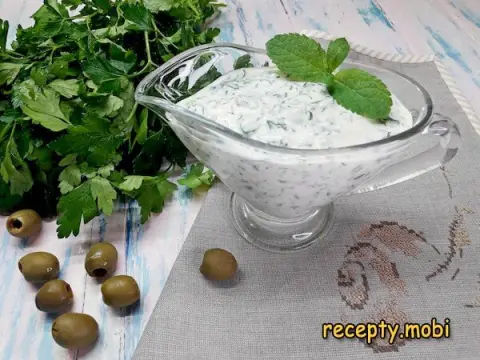
Béchamel sauce
Béchamel sauce is a traditional French sauce with a delicate taste and a uniform consistency. It is part of the so-called basic "five" sauces that serve as the foundation for a vast number of dishes in French cuisine. Many distinguish béchamel from the general lineup that includes velouté, espagnole, tomato, and hollandaise sauces, giving it the palm of victory.
Perhaps the secret to the immense popularity of béchamel sauce lies in its versatility and the atmosphere of sophistication and tenderness that surrounds it. Every self-respecting chef must master the art of making béchamel sauce: without passing the exam associated with its preparation, one cannot lead a restaurant kitchen.
Béchamel is the foundation of foundations. The color of the sauce is delicate, light, creamy, or beige, without dark inclusions.
From history
There are two versions of the origin of the béchamel sauce recipe. According to one source, it was invented by the steward of Louis XIV, Louis de Béchamel. The other version states that the popular recipe was created by the chef François de la Varenne, who established haute cuisine in Versailles. According to this version, the chef dedicated the new recipe to Louis de Béchamel, hence the well-known name.
Experts believe that such discrepancies in the history of the sauce's invention arose because Louis de Béchamel decided to claim the invention of the court chef for himself in order to win the king's favor. The first mention of the sauce recipe appears in the book by François de la Varenne, written in 1651. Since then, it has been reprinted many times, but there is confidence that the classic recipe for béchamel sauce has reached our days practically unchanged.
Features
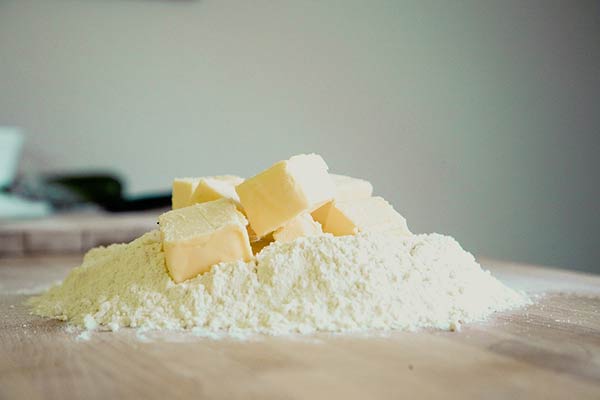
Béchamel consists of two parts: milk and roux – flour mixed with butter and browned to a golden hue. The classic ratio when preparing roux is one to one; however, some chefs alter it based on their preferences. The amount of milk can also vary depending on the desired thickness, as the sauce can be made in different consistencies – this depends on its further use. Masters recommend making the sauce thicker, as it can always be made thinner by adding more milk.
To achieve a liquid consistency, traditionally, from one hundred twenty to one hundred eighty grams of roux are added to a liter of milk, while a thick sauce is obtained if three hundred grams of roux are combined with a liter of milk. A béchamel of thick consistency, for example, is used for creating soufflé. It is very easy to remember the ratio of ingredients for making a medium consistency sauce: roux is prepared from flour and butter in equal proportions, while five times more milk is added than roux.

The classic basic recipe for the sauce includes a minimum of ingredients: milk, flour, butter, pepper, and salt. This recipe serves as the basis for preparing a basic sauce, which is foundational for many dishes. Often, herbs or roots are added to the milk to enhance the flavor of the dish. For this, the necessary ingredients are added to cold milk, after which it is slowly brought to a boil. Once boiling, the burner is turned off, the pot is covered with a lid, and left for two to three hours to allow the milk to infuse with the spices and herbs. After this, the milk is strained through a sieve or cheesecloth and used for further sauce preparation. The sequence of actions is important because this method allows the herbs to fully reveal their flavors. You can add to the milk: thyme, rosemary, oregano, onion, garlic, coriander, cumin, parsley, marjoram, nutmeg.
One of the main secrets of chefs who possess the virtuoso skill of making béchamel sauce is the difference in temperature between its components. If the milk is hot, the roux must be cold, and vice versa. Only such a combination guarantees the absence of lumps. It is important not to overdo it while browning the flour – it should develop a light golden hue. If the flour is overcooked, the sauce will lose its color and taste bitter.
Do not add too many spices, as the classic taste of the sauce is creamy, and it should remain that way. Spices and herbs should only contribute light hints of flavor and aroma. Béarnaise sauce should only be served hot, as the cooling sauce will be covered with a crust, which is unacceptable.
Experts recommend using pots with thick walls and non-stick properties for preparation. A wooden spatula and whisk are suitable for mashing and whipping.
Usage
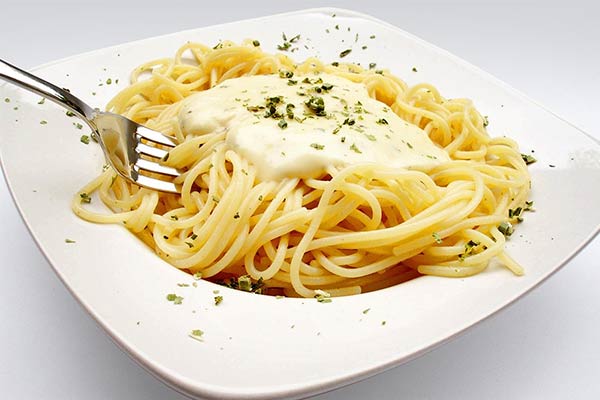
Béchamel sauce is one of the basic sauces in French cuisine. It is added to pasta, lasagna, and soufflé. Very often, vegetable dishes are served with a thick white sauce. Béchamel is used when preparing meat dishes: it is added to chicken gizzards, cutlets, and meatballs during stewing. After adding the sauce, delicate taste is acquired by omelets with vegetables and asparagus, dishes with seafood, and casseroles with potatoes, mushrooms, and cheese.
Chefs have their secrets for adding sauce to roasts: they recommend adding béchamel to the roast three minutes before it is ready and sprinkling everything with grated hard cheese. The dish will become incredibly tender.
The sauce is used to dress pureed soups, salads, and is added to vegetable fillings that include zucchini and broccoli. Béchamel can be used instead of mayonnaise when making sandwiches and canapés. Béchamel is the basis for many other sauces that are added to meat and fish dishes: it is included in the composition of sauces Aurora, Subiz, Albert, Nantua, and Mornay.
Ingredients
To prepare béchamel, you need to stock up on the following ingredients: milk, flour, butter, salt, pepper, and optionally, spices. Some cooks add bay leaves, shallots, and cloves to the milk before cooking for a special aroma.
Storage
The sauce keeps well in the refrigerator in a glass container, but not for more than three days. If it needs to be kept warm for some time, you can hold béchamel in a water bath for an hour. To prevent a film from forming on the surface, you can place thin slices of butter, plastic wrap, or baking paper on top.
Recipes
Classic recipe for Béchamel sauce
Ingredients:
- 50 g flour;
- 50 g butter;
- 500 ml milk;
- salt to taste;
- pepper to taste.
Cooking process:
- Melt the butter over low heat in such a way that it melts but does not burn.
- Add the flour to the butter and start quickly whisking the mixture with a whisk, breaking lumps with a wooden spatula.
- Gradually add cold milk in small portions while stirring the sauce until a homogeneous consistency is achieved. Keep in mind that the heat should be minimal; you can completely remove the pot from the burner.
- Thus, add 100 ml of milk, ensuring there are no lumps in the mixture, add the remaining milk, and turn the burner dial to medium.
- Bring the mixture to a boil and cook for five to seven minutes, constantly stirring.
- Add salt and pepper to taste to the finished sauce.

Béchamel sauce recipe with spices
The recipe with nutmeg is used even more often than the basic one. In addition to nutmeg, bay leaves, cloves, and various types of pepper are added. You can add a whole bouquet of spices and herbs, or you can stick with just nutmeg.
Ingredients:
- 50 g flour;
- 50 g butter;
- 600 ml milk;
- salt to taste;
- nutmeg to taste;
- spices to taste;
- pepper to taste.
Cooking process:
- Prepare a roux according to the classic recipe, cool it.
- Add herbs and spices to the cold milk, bring it to a boil, and simmer for ten to fifteen minutes.
- Strain the milk through a sieve; if it has reduced, add more milk to ensure the total volume is five hundred milliliters.
- Add the roux to the milk, stirring the mixture thoroughly to break up any lumps.
- Add salt to taste.
Tomato Béchamel
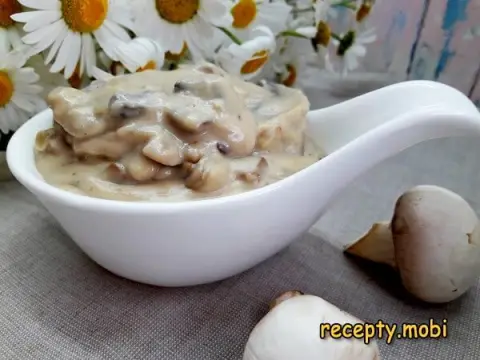
The sauce with tomatoes, although it does not have the usual white color, is still a béchamel sauce. In this variation, it is added to pasta, sandwiches, and baked potatoes.
Ingredients
- 50 g of flour;
- 50 g of butter;
- 500 ml of milk;
- 1 tablespoon of tomato paste;
- salt to taste;
- pepper to taste.
Cooking process:
- Prepare the roux according to the classic recipe, let it cool.
- Slowly add the milk in a thin stream, stirring the mixture each time until it becomes homogeneous. Add all the milk this way.
- Cook the sauce for five minutes.
- At the end, add salt, pepper, and tomato paste. Mix everything together.

Béchamel in the microwave
Of course, the microwave is not very suitable for making a classic béchamel sauce, but it can help those who do not have time for the classic recipe.
Ingredients:
- 50 g of flour;
- 50 g of butter;
- 600 ml of milk;
- salt to taste;
- nutmeg to taste;
- spices to taste;
- pepper to taste.
Cooking process:
- Combine the flour with the butter, rub it together. Place the bowl in the microwave for one and a half minutes on maximum power.
- Remove the bowl, gradually pour in the milk while stirring. Return the container to the microwave for five minutes.
- Periodically pause, remove the bowl, and stir the sauce.
- At the end, add salt and all the spices, then strain the béchamel through a sieve.
Béchamel sauce is a wonderful addition to fish, meat, and vegetable dishes. It softens the taste and adds tenderness. Pieces of meat and vegetables simply melt in your mouth when they are first placed in a bowl with béchamel sauce. Some may think that the cooking process is too labor-intensive and time- and energy-consuming, but that is not the case. Just prepare it a couple of times at home, and you will learn the entire sequence of actions and cook quite quickly. Do not deprive yourself of the pleasure of trying this delightful French sauce. Bon Appétit!