avg —
Tahini

Instructions
I get the ingredients ready – there are only three, and the tahini is done. It is better to use white sesame seeds (not black) – they give a more delicate flavour and a lighter colour to the finished paste.
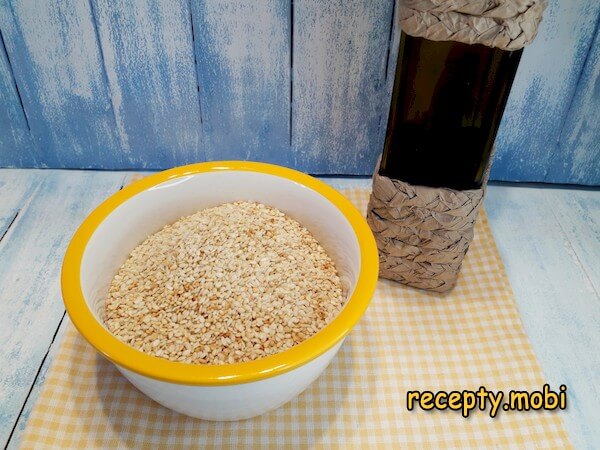
The sesame seeds need to be dried out in a pan or in the oven. The heat of the oven and the toasting time do not matter; the main thing is to make sure the seeds do not burn (and that can happen very quickly). Toasting releases the aromatic oil – that is what gives tahini its classic "roasted" flavour.
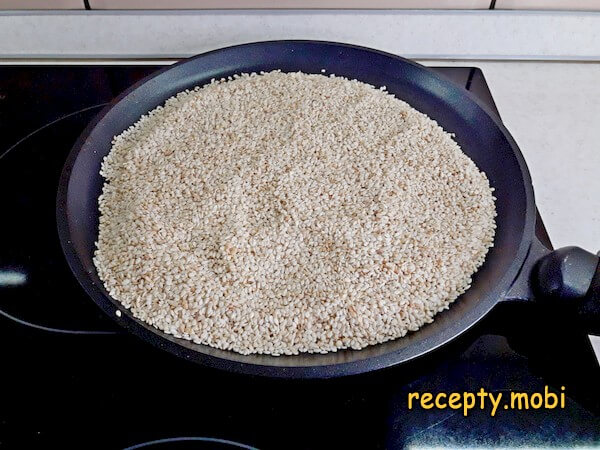
That is why you should not leave the stove and, stirring constantly, keep an eye on the colour of the sesame – as soon as it darkens a little, I take it off the heat. The ideal colour is a "burnt" beige, but not brown.
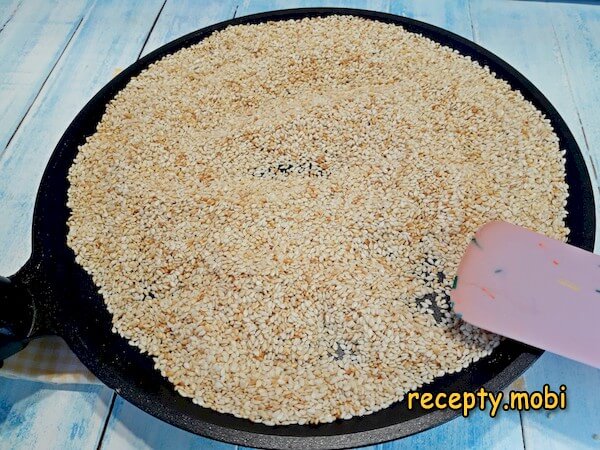
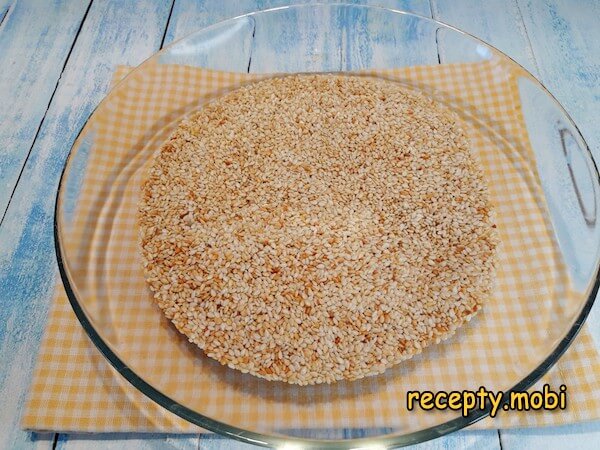
I tip the seeds into another container so they cool more quickly – hot sesame will "steam" in the chopper and release moisture.
Next I put the sesame into any chopper (grinder) and start the grinding process – it is the grinding that turns the dry seeds into an oily paste.
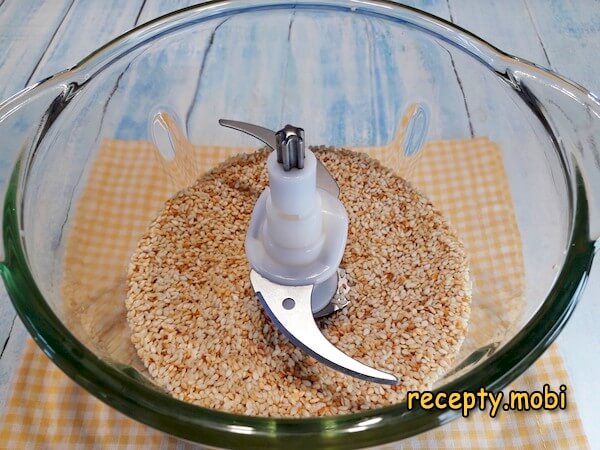
From time to time you need to open the lid of the chopper and scrape off the oily, slightly opened seeds that stick to the sides. Grinding is not a fast process; it all depends on the power of the grinder. Even so, it will take at least 20 minutes, and the machine needs to be given a rest (it will overheat badly under such a load).
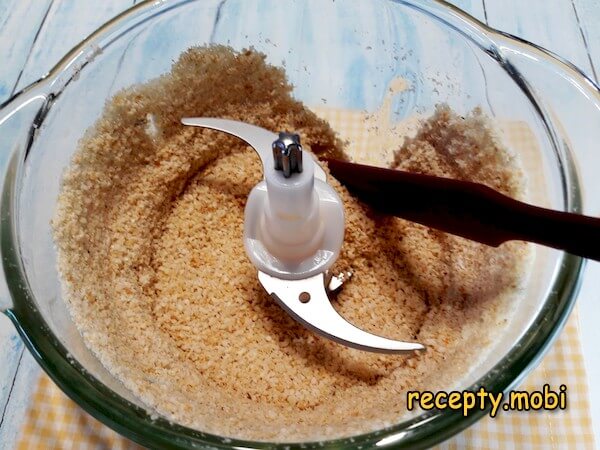
To make the work easier for the machine, I add the olive oil to the thickening mass – it is a "helper" for the blender and at the same time an "enhancer" of the flavour.
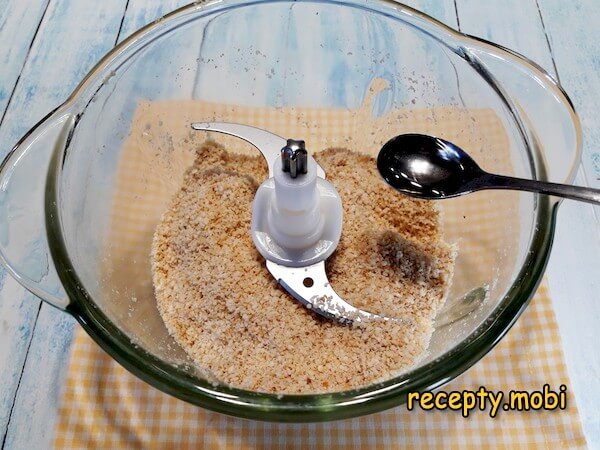
Over time the paste will become pliable, and you will be able to shape it into a ball. But this is still not the end of the process – the tahini should turn liquid and smooth.
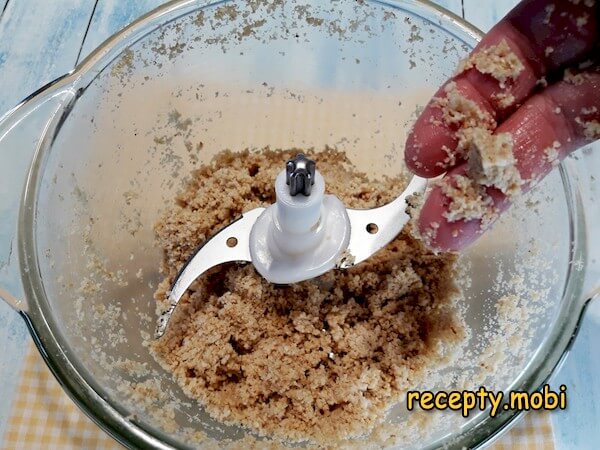
Grinding needs to continue until the sesame seeds take on the texture of thick sour cream – this is the finished tahini.
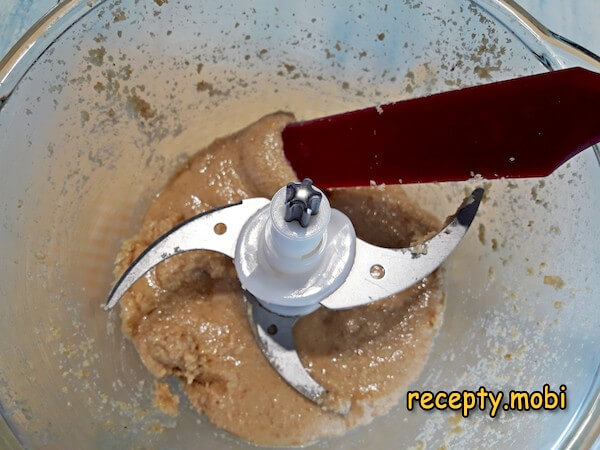
This is now real tahini. I transfer it into a suitable container and use it as a base preparation for sauces, since on its own it has a very rich flavour and is a little bitter. Pure tahini keeps in the fridge for up to 1 month in an airtight jar.
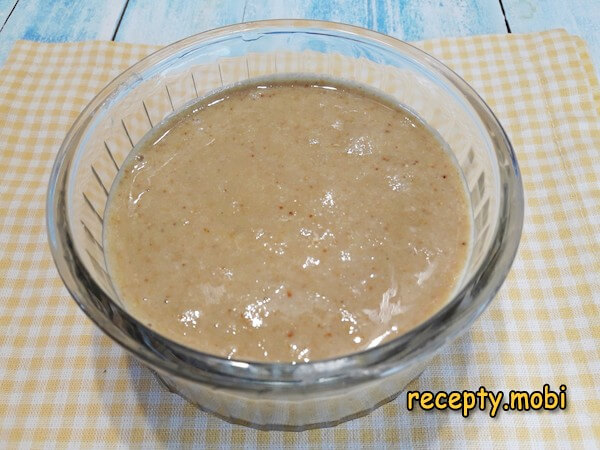
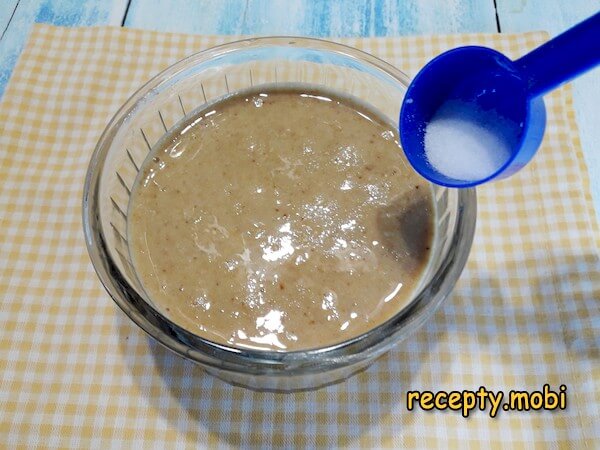
For a sauce, I sprinkle the paste with salt to taste – salt brings out the flavour and removes the bitterness.
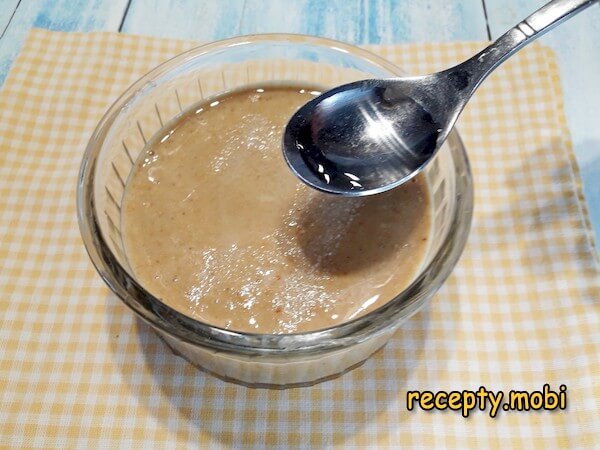
I add lemon juice (the amount also depends on individual preference) – it is the lemon that gives tahini its classic "Israeli" character.
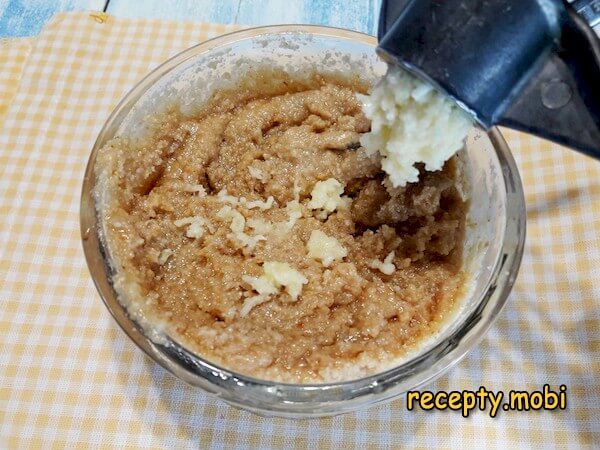
I squeeze in a little garlic. I mix everything, taste the sauce and adjust it to my liking. If you need a thinner mass, the resulting mixture should be let down with ice-cold water to the desired consistency and stirred thoroughly – ice-cold water gives the sauce an "airy" quality.


Tips
- 1
TOASTING THE SESAME is the secret to the classic flavour. Raw sesame gives a "grassy", bland paste, and under-toasted sesame gives a bland, uninteresting one. The ideal is toasting to a golden colour (not brown!) in a dry pan over medium heat for 5–7 minutes with constant stirring. The grains should start to "jump" a little and give off a characteristic nutty aroma. Overheated sesame (dark brown) gives a bitterness that can no longer be removed. Tip it straight into a cold container to stop the "carry-over" cooking from the residual heat.
- 2
CHOPPER vs BLENDER is the secret to the right technique. An ordinary immersion blender will not cope – it will overheat in 5 minutes and will not be able to "bite through" the hard seeds. You need a powerful chopper (a stationary grinder) of 500 W or more, preferably with ceramic blades. A coffee grinder also works, but in 50 g batches and with long "pauses". An alternative is a mortar and pestle (the way it is done by hand in the Middle East), but that is 1–2 hours of intensive work. Industrial mills produce the paste in 1 minute, but at home that is not realistic.
- 3
OLIVE OIL is the secret to a smooth texture. Without oil the seeds take a long time to give up their own oils, and the paste stays dry and grainy. The 2 teaspoons of olive oil are the "trigger" that starts the "oily binding" and brings the paste to the "thick sour cream" stage 2–3 times faster. Alternatives: grapeseed oil (more neutral), sesame oil (for a "double" aroma), flaxseed oil (for the "omega-3" in the mix). Butter is categorically unsuitable – the tahini will melt in the fridge.
- 4
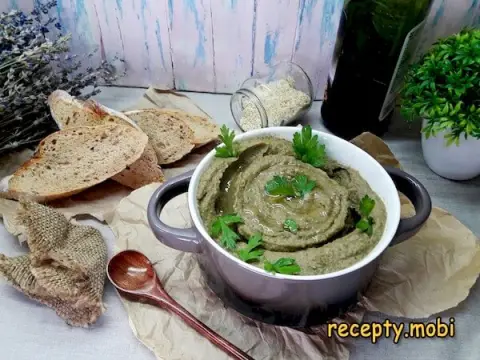
TAHINI AS A BASE is the secret to a dozen sauces. Finished tahini is a "zero-stage" semi-prepared product. On its base you can make: the classic "tahini sauce" (tahini + lemon + garlic + water), bean hummus (tahini + boiled chickpeas + lemon + garlic + spices), baba ganoush (tahini + baked aubergine + garlic), halva (tahini + honey + nuts), shawarma sauce (tahini + yogurt + herbs). The ideal serving is with homemade bread, for example sesame bread baked in the oven, as in Jerusalem.
FAQ
Which sesame is better – white or black? +
For classic tahini – white. It gives a delicate nutty flavour, a light beige colour to the paste, and a slight bitterness. Black sesame is rarer and more "characteristic": a dark grey colour to the paste (not very appetising), a deep "smoky" flavour, and a pronounced bitterness. It is better suited to "gourmet" variations. The best varieties of white are: Ethiopian (premium, golden), Indian (affordable), Turkish (classic). When choosing at the market, the grains should be smooth, without husks, and without a musty smell. The shelf life after opening is 6 months in an airtight jar.
How long does homemade tahini keep? +
In an airtight glass jar in the fridge – up to 1 month without loss of quality. The oil on top may separate slightly (this is normal; stir before use). At room temperature – no more than 7 days. In the freezer – up to 6 months, but the texture changes slightly (it becomes grainier after thawing). Tahini sauce with lemon and water keeps less well – 5–7 days in the fridge, after which it starts to "ferment". The purer the tahini (without additions), the longer it keeps.
Can I use ready-made sesame paste instead of homemade? +
Yes, supermarkets and online shops sell "tahini" – industrial tahini in jars. The quality is on a par with homemade, sometimes even better (industrial mills give a perfect texture). Among the cheaper options, Turkish brands work well. Homemade tahini only wins on freshness and control over the toasting – if you like things "your own way", it is worth it. Ready-made tahini costs on average 250–400 roubles for 250–300 g.
What do you serve tahini with? +
It is a universal sauce for the Middle East. Vegetable dishes: baked aubergines, cauliflower, carrots, quinoa, falafel. Meat dishes: roast lamb, shish kebab, kebabs, shawarma, chicken. Baked goods: pita, lavash, focaccia, flatbreads. Sweet uses: halva, tahinopita (a Greek pie), a banana smoothie, ice cream. With fruit: apples, pears, bananas, dates. For breakfast: instead of "Nutella" – tahini with honey on toast. To wash it down – be sure to have green or mint tea. The ideal "gourmet" dip is tahini + honey + a pinch of cinnamon.
- Comment
or post as a guest
Be the first to comment.