avg —
Cherry Compote for Winter

Tips
- 1
Let the jars cool before the berries – the secret against cracks. Hot glass jars will burst from cold berries, so let them cool down after sterilising.
- 2
The double pour – the secret of preserving without a separate sterilisation. The first pour warms the berries through; the second (with the sugar and citric acid) is the finished preserve.
- 3
Wrapping in towels – "self-sterilisation". The heat is held for a day, the jar cools slowly and the contents keep better.
- 4
Berries with the pits in – the secret of their shape. Without the pits the cherries will fall apart during the double pour. Stored with the pits, they keep for up to a year at most. The same principle works in other kinds of fruit compote for the winter.
Preparing the compote step by step
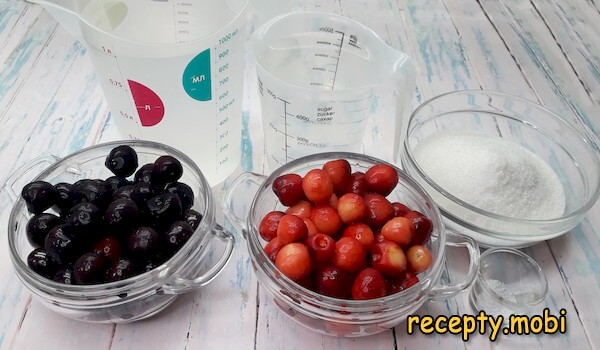
1. I get ready the ingredients I need for the cherry compote for winter.
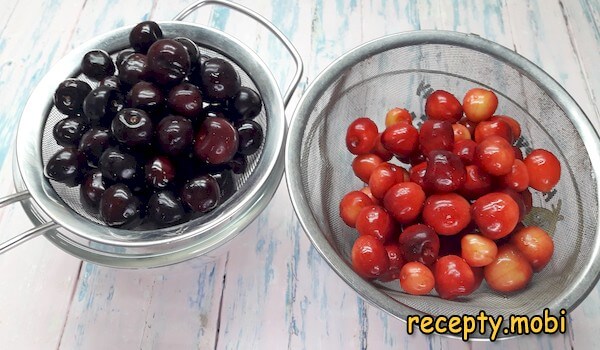
2. I wash the cherries, sort them and tip them into a sieve so the drops of water run off. I sterilise the jars in the oven or by another method and boil the metal lids for 5 minutes.
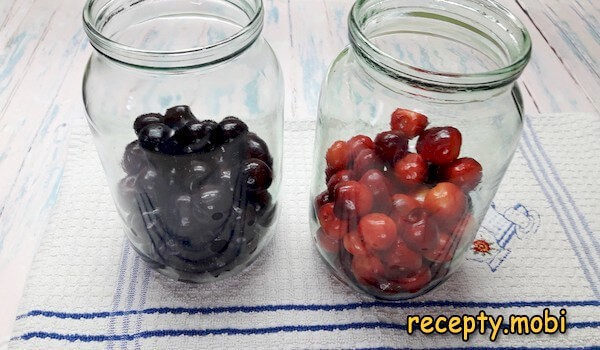
3. I pour the cherries into the jars – they should be filled a little less than half full (do not fill hot jars straight away, wait for them to cool, otherwise the glass may crack).
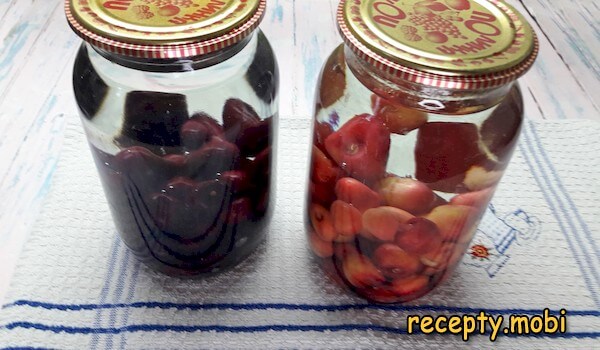
4. I boil the stated amount of water. I pour it over the berries right to the top and cover with a lid – let them warm through like this for half an hour.
5. Now I pour the water from the jars back into the same pot, where 40–50 ml of water may still be left. I add the citric acid and all the sugar. I stir and boil the syrup.
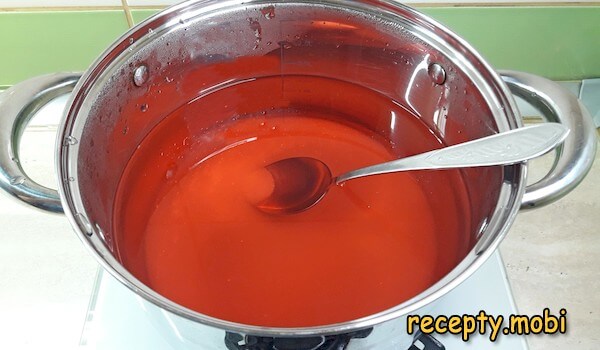
6. Now I pour the boiling syrup into each jar separately.
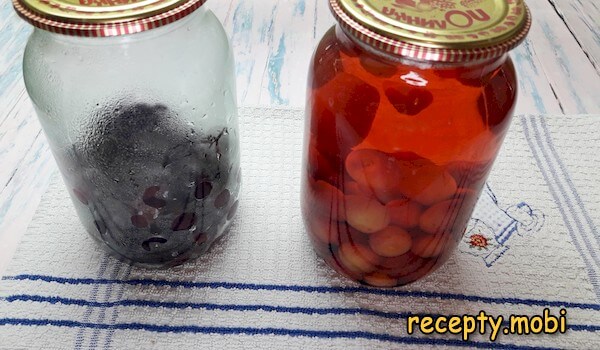
7. I seal it with a lid and make sure not a drop of liquid leaks out from under it. I turn the jar upside down. I do the same with the next jar.
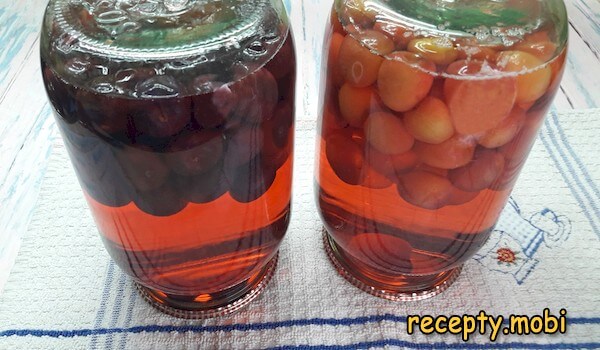
8. I wrap the sealed jars in several layers of towels and leave them for a day to cool slowly.

Since the pits were not removed from the berries, you can keep cherry compote for winter for no more than a year, and even in a flat at that. And how nice it is to remember the warm days while enjoying the summer fruit!
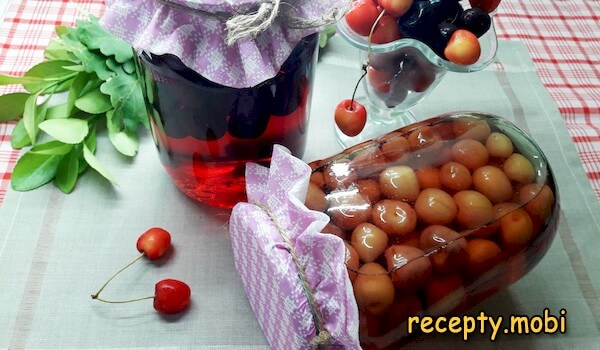
Give it a try – enjoy your meal!
FAQ
Which cherries should I choose? +
Ideally, ripe, meaty cherries (any colour, from yellow to deep burgundy). A size of 1.5–2 cm is best. Avoid ones that are spoiled, cracked, worm-eaten or unripe (sour). Farm cherries straight from the tree make the finest compote. A 50/50 mix of varieties gives a brighter flavour. Leave the pits in, as the author advises, to keep the shape and juiciness.
Can I remove the pits? +
You can, but in that case: 1) the cherries will go soft and fall apart when you pour the boiling water over them; 2) storage goes up to 2 years (with no pits, no hydrocyanic acid is released); 3) the finished cherries are easier to eat without picking out the pits. To remove them, use a cherry pitter or a hairpin. If you do take the pits out, reduce the warming time to 15–20 minutes, as the berries are more delicate. For a "children's" version, go without the pits to be safe. Decide according to your own preference.
How long does the compote keep? +
With the pits in, in sealed jars at room temperature, it keeps up to 1 year (as the author advises). In a cool, dark cellar it is also up to a year at most. Once opened, it keeps 5–7 days in the fridge. Do not store it in the sun – the jars may burst from the pressure. If a lid bulges, do not open it; throw it out. Write the sealing date on the jars so it is easy to keep track. It is best used within the first 6 months, when the flavour is brightest.
What do I serve the compote with? +
On its own as a drink – chilled in a glass with ice. With a sprig of mint it becomes a summer cooler. It goes with pies or buns, with pancakes or cottage-cheese fritters at breakfast, and with desserts (cakes and pastries). The syrup is good for soaking sponge cakes, in cocktails and over ice cream. The berries go into fruit salads, with a cottage-cheese bake, or as a decoration for desserts. It is a versatile summer preserve for the whole year round.
- Comment
or post as a guest
Be the first to comment.