avg —
Pickled Cucumbers in Jars for Winter

Instructions
I prepare the ingredients for the pickled cucumbers in jars for winter. I choose firm cucumbers with prickly bumps – it is precisely these varieties that stay crunchy after salting, whereas smooth slicing varieties go soft. I use clean bottled water – chlorinated tap water kills the lactic-acid bacteria and the fermentation simply won't start.
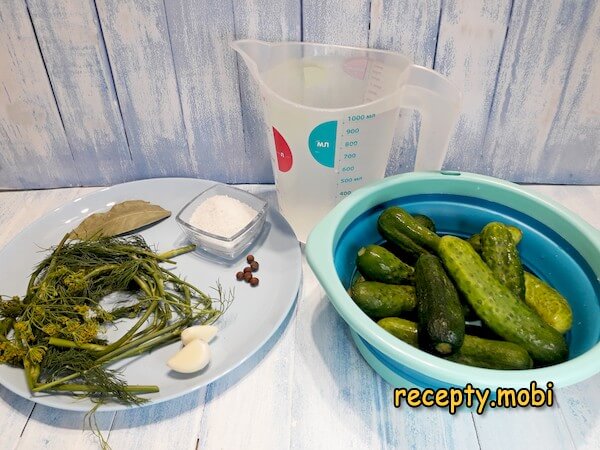
Before salting, I soak the cucumbers in cold water for an hour, then wash them thoroughly. Soaking restores the moisture the cucumbers have lost since they were picked – without this step, hollow spaces form inside the fruit and there will be no crunch.
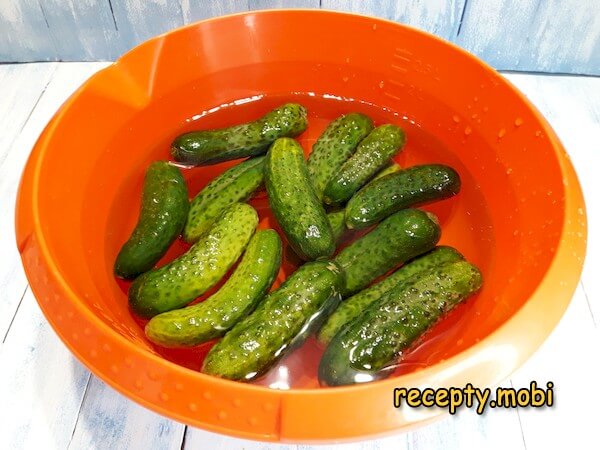
I trim the ends off both sides – through the cuts the brine penetrates the cucumber faster and salts the flesh evenly.
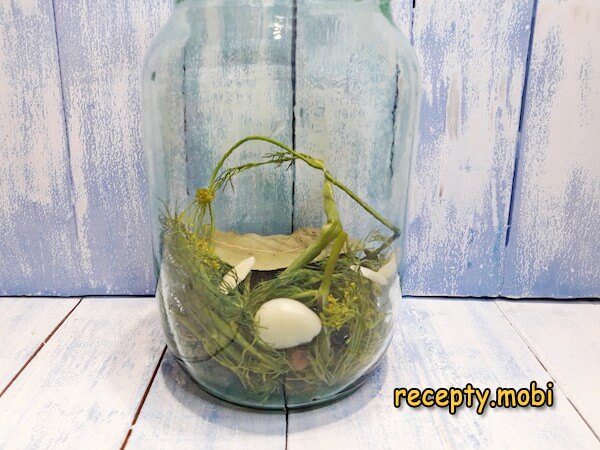
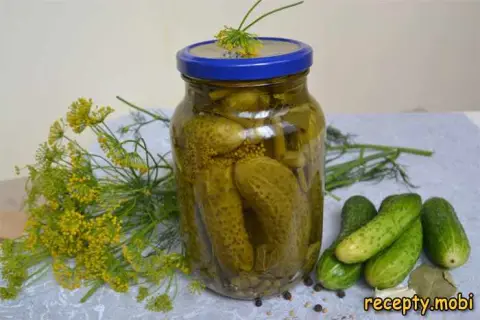
I wash the jar with baking soda; there is no need to sterilise it at this stage – the lactic-acid microflora must be able to work freely. I place the herbs and seasonings on the bottom. If you like, you can add a piece of hot pepper to give the flavour some heat.
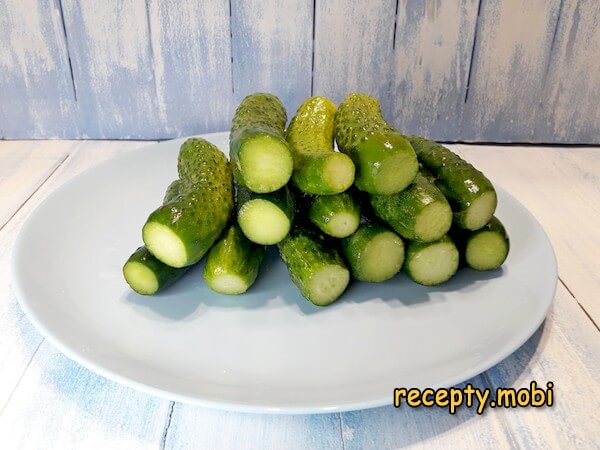
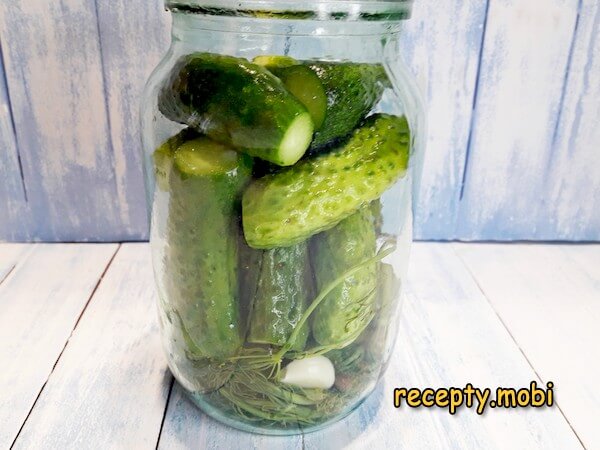
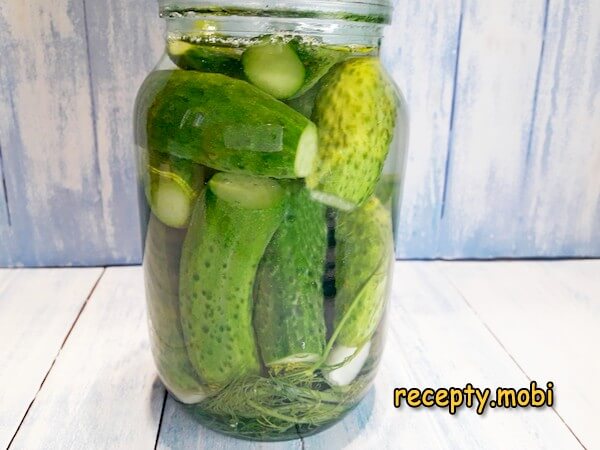
I pack the cucumbers tightly on top. You must not press them down with your hand – that crushes the tender fruit and the crunch is lost. I only tap the jar against a soft surface (a towel on the table) – the cucumbers will settle into the best position on their own.
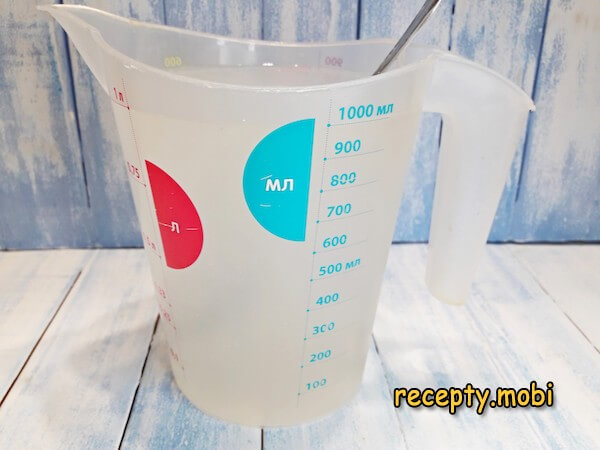
I dissolve the salt for the brine in the water – 50 g per 1 l gives a 5% concentration, the classic strength for fermentation. There is a little more brine than needed, but it is better to have a reserve: the exact amount is hard to predict, since different cucumbers take up different volumes and the gaps in the jar fill with liquid differently.
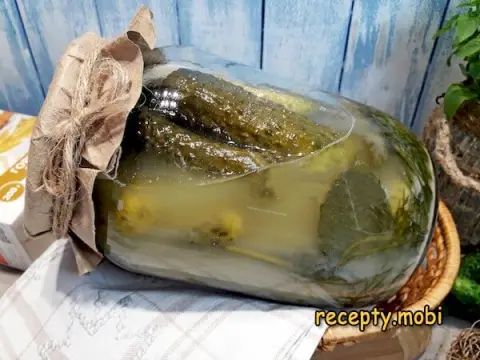
I pour this cold brine into the jar – it must completely cover the cucumbers. Anything not covered by brine will grow mould during fermentation, so the level is critical.
I always set a plate or bowl underneath – during fermentation the carbon dioxide that is released pushes brine out of the jar, and it needs to be collected (it will come in handy later). I cover the jar with a lid but do not screw it on – the gas must be able to escape freely, otherwise the jar will burst. I put the preserve in a dark, warm place for 2–3 days.
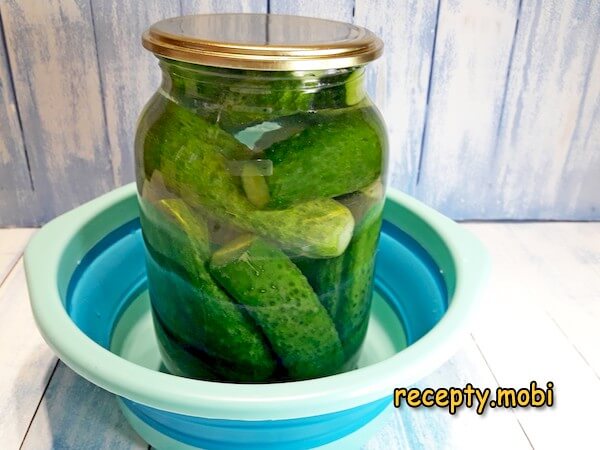
After a day the brine starts to cloud and bubbles appear – this is the signal that the lactic-acid bacteria have started working and fermentation is under way.
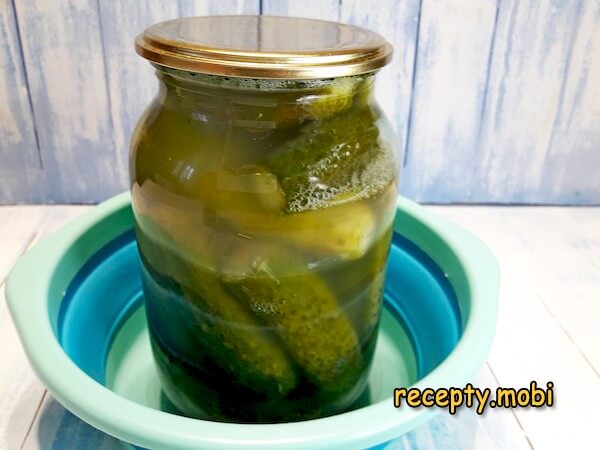
As time goes on, the foaming intensifies and brine flows out into the bowl below. This is normal – the foam is the result of active fermentation, and it is also an indicator that the process has not stopped prematurely.
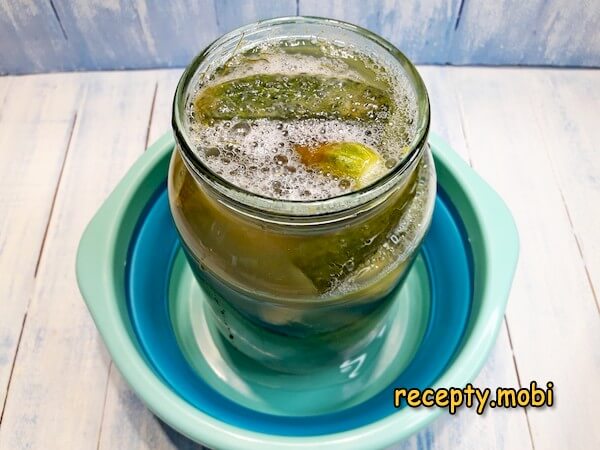
Fermentation can take different amounts of time – it depends on the temperature in the room and on the variety of cucumber. You can tell it has finished by the foam – it stops forming and the brine clears.
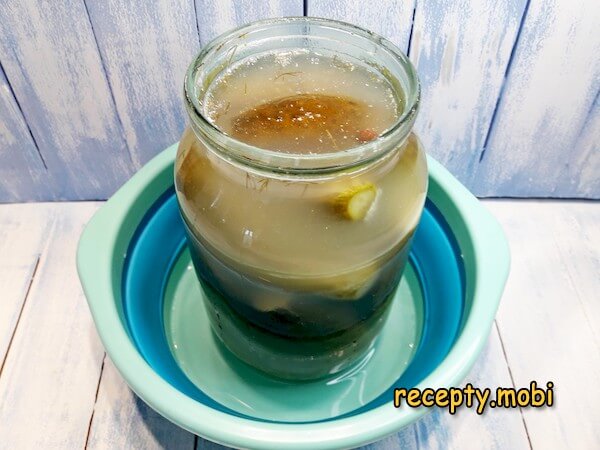
Now I drain the brine into a saucepan (including what has collected in the bowl). It is precisely this liquid that is the main treasure – it is home to those very lactic-acid bacteria and all the distinctive fermented aroma, and it will be used for the further salting.
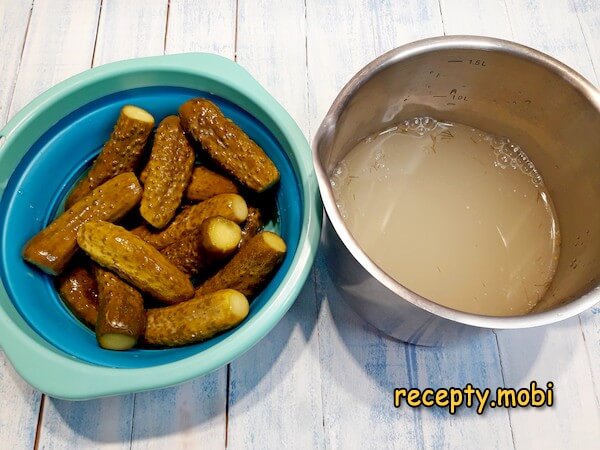
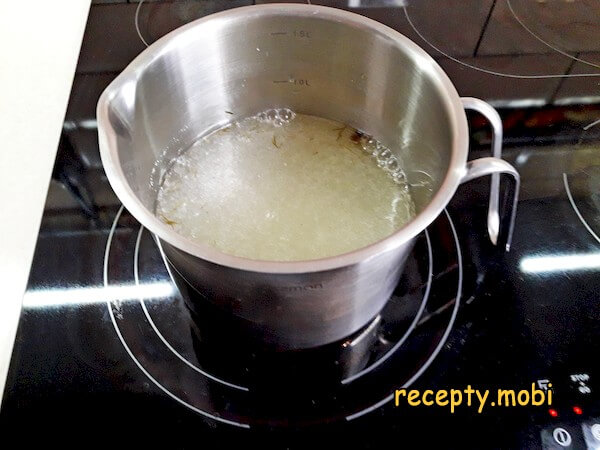
I put the brine over medium heat – not the highest, so that it warms evenly and does not boil away suddenly.
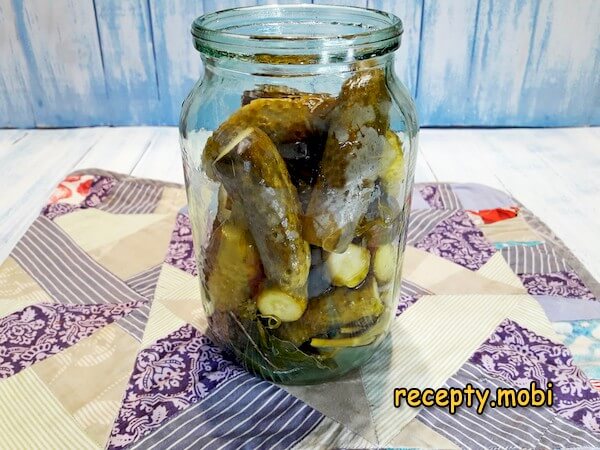
Meanwhile, I rinse the cucumbers themselves and the jar under running water – this removes the white film from fermentation. I return the cucumbers and seasonings back to the jar.
Just before it boils, foam forms on the surface of the brine – it needs to be skimmed off, otherwise it will leave a cloudy sediment in the finished jar. I boil the brine itself for 1 minute – no longer is needed, otherwise the aroma is lost, and a temperature of 100°C is enough to stop the fermentation.
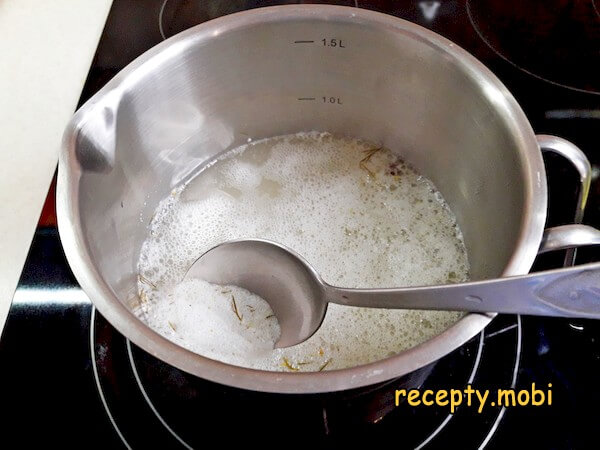
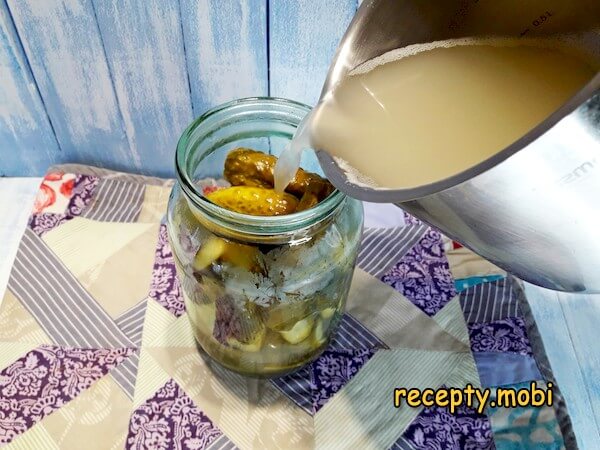
And right away, while it is hot, I pour the brine into the jar of cucumbers – contact with the boiling liquid warms the cucumbers and seals the lid.
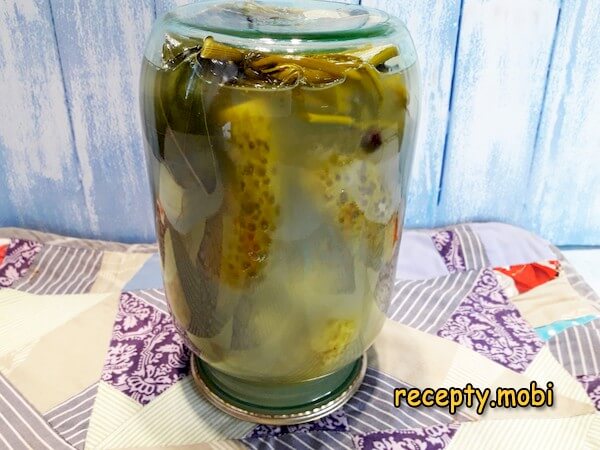
I screw on the lid (not boiled) and turn the jar over onto its lid – this way both the lid and the neck are sterilised. After 5 minutes I return the jar to its upright position and leave it on the table until it cools completely.


Tips
- 1
NON-CHLORINATED WATER is the secret to starting fermentation. Chlorine from the tap kills the lactic-acid bacteria, and the preserve simply sits there with no signs of fermentation. With bottled or spring water, fermentation got going the next day and the brine foamed actively.
- 2
BUMPY CUCUMBERS are the secret to crunch. Smooth slicing varieties go soft and turn to mush. Prickly pickling varieties (Nezhinsky, Rodnichok, Parisian Gherkin) hold their shape and stay crunchy all winter. The same trick works in crispy pickled cucumbers for winter in liter jars.
- 3
A 5% BRINE is the secret to correct salting. With less salt (3–4%) the cucumbers over-ferment and turn sour; with more (7–8%) the fermentation stops before it starts. 50 g of salt per 1 l of water is the optimum for lactic-acid bacteria.
- 4
THE DOUBLE POUR is the secret to storage without sterilisation. If you simply drain the brine and pour it back cold, the cucumbers over-ferment and the jar pops open. Drain it, boil it for a minute and pour it back hot – fermentation stops and the jar can be sealed for a year without sterilisation. The same principle is used in crispy pickled zucchini for winter in one liter jars.
FAQ
Which cucumbers are best for fermenting for winter? +
Ideally, pickling varieties with prickly black bumps: "Nezhinsky", "Rodnichok", "Zasolochny", "Parisian Gherkin" (7–12 cm long – the classic). Alternatives: "Voronezhsky", "Khrustyashchy", "Bochkovoy" (premium for home fermenting), and small gherkins up to 6 cm (premium for small jars). Do not use: slicing varieties with smooth skin and white spines – they go soft within a week in the jar. Cucumbers freshly picked from the bed in the morning are the star option, as they have not yet lost their moisture.
Can I use iodised or sea salt? +
Only coarse rock or table salt – iodised salt kills the lactic-acid bacteria and the fermentation either won't start or the brine turns bitter. Sea salt with mineral additives is also unsuitable: an unpredictable concentration and a taste of iodine. Fine "Extra" salt works, but it dissolves poorly in cold water, so it is better to dissolve it first in a small amount of hot water. The classic is grade No. 1 rock salt with no additives and no iodine.
What to do if the brine doesn't foam after 2 days? +
The main causes are chlorinated water, iodised salt or too cool a room. I check the conditions: the brine should be cloudy with bubbles on day 2–3 at a room temperature of 20–22°C. If nothing is happening, I move the jar closer to the radiator or onto a sunny windowsill, and I add a tablespoon of brine from other fermented vegetables or 1–2 drops of whey – the bacteria will "kick-start" the process. If it has failed completely, drain the brine and replace it with fresh brine made from bottled water.
How long do pickled cucumbers keep after the double pour? +
In an ordinary kitchen cupboard at room temperature – up to a year; in a cellar or refrigerator – up to 1.5 years without loss of quality. After opening the jar, I move it to the refrigerator and eat the contents within 2 weeks. Signs of spoilage: cloudy brine with white flakes, an unpleasant rotten smell, a bulging lid – I throw such a jar out without regret. Properly made cucumbers only become richer in taste and firmer in texture with age.
- Comment
or post as a guest
Be the first to comment.