avg —
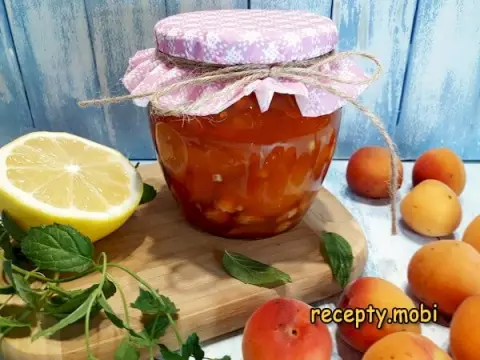
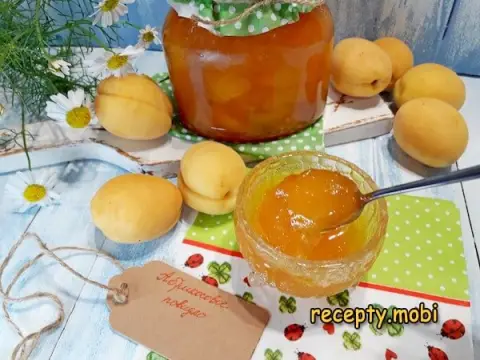
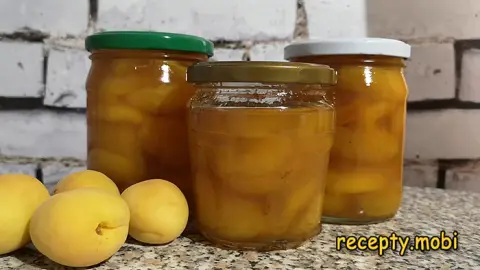
Apricots in Syrup for Winter

Instructions
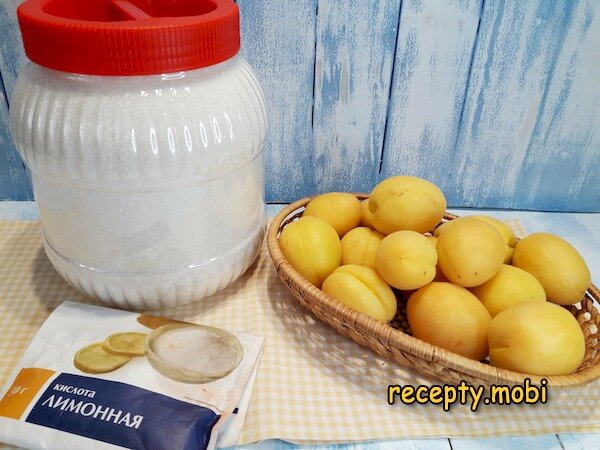
I prepare the ingredients. The amounts are worked out from a formula: for every 1 litre of water you need 450 g of sugar and 0.5 teaspoon of citric acid. From this you can calculate the quantities you need for any jar volume.
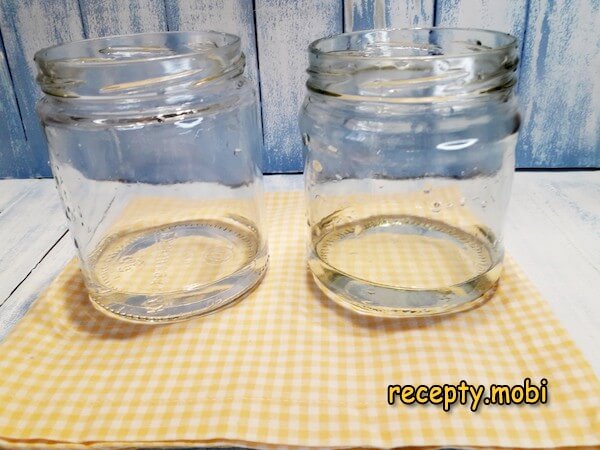
First, sterilise the glass jars. The simplest and quickest way is to pour 50 ml of water into clean jars and steam them in the microwave for 2 minutes at full power. I boil the metal lids for 3 minutes.
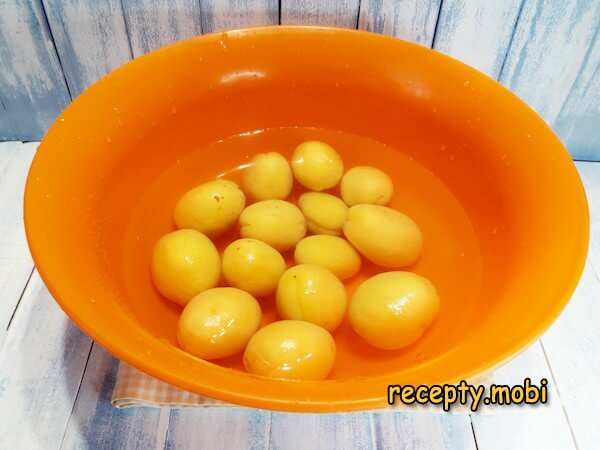
I cover the apricots with water for about 5 minutes and wash them well, taking care not to damage their velvety skin.
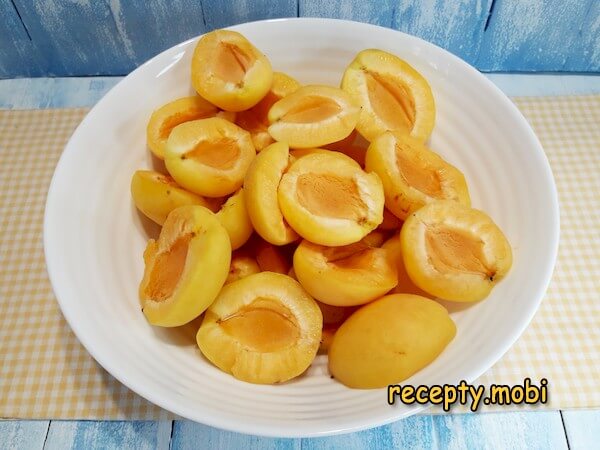
I open the fruit into halves and remove the pits.
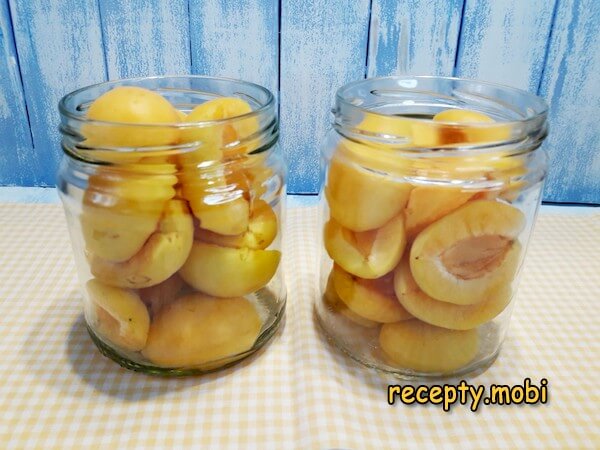
I fill the jars with the prepared halves (a half-litre jar holds 14 large halves, that is 7 apricots). If the fruit pokes out of the jar a little, that is fine – it will settle after the heat treatment. I never try to force the halves in, or they will turn to mush.
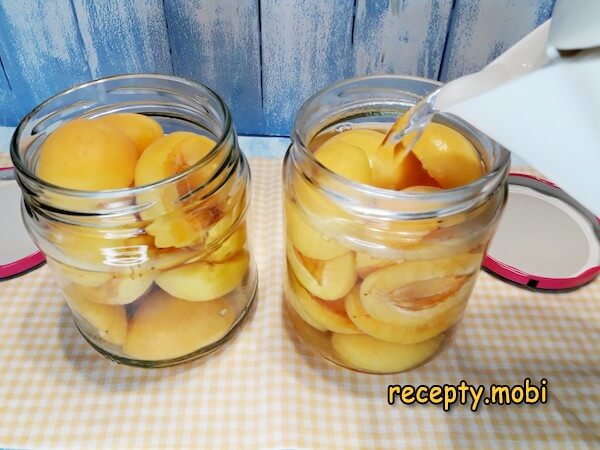
I pour boiling water right to the very top.
I screw the lid on loosely, or set a small weight on top if the lids are not the screw type.
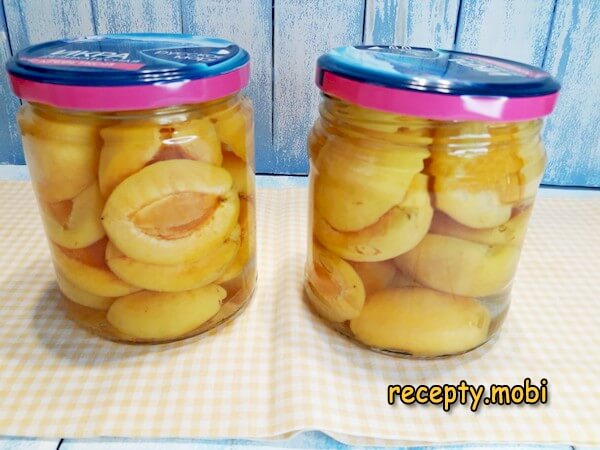
I cover the jars with a towel and leave them to warm through for 20 minutes.
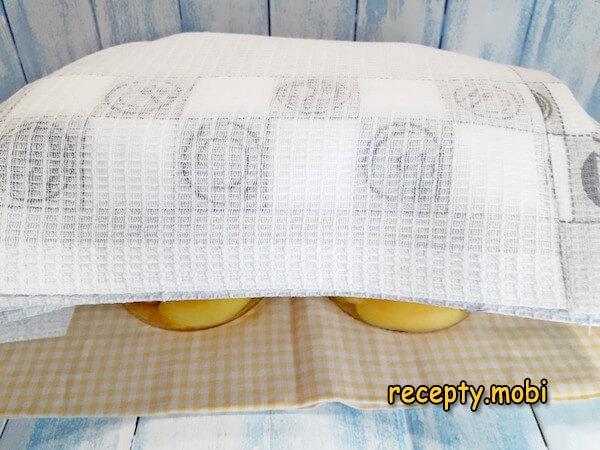
Next I drain the liquid from the jars straight into a measuring cup to find out its volume. Using the formula above, I work out how much sugar and citric acid will be needed.
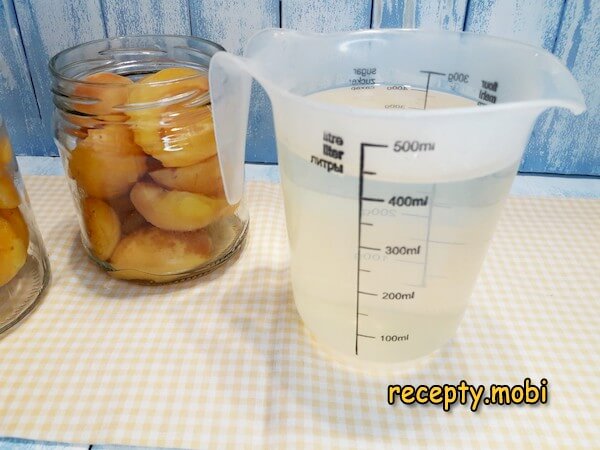
I pour the drained liquid into a pot and add the citric acid.
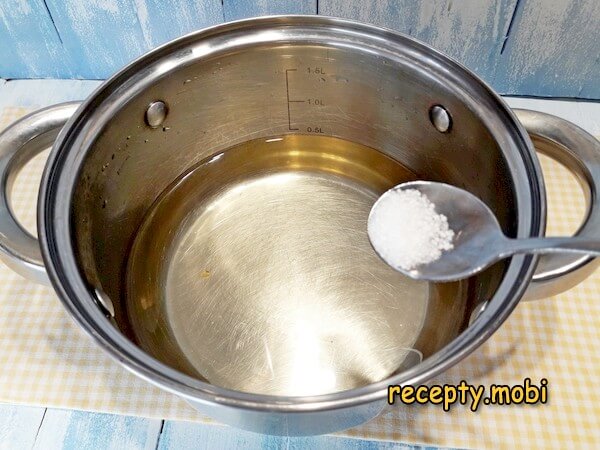
I add the sugar.
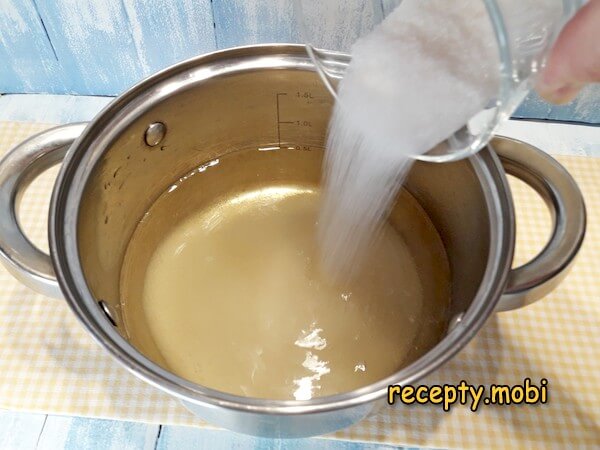
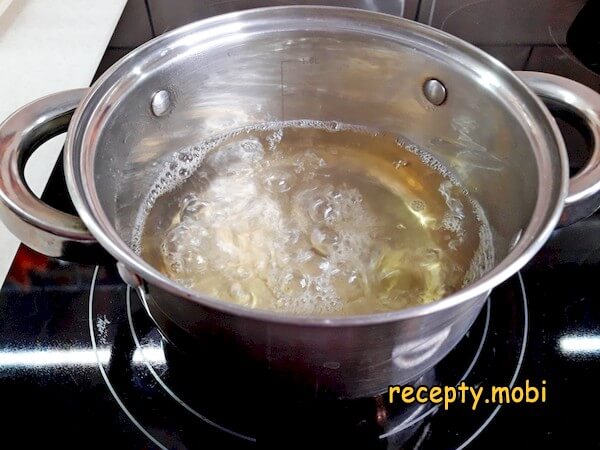
I put the pot over the heat and, once it boils, simmer the syrup for 5 minutes so that it bubbles well.
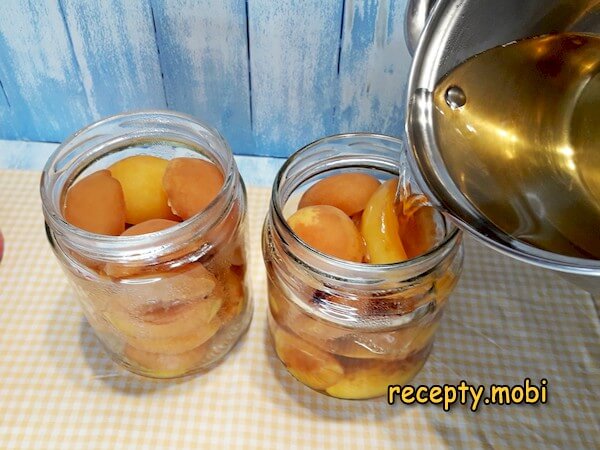
I pour the boiling syrup over the apricots.
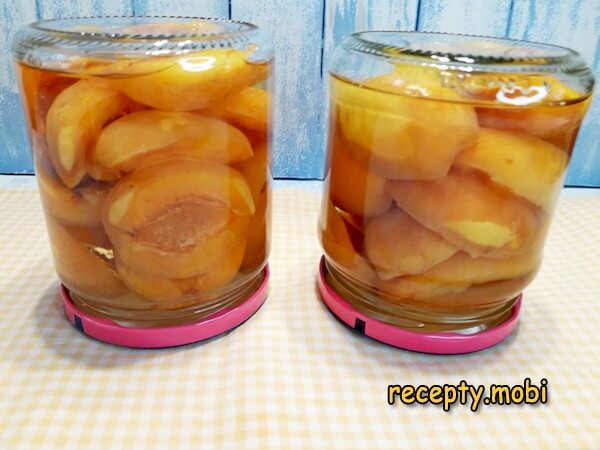
I seal the jars and turn them upside down to check that they are closed tightly. Then I wrap the sealed jars in a warm blanket and leave them like that until completely cool.


Tips
- 1
Careful packing is the secret to keeping the shape. If you force the apricots in, they will fall apart into mush. It is fine if they peek out slightly – they will settle once the heat does its work.
- 2
The double pour is the secret to good keeping. A single pour of syrup will not kill all the bacteria. First boiling water for 20 minutes, then a second pour of boiling syrup gives reliable sterilisation.
- 3
Citric acid is the secret to the colour. Without acid the apricots darken in the jar. With 0.25 tsp the fruit keeps its bright orange colour for a year.
- 4
The blanket for 10 hours is the secret to pasteurisation. Cooling too quickly risks fermentation. The warm bath under the blanket gently heats the contents a little longer. The same principle works for other kinds of fruit in syrup for winter.
FAQ
Which apricots should I choose? +
The ideal choice is large, firm apricots of the classic preserving kind (14 of them). You can also use peach halves (10), nectarines (12), a mix of apricots and plums (7 of each), mirabelle plums (20 small ones), or a mix of apricots and cherries (14 apricots plus 100 g of cherries). Apricots from your own garden are the best option of all. Do not use over-ripe soft fruit (it will fall apart), bruised or spotted fruit, or over-ripe fruit with cracked skin. For the classic version you must use firm, fragrant apricots of medium ripeness.
Can I replace the citric acid? +
Alternatives are fresh lemon juice (1 tbsp), lime juice (1 tbsp), apple cider vinegar 6% (0.5 tsp), ascorbic acid (0.5 g), lemon juice concentrate (1 tsp), thin fresh lemon slices (2 rounds per jar), redcurrant juice (1 tbsp) or gooseberry juice (1 tbsp). Fresh lemon is the best option. Do not use vinegar essence, as it gives a harsh taste. For the classic version you must use 0.25 tsp of citric acid per half-litre jar.
How long do apricots in syrup keep? +
In a cellar or a cool dark place at 5-15°C they keep for up to 1.5 years. At room temperature up to 25°C they keep for 1 year. Once the jar is opened, they keep in the fridge for 1 week. Chill them a little more before serving. If the lid bulges or there is mould, do not use them – throw them out. In the freezer, opened apricots keep for up to 6 months in a plastic container. After about a week the flavour deepens as the fruit becomes fully soaked in syrup. Do not leave the jars in sunlight, or the syrup will turn cloudy.
What do you serve apricots in syrup with? +
A winter classic is with a scoop of vanilla ice cream. They make a fine decoration for cakes and pies, go well with cheesecakes, and are good for soaking sponge layers. Serve them with pancakes and syrniki, with cottage cheese bakes, with panna cotta, with Greek yogurt and honey, or with whipped cream. They are lovely alongside a cup of black tea or a cappuccino, with a chocolate cake, or with thin pancakes filled with cottage cheese. They also work as a decoration for children's semolina porridge, and in cocktails and smoothies. The syrup itself goes into drinks and compotes. All in all, they make a versatile homemade dessert for a festive table, for baking and for a healthy-eating menu.
- Comment
or post as a guest
Be the first to comment.