avg —
Lemon Jam with Peel: Bright, Amber and Not Bitter

Instructions
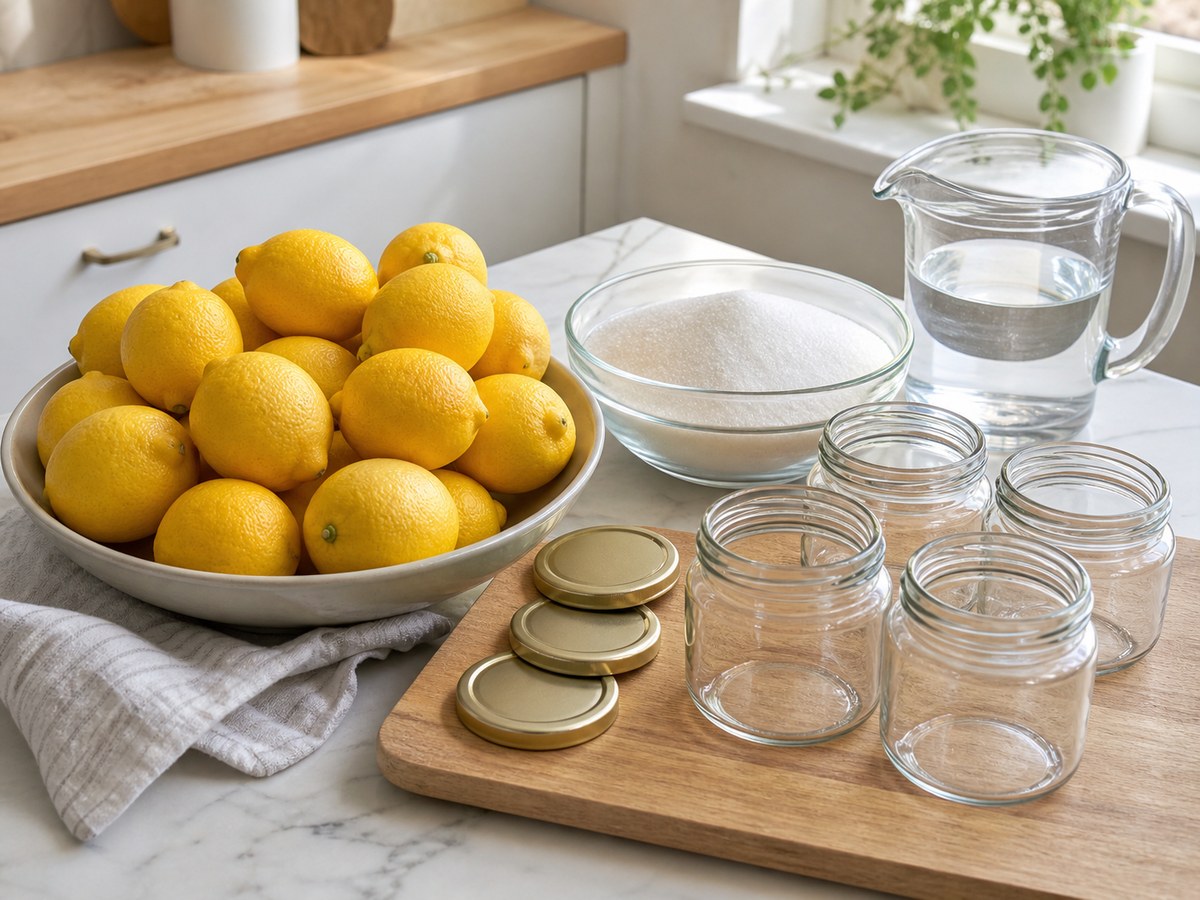
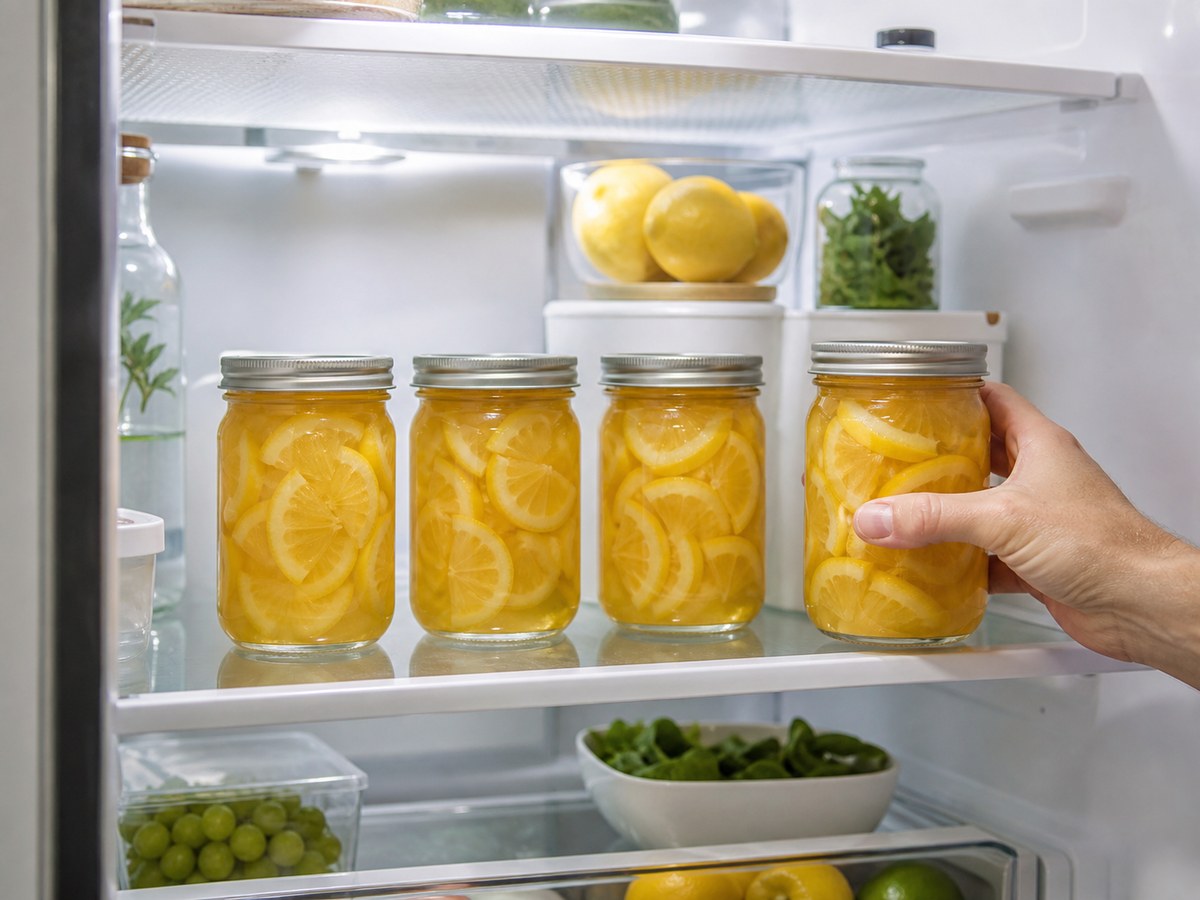
Prepare the ingredients and containers. Measure 1 kg firm ripe lemons, 900 g sugar and 500 ml water. Thoroughly wash, rinse and dry four heatproof 350 ml jars and their lids. These are clean refrigerator containers, not jars prepared for pantry canning.
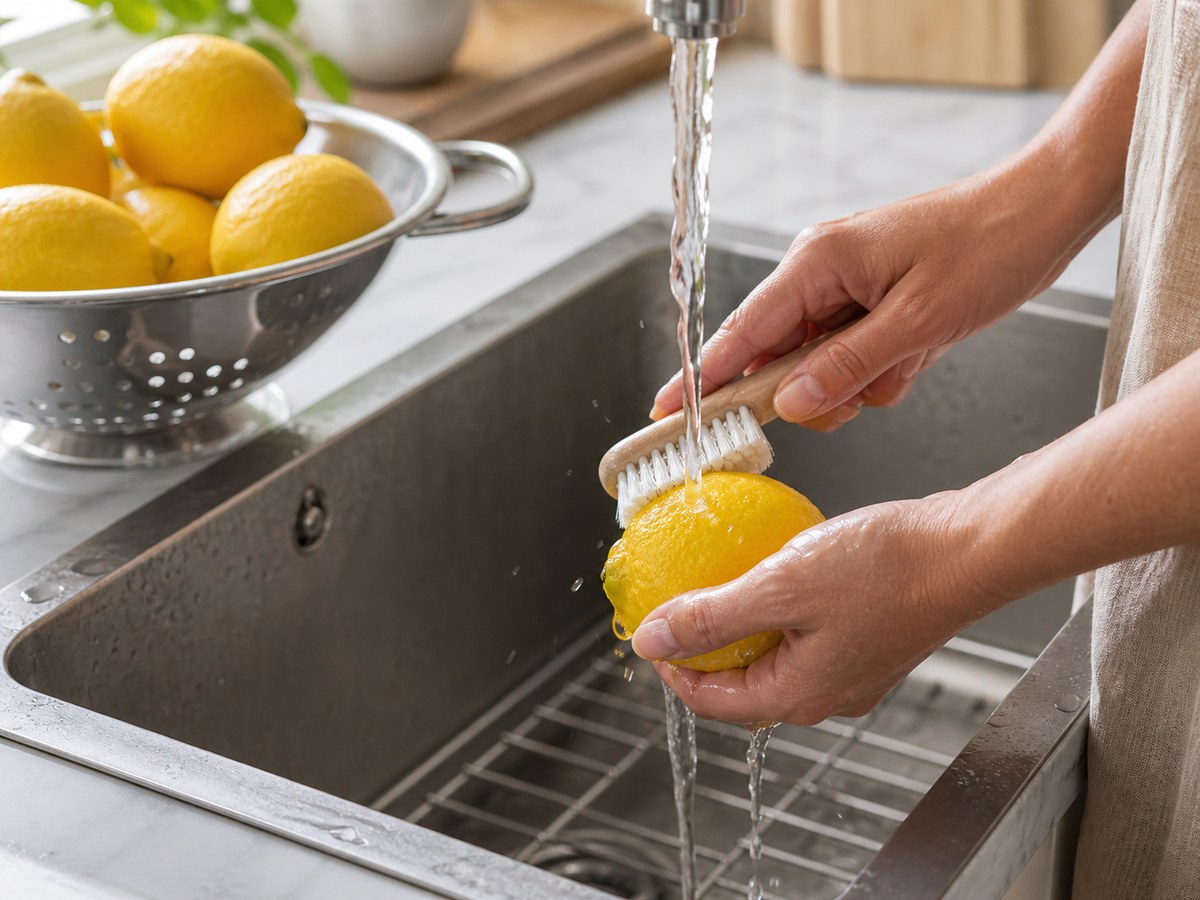
Wash the lemons thoroughly. Choose fruit with peel that is suitable for eating, ideally unwaxed or labelled for zest. Scrub every lemon under warm running water with a clean produce brush, rinse and dry. Trim only the two ends.
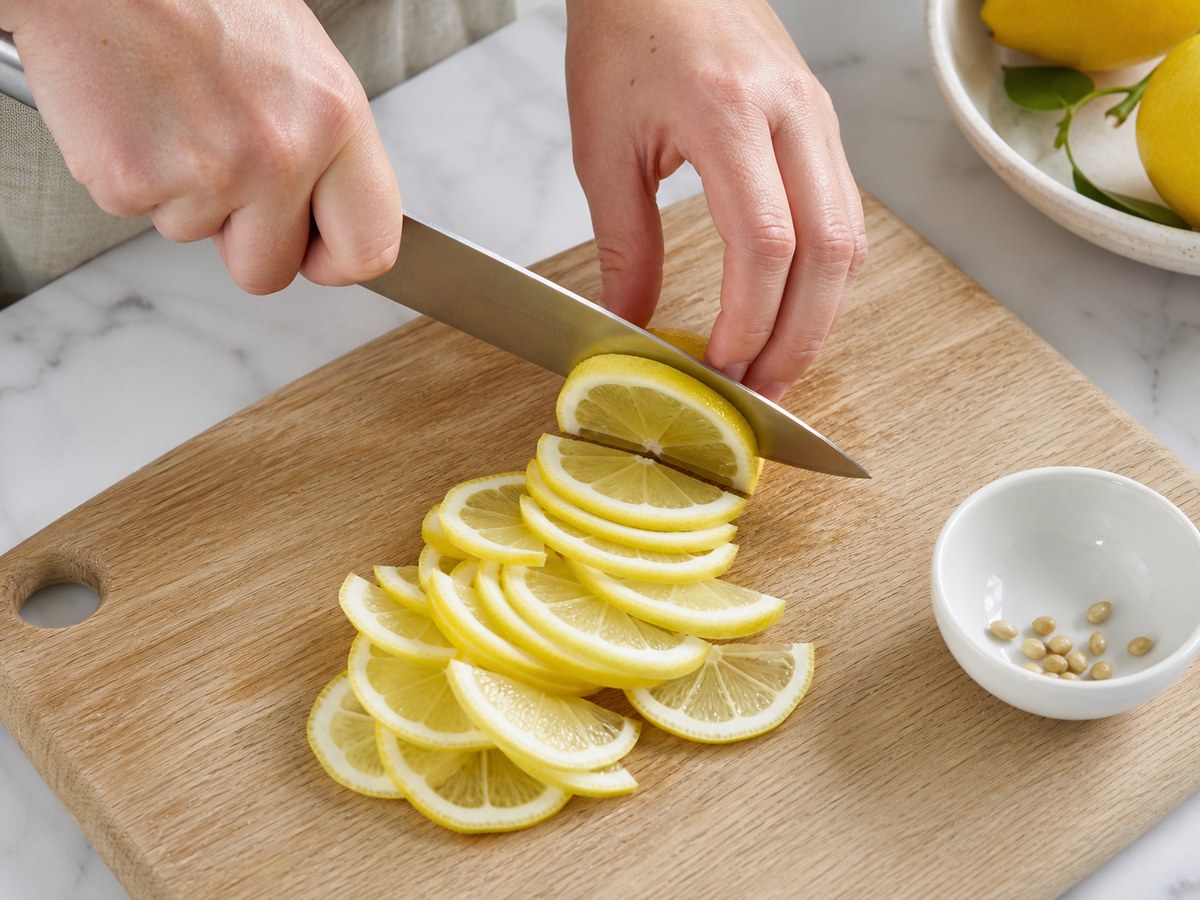
Slice and remove the seeds. Halve the lemons lengthways, then cut them crosswise into thin 2–3 mm half-moons. Collect any juice. Remove every seed and any large, firm section of the central membrane because both can intensify bitterness during cooking.
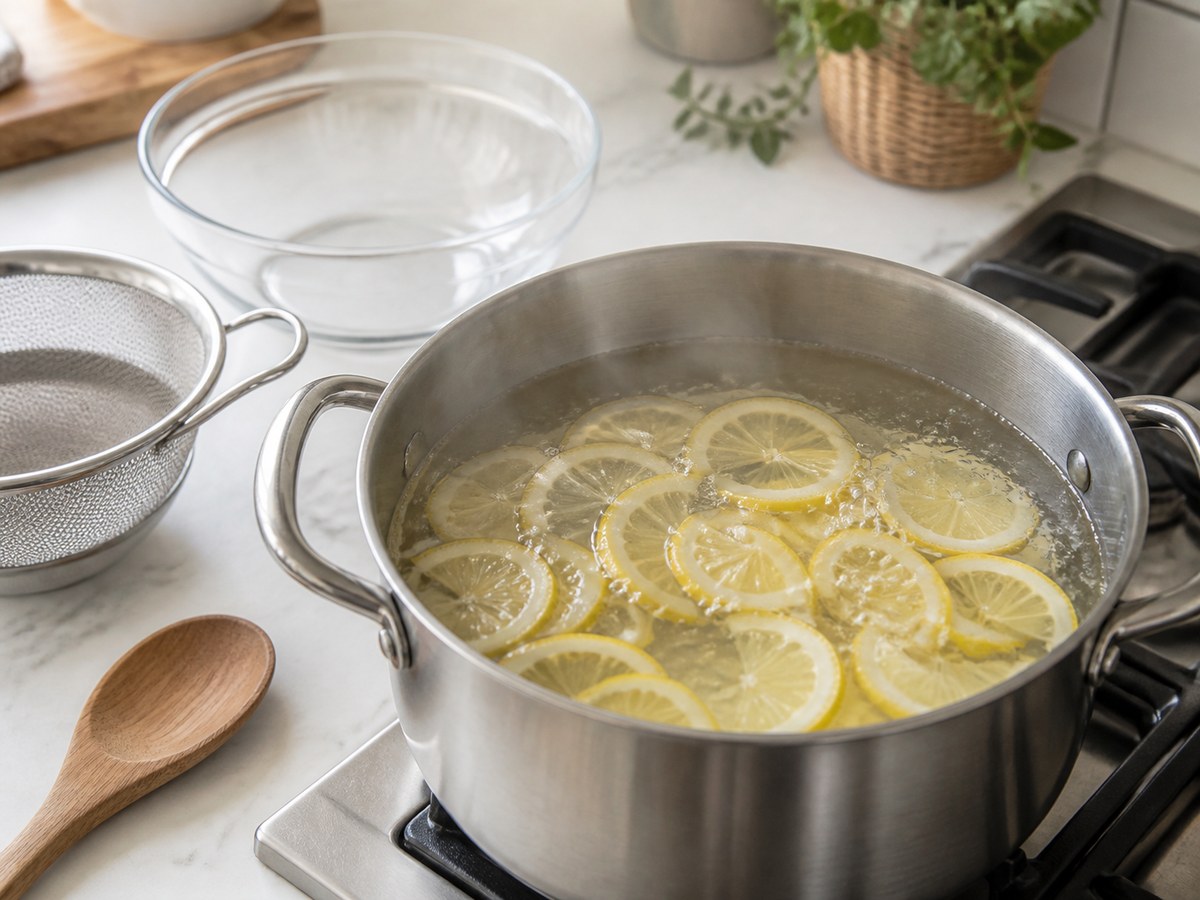
Blanch the slices twice. Cover the sliced lemons generously with fresh water, bring to a boil and cook for 2 minutes. Drain through a sieve and discard the water. Repeat once with fresh water. Taste a small cooled piece of peel; if this particular fruit is exceptionally bitter, perform a third identical cycle.
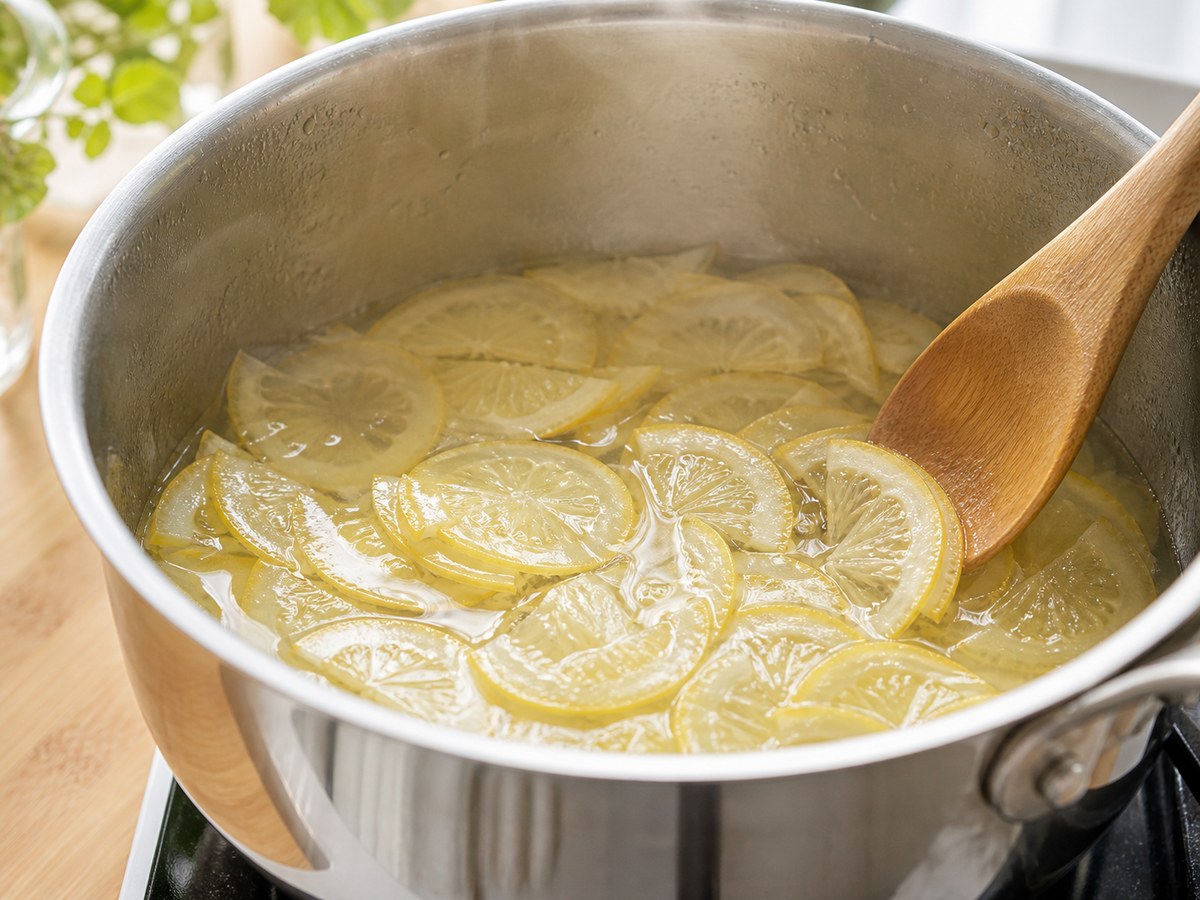
Soften the peel before adding sugar. Return the slices to a wide saucepan with the collected juice and 500 ml fresh water. Bring to a gentle simmer and cook for 20–25 minutes, until the white part of the peel is tender and can be crushed easily against the pan with the edge of a spoon. Do not add sugar while the peel is still firm.
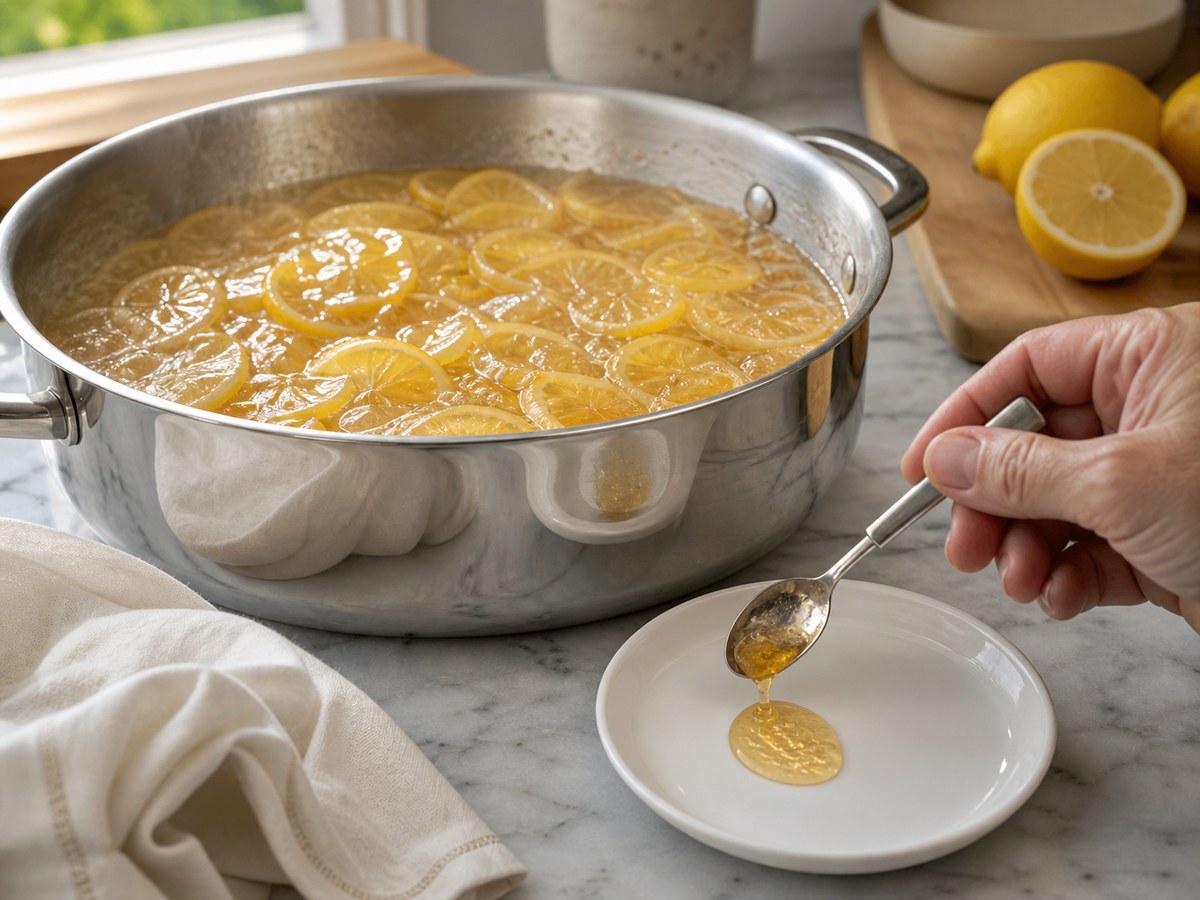
Add the sugar and reduce. Stir in 900 g sugar and heat gently until every crystal dissolves. Then boil steadily for 15–25 minutes, skimming foam when necessary. Start testing at 15 minutes: near sea level the temperature is usually about 104–105°C/219–221°F, while a drop on a cold plate should spread slowly and wrinkle when pushed.
Distribute the peel and chill. Remove the pan from the heat and rest for 5–7 minutes, stirring gently once so the slices do not all float to the top. Spoon into warm jars, leaving 1–2 cm headspace. Cool for no more than 2 hours, cover and refrigerate; for longer storage, freeze in small freezer-safe containers.


How to reduce bitterness in lemon jam
Seeds, thick white pith and naturally bitter cultivars contribute most of the harsh flavour. Thin slicing and two short blanching cycles in fresh water tame that bitterness without stripping away all citrus character. Do not soak sliced lemons at room temperature for a day: it does not make the method safer and noticeably weakens the aroma.
| Cause | What to do | What to avoid |
|---|---|---|
| Seeds | Remove every seed before cooking | Crushing lemons with the seeds |
| Thick white pith | Slice 2–3 mm thick and blanch twice | Leaving large, firm membrane sections |
| A particularly bitter cultivar | Taste the peel and blanch a third time if needed | Masking strong bitterness with extra sugar |
| Overcooking | Start testing 15 minutes after adding sugar | Cooking until dark brown |
How to tell when lemon jam is ready
- The peel is tender before the sugar goes in. It softens very slowly once surrounded by concentrated syrup, so check it during step five.
- The syrup remains pale amber. A brown colour and caramel smell mean the batch has been overheated.
- Use a cold plate. Chill a small plate in the freezer for 10 minutes, add a drop of syrup and draw a finger through it; the trail should close slowly.
- Temperature is only a guide. About 104–105°C/219–221°F applies near sea level; water boils at a lower temperature at altitude, so the cold-plate test matters more.
- The final set appears after cooling. Hot syrup should remain fluid, so do not try to make it as thick as cold jam while it is still in the pan.
Storing lemon jam
| Method | Best-quality period | Conditions |
|---|---|---|
| Refrigerator | 10–14 days | At or below 4°C/40°F, in a clean covered jar, using only a clean spoon |
| Freezer | About 3 months | Freezer-safe 200–300 ml containers with 2 cm headspace |
| Room temperature | Not recommended | This formula has no tested processing schedule for pantry storage |
Thaw one portion in the refrigerator and do not refreeze it. If you see mould, gas, foam, an unusual smell or a slimy texture, do not taste the product; discard the entire container.
Nutrition
One 20 g serving contains approximately 55 kcal, less than 1 g protein, 0 g fat and about 14 g carbohydrate. This is an estimate because the juiciness of the lemons, final batch weight and ratio of peel to syrup all affect the result.
Serving ideas
Serve lemon jam with toast, pancakes, natural yoghurt and soft cheese, or stir a spoonful of syrup into tea and homemade cake filling. For another unusual sweet preserve, try green tomato jam with lemon, or browse the homemade jam collection.
Recipe video: Lemon jam with peel and slices
Important: The video complements this recipe. Use the exact quantities, temperature, timing and storage guidance in this article, as the creator's version may differ.
The hero image and step photographs are AI-generated visual aids. The video demonstrates a related method; its ingredients and storage advice may differ, so follow the written recipe on this page whenever the two disagree.
FAQ
Which lemons are best for jam with peel? +
Choose firm ripe fruit with thin or medium peel, no green patches and no damage. Because the peel remains in the jam, look for unwaxed lemons or fruit specifically labelled as suitable for using the zest.
Can wax be removed completely from ordinary lemons? +
Warm water and a clean produce brush remove dirt and some surface coating, but they cannot guarantee that every applied substance is gone. The more reliable choice is to buy fruit whose peel is intended for eating.
Why is my lemon jam still bitter? +
Seeds, thick membranes or a naturally bitter cultivar are the usual causes. Remove every seed, slice the fruit 2–3 mm thick and replace the water after each blanching cycle; give exceptionally bitter peel a third brief blanch.
Do all the lemon seeds need to be removed? +
Yes. Even a few cut or crushed seeds can create an unpleasant harsh bitterness. Lift them out with the tip of a knife over a separate bowl so they cannot accidentally fall back into the pan.
Why did the lemon peel stay tough? +
The sugar was probably added too soon. Simmer the slices in fresh water for 20–25 minutes first and press the white part with a spoon; it should crush easily. Peel softens much more slowly in concentrated sugar syrup.
Why did the jam not set? +
Hot lemon jam is always much looser than the cooled product. Use the cold-plate test and judge the final texture only after complete cooling; if the syrup is still watery, return it to a wide pan and boil for another 3–5 minutes.
Can I reduce the sugar? +
You can for a small refrigerated batch, but the jam will be looser and more tart, and its storage life will not increase. With 700–750 g sugar per kilogram of lemons, refrigerate and use within 7–10 days.
How long does lemon jam keep? +
Allow 10–14 days in a clean covered jar at or below 4°C/40°F. For longer storage, cool the jam completely, divide it among small freezer-safe containers and freeze for about 3 months; do not store this version in the pantry.
- Comment
or post as a guest
Be the first to comment.