avg —
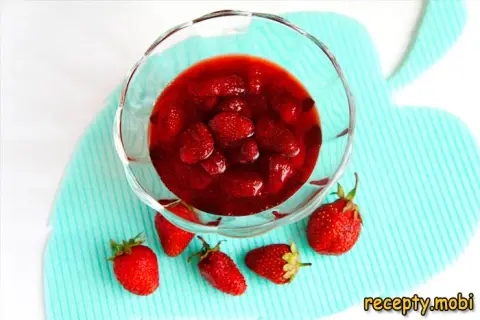
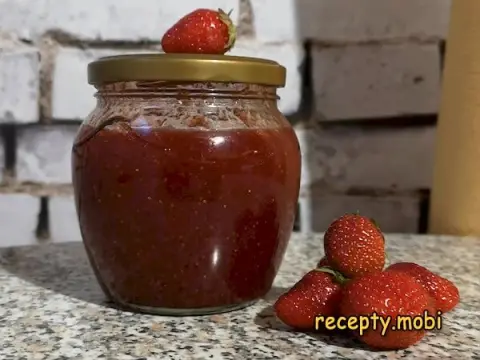
Strawberry Jam with Gelatin

Instructions
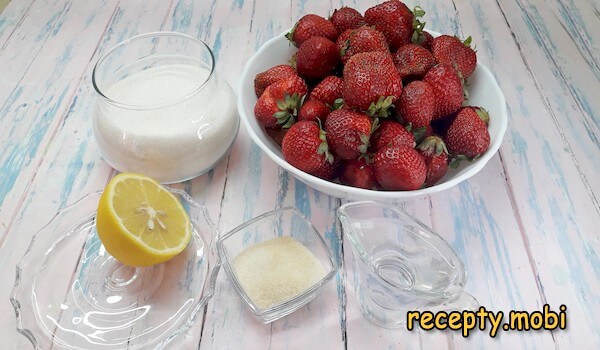
I prepare the listed ingredients for the strawberry jam with gelatin for winter.
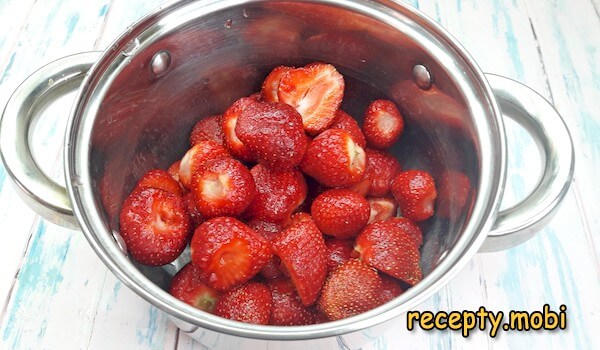
I put the clean medium and small berries into a stainless-steel saucepan or bowl whole (such cookware rules out any chance of scorching). I cut large berries in half (without chopping them too finely).
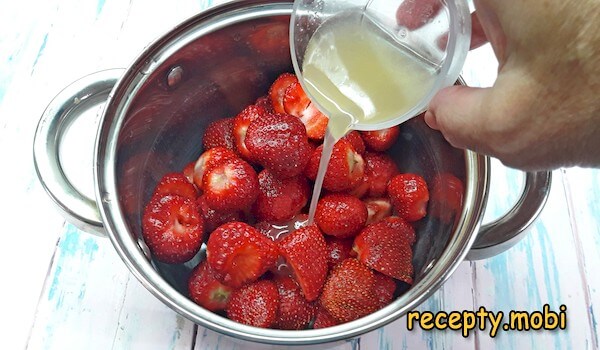
I squeeze in the lemon juice – it preserves the natural strawberry colour and makes the flavour richer. But the jam turns out wonderfully even without an acidifier.
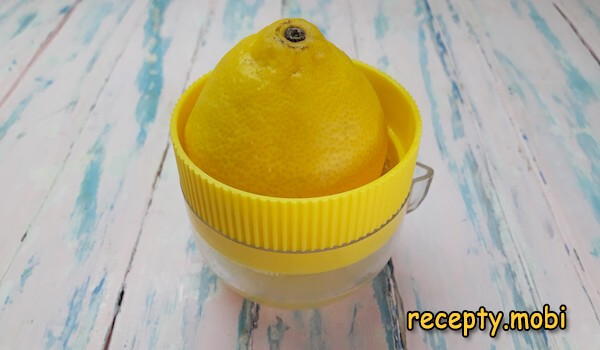
I pour the resulting juice over the berries.
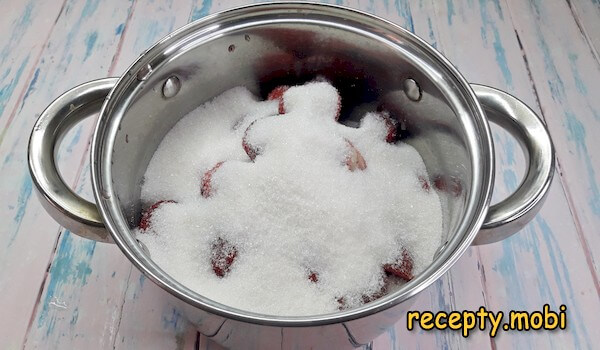
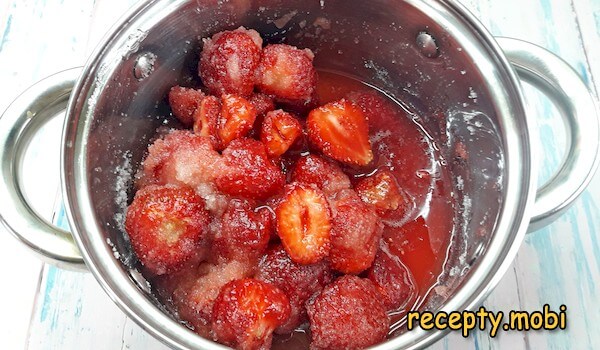
I sprinkle everything with the sugar.
I cover the saucepan with a lid and shake it so the sugar spreads throughout and the fruit is damaged less.
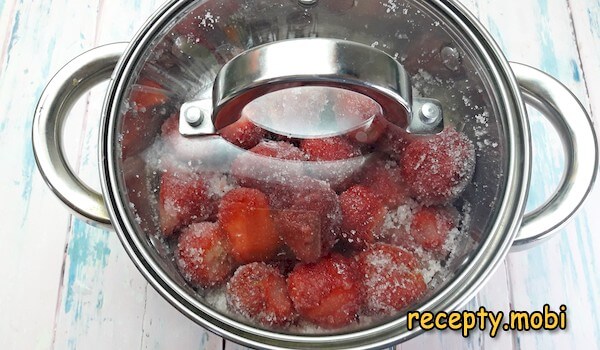
I wait about 15 minutes for the juice to be released.
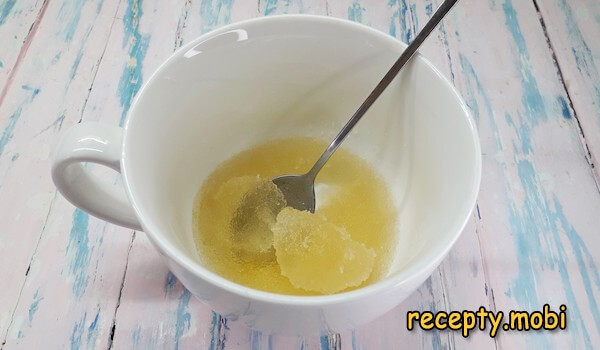
I pour the water over the gelatin. Once it has swelled, I carefully melt it to a liquid, for example in the microwave on defrost mode.
I put the bowl of strawberries over moderate heat first. The sugar and the released juice should merge into one and become a syrup.
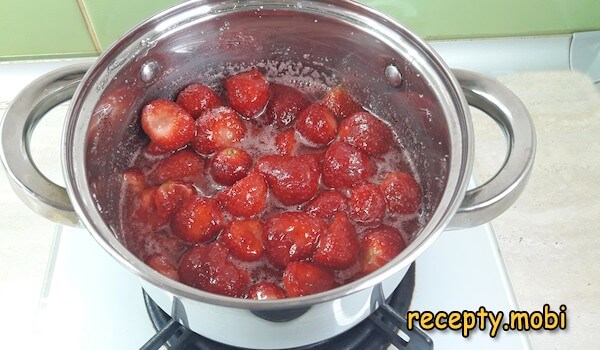
Then I cook the jam over the lowest heat for 7 minutes. There is no need to skim the foam – it contains pectin, and that helps the gelatin stabilise the whole liquid fraction.
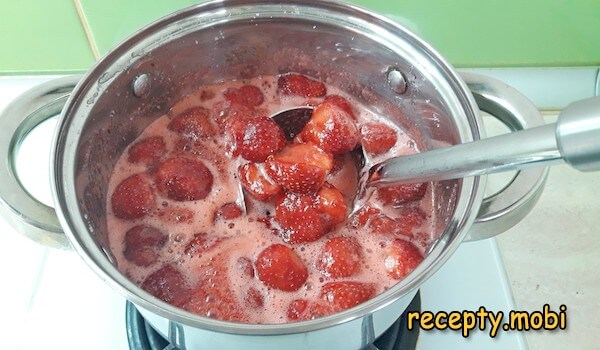
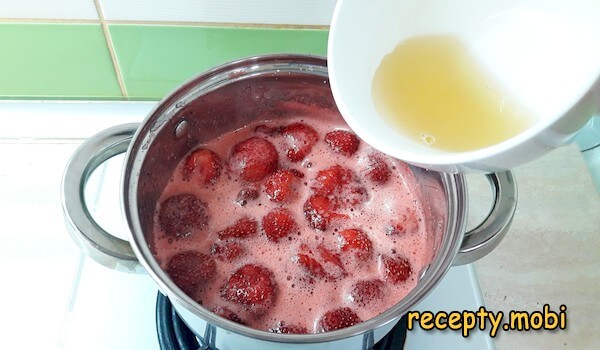
I turn off the burner and immediately pour the prepared gelatin into the hot jam. I stir it in.
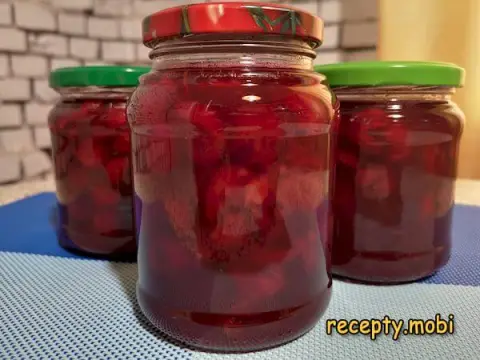
I pour the jam into the jars right to the top, standing them on a towel.
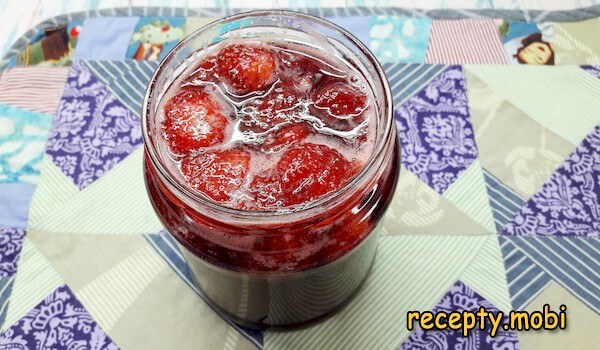
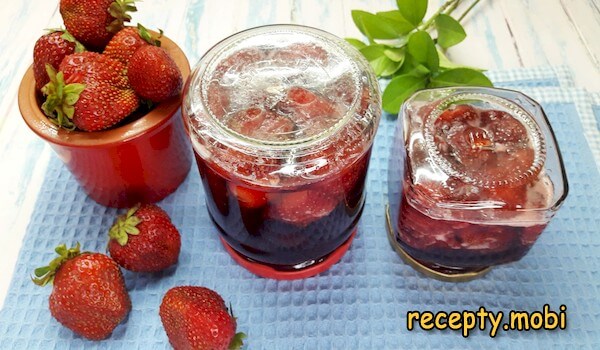
I screw on the lids and turn the jars upside down for half an hour. Then I stand the jars the right way up (otherwise the set jam will stay hanging at the top and won't settle to the bottom) and let them cool slowly.


Tips
- 1
Gelatin instead of long cooking – the secret to thickness. Ordinary strawberry jam is runny. Gelatin replaces 1–2 hours of boiling down.
- 2
Don't skim the foam – the secret of the pectin. The foam contains natural pectin that strengthens the gelling effect.
- 3
Lemon juice – the secret to colour. It keeps the bright red shade of the strawberries. Without it the jam will darken to a brownish colour.
- 4
Turn the jars over for half an hour – not overnight. If you leave them for too long, the jelly will set at the top and won't settle down. The same principle works in other kinds of berry jams with gelatin.
Proportions and Yield
Here is the base ratio from the recipe plus a doubled batch per kilogram of berries, so you are not doing arithmetic in your head at the stove.
| Strawberries | Sugar | Gelatin | Water for gelatin | Lemon | Approximate yield |
|---|---|---|---|---|---|
| 500 g | 350 g | 15 g | 45 ml | 1/2 | about 0.6 l |
| 1 kg | 700 g | 30 g | 90 ml | 1 | about 1.2 l |
The sugar here is roughly 70 percent of the berry weight, and that is a working preserving dose: at that level a properly sealed jar keeps calmly through the winter. You can drop the sugar to around 250 g per 500 g of berries for a brighter, tarter taste, but a jam like that keeps worse and needs the fridge. Firmness is the gelatin's job, not the sugar's, so cutting sugar will not make the jelly runnier, it only weakens the protection against fermentation.
How Much Gelatin: From Soft Jelly to Firm Marmalade
Firmness is almost entirely in the gelatin's hands. The same berry with the same sugar can turn into a pouring sauce or a sliceable slab, the dose decides everything. Below are the reference points for a standard 500 g of berries.
| Gelatin per 500 g berries | Consistency | Type |
|---|---|---|
| 10 g | soft, trails after the spoon | sauce |
| 15 g | basic jelly, as in the recipe | jelly |
| 20-25 g | firm, cuts with a knife | marmalade |
Bloom the gelatin in cold water at roughly one part powder to three parts water: 15 g takes exactly 45 ml, and for the firm 20-25 g version use 60-75 ml. After that, proceed as in the main recipe: let it swell, melt it down to a liquid, and add it at the very end.
Texture Variations
One ratio, yet you can steer the result three different ways. Pick the one that matches how you will eat the preserve come winter.
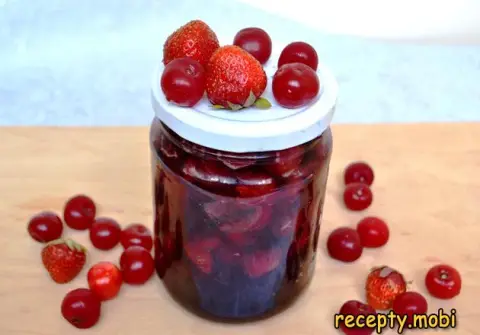
With whole berries. A dressy option, where the berries sit in clear jelly as if on display.
- strawberries 500 g, small and firm
- sugar 350 g
- gelatin 15 g, water 45 ml
- lemon 1/2
- Cover the whole berries with sugar and leave them for 3-4 hours to release their juice.
- Warm over low heat for 5-7 minutes, do not stir the berries with a spoon, just swirl the pot.
- Take off the heat, cool for 3-5 minutes, pour in the melted gelatin, distribute it gently, and pour into jars.
Good to know: cut large strawberries in half, but do not crush them, or the pulp will cloud the jelly.
Confiture puree. A smooth, uniform mass with no chunks, easy to spread.
- strawberries 500 g
- sugar 350 g
- gelatin 15 g, water 45 ml
- lemon 1/2
- Blend half the berries into a puree and dice the other half.
- Combine with sugar and cook down for 10 minutes, skimming the foam.
- Take off the heat, cool for a couple of minutes, and stir in the gelatin until smooth.
Good to know: for a truly smooth texture, press the puree through a sieve to remove some of the seeds.
Quick cold jelly. Minimal cooking, so the fresh berry flavor is better preserved.
- strawberries 500 g
- sugar 300 g
- gelatin 20 g, water 60 ml
- lemon 1/2
- Warm the berries with sugar just until the sugar dissolves, 3-4 minutes, without cooking down.
- Take off the heat, let it cool a little, and stir in the melted gelatin.
- Pour it out and chill until set.
Good to know: there is a touch more gelatin here because the berries barely cook and the syrup stays thin. This is a fridge preserve: keep it cold only and finish it within 2-3 weeks, it is not suited to long winter storage.
Common Mistakes
Almost every failure with this jam revolves around the gelatin and the sugar balance. Let us go through what goes wrong and how to rescue it.
| Mistake | What happens | How to fix it |
|---|---|---|
| Gelatin was boiled | the mass will not set even when chilled | reheat to 70°C (160°F) again and stir in a fresh portion of melted gelatin |
| Too little gelatin | you get a thin syrup rather than jelly | melt another 5-7 g and stir it into the warm mass |
| Too much gelatin | the texture is rubbery and bouncy | reheat, thin it with berry puree or water, and pour again |
| Poured into a cold mass | the gelatin seized into lumps and strings | warm it all together until the lumps dissolve, and strain if needed |
| Too little sugar | tart, ferments and molds faster | add more sugar and warm gently without bringing it to a boil, keep in the fridge only |
| Berries overcooked | the strawberries fell apart and the color faded | the shape is gone for good, blend it into a confiture and add a little lemon for color |
FAQ
Which strawberries should I choose? +
Ideally, ripe red strawberries with no rotten spots. Berries 2–4 cm in size are best (cut larger ones in half). Unsuitable ones are: unripe (sour), rotten (they will spoil the jam) and overripe (they will fall apart). Strawberries picked fresh in the morning are the most fragrant. If the strawberries are very wet, pat them dry with paper towels so they don't water down the flavour.
What can I use instead of gelatin? +
Alternatives: agar-agar (5 g instead of 15 g of gelatin – it is stronger), pectin for jams (10 g, and follow the instructions on the packet), or 1:1 gelling sugar (sugar plus pectin). Quick-dissolving gelatin doesn't need soaking, but ordinary gelatin (as in the recipe) gives a more stable consistency. Do not use: starch (it gives a "slimy" texture) or powdered milk (it won't thicken). For a vegan version, use agar-agar. For a less firm jam, reduce the gelatin to 10 g.
How long does the jam keep? +
In sealed jars in a cool place (a cellar, basement or fridge) it keeps for up to 1 year. At room temperature – up to 6 months (gelatin is heat-sensitive). Once opened, it keeps in the fridge for 1 month; any longer and the gelatin will separate. Write the canning date on the jars. If a lid bulges, do not open it – throw it away. Freezing is not needed – the jars would burst. It is best used within the first 6 months. Put it up in small 250–500 ml jars – they are easier to open (a large jar will spoil within 1 month after opening).
What do I serve the jam with? +
The classics: at breakfast with toast, pancakes and fritters. With any bakes and porridges (oatmeal, semolina). With a cup of tea with lemon for a fragrant tea break. With syrniki and cottage-cheese bake. On open sandwiches with butter. For layering cakes and pies. With yogurt and plain cottage cheese. With ice cream or panna cotta. As a decoration for cheesecake. As a spread on a croissant or baguette. With a cup of coffee with milk for a "French" breakfast. A versatile sweet jam for the whole family.
Why did my gelatin jam fail to set? +
Most often it comes down to two things: the gelatin was brought to a boil, or there was simply too little of it, since 500 g of berries needs at least 15 g. Exactly what went wrong and how to fix it is laid out in the common mistakes table above. The general rule: before adding the gelatin, take the mass off the heat and let it cool, and a set that failed can be saved with a gentle reheat and a fresh portion of melted gelatin.
Do I need to sterilize the jars for gelatin jam? +
Definitely wash the jars with baking soda and sterilize them with steam or in the oven, and boil the lids. Ladle the jam in hot and seal it right away. Once set, jelly is fussier than classic jam, so keep a full seal made with the full sugar dose in a cool pantry or cellar, and store the lower-sugar versions in the fridge only.
Can I make it from frozen strawberries? +
You can, and the taste will be almost the same as with fresh. Thaw the berries slowly in the fridge and be sure to keep the juice they release. Frozen strawberries give off more liquid, so either cook the mass down a bit longer, or add 3-5 g more gelatin so the jelly sets confidently.
- Comment
or post as a guest
Be the first to comment.