avg —
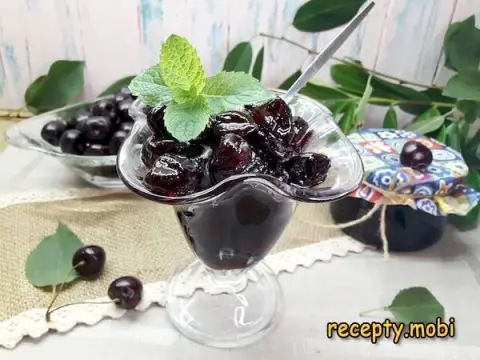
Blackcurrant with sugar without cooking

Instructions
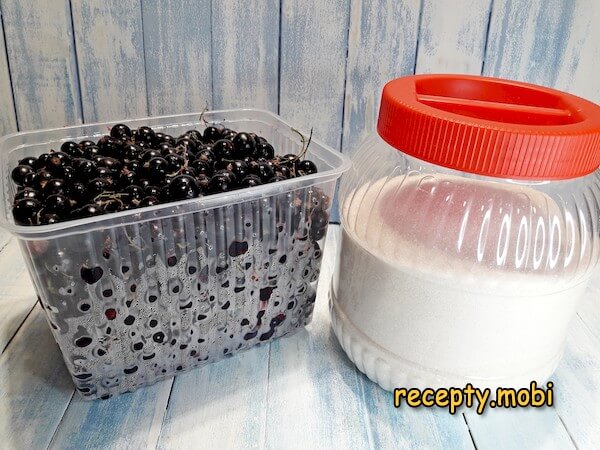
Gather the ingredients. Measure out the sugar only after the currants have been sorted. And one more thing – it is better to start in the evening, because the sugar poured over the berries needs to dissolve completely (this takes about 8 hours). On a summer night a room is not as hot as in the daytime, so the preserve can safely be left on a balcony or veranda.
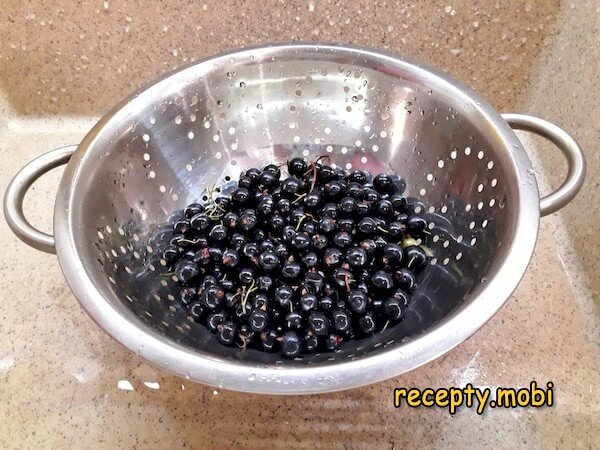
Put the berries into a colander in small batches and rinse them under running water, removing any spoiled ones and twigs. Then spread them out on a towel.
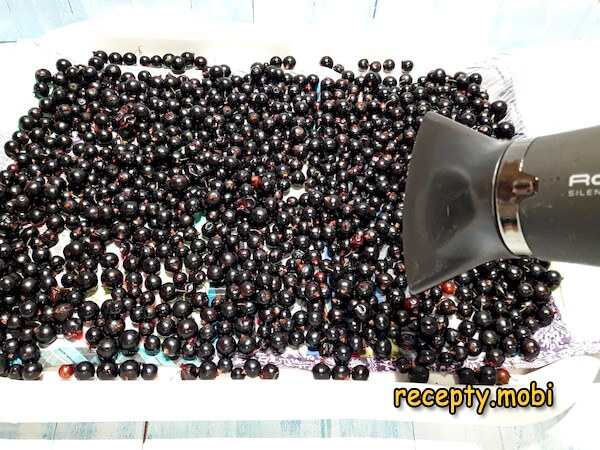
Once the whole batch has been washed and laid out to dry, you can speed up the process by drying the fruit with a hairdryer, since only dry berries are suitable for this preserve.
Next, grind the currants with a blender, food chopper or an ordinary potato masher.
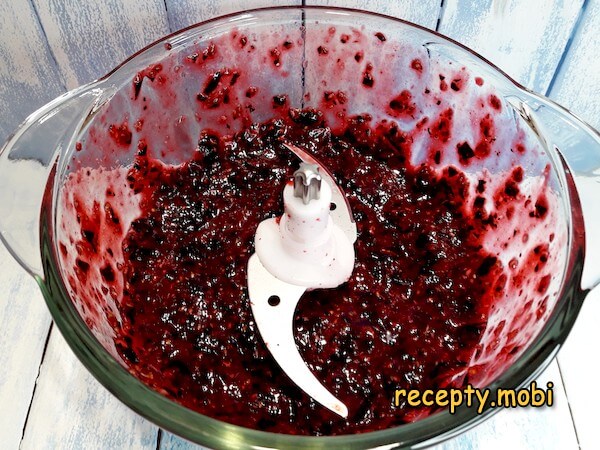
Transfer the resulting pulp into a large bowl.
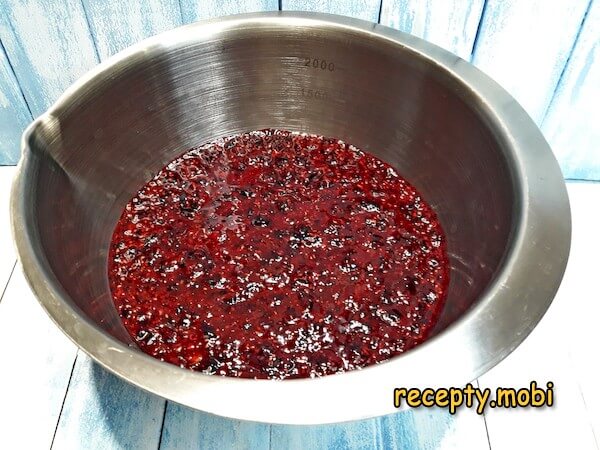
Pour all of the sugar into this container.
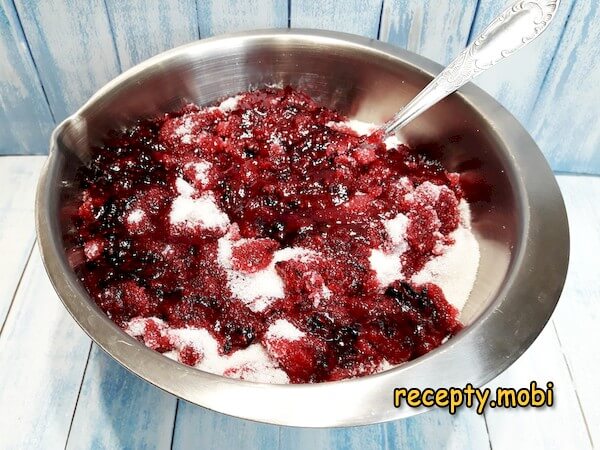
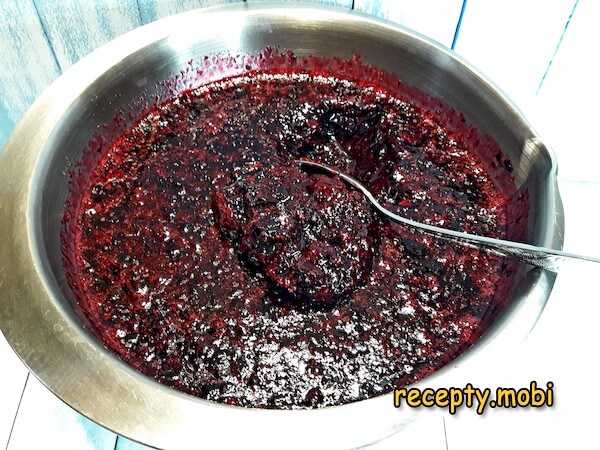
Mix everything together. Cover the mixture with a lid or a towel and take it to a cooler place (for example, a balcony), but not the fridge.
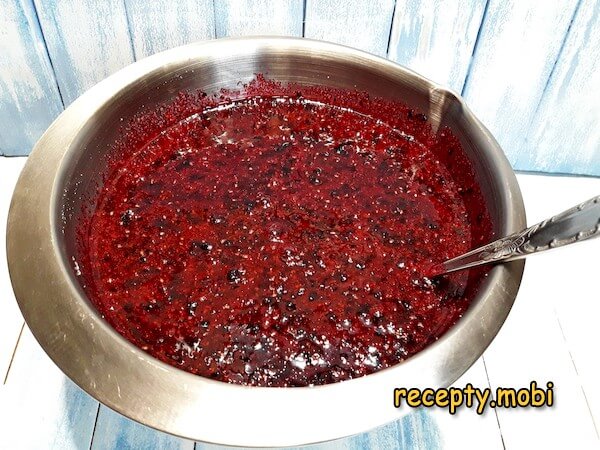
In the morning you will notice that the preserve has gelled a little and no sugar granules are left.
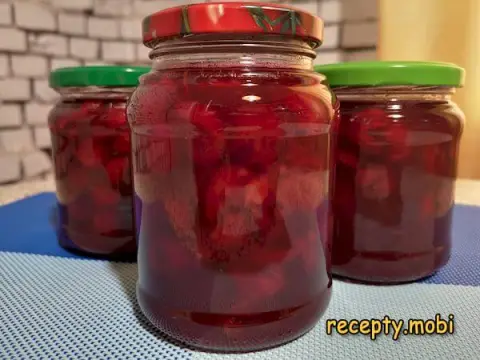
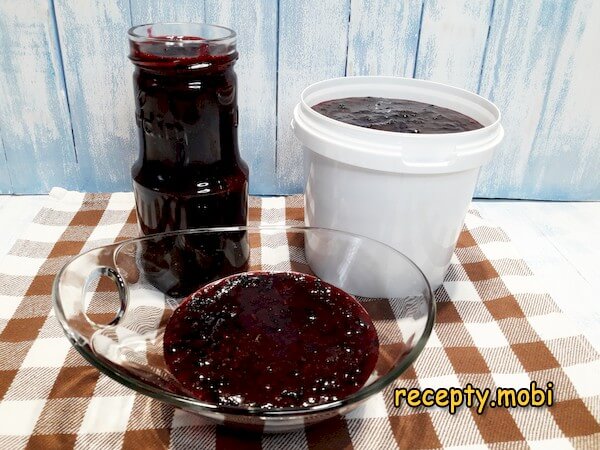
Fill the prepared dry containers with the sweet jam. You can close them with plastic or screw-on lids, after which I put the jars on a fridge shelf. There they can keep until the next harvest and even longer.


Tips
- 1
Perfectly dry berries are the secret to keeping the preserve. Wet berries release juice that starts to ferment. Dry them with a towel or a hairdryer and the jar will keep for up to a year.
- 2
The 8-hour rest is the secret against crystallising. Jar it straight away and the undissolved sugar will settle to the bottom and the preserve will become sugary. Eight hours of resting gives gelling without crystals.
- 3
The fridge is a must – the secret against fermentation. At room temperature raw currants will ferment within a week. Only the fridge, at 0–4°C, keeps the preserve for up to a year.
- 4
A 1:1.2 ratio of berries to sugar is the secret to keeping it. Less sugar (1:1) means a risk of fermentation. A 1:1.2 ratio gives the high concentration that preserves the berries without cooking. The same principle works in other kinds of raw jams and pureed berries.
FAQ
Which blackcurrant should I choose? +
Freshly picked, large, firm, dark-purple berries are ideal. Do not use overripe soft berries (they will run), mouldy ones, or unripe green ones.
Can I reduce the sugar? +
You can, but white sugar at a 1:1.2 ratio is what makes this no-cook preserve keep reliably. Using less sugar (down to 1:1) increases the risk of fermentation. If you want to use less sugar than that, it is better to cook the jam or freeze the berries instead.
How long does raw currant with sugar keep? +
In the fridge, in a tightly closed glass or plastic container, it keeps for up to a year. By the second month the flavour becomes more like cooked jam. If bubbles or mould appear on the surface, do not use it – throw it away. Do not leave it at room temperature for longer than 4 hours, as there is a risk of fermentation.
What do you serve raw currant with sugar with? +
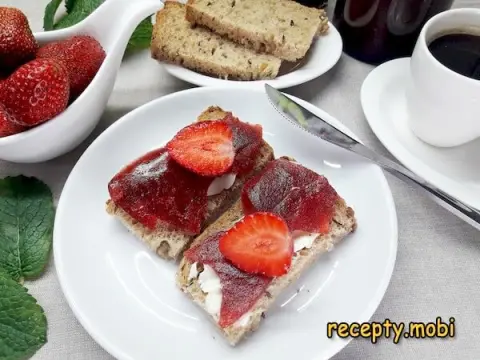
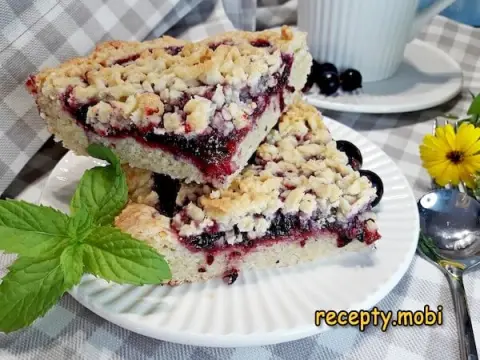
It is a classic for the winter table: with a cup of black tea, with pancakes and fritters, with syrniki and cottage cheese bake, or with buttered toast. It also works as a filling for small pies and as a layer in sponge cake. To make a fruit drink, stir a tablespoon into about 200 ml of water.
- Comment
or post as a guest
Be the first to comment.